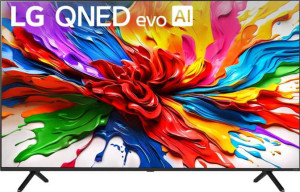
LG 85QNED92AUA 85"
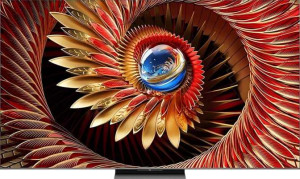
TCL 85C8K 85"

LG 85QNED92AUA 85" TCL 85C8K 85"

Overview

Welcome to our in-depth specification comparison between the LG 85QNED92AUA 85″ and the TCL 85C8K 85″, two impressive large-screen Mini-LED televisions competing for dominance in the premium home theater market. Both sets share a strong foundation of 4K resolution, Dolby Vision, and HDMI 2.1 connectivity, but key battlegrounds emerge around refresh rate and HDR capabilities, display technology, wireless connectivity, and physical design — making the choice between them anything but straightforward.

Common Features

  • Both TVs have a 4K (UHD) display resolution of 3840 x 2160 px.
  • Both TVs have a pixel density of 52 ppi.
  • Both TVs support 1070 million display colors with a 10-bit bit depth.
  • HDR10 support is available on both TVs.
  • Dolby Vision support is available on both TVs.
  • HLG support is available on both TVs.
  • Both TVs use a Mini-LED, LED-backlit, LCD panel construction.
  • Both TVs have 4 HDMI 2.1 ports and 1 RJ45 port.
  • Bluetooth is available on both TVs.
  • Both TVs support Wi-Fi including Wi-Fi 4, Wi-Fi 5, and Wi-Fi 6.
  • Miracast support is available on both TVs.
  • Neither TV has a 3.5 mm audio jack socket.
  • Neither TV has an external memory slot.
  • Dolby Digital support is available on both TVs.
  • Dolby Digital Plus support is available on both TVs.
  • Dolby Atmos and Dolby Audio are available on both TVs.
  • Digital Out support is available on both TVs.
  • Stereo speakers are present on both TVs.
  • Both TVs support VESA mounting.
  • AirPlay is available on both TVs.
  • Both TVs have a built-in smart TV platform and are compatible with Google Assistant and Alexa.
  • USB recording support is available on both TVs.
  • Neither TV has a rechargeable remote control.
  • Neither TV is compatible with Siri/Apple HomeKit.

Main Differences

  • The refresh rate is 120Hz on the LG 85QNED92AUA 85″ and 144Hz on the TCL 85C8K 85″.
  • HDR10+ support is present on the TCL 85C8K 85″ but not available on the LG 85QNED92AUA 85″.
  • The TCL 85C8K 85″ includes QLED technology in its display, while the LG 85QNED92AUA 85″ does not.
  • Adaptive sync support extends to AMD FreeSync Premium Pro on the TCL 85C8K 85″, whereas the LG 85QNED92AUA 85″ only supports AMD FreeSync and AMD FreeSync Premium.
  • The LG 85QNED92AUA 85″ supports Wi-Fi 6E (802.11ax) in addition to Wi-Fi 4, 5, and 6, while the TCL 85C8K 85″ supports only up to Wi-Fi 6.
  • The Bluetooth version is 5.3 on the LG 85QNED92AUA 85″ and 5.4 on the TCL 85C8K 85″.
  • The LG 85QNED92AUA 85″ has 2 USB ports, while the TCL 85C8K 85″ has 1 USB port.
  • The width is 1889.8 mm on the LG 85QNED92AUA 85″ and 1880 mm on the TCL 85C8K 85″.
  • The height is 1082 mm on the LG 85QNED92AUA 85″ and 1073 mm on the TCL 85C8K 85″.
  • The thickness is 60.9 mm on the LG 85QNED92AUA 85″ and 53 mm on the TCL 85C8K 85″.
  • The weight is 35199 g on the LG 85QNED92AUA 85″ and 41600 g on the TCL 85C8K 85″.
  • The volume is 124526.10 cm³ on the LG 85QNED92AUA 85″ and 106913.72 cm³ on the TCL 85C8K 85″.
  • The screen size is 84.5″ on the LG 85QNED92AUA 85″ and 85″ on the TCL 85C8K 85″.
Specs Comparison
LG 85QNED92AUA 85"

LG 85QNED92AUA 85"

TCL 85C8K 85"

TCL 85C8K 85"

Display:
display resolution 4K (UHD) 4K (UHD)
Display type Mini-LED, LCD, LED-backlit Mini-LED, LED-backlit, LCD, QLED
screen size 84.5" 85"
resolution 3840 x 2160 px 3840 x 2160 px
pixel density 52 ppi 52 ppi
display colors 1070 million 1070 million
bit depth 10-bit 10-bit
refresh rate 120Hz 144Hz
supports HDR10
supports HDR10+
supports Dolby Vision
supports HLG
Adaptive synchronization AMD FreeSync, AMD FreeSync Premium AMD FreeSync, AMD FreeSync Premium, AMD FreeSync Premium Pro
has anti-reflection coating
has an ambient light sensor
maximum horizontal viewing angle 178º 178º
maximum vertical viewing angle 178º 178º

Both the LG 85QNED92AUA and the TCL 85C8K share a strong display foundation: native 4K (3840 x 2160) resolution, a 52 ppi pixel density, 10-bit color depth rendering 1.07 billion colors, and a Mini-LED LCD panel architecture. Both also include anti-reflection coating and an ambient light sensor, along with identical 178° horizontal and vertical viewing angles — meaning neither panel has a meaningful edge in coverage or color fidelity at the panel-spec level.

Where the TCL 85C8K pulls ahead is in two meaningful areas for gaming and advanced HDR content. Its 144Hz refresh rate versus the LG's 120Hz provides smoother motion in fast-paced content, a tangible advantage in gaming scenarios. The TCL also adds AMD FreeSync Premium Pro to its sync stack (on top of FreeSync and FreeSync Premium, which both TVs share), enabling low-latency HDR variable refresh rate gaming — something the LG cannot do. On the HDR front, the TCL supports HDR10+ in addition to HDR10, Dolby Vision, and HLG, while the LG skips HDR10+. In practice, this means the TCL can leverage the dynamic metadata of both major competing HDR formats, whereas the LG is limited to Dolby Vision for dynamic HDR. Both support HLG for broadcast content.

The TCL 85C8K holds a clear display-spec advantage in this comparison. Its higher refresh rate, broader adaptive sync support, and full HDR format coverage make it the stronger choice for gamers and users who want maximum compatibility with current and emerging HDR content standards. The LG 85QNED92AUA remains competitive for general home theater use, but on paper it concedes ground on every key differentiator in this category.

Connectivity:
Has Bluetooth
HDMI version HDMI 2.1 HDMI 2.1
HDMI ports 4 4
supports Wi-Fi
Wi-Fi version Wi-Fi 4 (802.11n), Wi-Fi 5 (802.11ac), Wi-Fi 6 (802.11ax), Wi-Fi 6E (802.11ax) Wi-Fi 4 (802.11n), Wi-Fi 5 (802.11ac), Wi-Fi 6 (802.11ax)
Bluetooth version 5.3 5.4
USB ports 2 1
RJ45 ports 1 1
supports Miracast
has a socket for a 3.5 mm audio jack
has an external memory slot
has a VGA connector
has a DVI connector

At the core, these two TVs share a virtually identical wired connectivity setup: four HDMI 2.1 ports and one RJ45 ethernet jack. Four HDMI 2.1 ports is a premium configuration that supports 4K@120Hz and full bandwidth for next-gen consoles and PC sources across all inputs — neither TV compromises here. Both also support Miracast for wireless screen mirroring.

The wireless picture diverges in two notable ways. The LG 85QNED92AUA supports Wi-Fi 6E (802.11ax), which adds access to the uncongested 6 GHz band on top of the standard 2.4 GHz and 5 GHz bands — a real-world advantage in dense environments where Wi-Fi interference is common, translating to more stable streaming and lower latency. The TCL 85C8K tops out at Wi-Fi 6, which is still fast but lacks that extra headroom. Flipping the advantage, the TCL carries Bluetooth 5.4 versus the LG's Bluetooth 5.3 — a minor generational step that brings marginally improved connection reliability and efficiency, though the practical difference for typical TV use cases like soundbars and remotes is negligible.

The LG also holds an edge in physical ports with 2 USB ports compared to the TCL's single USB port — a tangible convenience difference for users connecting USB drives, keyboards, or other peripherals simultaneously. On balance, the LG 85QNED92AUA has the connectivity advantage, driven primarily by its Wi-Fi 6E support and the extra USB port; the TCL's newer Bluetooth version does not offset those practical gaps.

Audio:
supports Dolby Digital
supports Digital Out
supports Dolby Digital Plus
has SRS TheaterSound HD
has stereo speakers
has Dolby Atmos
has Dolby Audio
supports Dolby Virtual
has a subwoofer
HDMI ARC / eARC HDMI ARC, HDMI eARC HDMI ARC, HDMI eARC

The audio specifications for the LG 85QNED92AUA and TCL 85C8K are a perfect mirror image — every single listed feature is identical across both TVs. Both include built-in stereo speakers with a subwoofer, support the full Dolby audio stack (Dolby Digital, Dolby Digital Plus, Dolby Atmos, and Dolby Audio), and offer both HDMI ARC and eARC for external audio system integration.

The presence of eARC is worth highlighting as a shared strength: unlike standard ARC, eARC carries enough bandwidth to pass lossless audio formats — including Dolby Atmos in its full TrueHD form — to a compatible soundbar or AV receiver. This means neither TV is a bottleneck for high-end external audio setups. The onboard subwoofer on both units also suggests a more complete built-in sound stage than TVs relying solely on stereo drivers, though the actual output quality depends on wattage and tuning data not provided here.

This category is a complete tie. There is no differentiator — not even a minor one — between the two TVs based on the provided audio specifications. Buyers prioritizing audio features should look to other aspects of each product, such as pricing or ecosystem, to break the deadlock.

Design:
width 1889.8 mm 1880 mm
weight 35199 g 41600 g
thickness 60.9 mm 53 mm
height 1082 mm 1073 mm
volume 124526.10324 cm³ 106913.72 cm³
Supports VESA mount

Footprint-wise, these two 85-inch TVs are nearly identical — the width and height differ by less than 10 mm in each dimension, so placement and furniture compatibility will be essentially the same for both. Where they diverge meaningfully is in weight and thickness. The LG 85QNED92AUA weighs 35.2 kg, while the TCL 85C8K comes in considerably heavier at 41.6 kg — a difference of roughly 6.4 kg. At this size class, that gap is significant during installation, particularly for wall-mounting, where every kilogram adds stress to the mount, the wall structure, and the installers involved.

The TCL does claw back some ground in profile depth: at 53 mm thick versus the LG's 60.9 mm, it sits noticeably closer to the wall when mounted, which is a genuine aesthetic advantage in minimalist or flush-mount setups. The LG's larger overall volume (roughly 124,500 cm³ vs the TCL's ~106,900 cm³) reflects this bulkier chassis. Both TVs support VESA mounting, so neither restricts bracket options.

On balance, the LG 85QNED92AUA has the design advantage for most buyers — its substantially lower weight makes handling, mounting, and long-term structural load considerably more manageable. The TCL's slimmer profile is a real but narrower benefit, more relevant to wall-mount aesthetics than to practical installation concerns.

Features:
release date April 2025 June 2025
has AirPlay
has built-in smart TV
compatible with Google Assistant
works with Alexa
works with Siri/Apple HomeKit
supports a remote smartphone
has a rechargeable remote control
supports USB recording
standby power consumption 0.5W 0.5W
has a search browser
has a sleep timer
has a child lock
warranty period 1 years 1 years
has voice commands

Much like the audio category, the Features group yields no differentiators whatsoever between these two TVs. The LG 85QNED92AUA and TCL 85C8K share an identical smart feature set: both run a built-in smart TV platform, support AirPlay, Google Assistant, and Alexa, and notably, neither supports Siri/Apple HomeKit — a shared limitation worth flagging for users deeply embedded in the Apple ecosystem. Both also allow smartphone remote control, USB recording, and voice commands.

A few shared specs are worth contextualizing. The 0.5W standby power consumption on both units is commendably low, keeping idle energy costs minimal over time. USB recording — the ability to capture live broadcast content directly to a connected drive — is a useful but increasingly rare feature to find called out explicitly, and both TVs include it. The absence of a rechargeable remote on either model is a minor shared inconvenience, though not a deciding factor at this price tier.

This category is a complete tie. Every feature listed is present or absent on both TVs in exactly the same way. Buyers for whom smart features and ecosystem compatibility are the primary concern should weigh the shared lack of HomeKit support carefully, but cannot use this spec group to differentiate between the two models.

Comparison Summary & Verdict

After a thorough review of the specs, both TVs deliver a compelling large-screen experience, but each caters to a distinct type of buyer. The TCL 85C8K 85″ pulls ahead for entertainment enthusiasts and gamers thanks to its 144Hz refresh rate, HDR10+ support, QLED panel, and AMD FreeSync Premium Pro adaptive sync — features that make fast-moving content and gaming noticeably smoother and more vibrant. On the other hand, the LG 85QNED92AUA 85″ appeals to users who value a lighter build, a broader wireless reach via Wi-Fi 6E, an extra USB port, and a slightly slimmer overall footprint. Both share identical audio capabilities, smart platform features, and 4 HDMI 2.1 ports, so neither compromises on core connectivity. Your decision ultimately comes down to whether gaming and HDR performance or wireless versatility and lighter weight matter more to you.

LG 85QNED92AUA 85
Buy LG 85QNED92AUA 85" if...

Buy the LG 85QNED92AUA 85″ if you want a lighter TV with Wi-Fi 6E support and an extra USB port. Its slimmer profile and broader wireless connectivity make it ideal for versatile home setups.

TCL 85C8K 85
Buy TCL 85C8K 85" if...

Buy the TCL 85C8K 85″ if you prioritize a higher 144Hz refresh rate, HDR10+ support, and AMD FreeSync Premium Pro for a superior gaming and cinematic experience.