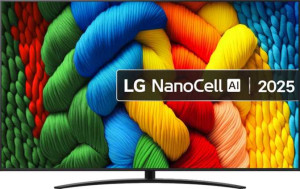
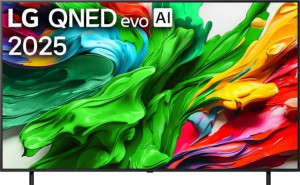
Both the LG 86NANO81A6A and the LG 86QNED85AUA share the same core panel fundamentals: 4K UHD (3840 x 2160) resolution, a 51 ppi pixel density, 10-bit color depth rendering up to 1.07 billion colors, and identical 178° horizontal and vertical viewing angles. Both also include anti-reflection coating and an ambient light sensor, meaning neither has a raw panel quality edge on these shared traits.
The most impactful differentiator is the refresh rate. The NANO81A6A is capped at 60Hz, which is adequate for standard broadcast and streaming content but noticeably limiting for fast-motion sports or gaming. The QNED85AUA steps up to 144Hz, a substantial leap that translates to significantly smoother motion handling and a much more responsive experience for gaming in particular. Complementing this, the QNED85AUA uses a Mini-LED backlight in addition to the standard LED-backlit LCD architecture of the NANO81A6A — a technology that enables more precise local dimming zones, which generally improves contrast and reduces blooming around bright highlights on dark backgrounds.
The HDR picture shifts in the opposite direction, however. The NANO81A6A supports Dolby Vision and HDR10+ — the two leading dynamic metadata HDR formats used heavily by Netflix, Amazon, and Apple TV+ — while the QNED85AUA supports neither, covering only the baseline HDR10 and HLG standards. This is a meaningful trade-off: the QNED85AUA's Mini-LED backlighting and higher refresh rate give it a hardware performance edge, especially for gaming, but the NANO81A6A offers a broader and more future-proof HDR ecosystem for streaming-focused users. Overall, the QNED85AUA holds the advantage for motion and gaming use cases, while the NANO81A6A is the stronger pick for HDR streaming content variety.