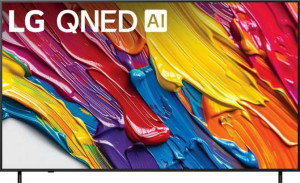
LG 86QNED82AUA 86"
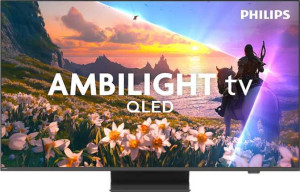
Philips 65PUS8600/12 65"

LG 86QNED82AUA 86" Philips 65PUS8600/12 65"

Overview

Choosing between the LG 86QNED82AUA 86″ and the Philips 65PUS8600/12 65″ means weighing two very different philosophies in large-screen television design. This head-to-head comparison examines their distinct display technologies, size and form factor, connectivity options, and energy efficiency — giving you a clear picture of how these two 4K TVs stack up before you make your decision.

Common Features

  • Both TVs share a 4K (UHD) display resolution of 3840 x 2160 px.
  • Both TVs display 1070 million colors with a 10-bit bit depth.
  • Both TVs have a native refresh rate of 60Hz.
  • HDR10 support is available on both TVs.
  • HLG support is available on both TVs.
  • An anti-reflection coating is present on both TVs.
  • Bluetooth connectivity is available on both TVs.
  • Both TVs use HDMI 2.1 and include 3 HDMI ports.
  • Wi-Fi support is available on both TVs, with Wi-Fi 4 (802.11n) and Wi-Fi 5 (802.11ac).
  • Both TVs include 1 RJ45 (Ethernet) port.
  • Miracast support is available on both TVs.
  • Neither TV includes an external memory slot.
  • Digital audio output is supported on both TVs.
  • Stereo speakers are present on both TVs.
  • Dolby Atmos and Dolby Audio are supported on both TVs.
  • Neither TV supports Dolby Virtual or includes a subwoofer.
  • Both TVs support HDMI ARC and HDMI eARC.
  • Both TVs support VESA mounting.
  • Both TVs feature a built-in smart TV platform compatible with Google Assistant and Alexa.
  • Neither TV is compatible with Siri or Apple HomeKit.
  • USB recording is supported on both TVs.
  • Both TVs have a standby power consumption of 0.5W.
  • A rechargeable remote control is not included with either TV.

Main Differences

  • The display technology is Mini-LED, LED-backlit LCD on the LG 86QNED82AUA 86″ and QLED, LED-backlit LCD on the Philips 65PUS8600/12 65″.
  • The screen size is 86.4″ on the LG 86QNED82AUA 86″ and 64.5″ on the Philips 65PUS8600/12 65″.
  • Pixel density is 51 ppi on the LG 86QNED82AUA 86″ and 68 ppi on the Philips 65PUS8600/12 65″.
  • HDR10+ support is present on the Philips 65PUS8600/12 65″ but not available on the LG 86QNED82AUA 86″.
  • The Bluetooth version is 5 on the LG 86QNED82AUA 86″ and 5.2 on the Philips 65PUS8600/12 65″.
  • The number of USB ports is 1 on the LG 86QNED82AUA 86″ and 2 on the Philips 65PUS8600/12 65″.
  • A 3.5 mm audio jack is present on the Philips 65PUS8600/12 65″ but not available on the LG 86QNED82AUA 86″.
  • The width is 1927.9 mm on the LG 86QNED82AUA 86″ and 1451 mm on the Philips 65PUS8600/12 65″.
  • The height is 1107.4 mm on the LG 86QNED82AUA 86″ and 847 mm on the Philips 65PUS8600/12 65″.
  • The thickness is 50.8 mm on the LG 86QNED82AUA 86″ and 85 mm on the Philips 65PUS8600/12 65″.
  • The weight is 32387 g on the LG 86QNED82AUA 86″ and 24240 g on the Philips 65PUS8600/12 65″.
  • The volume is 108455.788168 cm³ on the LG 86QNED82AUA 86″ and 104464.745 cm³ on the Philips 65PUS8600/12 65″.
  • Operating power consumption is 181W on the LG 86QNED82AUA 86″ and 101W on the Philips 65PUS8600/12 65″.
Specs Comparison
LG 86QNED82AUA 86"

LG 86QNED82AUA 86"

Philips 65PUS8600/12 65"

Philips 65PUS8600/12 65"

Display:
display resolution 4K (UHD) 4K (UHD)
Display type LED-backlit, LCD, Mini-LED QLED, LED-backlit, LCD
screen size 86.4" 64.5"
resolution 3840 x 2160 px 3840 x 2160 px
pixel density 51 ppi 68 ppi
display colors 1070 million 1070 million
bit depth 10-bit 10-bit
refresh rate 60Hz 60Hz
supports HDR10
supports HDR10+
supports HLG
has anti-reflection coating
has an ambient light sensor
maximum horizontal viewing angle 178º 178º
maximum vertical viewing angle 178º 178º

Both the LG 86QNED82AUA and the Philips 65PUS8600/12 share the same 4K (UHD) resolution at 3840 x 2160 px, identical 10-bit color depth capable of rendering 1.07 billion colors, and a matching 60Hz refresh rate. Their viewing angles top out at a wide 178° both horizontally and vertically, and both include anti-reflection coatings and ambient light sensors — meaning neither holds an advantage on these shared fundamentals.

Where the two diverge meaningfully is in screen size, backlight technology, and HDR support. The LG's 86.4″ Mini-LED panel delivers a dramatically larger canvas, but because both share the same pixel count, the LG ends up with a noticeably lower pixel density of 51 ppi versus the Philips′ 68 ppi. In practice, that gap is largely irrelevant at typical living-room viewing distances for a screen this large, but up close the Philips will appear slightly sharper. The LG′s Mini-LED backlighting technology generally allows for more precise local dimming zones compared to standard LED-backlit LCDs, which can improve contrast — though the provided data does not specify dimming zone counts. On the other hand, the Philips′ QLED panel uses quantum dot technology to widen the color gamut, typically delivering more saturated, vivid colors than a conventional LCD.

The single clearest differentiator in this group is HDR10+ support: the Philips includes it, the LG does not. HDR10+ adds dynamic metadata, adjusting tone-mapping scene by scene rather than applying a fixed global setting — a real-world advantage when watching compatible content that can yield noticeably better highlight and shadow detail. Both support HDR10 and HLG, so the LG is not without HDR capability, but the Philips has a broader HDR format coverage. Overall, the Philips 65PUS8600/12 holds a display-spec edge thanks to its HDR10+ support and higher pixel density, while the LG 86QNED82AUA compensates with a vastly larger screen and Mini-LED backlighting — making the choice largely dependent on room size and viewing priorities.

Connectivity:
Has Bluetooth
HDMI version HDMI 2.1 HDMI 2.1
HDMI ports 3 3
supports Wi-Fi
Wi-Fi version Wi-Fi 4 (802.11n), Wi-Fi 5 (802.11ac) Wi-Fi 4 (802.11n), Wi-Fi 5 (802.11ac)
Bluetooth version 5 5.2
USB ports 1 2
RJ45 ports 1 1
supports Miracast
has a socket for a 3.5 mm audio jack
has an external memory slot
has a VGA connector
has a DVI connector

At the foundation, both TVs are well-matched: identical HDMI 2.1 with 3 ports, shared Wi-Fi 4/5 dual-band wireless, a wired RJ45 port, and Miracast screen mirroring support. HDMI 2.1 is a genuine strength on both units, supporting higher bandwidth that future-proofs connections to gaming consoles and media players even if neither TV's panel exceeds 60Hz today.

The differences, while not dramatic, consistently favor the Philips 65PUS8600/12. Its Bluetooth 5.2 versus the LG′s Bluetooth 5.0 brings slightly improved connection stability and more efficient handling of multiple simultaneous devices — a practical benefit when pairing soundbars, headphones, or remotes. More tangibly, the Philips offers 2 USB ports to the LG′s single port, which matters when users want to connect a USB drive and a peripheral simultaneously without a hub. The Philips also includes a 3.5mm audio jack, a port the LG omits entirely — useful for plugging in wired headphones directly to the TV, a simple feature that proves convenient for late-night viewing.

Neither TV supports external memory card slots, VGA, or DVI, so those absences are a wash. On balance, the Philips edges out the LG 86QNED82AUA in connectivity: the extra USB port, the headphone jack, and the marginally newer Bluetooth version add up to a more flexible everyday setup, even if the gap is not large enough to be a decisive factor on its own.

Audio:
supports Digital Out
has SRS TheaterSound HD
has stereo speakers
has Dolby Atmos
has Dolby Audio
supports Dolby Virtual
has a subwoofer
HDMI ARC / eARC HDMI ARC, HDMI eARC HDMI ARC, HDMI eARC

Across every audio specification provided, the LG 86QNED82AUA and the Philips 65PUS8600/12 are an exact match. Both carry Dolby Atmos and Dolby Audio support, stereo speaker configurations, digital audio output, and full HDMI ARC and eARC compatibility — and neither includes a subwoofer or SRS TheaterSound HD processing.

The shared HDMI eARC support is worth highlighting as a practical win for both TVs. eARC allows high-bandwidth, uncompressed audio formats — including Dolby Atmos object-based tracks — to pass from the TV back to a connected soundbar or AV receiver over a single HDMI cable. That means users who invest in an external audio system will get the full benefit of lossless audio passthrough on either set, without needing a separate optical cable. Dolby Atmos support on the TV itself, meanwhile, enables spatial audio processing from compatible streaming apps even without an external speaker setup.

This group is a complete tie. The provided specs reveal no differentiator between the two products on audio — every feature is either present on both or absent on both. Buyers prioritizing audio should look beyond this spec group, as the actual speaker output quality, wattage, and acoustic tuning are not reflected in the data provided here.

Design:
width 1927.9 mm 1451 mm
weight 32387 g 24240 g
thickness 50.8 mm 85 mm
height 1107.4 mm 847 mm
volume 108455.788168 cm³ 104464.745 cm³
Supports VESA mount

Screen size dictates most of the story here. The LG 86QNED82AUA is a significantly larger physical object — 1927.9 mm wide and 1107.4 mm tall versus the Philips′ 1451 mm × 847 mm footprint. That translates to real installation constraints: the LG demands a substantially wider wall, TV unit, or room layout to sit comfortably, and at 32.4 kg compared to the Philips′ 24.2 kg, it also requires more hands and care during mounting or repositioning.

One counterintuitive finding is thickness. Despite being the larger set, the LG is notably slimmer at 50.8 mm versus the Philips′ 85 mm depth. For wall-mount installations, that 34 mm difference is meaningful — the LG will sit closer to the wall, producing a cleaner, more flush appearance. Both TVs support VESA mounting, so neither locks the buyer out of wall installation, but the LG′s slimmer profile gives it a practical aesthetic edge in that scenario.

Design-wise, there is no single winner — the right choice depends entirely on context. The Philips 65PUS8600/12 is lighter and more manageable, making it easier to install solo and better suited to smaller spaces. The LG dominates in sheer screen presence and offers a slimmer depth, rewarding buyers who have the room and the wall space to accommodate it. Neither has a categorical design advantage; it is a trade-off between scale and practicality.

Features:
release date April 2025 February 2025
has built-in smart TV
compatible with Google Assistant
works with Alexa
works with Siri/Apple HomeKit
supports a remote smartphone
has a rechargeable remote control
supports USB recording
operating power consumption 181W 101W
standby power consumption 0.5W 0.5W
has a search browser
has a sleep timer
has a child lock
has voice commands

Feature parity between these two TVs is remarkably high. Both are full smart TVs with built-in voice commands, Google Assistant and Alexa compatibility, smartphone remote support, USB recording, sleep timer, child lock, and a browser — and neither supports Apple HomeKit or offers a rechargeable remote. For the vast majority of smart TV use cases, buyers get an equivalent feature set regardless of which they choose.

The one standout differentiator in this group is power consumption. The LG 86QNED82AUA draws 181W during operation compared to the Philips 65PUS8600/12's 101W — nearly 80% more power. A portion of that gap is attributable to the LG's much larger screen size, since bigger panels inherently require more backlighting. Still, the practical consequence is real: running the LG for four hours a day would consume roughly 264 kWh per year versus about 147 kWh for the Philips, a difference that accumulates meaningfully on electricity bills over time. Both share an identical 0.5W standby consumption, so the gap only matters during active use.

Outside of power draw, this group produces no functional winner — the smart feature sets are identical. The Philips holds a clear edge on energy efficiency, which may matter to environmentally conscious buyers or those in regions with high electricity costs. For everyone else, features alone will not tip the decision between these two sets.

Comparison Summary & Verdict

Both the LG 86QNED82AUA 86″ and the Philips 65PUS8600/12 65″ share a solid common ground: 4K UHD resolution, Dolby Atmos audio, HDMI 2.1, and smart TV platforms with Google Assistant and Alexa support. Yet their differences tell two distinct stories. The LG 86QNED82AUA 86″ is built for those who want a truly cinematic presence, delivering a massive 86-inch Mini-LED panel in a notably slim 50.8 mm cabinet. The Philips 65PUS8600/12 65″ counters with a higher pixel density of 68 ppi, HDR10+ support, significantly lower power consumption at 101W, two USB ports, and a 3.5 mm audio jack — making it a sharper, more efficient, and more connected everyday option for a standard living room setup.

LG 86QNED82AUA 86
Buy LG 86QNED82AUA 86" if...

Buy the LG 86QNED82AUA 86″ if you want the largest possible screen with Mini-LED technology and a slim profile for a dedicated home theater room where sheer size is the top priority.

Philips 65PUS8600/12 65
Buy Philips 65PUS8600/12 65" if...

Buy the Philips 65PUS8600/12 65″ if you value sharper pixel density, HDR10+ support, lower energy consumption, and more versatile connectivity including extra USB ports and a 3.5 mm audio jack.