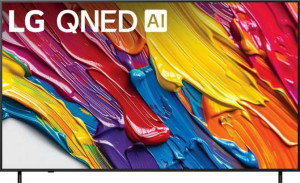
LG 86QNED82AUA 86"
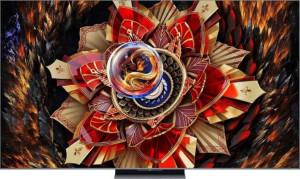
TCL 85C9K 85"

LG 86QNED82AUA 86" TCL 85C9K 85"

Overview

When shopping for a large-screen 4K TV, the LG 86QNED82AUA 86″ and the TCL 85C9K 85″ are two compelling options worth a close look. Both deliver Mini-LED backlighting, Dolby Atmos audio, and a rich smart TV experience, yet they diverge notably in areas like refresh rate, HDR format support, and audio hardware. This detailed spec comparison will help you weigh their strengths across display performance, connectivity, design, and features.

Common Features

  • Both TVs share a 4K UHD display resolution of 3840 x 2160 px.
  • Both TVs display 1.07 billion colors with a 10-bit bit depth.
  • HDR10 support is available on both products.
  • HLG support is available on both products.
  • An anti-reflection coating is present on both products.
  • An ambient light sensor is built into both products.
  • Both TVs use an LED-backlit, LCD, Mini-LED panel technology.
  • Both TVs include HDMI 2.1 ports.
  • Bluetooth connectivity is available on both products.
  • Wi-Fi support is available on both products, including Wi-Fi 4 and Wi-Fi 5.
  • Both TVs have one USB port and one RJ45 port.
  • Miracast support is available on both products.
  • Neither TV includes a 3.5 mm audio jack socket.
  • Neither TV includes an external memory slot.
  • Dolby Digital and Dolby Digital Plus support is available on both products.
  • Digital Out support is available on both products.
  • Dolby Atmos and Dolby Audio are present on both products.
  • Stereo speakers are included on both products.
  • Both TVs support VESA mounting.
  • AirPlay, built-in smart TV, Google Assistant, and Alexa compatibility are available on both products.
  • USB recording support is available on both products.
  • Neither TV comes with a rechargeable remote control.

Main Differences

  • The display type includes QLED on the TCL 85C9K 85″ but not on the LG 86QNED82AUA 86″.
  • Screen size is 86.4″ on the LG 86QNED82AUA 86″ and 85″ on the TCL 85C9K 85″.
  • Pixel density is 51 ppi on the LG 86QNED82AUA 86″ and 52 ppi on the TCL 85C9K 85″.
  • Refresh rate is 60Hz on the LG 86QNED82AUA 86″ and 144Hz on the TCL 85C9K 85″.
  • HDR10+ support is present on the TCL 85C9K 85″ but not available on the LG 86QNED82AUA 86″.
  • Dolby Vision support is present on the TCL 85C9K 85″ but not available on the LG 86QNED82AUA 86″.
  • Adaptive sync is limited to AMD FreeSync on the LG 86QNED82AUA 86″, while the TCL 85C9K 85″ also adds AMD FreeSync Premium and AMD FreeSync Premium Pro.
  • HDMI port count is 3 on the LG 86QNED82AUA 86″ and 4 on the TCL 85C9K 85″.
  • Wi-Fi 6 (802.11ax) support is present on the TCL 85C9K 85″ but not available on the LG 86QNED82AUA 86″.
  • Bluetooth version is 5.0 on the LG 86QNED82AUA 86″ and 5.4 on the TCL 85C9K 85″.
  • A built-in subwoofer is present on the TCL 85C9K 85″ but not available on the LG 86QNED82AUA 86″.
  • Width is 1927.9 mm on the LG 86QNED82AUA 86″ and 1880 mm on the TCL 85C9K 85″.
  • Height is 1107.4 mm on the LG 86QNED82AUA 86″ and 1073 mm on the TCL 85C9K 85″.
  • Thickness is 50.8 mm on the LG 86QNED82AUA 86″ and 53 mm on the TCL 85C9K 85″.
  • Weight is 32387 g on the LG 86QNED82AUA 86″ and 41600 g on the TCL 85C9K 85″.
  • Volume is approximately 108455 cm³ on the LG 86QNED82AUA 86″ and approximately 106913 cm³ on the TCL 85C9K 85″.
Specs Comparison
LG 86QNED82AUA 86"

LG 86QNED82AUA 86"

TCL 85C9K 85"

TCL 85C9K 85"

Display:
display resolution 4K (UHD) 4K (UHD)
Display type LED-backlit, LCD, Mini-LED QLED, LED-backlit, LCD, Mini-LED
screen size 86.4" 85"
resolution 3840 x 2160 px 3840 x 2160 px
pixel density 51 ppi 52 ppi
display colors 1070 million 1070 million
bit depth 10-bit 10-bit
refresh rate 60Hz 144Hz
supports HDR10
supports HDR10+
supports Dolby Vision
supports HLG
Adaptive synchronization AMD FreeSync AMD FreeSync, AMD FreeSync Premium, AMD FreeSync Premium Pro
has anti-reflection coating
has an ambient light sensor
maximum horizontal viewing angle 178º 178º
maximum vertical viewing angle 178º 178º

Both the LG 86QNED82AUA and the TCL 85C9K share a strong display foundation: native 4K (3840 x 2160) resolution, a 10-bit panel capable of rendering over a billion colors, Mini-LED backlighting for improved local dimming, and identical 178° horizontal and vertical viewing angles. At roughly 51–52 ppi across near-identical screen sizes, sharpness in everyday viewing is essentially the same for both.

The most impactful divergence is the refresh rate. The LG is capped at 60Hz, which is perfectly adequate for standard broadcast and streaming content, but the TCL steps up to 144Hz — a significant real-world advantage for fast-motion content, gaming, and any source that can push a high frame rate. Alongside this, the TCL's adaptive sync support extends to AMD FreeSync Premium Pro, versus the LG's basic FreeSync, meaning the TCL is far better equipped to eliminate screen tearing and stuttering at variable frame rates. The TCL also carries the QLED designation, indicating a quantum dot filter layer that typically widens the color gamut beyond standard LED-LCD panels.

On HDR, the gap widens further. The LG supports only HDR10 and HLG, while the TCL adds HDR10+ and Dolby Vision — the two dominant dynamic metadata formats used by major streaming services and Blu-ray releases. Dynamic metadata adjusts brightness and contrast on a scene-by-scene or frame-by-frame basis, which is a meaningful picture quality advantage over the LG's static HDR10. Overall, the TCL 85C9K holds a clear edge in this category: its higher refresh rate, broader HDR ecosystem, and stronger adaptive sync stack make it the more capable display, particularly for gaming and premium streaming content.
Connectivity:
Has Bluetooth
HDMI version HDMI 2.1 HDMI 2.1
HDMI ports 3 4
supports Wi-Fi
Wi-Fi version Wi-Fi 4 (802.11n), Wi-Fi 5 (802.11ac) Wi-Fi 4 (802.11n), Wi-Fi 5 (802.11ac), Wi-Fi 6 (802.11ax)
Bluetooth version 5 5.4
USB ports 1 1
RJ45 ports 1 1
supports Miracast
has a socket for a 3.5 mm audio jack
has an external memory slot
has a VGA connector
has a DVI connector

At their core, both TVs share a solid connectivity baseline: HDMI 2.1 ports, a single USB, a wired Ethernet jack, Bluetooth 5.x, dual-band Wi-Fi, and Miracast support. The absence of a 3.5mm audio jack, external memory slot, and legacy video connectors is identical across both — so neither has a legacy-compatibility advantage.

Where the TCL 85C9K pulls ahead is in the details that matter most for a modern living room setup. It offers 4 HDMI 2.1 ports versus the LG's 3, which is a practical win for users running a full complement of devices — a gaming console, soundbar, streaming stick, and AV receiver can all stay plugged in simultaneously without juggling cables. On wireless, the TCL adds Wi-Fi 6 (802.11ax) to the mix, which delivers meaningfully lower latency and better throughput in congested network environments compared to the Wi-Fi 5 ceiling on the LG. For 4K streaming or cloud gaming, this is a tangible real-world benefit. The TCL also edges ahead with Bluetooth 5.4 versus Bluetooth 5.0 on the LG — a newer revision that improves connection stability and efficiency, particularly relevant when pairing wireless headphones or peripherals.

The LG QNED82AUA covers the essentials competently, but the TCL 85C9K has a clear connectivity edge — more HDMI ports, a newer Wi-Fi generation, and a more current Bluetooth version collectively make it the better-equipped option for users building out a dense home entertainment or gaming setup.

Audio:
supports Dolby Digital
supports Digital Out
supports Dolby Digital Plus
has SRS TheaterSound HD
has stereo speakers
has Dolby Atmos
has Dolby Audio
supports Dolby Virtual
has a subwoofer
HDMI ARC / eARC HDMI ARC, HDMI eARC HDMI ARC, HDMI eARC

Audio is the rare category where these two TVs are almost completely matched. Both support the full Dolby stack — Dolby Digital, Dolby Digital Plus, Dolby Atmos, and Dolby Audio — and both include HDMI ARC and eARC, meaning either can pass high-quality audio to an external soundbar or AV receiver with equal capability. Stereo speaker configurations are present on both, and neither includes SRS TheaterSound HD or Dolby Virtual processing.

The single differentiator here is that the TCL 85C9K includes a built-in subwoofer, while the LG QNED82AUA does not. In practice, a dedicated subwoofer handles low-frequency reproduction — the kind of bass that adds weight to movie explosions, music, and action sequences. Without one, the LG's built-in audio will sound comparatively thinner at the low end when used without an external audio system. For users who plan to connect a soundbar or full surround setup regardless, this distinction is irrelevant. But for those who rely primarily on the TV's internal speakers, the TCL will deliver a noticeably fuller sound out of the box.

Given that every other audio specification is identical, the TCL 85C9K holds a narrow but real advantage in this group, solely on the strength of its integrated subwoofer. The LG is not lacking in audio format support, but falls short on raw built-in output for bass-heavy content.

Design:
width 1927.9 mm 1880 mm
weight 32387 g 41600 g
thickness 50.8 mm 53 mm
height 1107.4 mm 1073 mm
volume 108455.788168 cm³ 106913.72 cm³
Supports VESA mount

Considering these are near-identical screen sizes, the physical footprint difference is modest — the LG QNED82AUA is slightly wider and taller, while the TCL 85C9K is a touch more compact in both dimensions and marginally thicker at 53 mm versus 50.8 mm. Neither difference is large enough to matter in most room placements, and both support VESA mounting, so wall-mount compatibility is a non-issue for either set.

The standout figure in this group is weight. The LG comes in at 32.4 kg, while the TCL weighs a substantially heavier 41.6 kg — a difference of over 9 kg. That gap is highly relevant at installation time: a heavier TV demands more from wall mounts, requires sturdier furniture, and makes the physical handling and positioning process considerably more demanding, typically requiring an extra pair of hands. It can also influence which wall mount hardware is rated safe to use.

For day-to-day use once installed, weight is invisible — but during setup, moving, or wall-mounting, it becomes very real. On design and form factor, the LG QNED82AUA has a clear practical advantage due to its significantly lower weight, making it the easier and more flexible option to install and reposition.

Features:
release date April 2025 June 2025
has AirPlay
has built-in smart TV
compatible with Google Assistant
works with Alexa
works with Siri/Apple HomeKit
supports a remote smartphone
has a rechargeable remote control
supports USB recording
standby power consumption 0.5W 0.5W
has a search browser
has a sleep timer
has a child lock
warranty period 1 years 1 years
has voice commands

This is the most clear-cut group in the entire comparison: every single feature spec is identical between the LG QNED82AUA and the TCL 85C9K. Both carry a full smart TV platform with AirPlay, Google Assistant, and Alexa support, smartphone remote control, USB recording, voice commands, and a matched 0.5W standby power consumption. Neither supports Siri/Apple HomeKit, and neither ships with a rechargeable remote.

The shared 1-year warranty and identical utility features — sleep timer, child lock, search browser — mean there is no functional or ownership experience gap to speak of based on the provided data. For households invested in either the Amazon or Google voice ecosystems, both TVs are equally capable. The absence of HomeKit/Siri support is a shared limitation worth noting for Apple-centric users, but it applies equally to both.

This group is a complete tie. No advantage can be attributed to either product based on the available specs — the feature sets are a mirror image of one another.

Comparison Summary & Verdict

After examining every specification, these two large-format TVs serve slightly different audiences. The LG 86QNED82AUA 86″ stands out for its larger 86.4″ screen, lighter 32.4 kg body, and more compact footprint, making it the better fit for living rooms where size and ease of installation matter. The TCL 85C9K 85″, on the other hand, pulls ahead decisively for those who demand the best picture and gaming credentials: its 144Hz refresh rate, support for Dolby Vision and HDR10+, AMD FreeSync Premium Pro, Wi-Fi 6, Bluetooth 5.4, four HDMI 2.1 ports, and a built-in subwoofer collectively make it the stronger all-round performer. Choose the LG if you prioritize screen real estate and a lighter install; choose the TCL if picture quality versatility and gaming performance are your top priorities.

LG 86QNED82AUA 86
Buy LG 86QNED82AUA 86" if...

Buy the LG 86QNED82AUA 86″ if you want the largest possible screen in this pairing and prefer a significantly lighter, slimmer TV that is easier to mount or move.

TCL 85C9K 85
Buy TCL 85C9K 85" if...

Buy the TCL 85C9K 85″ if you want a superior viewing and gaming experience, with a 144Hz refresh rate, Dolby Vision, HDR10+, AMD FreeSync Premium Pro, Wi-Fi 6, and a built-in subwoofer for richer sound.