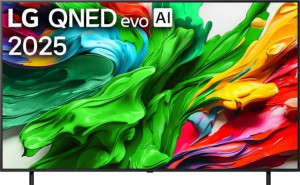
LG 86QNED85AUA 86"
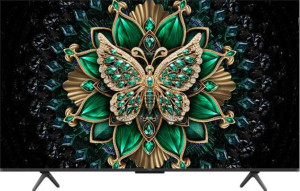
TCL 75C6K 75"

LG 86QNED85AUA 86" TCL 75C6K 75"

Overview

Welcome to our in-depth spec comparison between the LG 86QNED85AUA 86″ and the TCL 75C6K 75″. These two large-screen Mini-LED televisions share a strong common foundation — 4K resolution, 144Hz refresh rate, and Dolby Atmos — but diverge in meaningful ways across HDR format support, display technology, connectivity options, and physical design. Read on to see which television best suits your living room and viewing needs.

Common Features

  • Both TVs have a 4K (UHD) display resolution of 3840 x 2160 px.
  • Both TVs display 1070 million colors at a 10-bit depth.
  • Both TVs have a 144Hz refresh rate.
  • HDR10 support is available on both products.
  • HLG support is available on both products.
  • An anti-reflection coating is present on both products.
  • Both TVs have Bluetooth connectivity.
  • Both TVs feature HDMI 2.1 ports, with 4 HDMI ports each.
  • Both TVs support Wi-Fi.
  • Both TVs have 2 USB ports and 1 RJ45 port.
  • Miracast support is available on both products.
  • Neither TV has an external memory slot.
  • Both TVs support Dolby Digital, Dolby Digital Plus, and Dolby Audio.
  • Both TVs support Digital Out.
  • Dolby Atmos is available on both products.
  • Dolby Virtual support is not available on either product.
  • SRS TheaterSound HD is not available on either product.
  • Both TVs have stereo speakers.
  • Both TVs support VESA mounting.
  • Both TVs have AirPlay, a built-in smart TV platform, Google Assistant compatibility, Alexa compatibility, and remote smartphone support.
  • Neither TV works with Siri/Apple HomeKit.
  • Neither TV has a rechargeable remote control.
  • USB recording is supported on both products.

Main Differences

  • The display type is LED-backlit, LCD, Mini-LED on LG 86QNED85AUA 86″ and QLED, LED-backlit, LCD, Mini-LED on TCL 75C6K 75″.
  • The screen size is 86.4″ on LG 86QNED85AUA 86″ and 74.5″ on TCL 75C6K 75″.
  • The pixel density is 51 ppi on LG 86QNED85AUA 86″ and 59 ppi on TCL 75C6K 75″.
  • HDR10+ support is present on TCL 75C6K 75″ but not available on LG 86QNED85AUA 86″.
  • Dolby Vision support is present on TCL 75C6K 75″ but not available on LG 86QNED85AUA 86″.
  • Adaptive synchronization supports AMD FreeSync and AMD FreeSync Premium on LG 86QNED85AUA 86″, while TCL 75C6K 75″ also adds AMD FreeSync Premium Pro.
  • Wi-Fi versions include Wi-Fi 4, Wi-Fi 5, Wi-Fi 6, and Wi-Fi 6E on LG 86QNED85AUA 86″, while TCL 75C6K 75″ supports only Wi-Fi 4 and Wi-Fi 5.
  • The Bluetooth version is 5.3 on LG 86QNED85AUA 86″ and 5.4 on TCL 75C6K 75″.
  • A 3.5 mm audio jack socket is present on TCL 75C6K 75″ but not available on LG 86QNED85AUA 86″.
  • DTS:X support is present on TCL 75C6K 75″ but not available on LG 86QNED85AUA 86″.
  • The width is 1927.9 mm on LG 86QNED85AUA 86″ and 1670 mm on TCL 75C6K 75″.
  • The height is 1107.4 mm on LG 86QNED85AUA 86″ and 960 mm on TCL 75C6K 75″.
  • The thickness is 30.5 mm on LG 86QNED85AUA 86″ and 56.7 mm on TCL 75C6K 75″.
  • The weight is 50984 g on LG 86QNED85AUA 86″ and 23500 g on TCL 75C6K 75″.
  • The volume is 65116.17 cm³ on LG 86QNED85AUA 86″ and 90901.44 cm³ on TCL 75C6K 75″.
Specs Comparison
LG 86QNED85AUA 86"

LG 86QNED85AUA 86"

TCL 75C6K 75"

TCL 75C6K 75"

Display:
display resolution 4K (UHD) 4K (UHD)
Display type LED-backlit, LCD, Mini-LED QLED, LED-backlit, LCD, Mini-LED
screen size 86.4" 74.5"
resolution 3840 x 2160 px 3840 x 2160 px
pixel density 51 ppi 59 ppi
display colors 1070 million 1070 million
bit depth 10-bit 10-bit
refresh rate 144Hz 144Hz
supports HDR10
supports HDR10+
supports Dolby Vision
supports HLG
Adaptive synchronization AMD FreeSync, AMD FreeSync Premium AMD FreeSync, AMD FreeSync Premium, AMD FreeSync Premium Pro
has anti-reflection coating
has an ambient light sensor
maximum horizontal viewing angle 178º 178º
maximum vertical viewing angle 178º 178º

Both the LG 86QNED85AUA and the TCL 75C6K share the same 4K resolution, 144Hz refresh rate, 10-bit color depth, and 1.07 billion display colors, making their baseline image quality credentials very similar on paper. The most obvious practical difference is sheer size: the LG delivers an 86.4-inch panel versus the TCL's 74.5-inch one — a gap that meaningfully changes the sense of immersion in a large room. Conversely, because both panels carry the same pixel count, the smaller TCL actually achieves a slightly higher pixel density of 59 ppi versus the LG's 51 ppi, which can translate to marginally sharper fine detail at close viewing distances.

Where the TCL pulls ahead most clearly is in its panel technology and HDR ecosystem. The TCL adds a QLED layer to its Mini-LED LCD stack, which typically expands the color gamut and boosts peak brightness compared to a standard Mini-LED LCD like the LG. More critically, the TCL supports Dolby Vision and HDR10+ in addition to HDR10 and HLG, while the LG is limited to HDR10 and HLG only. This matters because Dolby Vision and HDR10+ use dynamic metadata — adjusting tone-mapping scene by scene — which can produce noticeably more nuanced highlights and shadows on supported content. The TCL also adds AMD FreeSync Premium Pro on top of the standard FreeSync and FreeSync Premium tiers that both TVs share, offering low-framerate compensation for a smoother gaming experience at variable frame rates.

In summary, the TCL 75C6K has a clear technical edge in display quality features: broader HDR format support, a richer panel technology, and a more complete adaptive-sync stack. The LG 86QNED85AUA's advantage is purely its larger screen, which is a legitimate and important consideration for big-room viewing but does not offset the TCL's superior HDR and color capabilities on a spec-for-spec basis.
Connectivity:
Has Bluetooth
HDMI version HDMI 2.1 HDMI 2.1
HDMI ports 4 4
supports Wi-Fi
Wi-Fi version Wi-Fi 4 (802.11n), Wi-Fi 5 (802.11ac), Wi-Fi 6 (802.11ax), Wi-Fi 6E (802.11ax) Wi-Fi 4 (802.11n), Wi-Fi 5 (802.11ac)
Bluetooth version 5.3 5.4
USB ports 2 2
RJ45 ports 1 1
supports Miracast
has a socket for a 3.5 mm audio jack
has an external memory slot
has a VGA connector
has a DVI connector

The wired connectivity foundation is identical between the two TVs: both offer 4 HDMI 2.1 ports, 2 USB ports, and a single RJ45 ethernet jack — a solid and modern setup that supports 4K/144Hz passthrough on all HDMI inputs and is unlikely to leave either buyer short on connections.

The more meaningful differences emerge in wireless capabilities. The LG supports Wi-Fi 6E (802.11ax) in addition to Wi-Fi 4, 5, and 6, whereas the TCL tops out at Wi-Fi 5 (802.11ac). Wi-Fi 6E opens up the uncongested 6GHz band, which can deliver noticeably lower latency and more stable throughput in households with many competing wireless devices — a real advantage for 4K streaming or cloud gaming. On the Bluetooth side, the TCL edges ahead with Bluetooth 5.4 versus the LG's 5.3, though the practical difference between these two adjacent versions is minimal for typical TV use cases like connecting soundbars or headphones.

One understated distinction is the TCL's inclusion of a 3.5mm audio jack, which the LG lacks entirely. For users who want to plug in wired headphones directly to the TV — a common need for late-night viewing — this is a genuinely useful convenience the LG simply cannot match. Overall, the connectivity edge is split: the LG wins on wireless networking with its Wi-Fi 6E support, while the TCL offers a small but practical advantage with its headphone jack.

Audio:
supports Dolby Digital
supports Digital Out
supports Dolby Digital Plus
has SRS TheaterSound HD
has stereo speakers
has Dolby Atmos
has Dolby Audio
supports Dolby Virtual
has a subwoofer
has DTS:X
HDMI ARC / eARC HDMI ARC, HDMI eARC HDMI ARC, HDMI eARC

Audio is arguably the spec group where these two TVs are most closely matched. Both carry stereo speakers with a built-in subwoofer, support the full Dolby suite — Dolby Digital, Dolby Digital Plus, Dolby Atmos, and Dolby Audio — and provide both HDMI ARC and eARC outputs for connecting external sound systems. The presence of eARC on both is worth highlighting, as it allows lossless high-bandwidth audio formats to pass through to a compatible soundbar or receiver, future-proofing the setup beyond what standard ARC can handle.

The single differentiator in this group is the TCL's support for DTS:X, which the LG lacks. DTS:X is an object-based surround format — a direct competitor to Dolby Atmos — commonly found on Blu-ray discs and certain streaming platforms. For users who own a DTS:X-capable soundbar or AV receiver, the TCL will pass that signal through natively, while the LG would require the external device to handle decoding independently or fall back to a lesser format.

For most households relying on streaming services, the DTS:X gap is unlikely to surface often, as Dolby Atmos dominates that space. But for physical media enthusiasts or those with a DTS:X sound system, the TCL holds a narrow but real advantage. Overall, the TCL takes a slight edge in audio compatibility purely on the strength of that added format support.

Design:
width 1927.9 mm 1670 mm
weight 50984 g 23500 g
thickness 30.5 mm 56.7 mm
height 1107.4 mm 960 mm
volume 65116.17203 cm³ 90901.44 cm³
Supports VESA mount

Size differences between these two TVs are expected given the screen gap, but the weight disparity is striking. The LG tips the scales at ~51 kg compared to the TCL's ~23.5 kg — more than double. That gap has real installation consequences: the LG will almost certainly require two people and potentially professional mounting hardware rated for the load, whereas the TCL is manageable enough for a standard wall-mount installation without special reinforcement.

Interestingly, the physical profile tells a different story. Despite being the heavier, larger set, the LG is notably slimmer at 30.5 mm deep versus the TCL's 56.7 mm. For wall-mount installations where a low-profile look matters, the LG will sit considerably flatter against the wall — an aesthetic advantage that partially offsets the handling difficulty. Both TVs support VESA mounting, so neither restricts the buyer to proprietary stand solutions.

On balance, neither product dominates this category cleanly. The LG wins on slim profile, while the TCL's dramatically lower weight makes it far easier to transport, install, and reposition. For buyers prioritizing ease of installation or frequent room changes, the TCL has a meaningful practical edge. For those who want the flattest possible wall mount and have the infrastructure to support a heavier unit, the LG's 30.5 mm depth is a genuine draw.

Features:
release date March 2025 March 2025
has AirPlay
has built-in smart TV
compatible with Google Assistant
works with Alexa
works with Siri/Apple HomeKit
supports a remote smartphone
has a rechargeable remote control
supports USB recording
standby power consumption 0.5W 0.5W
has a search browser
has a sleep timer
has a child lock
has voice commands

Across every feature listed in this group, the LG 86QNED85AUA and the TCL 75C6K are a perfect match — spec for spec, without a single differentiator. Both run a built-in smart TV platform, support AirPlay, respond to Google Assistant and Alexa, allow smartphone remote control, and share an identical 0.5W standby power consumption. Neither supports Siri or Apple HomeKit, and neither ships with a rechargeable remote.

A few of the shared features are worth contextualizing. USB recording on both sets means users can connect an external drive to record live broadcasts — a capability that is increasingly rare and genuinely useful for households without a dedicated DVR. The universal voice assistant support across both Google and Amazon ecosystems is also a practical convenience, covering the vast majority of smart home setups without forcing the buyer into a specific platform.

This is a clear and complete tie. There is no basis in the provided specs to give either TV an edge in features — every capability present on one is equally present on the other. A buyer's decision in this category comes down entirely to factors outside this spec group.

Comparison Summary & Verdict

After examining the full specification set, both televisions deliver a compelling 4K, 144Hz, Mini-LED experience, but they target slightly different buyers. The LG 86QNED85AUA 86″ stands out with its larger 86-inch screen, superior Wi-Fi 6E connectivity, and a slimmer 30.5 mm profile, making it the stronger pick for home theater enthusiasts who want maximum screen real estate and cutting-edge wireless performance. The TCL 75C6K 75″, on the other hand, earns its place with broader HDR format support — including Dolby Vision and HDR10+ — a higher pixel density of 59 ppi, AMD FreeSync Premium Pro, DTS:X audio, and a lighter, more manageable 23.5 kg weight. It is the more well-rounded choice for gamers, cinephiles, and those who value HDR versatility and easier installation.

LG 86QNED85AUA 86
Buy LG 86QNED85AUA 86" if...

Buy the LG 86QNED85AUA 86″ if you want the biggest possible screen at 86 inches and need future-proof Wi-Fi 6E wireless connectivity for a demanding home network.

TCL 75C6K 75
Buy TCL 75C6K 75" if...

Buy the TCL 75C6K 75″ if you prioritize comprehensive HDR format support — including Dolby Vision and HDR10+ — advanced AMD FreeSync Premium Pro for gaming, and a significantly lighter, easier-to-install design.