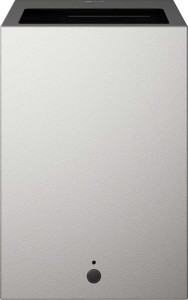
LG CineBeam S
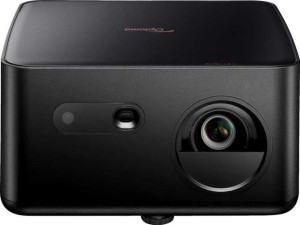
Optoma Photon Life PK32

LG CineBeam S Optoma Photon Life PK32

Overview

Welcome to our in-depth spec comparison between the LG CineBeam S and the Optoma Photon Life PK32. These two 4K projectors take very different approaches to the home cinema experience, and choosing between them means weighing up key factors like light source technology, smart connectivity, physical footprint, and refresh rate performance. Read on to see how every specification stacks up side by side.

Common Features

  • Both projectors output at 4K resolution.
  • Motorized focus is available on both products.
  • Neither product has motorized zoom.
  • HDR10+ support is not available on either product.
  • Dolby Vision support is not available on either product.
  • HDR10 support is available on both products.
  • HLG support is available on both products.
  • Both projectors have 2 USB ports.
  • Neither product has a VGA connector.
  • Neither product has a DVI connector.
  • Neither product has an RJ45 port.
  • Neither product has an S/PDIF Out port.
  • Both projectors feature stereo speakers.
  • Both projectors come with a remote control.
  • A built-in speaker is present on both products.
  • Neither product has an external memory slot.

Main Differences

  • A laser light source is present on LG CineBeam S but not available on Optoma Photon Life PK32.
  • Operating power consumption is 73W on LG CineBeam S and 163W on Optoma Photon Life PK32.
  • Width is 110 mm on LG CineBeam S and 240 mm on Optoma Photon Life PK32.
  • Height is 160 mm on LG CineBeam S and 130 mm on Optoma Photon Life PK32.
  • Thickness is 160 mm on LG CineBeam S and 220 mm on Optoma Photon Life PK32.
  • Weight is 1900 g on LG CineBeam S and 2200 g on Optoma Photon Life PK32.
  • Volume is 2816 cm³ on LG CineBeam S and 6864 cm³ on Optoma Photon Life PK32.
  • A dedicated smartphone app is available on LG CineBeam S but not on Optoma Photon Life PK32.
  • Maximum projection size is 100″ on LG CineBeam S and 150″ on Optoma Photon Life PK32.
  • Manual focus is available on LG CineBeam S but not on Optoma Photon Life PK32.
  • Refresh rate is 60Hz on LG CineBeam S and 240Hz on Optoma Photon Life PK32.
  • LG CineBeam S has 1 HDMI port while Optoma Photon Life PK32 has 2 HDMI ports.
  • AirPlay support is present on LG CineBeam S but not available on Optoma Photon Life PK32.
  • Bluetooth is available on LG CineBeam S but not on Optoma Photon Life PK32.
  • Wi-Fi support is present on LG CineBeam S but not available on Optoma Photon Life PK32.
  • Chromecast built-in is present on LG CineBeam S but not available on Optoma Photon Life PK32.
  • DLNA certification is present on LG CineBeam S but not on Optoma Photon Life PK32.
  • Miracast support is available on LG CineBeam S but not on Optoma Photon Life PK32.
  • Built-in smart TV functionality is present on LG CineBeam S but not on Optoma Photon Life PK32.
  • Audio output power is 2 x 4W on LG CineBeam S and 2 x 5W on Optoma Photon Life PK32.
  • Dolby Atmos support is present on LG CineBeam S but not available on Optoma Photon Life PK32.
Specs Comparison
LG CineBeam S

LG CineBeam S

Optoma Photon Life PK32

Optoma Photon Life PK32

General info:
has laser light source
release date August 2025 October 2025
operating power consumption 73W 163W
width 110 mm 240 mm
height 160 mm 130 mm
thickness 160 mm 220 mm
weight 1900 g 2200 g
Has a dedicated smartphone app
volume 2816 cm³ 6864 cm³

The most consequential difference in this group is the light source technology. The LG CineBeam S uses a laser light source, while the Optoma Photon Life PK32 does not. In practical terms, laser-based projectors typically deliver longer-lasting, more consistent brightness over time, since they do not rely on traditional lamps that degrade and eventually require replacement. This alone gives the LG a meaningful long-term reliability and maintenance advantage.

Physical footprint tells a similarly clear story. The CineBeam S has a calculated volume of roughly 2,816 cm³ and weighs 1,900 g, compared to the Optoma's 6,864 cm³ and 2,200 g — making the LG less than half the size by volume and noticeably lighter. Combined with its far lower operating power draw of 73W versus the Optoma's 163W, the CineBeam S is clearly engineered for portable, low-footprint use, whether that means shelf placement in a small room or easier transport. The Optoma's higher power consumption also implies greater heat output and potentially higher electricity costs over time.

The LG further extends its lead with a dedicated smartphone app, which the Optoma lacks entirely — a feature that meaningfully improves day-to-day usability for wireless control and setup. Overall, the LG CineBeam S holds a clear advantage in this group: it is more compact, more power-efficient, equipped with a superior light source technology, and better integrated into a modern connected workflow.
Projection quality:
output resolution 4K 4K
has motorized focus
maximum projection size 100" 150"
has motorized zoom
supports HDR10+
has manual focus
refresh rate 60Hz 240Hz
supports Dolby Vision
supports HDR10
supports HLG

Both projectors output at 4K resolution and share the same HDR support tier — HDR10 and HLG — with neither reaching HDR10+ or Dolby Vision. That puts them on equal footing for color and dynamic range capability, so the real differentiation lies elsewhere in this group.

Two specs stand out as genuine dividing lines. First, the Optoma Photon Life PK32 supports a maximum projection size of 150″ versus the LG CineBeam S's 100″ — a 50% larger image ceiling that matters significantly if the goal is a true home-cinema scale experience in a larger room. Second, the Optoma's 240Hz refresh rate dwarfs the LG's 60Hz, which is highly relevant for motion clarity in fast-paced content like sports or action films, and especially for anyone considering the projector for gaming. At 60Hz, the CineBeam S is adequate for standard cinematic viewing but cannot compete on motion performance.

Focus mechanics add one more nuance: the LG offers both motorized and manual focus, while the Optoma provides only motorized — a minor convenience trade-off, but the LG's flexibility can be useful in setups where fine manual adjustment is preferred. Still, on the two metrics that most define projection quality and versatility — image scale and refresh rate — the Optoma Photon Life PK32 holds a clear edge in this group.

Connectivity:
HDMI ports 1 2
has AirPlay
Has Bluetooth
supports Wi-Fi
USB ports 2 2
has Chromecast built-in
has a VGA connector
is DLNA-certified
has a DVI connector
supports Miracast
RJ45 ports 0 0
Has S/PDIF Out port

Wireless connectivity is where these two projectors diverge most dramatically. The LG CineBeam S supports Wi-Fi, Bluetooth, AirPlay, Chromecast, Miracast, and DLNA — a comprehensive suite that covers virtually every major wireless streaming and casting standard in use today. The Optoma Photon Life PK32 supports none of these. In practical terms, the Optoma is entirely dependent on physical source connections, meaning a cable must always be present to feed it content. For a modern living room setup or any scenario where wireless convenience matters, this is a substantial limitation.

On the wired side, the Optoma does have a marginal advantage with 2 HDMI ports versus the LG's 1, which allows two source devices — a console and a streaming stick, for instance — to remain connected simultaneously without swapping cables. Both projectors offer 2 USB ports, so that aspect is evenly matched. The absence of RJ45 on both means neither supports wired Ethernet, which reinforces that the LG is designed around wireless networking while the Optoma simply goes without network connectivity entirely.

The verdict here is unambiguous: the LG CineBeam S holds a commanding advantage in connectivity. Its wireless ecosystem effectively makes it a self-sufficient smart projector, while the Optoma functions as a traditional display device that requires external hardware to replicate any of those capabilities.

Features:
has stereo speakers
has a remote control
has built-in smart TV
has a built-in speaker
audio output power 2 x 4W 2 x 5W
has Dolby Atmos
has an external memory slot

A shared foundation of stereo speakers, a built-in speaker, and a remote control means neither projector has a basic feature gap in day-to-day usability. Raw speaker output is close — the Optoma Photon Life PK32 edges ahead at 2 x 5W versus the LG's 2 x 4W — but a 1W-per-channel difference is unlikely to produce a perceptible volume or fidelity improvement in most listening environments. Both will benefit from an external audio system for a true home-cinema experience regardless.

Where the gap becomes meaningful is in audio processing and platform intelligence. The LG CineBeam S supports Dolby Atmos, which enables object-based spatial audio decoding when paired with compatible content and a capable audio setup — the Optoma offers no equivalent. More significantly, the LG includes a built-in smart TV platform, transforming it into a standalone entertainment hub that can run streaming apps natively without any external device. The Optoma has no smart TV functionality, so it relies entirely on a connected source for all content, adding hardware and setup complexity.

These two features — Dolby Atmos and the smart TV platform — are not incremental niceties; they define a fundamentally different use case. The LG CineBeam S is the clear winner in this group, offering a more self-contained, feature-rich experience that the Optoma cannot match without supplementary equipment.

Comparison Summary & Verdict

After examining every specification, it is clear that these two projectors cater to quite different audiences. The LG CineBeam S stands out for users who want a compact, smart-home-ready solution: its laser light source, lower power consumption, built-in smart TV platform, AirPlay, Chromecast, Bluetooth, Wi-Fi, Miracast, DLNA, and Dolby Atmos support make it an excellent all-in-one choice for versatile everyday use. The Optoma Photon Life PK32, on the other hand, appeals to enthusiasts who prioritize a larger 150-inch projection size and a blazing 240Hz refresh rate, making it a strong contender for sports viewing and fast-motion content, especially in setups where an external smart device is already available. Choose the LG CineBeam S for a compact, feature-rich smart projector; choose the Optoma Photon Life PK32 if maximum screen size and ultra-smooth motion are your top priorities.

LG CineBeam S
Buy LG CineBeam S if...

Buy the LG CineBeam S if you want a compact, energy-efficient projector with a laser light source, built-in smart TV, and broad wireless connectivity including AirPlay, Chromecast, Bluetooth, and Miracast.

Optoma Photon Life PK32
Buy Optoma Photon Life PK32 if...

Buy the Optoma Photon Life PK32 if you prioritize a larger maximum projection size of 150″ and an ultra-smooth 240Hz refresh rate for sports or fast-motion content.