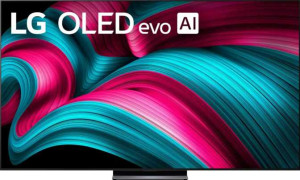
LG OLED42C5PUA 42"
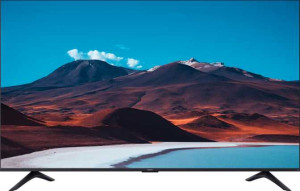
Xiaomi TV F 2026 43"

LG OLED42C5PUA 42" Xiaomi TV F 2026 43"

Overview

Welcome to our in-depth spec comparison between the LG OLED42C5PUA 42″ and the Xiaomi TV F 2026 43″. These two similarly sized 4K TVs take very different approaches to picture quality, audio performance, and connectivity. From contrasting display technologies to differences in refresh rate and smart home integration, there is plenty to weigh up before making your decision. Read on to see how these two sets stack up across every major specification category.

Common Features

  • Both TVs offer 4K UHD resolution at 3840 x 2160 px.
  • Both TVs display 1.07 billion colors with a 10-bit color depth.
  • HDR10 support is available on both products.
  • HDR10+ support is not available on either product.
  • HLG support is available on both products.
  • An anti-reflection coating is present on both products.
  • Bluetooth connectivity is available on both products.
  • Both TVs feature HDMI 2.1 ports.
  • Wi-Fi support is available on both products.
  • Both TVs include one RJ45 ethernet port.
  • Miracast support is available on both products.
  • Neither TV has an external memory card slot.
  • Neither TV has a VGA connector.
  • Both TVs support the same DVB standards: DVB-T, DVB-T2, DVB-C, DVB-S, and DVB-S2.
  • Digital audio output is supported on both products.
  • Stereo speakers are present on both products.
  • Dolby Audio support is available on both products.
  • Dolby Virtual support is not available on either product.
  • DTS:X support is available on both products.
  • Both TVs feature HDMI ARC and HDMI eARC.
  • SRS TheaterSound HD is not available on either product.
  • VESA mount support is available on both products.
  • Both TVs operate within the same temperature range of 0°C to 40°C.
  • AirPlay support is available on both products.
  • A built-in smart TV platform is present on both products.
  • Google Assistant compatibility is available on both products.
  • Alexa compatibility is available on both products.
  • Neither TV is compatible with Siri or Apple HomeKit.
  • Smartphone remote control support is available on both products.
  • Neither TV comes with a rechargeable remote control.
  • USB recording support is available on both products.

Main Differences

  • The display technology is OLED/AMOLED on LG OLED42C5PUA 42″ and QLED LED-backlit LCD on Xiaomi TV F 2026 43″.
  • The screen size is 42.1″ on LG OLED42C5PUA 42″ and 43″ on Xiaomi TV F 2026 43″.
  • Pixel density is 105 ppi on LG OLED42C5PUA 42″ and 102 ppi on Xiaomi TV F 2026 43″.
  • The refresh rate is 120Hz on LG OLED42C5PUA 42″ and 60Hz on Xiaomi TV F 2026 43″.
  • Dolby Vision support is present on LG OLED42C5PUA 42″ but not available on Xiaomi TV F 2026 43″.
  • The number of HDMI ports is 4 on LG OLED42C5PUA 42″ and 3 on Xiaomi TV F 2026 43″.
  • Wi-Fi support extends to Wi-Fi 4, Wi-Fi 5, Wi-Fi 6, and Wi-Fi 6E on LG OLED42C5PUA 42″, while Xiaomi TV F 2026 43″ supports only Wi-Fi 4 and Wi-Fi 5.
  • Bluetooth version is 5.3 on LG OLED42C5PUA 42″ and 5.0 on Xiaomi TV F 2026 43″.
  • The number of USB ports is 3 on LG OLED42C5PUA 42″ and 1 on Xiaomi TV F 2026 43″.
  • A 3.5mm audio jack socket is present on Xiaomi TV F 2026 43″ but not available on LG OLED42C5PUA 42″.
  • Dolby Atmos support is present on LG OLED42C5PUA 42″ but not available on Xiaomi TV F 2026 43″.
  • A built-in subwoofer is present on LG OLED42C5PUA 42″ but not available on Xiaomi TV F 2026 43″.
  • The width is 932.2 mm on LG OLED42C5PUA 42″ and 957 mm on Xiaomi TV F 2026 43″.
  • The weight is 10115 g on LG OLED42C5PUA 42″ and 6000 g on Xiaomi TV F 2026 43″.
  • The thickness is 40.6 mm on LG OLED42C5PUA 42″ and 72 mm on Xiaomi TV F 2026 43″.
  • The height is 541 mm on LG OLED42C5PUA 42″ and 563 mm on Xiaomi TV F 2026 43″.
  • The total volume is 20475.40 cm³ on LG OLED42C5PUA 42″ and 38792.95 cm³ on Xiaomi TV F 2026 43″.
  • Operating power consumption is 82W on LG OLED42C5PUA 42″ and 75W on Xiaomi TV F 2026 43″.
Specs Comparison
LG OLED42C5PUA 42"

LG OLED42C5PUA 42"

Xiaomi TV F 2026 43"

Xiaomi TV F 2026 43"

Display:
display resolution 4K (UHD) 4K (UHD)
Display type OLED/AMOLED QLED, LED-backlit, LCD
screen size 42.1" 43"
resolution 3840 x 2160 px 3840 x 2160 px
pixel density 105 ppi 102 ppi
display colors 1070 million 1070 million
bit depth 10-bit 10-bit
refresh rate 120Hz 60Hz
supports HDR10
supports HDR10+
supports Dolby Vision
supports HLG
has anti-reflection coating
has an ambient light sensor
maximum horizontal viewing angle 178º 178º
maximum vertical viewing angle 178º 178º

The most consequential difference in this group is the underlying panel technology. The LG OLED42C5PUA uses an OLED/AMOLED panel, where each pixel produces its own light and can switch off entirely, delivering true blacks and essentially infinite contrast. The Xiaomi TV F 2026 43″ relies on a QLED LED-backlit LCD panel, which uses a quantum-dot filter to boost color, but still depends on a backlight — meaning blacks appear as very dark grays and local dimming artifacts (blooming around bright objects on dark scenes) are inherent to the technology. For content like films with high-contrast scenes or dark-room viewing, this distinction is far more impactful than any resolution or color-count figure on the spec sheet.

The second major differentiator is motion handling. The LG runs at a native 120Hz refresh rate, making fast-paced content — sports, action sequences, gaming — noticeably smoother and sharper. The Xiaomi is capped at 60Hz, which is perfectly adequate for standard TV viewing but becomes a limitation for competitive gaming or high-frame-rate content. Compounding this, the LG also supports Dolby Vision, the dynamic HDR format that adjusts metadata scene-by-scene for more precise brightness and color accuracy; the Xiaomi supports only HDR10 and HLG, which use static metadata. Both share 4K resolution, 10-bit color depth, 1070 million display colors, anti-reflection coating, an ambient light sensor, and identical 178° viewing angles in both axes — so those specs are a wash.

The LG OLED42C5PUA holds a clear overall advantage in this display group. Its OLED panel, 120Hz refresh rate, and Dolby Vision support represent meaningful real-world upgrades over the Xiaomi's LCD-based panel and 60Hz ceiling. The Xiaomi's slight size edge (43″ vs 42.1″) and marginally lower pixel density (102 vs 105 ppi) are negligible in practice. Users who prioritize picture quality — particularly contrast, black levels, and HDR fidelity — will find the LG's display specification set substantially stronger.

Connectivity:
Has Bluetooth
HDMI version HDMI 2.1 HDMI 2.1
HDMI ports 4 3
supports Wi-Fi
Wi-Fi version Wi-Fi 4 (802.11n), Wi-Fi 5 (802.11ac), Wi-Fi 6 (802.11ax), Wi-Fi 6E (802.11ax) Wi-Fi 4 (802.11n), Wi-Fi 5 (802.11ac)
Bluetooth version 5.3 5
USB ports 3 1
RJ45 ports 1 1
supports Miracast
has a socket for a 3.5 mm audio jack
has an external memory slot
has a VGA connector
DVB standards DVB-T, DVB-T2, DVB-C, DVB-S, DVB-S2 DVB-T, DVB-T2, DVB-C, DVB-S, DVB-S2
has a DVI connector

Wireless connectivity is where the gap between these two TVs becomes especially practical. The LG OLED42C5PUA supports Wi-Fi 6E (in addition to Wi-Fi 4, 5, and 6), while the Xiaomi tops out at Wi-Fi 5. In a crowded home network, Wi-Fi 6 and 6E bring lower latency, better performance when multiple devices compete for bandwidth, and access to the less-congested 6GHz band — advantages that matter for 4K streaming and cloud gaming. Similarly, the LG's Bluetooth 5.3 versus the Xiaomi's Bluetooth 5.0 translates to marginally more stable and efficient connections with wireless audio accessories, though both versions are broadly compatible with modern peripherals.

On the physical port side, the LG again pulls ahead in quantity and flexibility. It offers 4 HDMI 2.1 ports and 3 USB ports, giving users ample room to connect a gaming console, soundbar, streaming stick, and still have ports to spare. The Xiaomi is more constrained, with 3 HDMI 2.1 ports and only 1 USB port — a meaningful limitation for users who want to attach a USB drive, keyboard, or additional peripherals simultaneously. Both share HDMI 2.1, a single RJ45 Ethernet port, Miracast support, and identical DVB tuner standards, so those capabilities are evenly matched. The Xiaomi does include a 3.5mm audio jack, which the LG omits — a minor but genuine convenience for users who want to plug in headphones directly.

Overall, the LG OLED42C5PUA holds a clear connectivity advantage: its superior Wi-Fi standard, newer Bluetooth version, additional HDMI port, and two extra USB ports make it a more future-ready and versatile hub for a modern home entertainment setup. The Xiaomi's headphone jack is a useful edge case perk, but it does not offset the LG's broader lead across the connectivity category.
Audio:
supports Digital Out
has SRS TheaterSound HD
has stereo speakers
has Dolby Atmos
has Dolby Audio
supports Dolby Virtual
has a subwoofer
has DTS:X
HDMI ARC / eARC HDMI ARC, HDMI eARC HDMI ARC, HDMI eARC

Both TVs share a reasonable audio foundation — stereo speakers, Dolby Audio, DTS:X, Digital Out, and full HDMI ARC/eARC support for passing audio to an external soundbar or receiver. Where they diverge meaningfully is in what the built-in speaker system can actually deliver without any external help. The LG OLED42C5PUA includes a built-in subwoofer and supports Dolby Atmos, while the Xiaomi TV F 2026 has neither.

These two omissions on the Xiaomi's part are connected. Dolby Atmos is an object-based surround format that creates a sense of height and spatial depth in compatible content — movies, streaming shows, and games increasingly carry Atmos tracks. Without hardware support for it, the Xiaomi simply decodes those tracks as standard audio. The absence of a dedicated subwoofer means low-frequency reproduction — bass in action sequences, music, or cinematic scores — falls entirely on the main drivers. The LG's subwoofer does not eliminate the case for an external soundbar, but it gives the built-in system a more complete frequency range out of the box.

For users who plan to route all audio through an external sound system, the eARC port on both TVs ensures lossless audio passthrough and levels the playing field considerably. But for anyone relying primarily on the TV's own speakers, the LG OLED42C5PUA holds a clear audio advantage, with its Dolby Atmos support and integrated subwoofer offering a noticeably more capable standalone listening experience than the Xiaomi.

Design:
width 932.2 mm 957 mm
weight 10115 g 6000 g
thickness 40.6 mm 72 mm
height 541 mm 563 mm
volume 20475.40012 cm³ 38792.952 cm³
Supports VESA mount
maximum operating temperature 40 °C 40 °C
lowest potential operating temperature 0 °C 0 °C

Physically, these two TVs tell very different stories despite being nearly the same screen size. The LG OLED42C5PUA is dramatically slimmer at 40.6mm thick compared to the Xiaomi's 72mm — nearly half the depth. This is a direct consequence of OLED panel construction, which requires no backlight assembly, and it translates to a more elegant profile whether the TV is wall-mounted or placed on a stand. The Xiaomi's LCD-based build adds significant depth, making it chunkier in side profile and more demanding of shelf or cabinet clearance.

The weight figures, however, flip the equation. The LG weighs 10,115g (roughly 10.1kg), while the Xiaomi comes in at a considerably lighter 6,000g (6kg). For wall mounting — which both TVs support via VESA — that 4kg difference is genuinely relevant: heavier sets require more robust wall anchors and make the installation process more cumbersome, particularly for a solo install. The LG's overall volume of approximately 20,475 cm³ versus the Xiaomi's 38,793 cm³ further illustrates how much more compactly the LG is packaged despite its greater mass — the weight is dense, not sprawling.

Neither product has a clean sweep in this category — the trade-off is real. The LG OLED42C5PUA wins on thinness and footprint, which most users will notice daily in terms of aesthetics and placement flexibility. The Xiaomi TV F 2026 wins on weight, making it easier to handle and mount. Users prioritizing a sleek wall-mounted look will favor the LG; those doing a solo install or working with weight-limited wall fixings may appreciate the Xiaomi's lighter build.

Features:
release date March 2025 September 2025
has AirPlay
has built-in smart TV
compatible with Google Assistant
works with Alexa
works with Siri/Apple HomeKit
supports a remote smartphone
has a rechargeable remote control
supports USB recording
operating power consumption 82W 75W
standby power consumption 0.5W 0.5W
has a search browser
has a sleep timer
has a child lock
warranty period 1 years 1 years
has voice commands

Across the features category, these two TVs are remarkably well-matched. Both offer a full smart TV platform with Google Assistant, Alexa, and AirPlay support, smartphone remote control, USB recording, voice commands, a browser, sleep timer, and child lock. Neither supports Apple HomeKit/Siri integration, and both carry identical one-year warranties and a standby consumption of 0.5W. For most users, the day-to-day smart TV experience will feel essentially equivalent between the two.

The only measurable differentiator in this group is operating power consumption: the LG OLED42C5PUA draws 82W during use, while the Xiaomi TV F 2026 draws 75W. That 7W gap is modest in absolute terms — over 1,000 hours of viewing (roughly a full year of average use), it amounts to around 7 kWh of additional consumption on the LG's side. Depending on local electricity rates, this is a minor but real long-term cost difference, and it is worth noting that the LG's higher draw comes alongside its more capable panel technology.

This group is effectively a near-tie. The feature sets are identical in every meaningful dimension, and the small power consumption advantage belongs to the Xiaomi. Neither product differentiates itself here in a way that should drive a purchasing decision — this category is best treated as a wash, with the choice between these two TVs resting on the more consequential differences found in display, audio, and connectivity.

Comparison Summary & Verdict

After examining every specification, a clear picture emerges of two TVs built for different audiences. The LG OLED42C5PUA 42″ is the stronger performer on paper, offering a 120Hz OLED panel with Dolby Vision, Dolby Atmos, a built-in subwoofer, four HDMI 2.1 ports, three USB ports, and Wi-Fi 6E support — making it the better fit for cinephiles and gamers who want premium picture quality and rich connectivity. The Xiaomi TV F 2026 43″, on the other hand, is significantly lighter and slimmer, draws less power at 75W, includes a 3.5mm audio jack, and comes in at a larger physical screen footprint — making it an appealing choice for everyday family viewing where simplicity, lower running costs, and a lighter installation are priorities. Neither is a poor choice, but your decision should hinge on whether picture and audio excellence or practical, budget-conscious everyday use matters most to you.

LG OLED42C5PUA 42
Buy LG OLED42C5PUA 42" if...

Buy the LG OLED42C5PUA 42″ if you want a premium viewing experience with a 120Hz OLED display, Dolby Vision, Dolby Atmos, and richer connectivity including four HDMI ports and Wi-Fi 6E support.

Xiaomi TV F 2026 43
Buy Xiaomi TV F 2026 43" if...

Buy the Xiaomi TV F 2026 43″ if you prioritize a lighter, slimmer design with lower power consumption and a 3.5mm audio jack for straightforward everyday use.