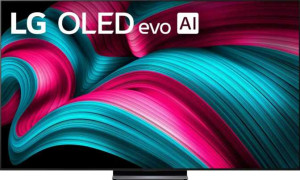
LG OLED55C5PUA 55"
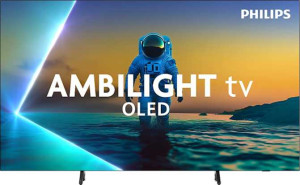
Philips 77OLED810/12 77"

LG OLED55C5PUA 55" Philips 77OLED810/12 77"

Overview

Welcome to our in-depth comparison of the LG OLED55C5PUA 55″ and the Philips 77OLED810/12 77″, two premium OLED televisions that share a strong common foundation yet diverge in several meaningful ways. Both sets deliver stunning 4K UHD picture quality with Dolby Vision and Dolby Atmos support, but key battlegrounds such as screen size and refresh rate, wireless connectivity, and physical footprint set them apart in ways that could matter greatly depending on your living space and viewing habits.

Common Features

  • Both TVs have a 4K UHD OLED display with a resolution of 3840 x 2160 px.
  • Both TVs display 1070 million colors with a 10-bit bit depth.
  • HDR10 support is available on both products.
  • Dolby Vision support is available on both products.
  • HLG support is available on both products.
  • Both TVs have a Bluetooth connection.
  • Both TVs use HDMI 2.1 and have 4 HDMI ports.
  • Wi-Fi support is available on both products.
  • Both TVs have 1 RJ45 port.
  • Miracast support is available on both products.
  • Neither TV has an external memory slot.
  • Neither TV has a VGA connector.
  • Dolby Digital support is available on both products.
  • Digital Out support is available on both products.
  • Dolby Digital Plus support is not available on either product.
  • SRS TheaterSound HD is not available on either product.
  • Both TVs have stereo speakers.
  • Dolby Atmos support is available on both products.
  • Dolby Audio support is available on both products.
  • Dolby Virtual support is not available on either product.
  • Both TVs support VESA mount.
  • AirPlay is available on both products.
  • Both TVs have a built-in smart TV platform.
  • Google Assistant compatibility is available on both products.
  • Alexa compatibility is available on both products.
  • Siri and Apple HomeKit support is not available on either product.
  • Remote smartphone control is supported on both products.
  • Neither TV has a rechargeable remote control.
  • USB recording support is available on both products.

Main Differences

  • Screen size is 55.2″ on LG OLED55C5PUA 55″ and 77″ on Philips 77OLED810/12 77″.
  • Pixel density is 80 ppi on LG OLED55C5PUA 55″ and 57 ppi on Philips 77OLED810/12 77″.
  • Refresh rate is 120Hz on LG OLED55C5PUA 55″ and 144Hz on Philips 77OLED810/12 77″.
  • HDR10+ support is present on Philips 77OLED810/12 77″ but not available on LG OLED55C5PUA 55″.
  • Wi-Fi version supports Wi-Fi 4, Wi-Fi 5, Wi-Fi 6, and Wi-Fi 6E on LG OLED55C5PUA 55″, while Philips 77OLED810/12 77″ supports only Wi-Fi 4 and Wi-Fi 5.
  • Bluetooth version is 5.3 on LG OLED55C5PUA 55″ and 5.2 on Philips 77OLED810/12 77″.
  • USB ports count is 3 on LG OLED55C5PUA 55″ and 2 on Philips 77OLED810/12 77″.
  • A 3.5 mm audio jack socket is present on Philips 77OLED810/12 77″ but not available on LG OLED55C5PUA 55″.
  • Width is 1221.7 mm on LG OLED55C5PUA 55″ and 1723 mm on Philips 77OLED810/12 77″.
  • Height is 703.6 mm on LG OLED55C5PUA 55″ and 991 mm on Philips 77OLED810/12 77″.
  • Thickness is 45.7 mm on LG OLED55C5PUA 55″ and 79 mm on Philips 77OLED810/12 77″.
  • Weight is 16012 g on LG OLED55C5PUA 55″ and 36000 g on Philips 77OLED810/12 77″.
  • Volume is 39283.177084 cm³ on LG OLED55C5PUA 55″ and 134891.947 cm³ on Philips 77OLED810/12 77″.
  • Maximum operating temperature is 40 °C on LG OLED55C5PUA 55″ and 35 °C on Philips 77OLED810/12 77″.
  • Lowest potential operating temperature is 0 °C on LG OLED55C5PUA 55″ and 5 °C on Philips 77OLED810/12 77″.
  • Operating power consumption is 133.1W on LG OLED55C5PUA 55″ and 134W on Philips 77OLED810/12 77″.
Specs Comparison
LG OLED55C5PUA 55"

LG OLED55C5PUA 55"

Philips 77OLED810/12 77"

Philips 77OLED810/12 77"

Display:
display resolution 4K (UHD) 4K (UHD)
Display type OLED/AMOLED OLED/AMOLED
screen size 55.2" 77"
resolution 3840 x 2160 px 3840 x 2160 px
pixel density 80 ppi 57 ppi
display colors 1070 million 1070 million
bit depth 10-bit 10-bit
refresh rate 120Hz 144Hz
supports HDR10
supports HDR10+
supports Dolby Vision
supports HLG
Adaptive synchronization Nvidia G-Sync, AMD FreeSync, AMD FreeSync Premium Nvidia G-Sync, AMD FreeSync, AMD FreeSync Premium
has anti-reflection coating
has an ambient light sensor
maximum horizontal viewing angle 178º 178º
maximum vertical viewing angle 178º 178º

Both the LG OLED55C5PUA and the Philips 77OLED810/12 share the same panel technology (OLED/AMOLED), the same 4K resolution of 3840 x 2160 px, identical 10-bit color depth, and a matching 1.07 billion color palette — so at the panel-quality level, both offer the deep blacks and infinite contrast OLED is known for. They also share identical viewing angles of 178° horizontally and vertically, anti-reflection coatings, ambient light sensors, and full adaptive sync support (Nvidia G-Sync and AMD FreeSync Premium), making both equally capable as home theater screens or gaming displays in terms of their shared feature set.

The most impactful differences come down to three specs. First, screen size: the Philips is a significantly larger 77″ panel versus the LG's 55.2″, which is a fundamentally different viewing experience — the Philips is better suited to larger living rooms and viewers sitting farther away, while the LG fits tighter spaces. As a direct consequence, the LG achieves a noticeably higher pixel density of 80 ppi compared to the Philips′ 57 ppi; at typical viewing distances for each screen size this gap is largely mitigated, but up close the LG will appear sharper. Second, the Philips edges ahead on refresh rate at 144Hz versus the LG′s 120Hz, a meaningful advantage for competitive gaming where higher frame rates reduce motion blur. Third, the Philips adds support for HDR10+, a dynamic HDR format the LG lacks — both support Dolby Vision and HLG, but HDR10+ broadens compatibility with certain streaming services and Blu-ray releases that use it.

In summary, the Philips 77OLED810/12 holds a technical edge in this group: it offers a higher refresh rate, broader HDR format support with HDR10+, and a dramatically larger screen. The LG OLED55C5PUA counters with a higher pixel density, which benefits closer viewing distances, and a more compact footprint. If raw display capability and future-proofed HDR compatibility are the priority, the Philips wins on specs alone — but the ″right″ choice still depends heavily on room size and use case.
Connectivity:
Has Bluetooth
HDMI version HDMI 2.1 HDMI 2.1
HDMI ports 4 4
supports Wi-Fi
Wi-Fi version Wi-Fi 4 (802.11n), Wi-Fi 5 (802.11ac), Wi-Fi 6 (802.11ax), Wi-Fi 6E (802.11ax) Wi-Fi 4 (802.11n), Wi-Fi 5 (802.11ac)
Bluetooth version 5.3 5.2
USB ports 3 2
RJ45 ports 1 1
supports Miracast
has a socket for a 3.5 mm audio jack
has an external memory slot
has a VGA connector
DVB standards DVB-T, DVB-T2, DVB-C, DVB-S, DVB-S2 DVB-T, DVB-T2, DVB-C, DVB-S, DVB-S2
has a DVI connector

On the fundamentals, both TVs are well matched: four HDMI 2.1 ports (enabling 4K@120Hz passthrough for next-gen consoles and GPUs on all inputs), a gigabit RJ45 ethernet port, Miracast wireless mirroring, and identical DVB tuner support. These shared specs mean neither product is at a disadvantage for core wired or broadcast connectivity.

The LG OLED55C5PUA pulls ahead in wireless. Its Wi-Fi reaches Wi-Fi 6E (802.11ax), whereas the Philips 77OLED810/12 tops out at Wi-Fi 5 (802.11ac) — a meaningful gap in congested environments, since Wi-Fi 6E unlocks the less crowded 6 GHz band for faster, more stable streaming. The LG also has a marginally newer Bluetooth 5.3 versus the Philips′ 5.2, offering incremental improvements in connection stability and power efficiency, though the practical difference for everyday use like soundbar or headphone pairing is minor. The LG additionally provides 3 USB ports to the Philips′ 2, a small but useful advantage for simultaneous storage and peripheral use.

The Philips does claim one exclusive: a 3.5 mm audio jack, absent on the LG. For users who want to plug in wired headphones directly to the TV — useful for late-night viewing — this is a genuine convenience win. Overall though, the LG OLED55C5PUA holds the broader connectivity edge, primarily due to its superior Wi-Fi 6E support and extra USB port, making it the stronger choice for users in bandwidth-heavy households or those building a modern smart home setup.

Audio:
supports Dolby Digital
supports Digital Out
supports Dolby Digital Plus
has SRS TheaterSound HD
has stereo speakers
has Dolby Atmos
has Dolby Audio
supports Dolby Virtual
has a subwoofer
has DTS:X
HDMI ARC / eARC HDMI ARC, HDMI eARC HDMI ARC, HDMI eARC

Across every single audio specification provided, the LG OLED55C5PUA and the Philips 77OLED810/12 are a perfect match. Both carry Dolby Atmos and DTS:X — the two dominant object-based surround sound formats — meaning either TV can decode and present immersive, height-aware audio from compatible streaming services, Blu-rays, and game consoles without an external receiver. Both also include a built-in subwoofer and stereo speakers, which is a notable hardware inclusion for TV-only setups aiming for fuller bass response.

For external audio system integration, both offer HDMI ARC and eARC, with eARC being the critical spec here — it carries enough bandwidth to pass lossless Dolby TrueHD and DTS-HD Master Audio to a compatible soundbar or AV receiver over a single HDMI cable, which older ARC connections cannot do. The presence of eARC on both models means neither user needs to compromise when upgrading to a high-end audio system down the line.

This group is a dead tie. There is no differentiator — not a single audio spec separates these two TVs. Users prioritizing audio capability should look to other factors, such as raw speaker wattage or external soundbar pairings, neither of which is addressed in the provided data.

Design:
width 1221.7 mm 1723 mm
weight 16012 g 36000 g
thickness 45.7 mm 79 mm
height 703.6 mm 991 mm
volume 39283.177084 cm³ 134891.947 cm³
Supports VESA mount
maximum operating temperature 40 °C 35 °C
lowest potential operating temperature 0 °C 5 °C

The size difference between these two TVs cascades into dramatically different physical realities. The Philips 77OLED810/12 weighs 36 kg — more than double the LG OLED55C5PUA's 16 kg — and its footprint is substantially larger at 1723 mm wide versus 1221.7 mm. For wall mounting, the Philips will require two people, heavy-duty wall anchors, and careful structural assessment; the LG is far more manageable for a standard installation. Both support VESA mounting, so neither locks the user into a proprietary stand solution.

Thickness tells a similarly contrasting story: the Philips measures 79 mm deep compared to the LG's notably slimmer 45.7 mm. While neither figure is extreme for a large OLED, the LG will sit more flush against a wall and present a cleaner profile in space-conscious rooms. The overall volume difference — roughly 135,000 cm³ for the Philips versus 39,000 cm³ for the LG — underscores just how much more physical presence the larger set demands.

One subtle but practical distinction emerges in operating temperature range: the LG tolerates environments up to 40 °C and down to 0 °C, while the Philips is rated for a narrower 5 °C to 35 °C window. This makes the LG marginally more tolerant of temperature extremes — relevant for installations in unconventional spaces like sunrooms or garages. Overall, the LG OLED55C5PUA holds the design edge for installation flexibility, being lighter, thinner, and more temperature-resilient; the Philips′ larger dimensions are a consequence of its screen size rather than a design flaw, but they do impose real logistical demands.

Features:
release date March 2025 April 2025
has AirPlay
has built-in smart TV
compatible with Google Assistant
works with Alexa
works with Siri/Apple HomeKit
supports a remote smartphone
has a rechargeable remote control
supports USB recording
operating power consumption 133.1W 134W
standby power consumption 0.5W 0.5W
has a search browser
has a sleep timer
has a child lock
has voice commands

Remarkably, this is another group where the two TVs are essentially indistinguishable. Both the LG OLED55C5PUA and the Philips 77OLED810/12 offer a full-featured smart TV platform with AirPlay, Google Assistant, and Amazon Alexa built in, plus smartphone remote control support, USB recording, voice commands, and a web browser. Neither supports Apple HomeKit/Siri, which is worth noting for users deeply embedded in the Apple ecosystem — but this limitation applies equally to both.

Power consumption is where a difference could theoretically emerge, given the Philips is a significantly larger panel. Yet the numbers are nearly identical: the LG draws 133.1W during operation versus the Philips′ 134W, with both sitting at 0.5W in standby. For a 77″ OLED to consume virtually the same power as a 55″ model is a notable data point — though the specs provided offer no further context to explain it, and users should not read additional meaning into it beyond what the numbers state.

With no meaningful differentiator across any feature in this group, the verdict is a complete tie. A buyer choosing between these two sets will gain or lose nothing in terms of smart features, ecosystem compatibility, or power efficiency based on this data alone.

Comparison Summary & Verdict

After examining the full specification profile of both televisions, a clear picture emerges for each type of buyer. The LG OLED55C5PUA 55″ is the stronger choice for those who want a more compact, lighter set with superior wireless connectivity, including Wi-Fi 6E and Bluetooth 5.3, along with a wider operating temperature range and an extra USB port. It suits smaller rooms or setups where a sleek, modern wireless ecosystem matters. The Philips 77OLED810/12 77″, on the other hand, dominates when it comes to sheer screen presence and cinematic performance, offering a larger 77-inch panel, a smoother 144Hz refresh rate, HDR10+ support, and a convenient 3.5 mm audio jack. It is the natural pick for home cinema enthusiasts who prioritize an immersive, large-format viewing experience above all else.

LG OLED55C5PUA 55
Buy LG OLED55C5PUA 55" if...

Buy the LG OLED55C5PUA 55″ if you want a lighter, more compact TV with cutting-edge Wi-Fi 6E and Bluetooth 5.3 connectivity and an extra USB port for a smaller room setup.

Philips 77OLED810/12 77
Buy Philips 77OLED810/12 77" if...

Buy the Philips 77OLED810/12 77″ if you prioritize a large 77-inch screen, a 144Hz refresh rate, HDR10+ support, and the convenience of a built-in 3.5 mm audio jack for a home cinema experience.