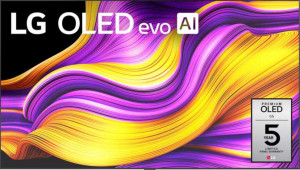
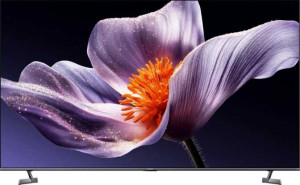
The most fundamental difference here is panel technology. The LG G5 uses OLED, where each pixel generates its own light and can switch off completely, delivering true infinite contrast, perfect blacks, and exceptional shadow detail. The Xiaomi S Pro relies on Mini-LED LCD (QLED), which uses thousands of tiny backlight zones to approximate deep blacks — a significant improvement over standard LED, but still unable to match OLED's per-pixel precision. In practice, this means the LG will produce more cinematic HDR highlights with no blooming around bright objects on dark backgrounds, a visible artifact that can still affect even premium Mini-LED panels.
Where the Xiaomi pushes back is in refresh rate and HDR format support. Its 144Hz panel has a clear edge over the LG's 120Hz for fast-motion content and gaming, reducing motion blur and enabling smoother frame interpolation. It also adds HDR10+ support — a dynamic metadata standard that the LG omits — meaning HDR10+ mastered content (common on Amazon Prime Video) will be tone-mapped more accurately on the Xiaomi. Both TVs cover Dolby Vision, HDR10, and HLG, so this gap only matters for HDR10+ specific content.
All remaining specs — 4K resolution, 10-bit depth, 1.07 billion colors, 80 ppi, anti-reflection coating, ambient light sensor, and 178° viewing angles in both axes — are identical. Overall, the LG G5 holds the display quality edge for cinematic and everyday viewing thanks to OLED's contrast superiority, while the Xiaomi S Pro has a measurable advantage for gaming and HDR10+ content. Which panel ″wins″ depends almost entirely on the user's primary use case.