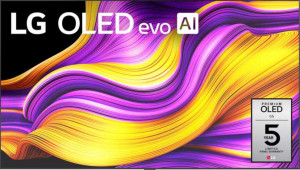
LG OLED55G5WUA 55"
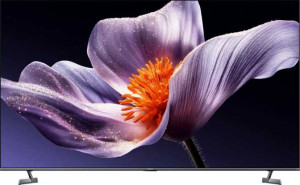
Xiaomi TV S Pro Mini LED 2026 75"

LG OLED55G5WUA 55" Xiaomi TV S Pro Mini LED 2026 75"

Overview

Welcome to our in-depth specification comparison between the LG OLED55G5WUA 55″ and the Xiaomi TV S Pro Mini LED 2026 75″. These two TVs represent fundamentally different approaches to premium home cinema, with the LG championing its self-emissive OLED panel technology in a refined 55-inch form factor, while the Xiaomi counters with a sprawling 75-inch Mini-LED LCD display and a higher refresh rate. Dive into the full breakdown below to see how they stack up across display quality, connectivity, audio, design, and smart features.

Common Features

  • Both TVs have a 4K UHD display resolution of 3840 x 2160 px.
  • Both TVs display 1070 million colors with a 10-bit color depth.
  • HDR10 support is available on both products.
  • Dolby Vision support is available on both products.
  • HLG support is available on both products.
  • An anti-reflection coating is present on both products.
  • Both TVs include Bluetooth connectivity.
  • Both TVs use HDMI 2.1 ports.
  • Wi-Fi support is available on both products.
  • Both TVs have one RJ45 ethernet port.
  • Miracast support is available on both products.
  • Neither TV has an external memory card slot.
  • Neither TV has a VGA connector.
  • Both TVs support DVB-T, DVB-T2, DVB-C, DVB-S, and DVB-S2 standards.
  • Dolby Digital support is available on both products.
  • Digital Out support is available on both products.
  • Stereo speakers are present on both products.
  • Dolby Atmos support is available on both products.
  • Dolby Audio support is available on both products.
  • DTS:X support is available on both products.
  • SRS TheaterSound HD is not available on either product.
  • Dolby Virtual support is not available on either product.
  • Both TVs support VESA mounting.
  • Both TVs operate within a temperature range of 0 °C to 40 °C.
  • Chromecast built-in is available on both products.
  • AirPlay support is available on both products.
  • A built-in smart TV platform is present on both products.
  • Google Assistant compatibility is available on both products.
  • Apple HomeKit and Siri compatibility is not available on either product.
  • Remote smartphone control is supported on both products.
  • Neither TV has a rechargeable remote control.
  • USB recording is supported on both products.

Main Differences

  • Display type is OLED/AMOLED on LG OLED55G5WUA 55″ and QLED Mini-LED LCD on Xiaomi TV S Pro Mini LED 2026 75″.
  • Screen size is 55.2″ on LG OLED55G5WUA 55″ and 75″ on Xiaomi TV S Pro Mini LED 2026 75″.
  • Pixel density is 80 ppi on LG OLED55G5WUA 55″ and 59 ppi on Xiaomi TV S Pro Mini LED 2026 75″.
  • Refresh rate is 120Hz on LG OLED55G5WUA 55″ and 144Hz on Xiaomi TV S Pro Mini LED 2026 75″.
  • HDR10+ support is present on Xiaomi TV S Pro Mini LED 2026 75″ but not available on LG OLED55G5WUA 55″.
  • HDMI port count is 4 on LG OLED55G5WUA 55″ and 3 on Xiaomi TV S Pro Mini LED 2026 75″.
  • Wi-Fi support extends to Wi-Fi 6E (802.11ax) on LG OLED55G5WUA 55″ but only up to Wi-Fi 6 (802.11ax) on Xiaomi TV S Pro Mini LED 2026 75″.
  • Bluetooth version is 5.3 on LG OLED55G5WUA 55″ and 5.2 on Xiaomi TV S Pro Mini LED 2026 75″.
  • USB port count is 3 on LG OLED55G5WUA 55″ and 2 on Xiaomi TV S Pro Mini LED 2026 75″.
  • A 3.5 mm audio jack socket is present on Xiaomi TV S Pro Mini LED 2026 75″ but not available on LG OLED55G5WUA 55″.
  • Dolby Digital Plus support is present on Xiaomi TV S Pro Mini LED 2026 75″ but not available on LG OLED55G5WUA 55″.
  • A built-in subwoofer is present on LG OLED55G5WUA 55″ but not included on Xiaomi TV S Pro Mini LED 2026 75″.
  • Width is 1221.7 mm on LG OLED55G5WUA 55″ and 1667 mm on Xiaomi TV S Pro Mini LED 2026 75″.
  • Weight is 22089 g on LG OLED55G5WUA 55″ and 26200 g on Xiaomi TV S Pro Mini LED 2026 75″.
  • Thickness is 27.9 mm on LG OLED55G5WUA 55″ and 73 mm on Xiaomi TV S Pro Mini LED 2026 75″.
  • Height is 703.6 mm on LG OLED55G5WUA 55″ and 958 mm on Xiaomi TV S Pro Mini LED 2026 75″.
  • Volume is 23982.508548 cm³ on LG OLED55G5WUA 55″ and 116579.978 cm³ on Xiaomi TV S Pro Mini LED 2026 75″.
  • Alexa compatibility is available on LG OLED55G5WUA 55″ but not present on Xiaomi TV S Pro Mini LED 2026 75″.
  • Operating power consumption is 125W on LG OLED55G5WUA 55″ and 350W on Xiaomi TV S Pro Mini LED 2026 75″.
  • Warranty period is 5 years on LG OLED55G5WUA 55″ and 1 year on Xiaomi TV S Pro Mini LED 2026 75″.
Specs Comparison
LG OLED55G5WUA 55"

LG OLED55G5WUA 55"

Xiaomi TV S Pro Mini LED 2026 75"

Xiaomi TV S Pro Mini LED 2026 75"

Display:
display resolution 4K (UHD) 4K (UHD)
Display type OLED/AMOLED QLED, LED-backlit, LCD, Mini-LED
screen size 55.2" 75"
resolution 3840 x 2160 px 3840 x 2160 px
pixel density 80 ppi 59 ppi
display colors 1070 million 1070 million
bit depth 10-bit 10-bit
refresh rate 120Hz 144Hz
supports HDR10
supports HDR10+
supports Dolby Vision
supports HLG
has anti-reflection coating
has an ambient light sensor
maximum horizontal viewing angle 178º 178º
maximum vertical viewing angle 178º 178º

The most fundamental difference here is panel technology. The LG OLED55G5WUA uses an OLED/AMOLED panel, where each pixel generates its own light and can switch off independently, delivering true blacks, theoretically infinite contrast, and exceptional color accuracy. The Xiaomi TV S Pro Mini LED 2026 relies on a Mini-LED backlit LCD panel, which uses thousands of tiny LEDs to approximate per-pixel lighting control — a significant leap over conventional LED LCD, but still subject to some blooming and limited contrast compared to self-emissive OLED. That said, Mini-LED panels can sustain much higher peak brightness, which is an advantage in bright rooms and for HDR highlights that the provided specs do not quantify here.

Screen size and pixel density cut in opposite directions. The Xiaomi's 75″ screen dominates for home theater immersion, but its 59 ppi pixel density is noticeably lower than the LG's 80 ppi at 55.2″ — meaning the LG delivers a sharper image per inch of screen, which matters at closer viewing distances. The Xiaomi also edges ahead on motion handling with a 144Hz refresh rate versus the LG's 120Hz, a meaningful difference for fast-motion content and gaming. On HDR format support, the Xiaomi covers HDR10+ in addition to HDR10, Dolby Vision, and HLG, while the LG omits HDR10+ — a minor but real gap for content mastered in that format. Both share identical 178° viewing angles, 10-bit color depth, 1.07 billion display colors, anti-reflection coating, and an ambient light sensor.

The verdict depends on what the buyer prioritizes. The LG OLED has a clear edge in contrast and black-level performance thanks to its self-emissive panel and higher pixel density — it is the stronger choice for dark-room cinephiles or users who sit close to the screen. The Xiaomi counters with a much larger screen, a higher 144Hz refresh rate, and broader HDR format coverage including HDR10+, making it the better fit for spacious living rooms, sports, and gaming. Neither is a universal winner; the decision hinges on panel technology versus screen size and refresh rate.
Connectivity:
Has Bluetooth
HDMI version HDMI 2.1 HDMI 2.1
HDMI ports 4 3
supports Wi-Fi
Wi-Fi version Wi-Fi 4 (802.11n), Wi-Fi 5 (802.11ac), Wi-Fi 6 (802.11ax), Wi-Fi 6E (802.11ax) Wi-Fi 4 (802.11n), Wi-Fi 5 (802.11ac), Wi-Fi 6 (802.11ax)
Bluetooth version 5.3 5.2
USB ports 3 2
RJ45 ports 1 1
supports Miracast
has a socket for a 3.5 mm audio jack
has an external memory slot
has a VGA connector
DVB standards DVB-T, DVB-T2, DVB-C, DVB-S, DVB-S2 DVB-T, DVB-T2, DVB-C, DVB-S, DVB-S2
has a DVI connector

Both TVs share a strong connectivity foundation — HDMI 2.1 ports, gigabit ethernet via RJ45, USB ports, Miracast support, and identical DVB tuner standards. Where they diverge is in the details that matter for a well-equipped setup. The LG leads with 4 HDMI ports versus the Xiaomi's 3, and 3 USB ports against the Xiaomi's 2 — a tangible advantage for users running multiple consoles, a soundbar, a streaming stick, and a PC simultaneously without juggling adapters.

Wireless connectivity also favors the LG. Its Wi-Fi support extends to Wi-Fi 6E (802.11ax), which adds access to the less congested 6 GHz band for faster, more stable streaming in crowded wireless environments — the Xiaomi tops out at Wi-Fi 6 and misses that band entirely. Similarly, the LG's Bluetooth 5.3 is a step ahead of the Xiaomi's 5.2, offering marginally improved connection stability and efficiency, relevant for wireless headphones or remotes. The Xiaomi does have one exclusive: a 3.5 mm audio jack, which the LG omits — useful for directly plugging in wired headphones without an adapter.

Overall, the LG OLED55G5WUA holds a clear connectivity edge, offering more ports across the board and superior wireless capabilities with Wi-Fi 6E and a newer Bluetooth version. The Xiaomi's 3.5 mm jack is a convenient bonus but does not offset the LG's broader port selection and future-leaning wireless stack, making the LG the stronger choice for users who demand a well-connected, expansion-ready setup.

Audio:
supports Dolby Digital
supports Digital Out
supports Dolby Digital Plus
has SRS TheaterSound HD
has stereo speakers
has Dolby Atmos
has Dolby Audio
supports Dolby Virtual
has a subwoofer
has DTS:X
HDMI ARC / eARC HDMI ARC, HDMI eARC HDMI ARC, HDMI eARC

Audio formats tell only part of the story — hardware backing them up matters just as much. Both TVs support the same core lineup: Dolby Atmos, Dolby Audio, Dolby Digital, DTS:X, and full HDMI ARC/eARC for passthrough to external sound systems. That shared foundation means either TV will decode and relay today's most common immersive audio formats without issue, and eARC in particular ensures lossless audio can be sent to a high-end soundbar or AV receiver.

Two specs split them meaningfully. The LG includes a built-in subwoofer, which adds dedicated low-frequency output directly from the TV — a real-world advantage for users who rely on the TV's internal speakers rather than an external audio system. The Xiaomi counters with support for Dolby Digital Plus, an enhanced version of Dolby Digital that handles higher bitrates and is commonly used in streaming services; the LG omits this format. In practice, Dolby Digital Plus compatibility can improve the quality of audio decoded directly from streaming apps without relying on passthrough to an external device.

Neither product dominates cleanly. The LG OLED55G5WUA has the hardware edge for standalone listening thanks to its subwoofer, making it more capable out of the box without additional equipment. The Xiaomi has the format edge with Dolby Digital Plus, which benefits streaming-heavy users. If you plan to pair either TV with a soundbar or receiver, the distinction narrows considerably — but for TV-speaker-only use, the LG's subwoofer gives it a practical advantage.

Design:
width 1221.7 mm 1667 mm
weight 22089 g 26200 g
thickness 27.9 mm 73 mm
height 703.6 mm 958 mm
volume 23982.508548 cm³ 116579.978 cm³
Supports VESA mount
maximum operating temperature 40 °C 40 °C
lowest potential operating temperature 0 °C 0 °C

Screen size differences naturally cascade into every physical dimension, so the Xiaomi's larger footprint is expected — but thickness is where the gap becomes striking. The LG OLED55G5WUA measures just 27.9 mm deep, while the Xiaomi comes in at 73 mm — more than 2.6 times thicker. This is a direct consequence of panel technology: OLED panels require no backlight assembly, allowing for dramatically slimmer chassis. For wall-mount installations in particular, the LG will sit far closer to the wall, which is a meaningful aesthetic and practical consideration in living spaces where a flush, minimal look is desired.

Weight follows a similar pattern. The LG weighs 22.1 kg against the Xiaomi's 26.2 kg, a difference of roughly 4 kg. While neither is light, the LG's lower mass simplifies solo installation and puts less stress on wall mounts. The volume figures underscore just how different these two physically are — the Xiaomi's total volume is nearly five times greater than the LG's, reflecting both its larger screen and considerably bulkier depth. Both TVs support VESA mounting and share identical operating temperature ranges, so environmental placement flexibility is equal.

For design and installation, the LG OLED55G5WUA holds a clear advantage in physical form factor. Its dramatically slimmer profile and lower weight make it easier to handle, mount, and integrate cleanly into a room. The Xiaomi's bulk is an inherent trade-off of its larger screen and Mini-LED construction — unavoidable for buyers who prioritize screen size, but a real consideration for anyone working with tight spaces or wall-mounting without professional help.

Features:
release date March 2025 September 2025
has Chromecast built-in
has AirPlay
has built-in smart TV
compatible with Google Assistant
works with Alexa
works with Siri/Apple HomeKit
supports a remote smartphone
has a rechargeable remote control
supports USB recording
operating power consumption 125W 350W
standby power consumption 0.5W 0.5W
has a search browser
has a sleep timer
has a child lock
warranty period 5 years 1 years
has voice commands

Smart platform features are largely aligned between these two TVs — both offer Chromecast built-in, AirPlay, Google Assistant, smartphone remote control, USB recording, and voice commands. The one ecosystem gap is Alexa compatibility: the LG OLED55G5WUA supports it, the Xiaomi does not. For households already invested in Amazon's ecosystem — smart lights, speakers, routines — this is a genuine convenience difference, as it allows the LG to act as a hub within that environment without workarounds.

Power consumption is where the data reveals a striking gap. The LG draws 125W during operation, while the Xiaomi consumes 350W — nearly three times as much. This reflects the combined effect of a larger panel and a Mini-LED backlight array that demands significantly more energy than an OLED panel. Over daily use, that difference translates into meaningfully higher electricity costs over the TV's lifespan. Standby consumption is identical at 0.5W for both.

The single most consequential differentiator in this group, however, is warranty coverage. The LG backs its TV with a 5-year warranty against the Xiaomi's 1 year — a fivefold difference that carries real financial weight on a premium purchase. Combined with its lower power draw and broader voice assistant compatibility, the LG OLED55G5WUA holds a clear overall advantage in this category, particularly for buyers who factor in long-term ownership costs and peace of mind.

Comparison Summary & Verdict

After a thorough look at both TVs, the right choice comes down to your priorities. The LG OLED55G5WUA 55″ excels with its self-emissive OLED panel, delivering superior pixel-level contrast, a remarkably slim 27.9 mm profile, four HDMI 2.1 ports, Wi-Fi 6E support, a built-in subwoofer, Alexa compatibility, and an impressive 5-year warranty — making it ideal for buyers who value picture quality, build refinement, and long-term peace of mind in a smaller room. The Xiaomi TV S Pro Mini LED 2026 75″, on the other hand, wins on sheer screen real estate, a faster 144Hz refresh rate, HDR10+ support, Dolby Digital Plus, and a lower power-per-inch footprint for those who want a truly cinematic large-format experience at a potentially lower price point. Neither TV is a clear overall winner — each dominates in its own niche.

LG OLED55G5WUA 55
Buy LG OLED55G5WUA 55" if...

Buy the LG OLED55G5WUA 55″ if you want a slim OLED display with a 5-year warranty, Wi-Fi 6E, four HDMI ports, and Alexa support in a compact living space.

Xiaomi TV S Pro Mini LED 2026 75
Buy Xiaomi TV S Pro Mini LED 2026 75" if...

Buy the Xiaomi TV S Pro Mini LED 2026 75″ if you prioritize a large 75-inch screen, a 144Hz refresh rate, and HDR10+ support for an immersive big-screen viewing experience.