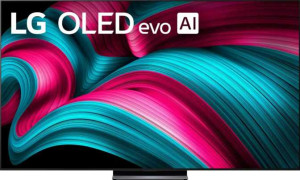
LG OLED77C5PUA 77"
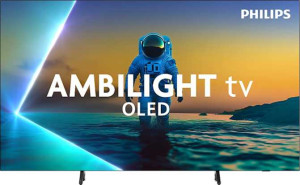
Philips 77OLED810/12 77"

LG OLED77C5PUA 77" Philips 77OLED810/12 77"

Overview

Welcome to our in-depth specification comparison between the LG OLED77C5PUA 77″ and the Philips 77OLED810/12 77″, two premium 77-inch OLED televisions that share a great deal of common ground yet differ in some meaningful ways. Both sets deliver a stunning 4K OLED picture with Dolby Vision and HDR10 support, but key battlegrounds emerge when examining their refresh rates, connectivity options, physical design, and power consumption. Read on to discover which of these flagship screens better suits your viewing setup and lifestyle.

Common Features

  • Both TVs have a 4K UHD OLED display with a resolution of 3840 x 2160 px.
  • Both TVs have a pixel density of 57 ppi.
  • Both TVs support 1070 million display colors at 10-bit depth.
  • HDR10 support is available on both products.
  • Dolby Vision support is available on both products.
  • Both TVs have a Bluetooth connection.
  • Both TVs use HDMI 2.1 with 4 HDMI ports.
  • Wi-Fi support is available on both products.
  • Both TVs include one RJ45 Ethernet port.
  • Miracast support is available on both products.
  • Neither TV has an external memory slot.
  • Neither TV has a VGA connector.
  • Dolby Digital support is available on both products.
  • Digital Out support is available on both products.
  • Dolby Digital Plus support is not available on either product.
  • SRS TheaterSound HD is not available on either product.
  • Both TVs have stereo speakers with Dolby Atmos and Dolby Audio.
  • Dolby Virtual support is not available on either product.
  • Both TVs support VESA mounting.
  • AirPlay is available on both products.
  • Both TVs have a built-in smart TV platform and are compatible with Google Assistant and Amazon Alexa.
  • Siri and Apple HomeKit compatibility is not available on either product.
  • Both TVs support remote smartphone control.
  • Neither TV has a rechargeable remote control.
  • USB recording support is available on both products.

Main Differences

  • The refresh rate is 120Hz on LG OLED77C5PUA 77″ and 144Hz on Philips 77OLED810/12 77″.
  • HDR10+ support is present on Philips 77OLED810/12 77″ but not available on LG OLED77C5PUA 77″.
  • The screen size is 77.4″ on LG OLED77C5PUA 77″ and 77″ on Philips 77OLED810/12 77″.
  • The Wi-Fi version supports Wi-Fi 4, Wi-Fi 5, Wi-Fi 6, and Wi-Fi 6E on LG OLED77C5PUA 77″, while Philips 77OLED810/12 77″ supports only Wi-Fi 4 and Wi-Fi 5.
  • The Bluetooth version is 5.3 on LG OLED77C5PUA 77″ and 5.2 on Philips 77OLED810/12 77″.
  • The number of USB ports is 3 on LG OLED77C5PUA 77″ and 2 on Philips 77OLED810/12 77″.
  • A 3.5 mm audio jack socket is present on Philips 77OLED810/12 77″ but not available on LG OLED77C5PUA 77″.
  • The width is 1711.9 mm on LG OLED77C5PUA 77″ and 1723 mm on Philips 77OLED810/12 77″.
  • The weight is 27079 g on LG OLED77C5PUA 77″ and 36000 g on Philips 77OLED810/12 77″.
  • The thickness is 48.3 mm on LG OLED77C5PUA 77″ and 79 mm on Philips 77OLED810/12 77″.
  • The height is 982.9 mm on LG OLED77C5PUA 77″ and 991 mm on Philips 77OLED810/12 77″.
  • The volume is 81270.86 cm³ on LG OLED77C5PUA 77″ and 134891.95 cm³ on Philips 77OLED810/12 77″.
  • The maximum operating temperature is 40 °C on LG OLED77C5PUA 77″ and 35 °C on Philips 77OLED810/12 77″.
  • The lowest potential operating temperature is 0 °C on LG OLED77C5PUA 77″ and 5 °C on Philips 77OLED810/12 77″.
  • The operating power consumption is 204W on LG OLED77C5PUA 77″ and 134W on Philips 77OLED810/12 77″.
Specs Comparison
LG OLED77C5PUA 77"

LG OLED77C5PUA 77"

Philips 77OLED810/12 77"

Philips 77OLED810/12 77"

Display:
display resolution 4K (UHD) 4K (UHD)
Display type OLED/AMOLED OLED/AMOLED
screen size 77.4" 77"
resolution 3840 x 2160 px 3840 x 2160 px
pixel density 57 ppi 57 ppi
display colors 1070 million 1070 million
bit depth 10-bit 10-bit
refresh rate 120Hz 144Hz
supports HDR10
supports HDR10+
supports Dolby Vision
supports HLG
Adaptive synchronization Nvidia G-Sync, AMD FreeSync, AMD FreeSync Premium Nvidia G-Sync, AMD FreeSync, AMD FreeSync Premium
has anti-reflection coating
has an ambient light sensor
maximum horizontal viewing angle 178º 178º
maximum vertical viewing angle 178º 178º

Both TVs share the same foundational display DNA: 4K OLED panels at 3840 x 2160 resolution, 57 ppi, 10-bit color depth rendering 1.07 billion colors, and identical 178° viewing angles in both directions. For everyday picture quality — contrast, black levels, color volume — these two panels are effectively peers on paper.

Where they diverge is meaningful for specific use cases. The Philips 77OLED810/12 runs at a native 144Hz refresh rate versus the LG C5's 120Hz, a real advantage for PC gaming where the extra headroom reduces motion blur and makes high-framerate content noticeably smoother. The Philips also adds HDR10+ support alongside the HDR10, Dolby Vision, and HLG that both models share — HDR10+ uses dynamic metadata (similar to Dolby Vision) and is widely used on Amazon Prime Video and Samsung/Panasonic content, so its absence on the LG is a genuine gap for users in those ecosystems. Both TVs support the same adaptive sync suite (Nvidia G-Sync and AMD FreeSync Premium), anti-reflection coating, and an ambient light sensor, so those features are a wash.

The Philips 77OLED810/12 holds a clear edge in this group: its higher refresh rate benefits gaming and motion clarity, and its broader HDR format coverage — adding HDR10+ — means fewer compatibility compromises across streaming platforms and disc content. The LG C5 is not outclassed on core image quality, but for users who game at high framerates or consume HDR10+ content regularly, the Philips has a tangible advantage.

Connectivity:
Has Bluetooth
HDMI version HDMI 2.1 HDMI 2.1
HDMI ports 4 4
supports Wi-Fi
Wi-Fi version Wi-Fi 4 (802.11n), Wi-Fi 5 (802.11ac), Wi-Fi 6 (802.11ax), Wi-Fi 6E (802.11ax) Wi-Fi 4 (802.11n), Wi-Fi 5 (802.11ac)
Bluetooth version 5.3 5.2
USB ports 3 2
RJ45 ports 1 1
supports Miracast
has a socket for a 3.5 mm audio jack
has an external memory slot
has a VGA connector
DVB standards DVB-T, DVB-T2, DVB-C, DVB-S, DVB-S2 DVB-T, DVB-T2, DVB-C, DVB-S, DVB-S2
has a DVI connector

The shared connectivity foundation is strong on both sides: 4x HDMI 2.1 ports, a wired Ethernet jack, Miracast, and identical DVB tuner support make either TV well-equipped for the living room. These commonalities mean neither product is at a disadvantage for source devices, antennas, or cable/satellite setups.

The gaps open up in wireless and peripheral connectivity. The LG C5 supports Wi-Fi 6 and Wi-Fi 6E, while the Philips tops out at Wi-Fi 5 — a meaningful difference in crowded networks or larger homes, where Wi-Fi 6/6E offers lower latency, better multi-device handling, and the less congested 6 GHz band. The LG also edges ahead with Bluetooth 5.3 versus the Philips′ 5.2 — a minor but real improvement in connection stability and energy efficiency for wireless headphones or remotes. Add one extra USB port (3 vs. 2) and the LG is simply the more future-proof wireless hub. On the flip side, the Philips includes a 3.5 mm headphone jack that the LG omits — a practical win for users who want to plug in wired headphones directly without an adapter or Bluetooth pairing.

Overall, the LG OLED77C5PUA holds the connectivity edge, primarily due to its significantly more capable Wi-Fi stack. The Philips′ headphone jack is a useful convenience, but it doesn′t offset the advantage of faster, more reliable wireless networking that most users will benefit from daily.

Audio:
supports Dolby Digital
supports Digital Out
supports Dolby Digital Plus
has SRS TheaterSound HD
has stereo speakers
has Dolby Atmos
has Dolby Audio
supports Dolby Virtual
has a subwoofer
has DTS:X
HDMI ARC / eARC HDMI ARC, HDMI eARC HDMI ARC, HDMI eARC

Audio is the rare category where these two TVs are in complete lockstep. Both carry the same format support across the board: Dolby Atmos, Dolby Audio, Dolby Digital, and DTS:X cover all the major immersive and surround sound standards a user is likely to encounter from streaming services, Blu-ray, or broadcast. Neither supports Dolby Digital Plus, but that omission is shared equally and has minimal practical impact given the broader codec coverage.

On the hardware side, both include a subwoofer alongside stereo speakers — a meaningful inclusion for built-in audio, as it adds low-frequency presence that most flat-panel TVs lack entirely. Critically, both also support HDMI eARC, which allows lossless, high-bandwidth audio passthrough to a soundbar or AV receiver. For users planning to connect external audio equipment — which is likely at this price tier — eARC ensures no format or quality compromises when routing audio out.

This group is a dead tie. Every spec, from format support to hardware configuration to ARC implementation, is identical. Audio capability should play no role whatsoever in choosing between these two TVs.

Design:
width 1711.9 mm 1723 mm
weight 27079 g 36000 g
thickness 48.3 mm 79 mm
height 982.9 mm 991 mm
volume 81270.860433 cm³ 134891.947 cm³
Supports VESA mount
maximum operating temperature 40 °C 35 °C
lowest potential operating temperature 0 °C 5 °C

Physical form factor tells a striking story here. The LG C5 weighs 27.1 kg against the Philips′ 36 kg — a difference of nearly 9 kg, which is substantial when it comes to wall mounting, repositioning, or single-person installation. The LG is also dramatically slimmer at 48.3 mm thick versus the Philips′ 79 mm, resulting in a volume nearly 40% smaller. For wall-mounted setups where a low-profile look matters, that depth gap is immediately visible.

The operating temperature range adds a nuance worth noting. The LG C5 tolerates environments from 0 °C to 40 °C, while the Philips narrows that window to 5 °C to 35 °C. This means the LG is more tolerant of both colder rooms — relevant in less-heated spaces like sunrooms or garages — and warmer ambient conditions, such as installations near heat sources or in warmer climates. Both support VESA mounting, so neither has an advantage on compatibility with third-party wall brackets.

The LG OLED77C5PUA has a clear design advantage across every measurable dimension: it is significantly lighter, considerably thinner, and handles a wider operating temperature range. For anyone prioritizing ease of installation or a sleek wall-mounted aesthetic, the LG is the more practical choice by a meaningful margin.

Features:
release date March 2025 April 2025
has AirPlay
has built-in smart TV
compatible with Google Assistant
works with Alexa
works with Siri/Apple HomeKit
supports a remote smartphone
has a rechargeable remote control
supports USB recording
operating power consumption 204W 134W
standby power consumption 0.5W 0.5W
has a search browser
has a sleep timer
has a child lock
has voice commands

From a smart features standpoint, these two TVs are functionally identical. Both run a built-in smart TV platform, support AirPlay, Google Assistant, Alexa, smartphone remote control, USB recording, and the full set of everyday usability features like sleep timer, child lock, and voice commands. Neither supports Apple HomeKit/Siri, and that omission is shared equally — so no advantage either way for Apple ecosystem users.

The single standout differentiator in this group is power consumption. The LG C5 draws 204W during operation versus the Philips′ 134W — a gap of 70W, or roughly 35% more power used by the LG. At typical viewing hours, that difference compounds meaningfully on an annual electricity bill. Both share an identical 0.5W standby draw, so the gap is purely in active use. It is worth noting that the LG′s higher panel refresh rate and other internal processing demands established in prior spec groups may contribute to this figure, but strictly within the data provided here, the Philips simply consumes significantly less power for the same screen size.

Outside of power draw, this group is a tie on every feature. The Philips 77OLED810/12 takes the edge here solely on the basis of its substantially lower operating power consumption — a practical, ongoing cost advantage for any user who watches TV regularly.

Comparison Summary & Verdict

After a thorough look at the evidence, both TVs deliver a strong 4K OLED experience with identical core picture credentials, including Dolby Vision, HDR10, Dolby Atmos, and a full suite of smart features. The Philips 77OLED810/12 77″ pulls ahead for cinephiles and gamers who demand the highest fluidity, thanks to its 144Hz refresh rate and HDR10+ support, while also offering a convenient 3.5 mm audio jack. However, it is notably heavier and thicker, and draws less power at 134W. The LG OLED77C5PUA 77″ is the better fit for those who value a slimmer, lighter cabinet, broader Wi-Fi compatibility including Wi-Fi 6E, an extra USB port, and a wider operating temperature range. In short, choose the Philips for cutting-edge motion and HDR flexibility; choose the LG for a more compact build and future-proof wireless connectivity.

LG OLED77C5PUA 77
Buy LG OLED77C5PUA 77" if...

Buy the LG OLED77C5PUA 77″ if you want a slimmer, lighter TV with Wi-Fi 6E support, an extra USB port, and a broader operating temperature range.

Philips 77OLED810/12 77
Buy Philips 77OLED810/12 77" if...

Buy the Philips 77OLED810/12 77″ if you prioritize a higher 144Hz refresh rate, HDR10+ support, and the convenience of a built-in 3.5 mm audio jack.