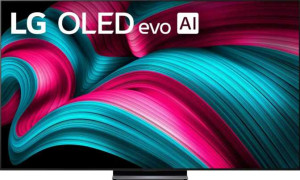
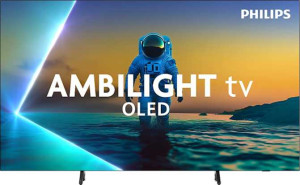
Both the LG OLED83C5PUA and the Philips 77OLED810/12 share a strong common foundation: OLED/AMOLED panels with a native 4K (3840 x 2160) resolution, 10-bit color depth, and a claimed 1.07 billion colors. They also match on viewing angles (178° both axes), anti-reflection coating, ambient light sensor, and the same adaptive sync suite (Nvidia G-Sync and AMD FreeSync Premium). For picture quality fundamentals, both are well-equipped.
The differences come down to three meaningful specs. First, screen size: the LG delivers a significantly larger 83.5″ canvas versus the Philips′ 77″, which translates to roughly 17% more screen area — a real advantage for large living rooms or dedicated home theater setups. However, because the Philips fits the same pixel count into a smaller panel, it achieves a slightly higher pixel density of 57 ppi versus 53 ppi, meaning its image is marginally sharper per inch at close viewing distances. Second, the Philips supports a 144Hz refresh rate versus the LG′s 120Hz — a notable edge for gaming, where smoother motion and lower input latency are perceptible, especially when paired with a compatible GPU. Third, the Philips adds HDR10+ support on top of the shared Dolby Vision and HDR10/HLG coverage, giving it broader HDR compatibility with Amazon and Samsung-mastered content.
In summary, neither product dominates outright. The LG OLED83C5PUA has the clear edge for viewers who prioritize sheer screen size and immersion. The Philips 77OLED810/12 holds the technical advantage for gamers and HDR format coverage, thanks to its higher refresh rate and HDR10+ support — making it the stronger choice if the TV will double as a gaming display or if HDR10+ content is part of your regular library.