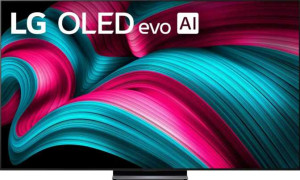
LG OLED83C5PUA 83"
Samsung QA83S95FAEXXY 83"

LG OLED83C5PUA 83" Samsung QA83S95FAEXXY 83"

Overview

Welcome to our in-depth specification comparison between the LG OLED83C5PUA 83″ and the Samsung QA83S95FAEXXY 83″ — two premium 83-inch OLED televisions that share a strong foundation yet take distinctly different paths in key areas. Both panels deliver stunning 4K OLED picture quality, but they diverge when it comes to refresh rate and HDR format support, adaptive sync ecosystems, connectivity options, and physical design. Read on to discover which of these flagship screens best suits your viewing and gaming setup.

Common Features

  • Both TVs have a 4K UHD resolution of 3840 x 2160 px.
  • Both TVs feature an OLED/AMOLED display type.
  • Both TVs have a screen size of 83.5″.
  • Both TVs have a pixel density of 53 ppi.
  • Both TVs support 1070 million display colors with a 10-bit depth.
  • HDR10 support is available on both TVs.
  • Both TVs have 4 HDMI 2.1 ports.
  • Both TVs include Bluetooth 5.3.
  • Both TVs support Wi-Fi.
  • Both TVs have 1 RJ45 port.
  • Miracast support is available on both TVs.
  • Neither TV has a 3.5 mm audio jack.
  • Both TVs have stereo speakers and a subwoofer.
  • Dolby Atmos and Dolby Audio support are available on both TVs.
  • Both TVs support Digital Out audio.
  • Both TVs support HDMI ARC and HDMI eARC.
  • Both TVs support VESA mounting.
  • AirPlay is available on both TVs.
  • Both TVs have a built-in smart TV platform and are compatible with Google Assistant and Alexa.
  • Both TVs support remote smartphone control and USB recording, and have a standby power consumption of 0.5W.

Main Differences

  • Refresh rate is 120Hz on LG OLED83C5PUA 83″ and 165Hz on Samsung QA83S95FAEXXY 83″.
  • HDR10+ support is present on Samsung QA83S95FAEXXY 83″ but not available on LG OLED83C5PUA 83″.
  • Dolby Vision support is available on LG OLED83C5PUA 83″ but not present on Samsung QA83S95FAEXXY 83″.
  • Adaptive sync on LG OLED83C5PUA 83″ includes Nvidia G-Sync, AMD FreeSync, and AMD FreeSync Premium, while Samsung QA83S95FAEXXY 83″ supports AMD FreeSync, AMD FreeSync Premium, and AMD FreeSync Premium Pro.
  • Wi-Fi on LG OLED83C5PUA 83″ supports Wi-Fi 4, Wi-Fi 5, Wi-Fi 6, and Wi-Fi 6E, while Samsung QA83S95FAEXXY 83″ supports only Wi-Fi 4 and Wi-Fi 5.
  • USB ports number 3 on LG OLED83C5PUA 83″ and 4 on Samsung QA83S95FAEXXY 83″.
  • DVB standards on LG OLED83C5PUA 83″ include DVB-T, DVB-T2, DVB-C, DVB-S, and DVB-S2, while Samsung QA83S95FAEXXY 83″ supports only DVB-T and DVB-T2.
  • Width is 1841.5 mm on LG OLED83C5PUA 83″ and 1844.2 mm on Samsung QA83S95FAEXXY 83″.
  • Height is 1054.1 mm on LG OLED83C5PUA 83″ and 1056.8 mm on Samsung QA83S95FAEXXY 83″.
  • Thickness is 53.3 mm on LG OLED83C5PUA 83″ and 12.6 mm on Samsung QA83S95FAEXXY 83″.
  • Weight is 33022 g on LG OLED83C5PUA 83″ and 51900 g on Samsung QA83S95FAEXXY 83″.
  • Volume is 103461.97 cm³ on LG OLED83C5PUA 83″ and 24556.78 cm³ on Samsung QA83S95FAEXXY 83″.
  • A rechargeable remote control is included with Samsung QA83S95FAEXXY 83″ but not with LG OLED83C5PUA 83″.
  • Operating power consumption is 223W on LG OLED83C5PUA 83″ and 248W on Samsung QA83S95FAEXXY 83″.
  • Annual power consumption is 410 kWh on LG OLED83C5PUA 83″ and 908 kWh on Samsung QA83S95FAEXXY 83″.
Specs Comparison
LG OLED83C5PUA 83"

LG OLED83C5PUA 83"

Samsung QA83S95FAEXXY 83"

Samsung QA83S95FAEXXY 83"

Display:
display resolution 4K (UHD) 4K (UHD)
Display type OLED/AMOLED OLED/AMOLED
screen size 83.5" 83.5"
resolution 3840 x 2160 px 3840 x 2160 px
pixel density 53 ppi 53 ppi
display colors 1070 million 1070 million
bit depth 10-bit 10-bit
refresh rate 120Hz 165Hz
supports HDR10
supports HDR10+
supports Dolby Vision
supports HLG
Adaptive synchronization Nvidia G-Sync, AMD FreeSync, AMD FreeSync Premium AMD FreeSync, AMD FreeSync Premium, AMD FreeSync Premium Pro
has anti-reflection coating
has an ambient light sensor
maximum horizontal viewing angle 178º 178º
maximum vertical viewing angle 178º 178º

Both the LG OLED83C5PUA and Samsung QA83S95FAEXXY share a strong display foundation: identical 83.5″ OLED panels at 4K (3840 x 2160) resolution, a 53 ppi pixel density, 10-bit color depth rendering over a billion colors, and wide 178° viewing angles in both directions. For picture quality fundamentals, these two are essentially matched — both deliver the deep blacks and infinite contrast that OLED technology is known for.

The meaningful divergences emerge in three areas. First, refresh rate: the Samsung pulls ahead with a 165Hz panel versus the LG's 120Hz, which translates to noticeably smoother motion in fast-paced gaming and action content. Second, HDR ecosystem support splits them in opposite directions — the LG supports Dolby Vision but not HDR10+, while the Samsung supports HDR10+ but not Dolby Vision. In practice, this means content mastered for Dolby Vision (common on Apple TV+, Netflix) will look its best on the LG, while HDR10+ content (prevalent on Amazon Prime Video and Samsung's own ecosystem) favors the Samsung. Third, on adaptive sync, the LG adds Nvidia G-Sync compatibility alongside AMD FreeSync, making it the stronger pick for PC gamers with Nvidia GPUs, whereas the Samsung is limited to the AMD FreeSync stack (including FreeSync Premium Pro).

Overall, the Samsung holds a clear edge for high-refresh-rate gaming at 165Hz, and the two products split on HDR format allegiance rather than one being objectively superior. The LG, however, is the better fit for Nvidia GPU owners and households invested in the Dolby Vision content library. Your choice here should be driven by your primary use case: gaming frame rate and HDR10+ coverage favor the Samsung, while Nvidia PC gaming and Dolby Vision content favor the LG.
Connectivity:
Has Bluetooth
HDMI version HDMI 2.1 HDMI 2.1
HDMI ports 4 4
supports Wi-Fi
Wi-Fi version Wi-Fi 4 (802.11n), Wi-Fi 5 (802.11ac), Wi-Fi 6 (802.11ax), Wi-Fi 6E (802.11ax) Wi-Fi 4 (802.11n), Wi-Fi 5 (802.11ac)
Bluetooth version 5.3 5.3
USB ports 3 4
RJ45 ports 1 1
supports Miracast
has a socket for a 3.5 mm audio jack
has an external memory slot
has a VGA connector
DVB standards DVB-T, DVB-T2, DVB-C, DVB-S, DVB-S2 DVB-T, DVB-T2
has a DVI connector

At the core, both TVs are well-matched: four HDMI 2.1 ports (enabling 4K@120Hz and eARC on compatible devices), a wired RJ45 Ethernet port, Bluetooth 5.3, and Miracast wireless casting. These shared features ensure neither TV is at a disadvantage for connecting consoles, soundbars, or streaming sticks.

The gaps that matter, however, are real. The LG's Wi-Fi 6E support is the standout connectivity advantage here — operating on the 6GHz band, it offers significantly less interference and higher throughput in congested wireless environments compared to the Samsung, which tops out at Wi-Fi 5 (802.11ac). In a home with many connected devices, this difference becomes tangible in streaming stability and latency. On the other hand, the Samsung counters with 4 USB ports versus the LG's 3, a modest but practical win for users connecting multiple peripherals simultaneously. The LG also supports a considerably broader set of DVB broadcast standards (including DVB-C, DVB-S, and DVB-S2 on top of the terrestrial DVB-T/T2 that the Samsung covers), making it more versatile for cable and satellite tuner setups across different markets.

Taken together, the LG OLED83C5PUA holds a clear connectivity edge, primarily due to its superior Wi-Fi 6E capability and wider broadcast tuner support. The Samsung's extra USB port is a minor consolation. For users in dense wireless environments or those relying on cable/satellite reception, the LG is the stronger choice in this category.

Audio:
supports Digital Out
has SRS TheaterSound HD
has stereo speakers
has Dolby Atmos
has Dolby Audio
supports Dolby Virtual
has a subwoofer
HDMI ARC / eARC HDMI ARC, HDMI eARC HDMI ARC, HDMI eARC

Across every audio specification provided, the LG OLED83C5PUA and Samsung QA83S95FAEXXY are in complete lockstep. Both include stereo speakers with a built-in subwoofer, support Dolby Atmos and Dolby Audio decoding, offer Digital Out, and provide both HDMI ARC and eARC — the latter being the most important for soundbar users, as eARC carries high-bandwidth audio formats like lossless Dolby TrueHD and DTS:X without compression.

This is a straightforward tie. Neither TV differentiates itself through the specs provided for this group, and no advantage can be assigned to either based solely on this data. Users prioritizing audio should note that both TVs are equally equipped to pass premium audio signals to an external soundbar or AV receiver via eARC, which is where most serious home theater audio performance will ultimately be determined anyway.

Design:
width 1841.5 mm 1844.2 mm
weight 33022 g 51900 g
thickness 53.3 mm 12.6 mm
height 1054.1 mm 1056.8 mm
volume 103461.970495 cm³ 24556.777056 cm³
Supports VESA mount

Footprint-wise, these two 83″ TVs are virtually identical — nearly the same width and height — and both support VESA mounting. Where they diverge dramatically is in thickness and weight. The Samsung's 12.6 mm depth is a remarkable engineering achievement, less than a quarter of the LG's 53.3 mm. For wall-mount installations where a flush, frameless look is a priority, that difference is visually significant and immediately apparent in a room.

The weight picture flips the story, however. At 33 kg, the LG is meaningfully lighter than the Samsung's 51.9 kg — a difference of nearly 19 kg. That gap has real logistical consequences: wall mounts must be rated appropriately, and the installation process for the Samsung will require more effort and care. The LG's lower mass also makes repositioning or adjusting it over time considerably more manageable.

Neither product is categorically superior in design — the choice depends on the installation context. The Samsung QA83S95FAEXXY wins decisively on thinness, making it the stronger candidate for wall-mounted setups where aesthetics and slim profiles are paramount. The LG OLED83C5PUA, being substantially lighter, is the more practical option for stand placement, frequent repositioning, or situations where wall load capacity is a concern.

Features:
release date March 2025 March 2025
has AirPlay
has built-in smart TV
compatible with Google Assistant
works with Alexa
works with Siri/Apple HomeKit
supports a remote smartphone
has a rechargeable remote control
supports USB recording
operating power consumption 223W 248W
standby power consumption 0.5W 0.5W
has a search browser
has a sleep timer
has a child lock
annual power consumption 410 kWh 908 kWh
warranty period 1 years 1 years
has voice commands

Smart platform parity is essentially complete between these two TVs. Both support AirPlay, Google Assistant, Alexa, smartphone remote control, USB recording, and the full suite of convenience features like sleep timer and child lock. Neither supports Siri/Apple HomeKit, so that is not a differentiator. For the vast majority of smart TV use cases, users on either platform will find the same ecosystem reach.

Two differences stand out. The Samsung includes a rechargeable remote control — a small but genuinely appreciated quality-of-life advantage that eliminates the need to replace disposable batteries. More significantly, the power consumption figures tell a striking story: the LG's annual energy consumption of 410 kWh is less than half the Samsung's 908 kWh. At typical electricity rates, that gap compounds into a meaningful cost difference over the TV's lifespan. The Samsung's higher operating draw of 248W versus the LG's 223W contributes to this, but the annual figure suggests the difference is substantial in real-world usage patterns.

The LG OLED83C5PUA holds the clear advantage in this group. The energy efficiency gap is too large to overlook — 498 kWh annually is a significant ongoing cost and environmental consideration. The Samsung's rechargeable remote is a convenience win, but it cannot offset the LG's decisive lead in power efficiency. For budget-conscious or environmentally aware buyers, the LG is the stronger choice here.

Comparison Summary & Verdict

Both the LG OLED83C5PUA 83″ and the Samsung QA83S95FAEXXY 83″ are exceptional 83-inch 4K OLED displays with shared strengths like Dolby Atmos audio, HDMI 2.1, and smart platform versatility. However, their differences point them toward distinct audiences. The LG OLED83C5PUA stands out for cinephiles and home theatre enthusiasts, thanks to its Dolby Vision support, broader Wi-Fi compatibility including Wi-Fi 6E, a wider DVB tuner range, and a significantly lower annual power consumption of 410 kWh. It is also noticeably lighter and thinner in volume. The Samsung QA83S95FAEXXY is the stronger choice for gamers and performance-focused users, offering a 165Hz refresh rate, AMD FreeSync Premium Pro, and HDR10+ support, along with a rechargeable remote and an extra USB port. Choose accordingly based on whether your priority is cinematic immersion or high-refresh gaming performance.

LG OLED83C5PUA 83
Buy LG OLED83C5PUA 83" if...

Buy the LG OLED83C5PUA 83″ if you prioritise Dolby Vision support, broader Wi-Fi and tuner compatibility, and lower long-term power consumption for a home theatre setup.

Samsung QA83S95FAEXXY 83
Buy Samsung QA83S95FAEXXY 83" if...

Buy the Samsung QA83S95FAEXXY 83″ if you want a higher 165Hz refresh rate with AMD FreeSync Premium Pro for gaming, plus HDR10+ support and a rechargeable remote control.