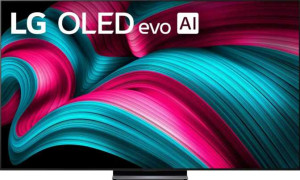
LG OLED83C5PUA 83"
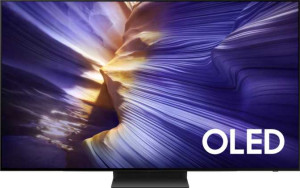
Samsung QN83S90FAE 83"

LG OLED83C5PUA 83" Samsung QN83S90FAE 83"

Overview

Welcome to our in-depth spec comparison between the LG OLED83C5PUA 83″ and the Samsung QN83S90FAE 83″ — two flagship 83-inch OLED televisions competing at the very top of the market. Both share a stunning 4K OLED panel and a robust connectivity suite, yet they diverge in meaningful ways across refresh rate and HDR format support, adaptive sync ecosystems, wireless standards, and physical design. Read on to discover which of these premium sets best aligns with your viewing and gaming priorities.

Common Features

  • Both TVs have a 4K (UHD) display resolution of 3840 x 2160 px.
  • Both TVs use an OLED/AMOLED display type.
  • Both TVs have a pixel density of 53 ppi.
  • Both TVs support 1070 million display colors at 10-bit depth.
  • HDR10 support is available on both TVs.
  • HLG support is available on both TVs.
  • Both TVs have 4 HDMI 2.1 ports.
  • Both TVs have 3 USB ports and 1 RJ45 port.
  • Both TVs support Wi-Fi and include Bluetooth 5.3.
  • Miracast support is available on both TVs.
  • Both TVs support Dolby Digital and Dolby Atmos.
  • Both TVs have stereo speakers and a subwoofer.
  • Dolby Audio is available on both TVs.
  • SRS TheaterSound HD is not available on either TV.
  • Dolby Virtual is not supported on either TV.
  • Both TVs support VESA mounting.
  • AirPlay is available on both TVs.
  • Both TVs are compatible with Google Assistant and work with Alexa.
  • Siri and Apple HomeKit compatibility is not available on either TV.
  • Both TVs have a standby power consumption of 0.5W and support USB recording and smartphone remote control.

Main Differences

  • Screen size is 83.5″ on LG OLED83C5PUA 83″ and 82.5″ on Samsung QN83S90FAE 83″.
  • Refresh rate is 120Hz on LG OLED83C5PUA 83″ and 144Hz on Samsung QN83S90FAE 83″.
  • HDR10+ support is present on Samsung QN83S90FAE 83″ but not available on LG OLED83C5PUA 83″.
  • Dolby Vision support is present on LG OLED83C5PUA 83″ but not available on Samsung QN83S90FAE 83″.
  • Adaptive synchronization includes Nvidia G-Sync, AMD FreeSync, and AMD FreeSync Premium on LG OLED83C5PUA 83″, while Samsung QN83S90FAE 83″ supports AMD FreeSync, AMD FreeSync Premium, and AMD FreeSync Premium Pro.
  • Wi-Fi support extends to Wi-Fi 6E (802.11ax) on LG OLED83C5PUA 83″, whereas Samsung QN83S90FAE 83″ supports only up to Wi-Fi 5 (802.11ac).
  • Dolby Digital Plus support is present on Samsung QN83S90FAE 83″ but not available on LG OLED83C5PUA 83″.
  • Width is 1841.5 mm on LG OLED83C5PUA 83″ and 1851 mm on Samsung QN83S90FAE 83″.
  • Height is 1054.1 mm on LG OLED83C5PUA 83″ and 1062.8 mm on Samsung QN83S90FAE 83″.
  • Thickness is 53.3 mm on LG OLED83C5PUA 83″ and 44.9 mm on Samsung QN83S90FAE 83″.
  • Weight is 33022 g on LG OLED83C5PUA 83″ and 37600 g on Samsung QN83S90FAE 83″.
  • Volume is 103461.97 cm³ on LG OLED83C5PUA 83″ and 88329.20 cm³ on Samsung QN83S90FAE 83″.
  • A rechargeable remote control is included with Samsung QN83S90FAE 83″ but not with LG OLED83C5PUA 83″.
  • Operating power consumption is 223W on LG OLED83C5PUA 83″ and 237W on Samsung QN83S90FAE 83″.
Specs Comparison
LG OLED83C5PUA 83"

LG OLED83C5PUA 83"

Samsung QN83S90FAE 83"

Samsung QN83S90FAE 83"

Display:
display resolution 4K (UHD) 4K (UHD)
Display type OLED/AMOLED OLED/AMOLED
screen size 83.5" 82.5"
resolution 3840 x 2160 px 3840 x 2160 px
pixel density 53 ppi 53 ppi
display colors 1070 million 1070 million
bit depth 10-bit 10-bit
refresh rate 120Hz 144Hz
supports HDR10
supports HDR10+
supports Dolby Vision
supports HLG
Adaptive synchronization Nvidia G-Sync, AMD FreeSync, AMD FreeSync Premium AMD FreeSync, AMD FreeSync Premium, AMD FreeSync Premium Pro
has anti-reflection coating
has an ambient light sensor
maximum horizontal viewing angle 178º 178º
maximum vertical viewing angle 178º 178º

Both the LG OLED83C5PUA and the Samsung QN83S90FAE share the same fundamental display DNA: OLED/AMOLED panels at 4K (3840 x 2160) resolution, a 53 ppi pixel density, 10-bit color depth rendering 1.07 billion colors, and identical 178° viewing angles in both directions. At this size and panel type, both will deliver the hallmark OLED traits — true blacks, infinite contrast, and exceptional off-axis uniformity — so neither has a structural image quality advantage from the panel itself.

The meaningful split comes down to three areas. First, refresh rate: the Samsung edges ahead with 144Hz versus the LG's 120Hz, which matters primarily for gaming and fast-motion content — smoother frame delivery and lower perceived judder at high frame rates. Second, HDR ecosystem: the LG supports Dolby Vision but lacks HDR10+, while the Samsung supports HDR10+ but omits Dolby Vision. Dolby Vision is more prevalent on streaming platforms and Blu-ray, whereas HDR10+ is stronger in the Samsung and Amazon ecosystems. Your preferred content source should guide this choice. Third, adaptive sync: the LG covers Nvidia G-Sync and AMD FreeSync Premium, making it more versatile across PC GPU brands, while the Samsung is AMD-exclusive with FreeSync Premium Pro, which adds low-framerate compensation — a meaningful perk for AMD GPU owners.

Overall, neither TV dominates unconditionally. The Samsung QN83S90FAE holds a practical edge for gamers — particularly those with AMD hardware — thanks to its higher refresh rate and FreeSync Premium Pro support. The LG OLED83C5PUA is the stronger pick for home theater and mixed-platform gaming, given its Dolby Vision compatibility and broader GPU sync coverage. Choose based on whether your priority is gaming performance (Samsung) or streaming/cinematic HDR fidelity (LG).
Connectivity:
Has Bluetooth
HDMI version HDMI 2.1 HDMI 2.1
HDMI ports 4 4
supports Wi-Fi
Wi-Fi version Wi-Fi 4 (802.11n), Wi-Fi 5 (802.11ac), Wi-Fi 6 (802.11ax), Wi-Fi 6E (802.11ax) Wi-Fi 4 (802.11n), Wi-Fi 5 (802.11ac)
Bluetooth version 5.3 5.3
USB ports 3 3
RJ45 ports 1 1
supports Miracast
has a socket for a 3.5 mm audio jack
has an external memory slot
has a VGA connector
DVB standards DVB-T, DVB-T2, DVB-C, DVB-S, DVB-S2 DVB-T, DVB-T2, DVB-C, DVB-S, DVB-S2
has a DVI connector

On the wired side, these two TVs are effectively identical: both offer 4x HDMI 2.1 ports, 3x USB ports, a single RJ45 ethernet jack, and Miracast wireless display mirroring. Shared Bluetooth 5.3 support rounds out a well-matched physical connectivity suite — neither has a meaningful port advantage over the other.

The one area where the specs diverge is wireless networking. The LG OLED83C5PUA supports Wi-Fi 6E (802.11ax) in addition to Wi-Fi 6, 5, and 4, while the Samsung QN83S90FAE tops out at Wi-Fi 5 (802.11ac). This is a notable practical difference: Wi-Fi 6E operates on the 6GHz band, which is far less congested than the 2.4GHz and 5GHz bands used by older standards. In dense environments — apartments, homes with many connected devices — this translates to more consistent throughput, lower latency for streaming and gaming, and greater future-proofing as Wi-Fi 6E routers become more common. Wi-Fi 5, by contrast, is a capable but aging standard that will increasingly feel the pressure of crowded networks.

The LG OLED83C5PUA holds a clear connectivity edge here, and it is entirely down to Wi-Fi 6E. If your router already supports 6GHz or you plan to upgrade soon, the LG will deliver a noticeably more reliable wireless experience. For users on older routers or wired ethernet setups, the difference is moot — but as a forward-looking consideration, the LG is the stronger choice in this category.

Audio:
supports Dolby Digital
supports Digital Out
supports Dolby Digital Plus
has SRS TheaterSound HD
has stereo speakers
has Dolby Atmos
has Dolby Audio
supports Dolby Virtual
has a subwoofer
HDMI ARC / eARC HDMI ARC, HDMI eARC HDMI ARC, HDMI eARC

Audio capability is remarkably close between these two TVs. Both carry Dolby Atmos, Dolby Audio, Dolby Digital, built-in subwoofers, stereo speakers, and full HDMI ARC/eARC support — meaning either TV can pass high-quality audio to an external soundbar or AV receiver without compromise. For most users, this shared foundation will be the only thing that matters.

The single spec separating them is Dolby Digital Plus, which the Samsung QN83S90FAE supports and the LG OLED83C5PUA does not. Dolby Digital Plus is an enhanced version of the core Dolby Digital codec, capable of carrying higher bitrates and serving as the transport layer for Dolby Atmos streams over HDMI ARC (as opposed to eARC). In practice, this means the Samsung can decode richer Atmos signals through a standard ARC connection, whereas the LG relies on eARC to achieve the same — a distinction that only surfaces if your soundbar or receiver supports ARC but not eARC.

The Samsung QN83S90FAE earns a narrow edge here due to its Dolby Digital Plus support, which provides slightly broader compatibility with audio equipment over ARC. That said, for anyone using eARC-capable gear or the TV's built-in speakers, the real-world difference is negligible. This is a minor advantage rather than a decisive one.

Design:
width 1841.5 mm 1851 mm
weight 33022 g 37600 g
thickness 53.3 mm 44.9 mm
height 1054.1 mm 1062.8 mm
volume 103461.970495 cm³ 88329.20172 cm³
Supports VESA mount

At 83 inches, both TVs occupy nearly identical footprints — within 10mm of each other in width and height — so wall space and furniture clearance will not meaningfully differ between them. Both support VESA mounting, making either a viable candidate for a wall installation.

Where the two diverge is in thickness and weight, and those differences pull in opposite directions. The Samsung QN83S90FAE is noticeably slimmer at 44.9 mm versus the LG's 53.3 mm — a roughly 16% reduction that gives it a more elegant profile, particularly relevant for wall-mounted setups where panel depth is visible from the side. The LG OLED83C5PUA, however, is significantly lighter at 33 kg compared to the Samsung's 37.6 kg — a difference of about 4.6 kg, which is substantial when maneuvering or mounting a panel of this size. Fewer hands and less hardware stress on wall brackets can genuinely simplify installation.

There is no single winner here — it depends on the installation context. For wall mounting where aesthetics and slim depth matter most, the Samsung has the edge. For ease of handling during setup, or placement on a TV stand where depth is irrelevant, the LG's lighter chassis is the practical advantage. Buyers should weigh their specific installation scenario to determine which trade-off matters more.

Features:
release date March 2025 April 2025
has AirPlay
has built-in smart TV
compatible with Google Assistant
works with Alexa
works with Siri/Apple HomeKit
supports a remote smartphone
has a rechargeable remote control
supports USB recording
operating power consumption 223W 237W
standby power consumption 0.5W 0.5W
has a search browser
has a sleep timer
has a child lock
warranty period 1 years 1 years
has voice commands

Feature parity between these two TVs is striking. Both offer full smart TV platforms, AirPlay, Google Assistant, Alexa, smartphone remote support, USB recording, voice commands, and identical 1-year warranties. Neither supports Siri or Apple HomeKit, so Apple ecosystem users will find the same limitation on both sides. For the vast majority of smart TV use cases, the experience will feel essentially equivalent.

Two points of difference are worth noting. First, the Samsung QN83S90FAE includes a rechargeable remote control, while the LG does not — a small but recurring convenience that eliminates the need to replace batteries over time. Second, power consumption differs slightly: the LG draws 223W during operation versus the Samsung's 237W, with both idling at an identical 0.5W in standby. Over years of daily use, the LG's lower draw translates to a modest but real reduction in energy costs.

This category is close to a wash, but each TV holds one minor advantage. The Samsung wins on day-to-day convenience with its rechargeable remote, while the LG edges ahead on long-term energy efficiency. Neither difference is significant enough to be a deciding factor on its own, making this group essentially tied for most buyers.

Comparison Summary & Verdict

After examining every specification, it is clear that both TVs are exceptional large-screen OLED performers, yet each is tuned for a slightly different owner. The LG OLED83C5PUA 83″ stands out with its Dolby Vision support, broader Wi-Fi coverage up to Wi-Fi 6E, and Nvidia G-Sync compatibility, making it the stronger pick for cinephiles and gamers with Nvidia-based rigs who want the widest HDR and wireless ecosystem. The Samsung QN83S90FAE 83″ counters with a higher 144Hz refresh rate, HDR10+ certification, AMD FreeSync Premium Pro, Dolby Digital Plus, and a rechargeable remote, appealing to competitive gamers, AMD GPU users, and those who prefer a slimmer cabinet. Both panels are virtually identical in picture fundamentals, so your decision should hinge on which feature set matches your setup and content habits.

LG OLED83C5PUA 83
Buy LG OLED83C5PUA 83" if...

Buy the LG OLED83C5PUA 83″ if you prioritize Dolby Vision HDR, Nvidia G-Sync compatibility, or future-proof Wi-Fi 6E wireless connectivity in your home setup.

Samsung QN83S90FAE 83
Buy Samsung QN83S90FAE 83" if...

Buy the Samsung QN83S90FAE 83″ if you want a higher 144Hz refresh rate, HDR10+ support with AMD FreeSync Premium Pro for gaming, or the convenience of a rechargeable remote.