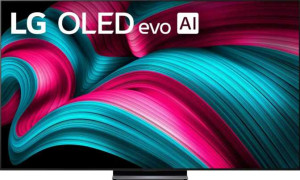
LG OLED83C5PUA 83"
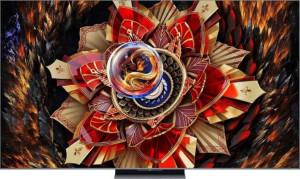
TCL 85C9K 85"

LG OLED83C5PUA 83" TCL 85C9K 85"

Overview

Choosing between two large-screen titans is never straightforward, and the LG OLED83C5PUA 83″ versus TCL 85C9K 85″ comparison is no exception. Both sets share a strong foundation: 4K UHD resolution, Dolby Vision, four HDMI 2.1 ports, and a full smart TV ecosystem with Chromecast and AirPlay built in. Yet the two diverge significantly in display technology, refresh rate capabilities, and gaming-focused features. Whether self-emissive OLED or a Mini-LED-backlit QLED panel better suits your living room is just one of the questions this head-to-head comparison will help you answer.

Common Features

  • Both TVs have a 4K (UHD) display resolution of 3840 x 2160 px.
  • Both TVs display 1070 million colors at a 10-bit depth.
  • HDR10 support is available on both products.
  • Dolby Vision support is available on both products.
  • HLG support is available on both products.
  • An anti-reflection coating is present on both products.
  • Both TVs have 4 HDMI 2.1 ports and 1 RJ45 port.
  • Bluetooth is available on both products.
  • Wi-Fi support is available on both products.
  • Miracast support is available on both products.
  • Neither product has a 3.5 mm audio jack socket.
  • Neither product has an external memory slot.
  • Dolby Digital support is available on both products.
  • Digital Out support is available on both products.
  • Dolby Atmos support is available on both products.
  • Dolby Audio support is available on both products.
  • Stereo speakers and a subwoofer are present on both products.
  • SRS TheaterSound HD is not available on either product.
  • Dolby Virtual is not available on either product.
  • Both TVs support VESA mounting.
  • Chromecast built-in is available on both products.
  • AirPlay support is available on both products.
  • Both TVs have a built-in smart TV platform.
  • Google Assistant compatibility is available on both products.
  • Alexa support is available on both products.
  • Neither product works with Siri or Apple HomeKit.
  • Remote smartphone control is supported on both products.
  • Neither product has a rechargeable remote control.

Main Differences

  • The display type is OLED/AMOLED on LG OLED83C5PUA 83″ and QLED, LED-backlit, LCD, Mini-LED on TCL 85C9K 85″.
  • The screen size is 83.5″ on LG OLED83C5PUA 83″ and 85″ on TCL 85C9K 85″.
  • The pixel density is 53 ppi on LG OLED83C5PUA 83″ and 52 ppi on TCL 85C9K 85″.
  • The refresh rate is 120Hz on LG OLED83C5PUA 83″ and 144Hz on TCL 85C9K 85″.
  • HDR10+ support is present on TCL 85C9K 85″ but not available on LG OLED83C5PUA 83″.
  • Adaptive synchronization includes Nvidia G-Sync, AMD FreeSync, and AMD FreeSync Premium on LG OLED83C5PUA 83″, while TCL 85C9K 85″ supports AMD FreeSync, AMD FreeSync Premium, and AMD FreeSync Premium Pro.
  • Wi-Fi 6E (802.11ax) support is present on LG OLED83C5PUA 83″ but not available on TCL 85C9K 85″.
  • The Bluetooth version is 5.3 on LG OLED83C5PUA 83″ and 5.4 on TCL 85C9K 85″.
  • The number of USB ports is 3 on LG OLED83C5PUA 83″ and 1 on TCL 85C9K 85″.
  • Dolby Digital Plus support is present on TCL 85C9K 85″ but not available on LG OLED83C5PUA 83″.
  • The width is 1841.5 mm on LG OLED83C5PUA 83″ and 1880 mm on TCL 85C9K 85″.
  • The weight is 33022 g on LG OLED83C5PUA 83″ and 41600 g on TCL 85C9K 85″.
  • The thickness is 53.3 mm on LG OLED83C5PUA 83″ and 53 mm on TCL 85C9K 85″.
  • The height is 1054.1 mm on LG OLED83C5PUA 83″ and 1073 mm on TCL 85C9K 85″.
  • The volume is 103461.97 cm³ on LG OLED83C5PUA 83″ and 106913.72 cm³ on TCL 85C9K 85″.
  • The maximum operating temperature is 40 °C on LG OLED83C5PUA 83″ and 35 °C on TCL 85C9K 85″.
  • The lowest potential operating temperature is 0 °C on LG OLED83C5PUA 83″ and 5 °C on TCL 85C9K 85″.
Specs Comparison
LG OLED83C5PUA 83"

LG OLED83C5PUA 83"

TCL 85C9K 85"

TCL 85C9K 85"

Display:
display resolution 4K (UHD) 4K (UHD)
Display type OLED/AMOLED QLED, LED-backlit, LCD, Mini-LED
screen size 83.5" 85"
resolution 3840 x 2160 px 3840 x 2160 px
pixel density 53 ppi 52 ppi
display colors 1070 million 1070 million
bit depth 10-bit 10-bit
refresh rate 120Hz 144Hz
supports HDR10
supports HDR10+
supports Dolby Vision
supports HLG
Adaptive synchronization Nvidia G-Sync, AMD FreeSync, AMD FreeSync Premium AMD FreeSync, AMD FreeSync Premium, AMD FreeSync Premium Pro
has anti-reflection coating
has an ambient light sensor
maximum horizontal viewing angle 178º 178º
maximum vertical viewing angle 178º 178º

The most consequential difference in this group is the underlying panel technology. The LG OLED83C5PUA uses an OLED panel, where each pixel produces its own light and can switch off entirely, delivering true blacks and effectively infinite contrast. The TCL 85C9K, by contrast, uses a Mini-LED LCD panel, which relies on a backlight — even a very advanced one. In practice, this means the LG will produce deeper blacks and more vivid HDR highlights in dark scenes, while the TCL, being a larger 85″ screen versus the LG's 83.5″, compensates with strong peak brightness typical of Mini-LED designs. Both share identical 4K (3840 x 2160) resolution and near-identical pixel density (~52–53 ppi), so sharpness is a non-issue at normal viewing distances.

For HDR, both support Dolby Vision and HDR10, but the TCL adds HDR10+ support — a format the LG lacks. This gives the TCL broader compatibility with HDR-mastered content from Amazon and other HDR10+ sources. On the gaming front, the TCL's 144Hz refresh rate edges out the LG's 120Hz, offering a smoother ceiling for high-frame-rate content. However, the LG counters with Nvidia G-Sync compatibility alongside AMD FreeSync, making it more versatile for PC gamers with Nvidia GPUs, while the TCL tops out at AMD FreeSync Premium Pro.

Overall, neither TV dominates outright — the choice depends on use case. The LG OLED holds a clear edge in pure picture quality for cinematic and dark-room viewing, thanks to its self-emissive pixels. The TCL Mini-LED counters with a higher refresh rate, HDR10+ support, and a slightly larger screen, making it the stronger pick for gaming versatility and bright-room HDR breadth. Users who prioritize contrast and color accuracy should lean toward the LG; those who want maximum gaming headroom and wider HDR format coverage will find the TCL compelling.
Connectivity:
Has Bluetooth
HDMI version HDMI 2.1 HDMI 2.1
HDMI ports 4 4
supports Wi-Fi
Wi-Fi version Wi-Fi 4 (802.11n), Wi-Fi 5 (802.11ac), Wi-Fi 6 (802.11ax), Wi-Fi 6E (802.11ax) Wi-Fi 4 (802.11n), Wi-Fi 5 (802.11ac), Wi-Fi 6 (802.11ax)
Bluetooth version 5.3 5.4
USB ports 3 1
RJ45 ports 1 1
supports Miracast
has a socket for a 3.5 mm audio jack
has an external memory slot
has a VGA connector
DVB standards DVB-T, DVB-T2, DVB-C, DVB-S, DVB-S2 DVB-T, DVB-T2, DVB-C, DVB-S, DVB-S2
has a DVI connector

At a glance, these two TVs share a strong connectivity foundation: both offer 4x HDMI 2.1 ports, a wired RJ45 ethernet port, Miracast wireless casting, and identical DVB tuner support. Where they diverge is in the details that matter for day-to-day use. The LG's 3 USB ports versus the TCL's single 1 USB port is a meaningful practical gap — connecting a hard drive, a USB keyboard, and a dongle simultaneously is straightforward on the LG but forces trade-offs on the TCL.

Wireless connectivity tells a split story. The LG OLED83C5PUA supports Wi-Fi 6E, adding access to the less-congested 6GHz band on top of the standard 2.4GHz and 5GHz bands — a real advantage in dense apartment environments or homes with many wireless devices. The TCL tops out at Wi-Fi 6, which is still fast and capable, but lacks that 6GHz headroom. Flip the advantage, and the TCL 85C9K carries Bluetooth 5.4 versus the LG's Bluetooth 5.3 — a minor version bump that brings marginally improved connection stability and efficiency, though the real-world difference for typical TV use cases like wireless headphones or remotes is negligible.

On balance, the LG holds a clear connectivity edge here. The combination of Wi-Fi 6E support and three USB ports gives it meaningfully more flexibility for both device attachment and wireless networking, while the TCL's Bluetooth 5.4 advantage is too incremental to shift the overall verdict.

Audio:
supports Dolby Digital
supports Digital Out
supports Dolby Digital Plus
has SRS TheaterSound HD
has stereo speakers
has Dolby Atmos
has Dolby Audio
supports Dolby Virtual
has a subwoofer
has a DTS-HD High Resolution
has DTS:X
HDMI ARC / eARC HDMI ARC, HDMI eARC HDMI ARC, HDMI eARC

These two TVs are remarkably well-matched in audio capability, sharing a nearly identical feature set: both include built-in subwoofers, stereo speakers, Dolby Atmos, DTS:X, DTS-HD High Resolution, Dolby Audio, and full HDMI ARC/eARC support. The eARC port is worth highlighting for anyone using an external soundbar or AV receiver — it allows lossless, high-bandwidth audio formats to pass through a single HDMI cable, preserving the full quality of Atmos and DTS:X tracks without compression.

The only spec separating them is Dolby Digital Plus, which the TCL 85C9K supports and the LG OLED83C5PUA does not. Dolby Digital Plus is an enhanced codec commonly used for streaming services like Netflix and Disney+, capable of carrying higher-bitrate audio than standard Dolby Digital. Its absence on the LG is a minor but real gap — certain streaming audio tracks may be downgraded or processed differently before output.

In practical terms, this is a very close group. Both TVs offer a strong internal audio foundation and professional-grade surround format support. The TCL earns a narrow edge solely due to its Dolby Digital Plus compatibility, which is increasingly relevant for streaming-heavy users. For anyone routing audio through an external sound system via eARC, however, this difference largely disappears — making the two TVs effectively tied for that use case.

Design:
width 1841.5 mm 1880 mm
weight 33022 g 41600 g
thickness 53.3 mm 53 mm
height 1054.1 mm 1073 mm
volume 103461.970495 cm³ 106913.72 cm³
Supports VESA mount
maximum operating temperature 40 °C 35 °C
lowest potential operating temperature 0 °C 5 °C

Size and weight are where this group gets interesting. Despite being only about 1.5 inches larger diagonally, the TCL 85C9K is substantially heavier at 41,600 g versus the LG's 33,022 g — a difference of roughly 8.6 kg. That gap is directly attributable to the nature of Mini-LED LCD construction, which requires a more complex backlight assembly and chassis than OLED panels. For solo installation or wall-mounting, this weight delta is practically significant and may require a more robust wall bracket or an extra pair of hands.

Depth is nearly identical at around 53 mm for both, so neither has a meaningful advantage in how flush they sit against a wall. Both support VESA mounting, keeping installation options equivalent. The TCL is modestly wider and taller given its larger screen, which is expected and unlikely to be a deciding factor unless the installation space is very tightly constrained.

The operating temperature range deserves attention for anyone considering installation in non-standard environments like a garage, sunroom, or commercial space. The LG OLED83C5PUA operates from 0 °C to 40 °C, while the TCL is rated only from 5 °C to 35 °C — a narrower window on both ends. This gives the LG a practical advantage in spaces that run warmer or cooler than typical living room conditions. Overall, the LG holds the edge in this group, chiefly due to its significantly lower weight and broader thermal tolerance.

Features:
release date March 2025 June 2025
has Chromecast built-in
has AirPlay
has built-in smart TV
compatible with Google Assistant
works with Alexa
works with Siri/Apple HomeKit
supports a remote smartphone
has a rechargeable remote control
supports USB recording
standby power consumption 0.5W 0.5W
has a search browser
has a sleep timer
has a child lock
warranty period 1 years 1 years
has voice commands

Across every single spec in this group, the LG OLED83C5PUA and TCL 85C9K are identical — a rare complete tie. Both ship with a fully featured smart TV platform, support Chromecast built-in and AirPlay, and respond to Google Assistant and Alexa voice commands. Neither supports Siri or Apple HomeKit, so users embedded in the Apple ecosystem will need to rely on AirPlay for iOS integration rather than native HomeKit control.

Practical conveniences like USB recording, smartphone remote support, sleep timer, and child lock are present on both, and standby power consumption is a matching 0.5W — negligible for always-on use. The warranty period is also identical at 1 year for each, so post-purchase support terms offer no differentiation.

This group is a straightforward draw. There is no basis in the provided specs to favor one TV over the other on features — buyers can expect the same smart platform capabilities, voice assistant breadth, and utility functions from either model.

Comparison Summary & Verdict

After examining every specification, it is clear that both screens excel in different areas. The LG OLED83C5PUA 83″ stands out with its self-emissive OLED panel, a lighter chassis of just 33 kg, three USB ports for easier peripheral management, and the added reach of Wi-Fi 6E alongside Nvidia G-Sync compatibility. Its wider operating temperature range also makes it more versatile in varied environments. The TCL 85C9K 85″, on the other hand, counters with a faster 144Hz refresh rate, native HDR10+ support, AMD FreeSync Premium Pro for smoother variable-rate gaming, Dolby Digital Plus audio decoding, and the latest Bluetooth 5.4. In short, the LG suits cinephiles and those who prize picture quality and connectivity breadth, while the TCL is the stronger choice for high-refresh-rate gaming enthusiasts who also want richer audio format support.

LG OLED83C5PUA 83
Buy LG OLED83C5PUA 83" if...

Buy the LG OLED83C5PUA 83″ if you want a true OLED picture, Wi-Fi 6E connectivity, Nvidia G-Sync support, and more USB ports in a noticeably lighter cabinet.

TCL 85C9K 85
Buy TCL 85C9K 85" if...

Buy the TCL 85C9K 85″ if you prioritize a 144Hz refresh rate, HDR10+ and Dolby Digital Plus support, and AMD FreeSync Premium Pro for a more capable gaming and audio experience.