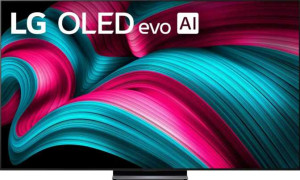
LG OLED83C5PUA 83"
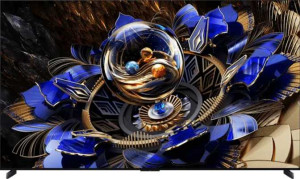
TCL 98X11K 98"

LG OLED83C5PUA 83" TCL 98X11K 98"

Overview

Welcome to our in-depth specification comparison between the LG OLED83C5PUA 83″ and the TCL 98X11K 98″ — two large-screen 4K TVs that take very different approaches to picture technology and design. From their distinct display panel types to contrasting refresh rates, adaptive sync ecosystems, and connectivity options, there is plenty to weigh up before making a decision. Read on as we break down every key specification side by side.

Common Features

  • Both TVs have a 4K (UHD) display resolution of 3840 x 2160 px.
  • Both TVs display 1070 million colors at a 10-bit depth.
  • HDR10 support is available on both products.
  • Dolby Vision support is available on both products.
  • HLG support is available on both products.
  • An anti-reflection coating is present on both products.
  • Both TVs use HDMI 2.1 and include 4 HDMI ports.
  • Bluetooth connectivity is available on both products.
  • Wi-Fi support is available on both products.
  • Both TVs include 1 RJ45 ethernet port.
  • Miracast support is available on both products.
  • Neither TV has a 3.5 mm audio jack socket.
  • Neither TV has an external memory slot.
  • Both TVs have stereo speakers and a subwoofer.
  • Digital Out support is available on both products.
  • SRS TheaterSound HD is not available on either product.
  • Dolby Virtual is not supported on either product.
  • Both TVs support HDMI ARC and HDMI eARC.
  • Both TVs support VESA mounting.
  • Chromecast built-in is available on both products.
  • AirPlay support is available on both products.
  • Google Assistant compatibility is available on both products.
  • Apple HomeKit and Siri support is not available on either product.
  • Remote smartphone support is available on both products.
  • USB recording support is available on both products.
  • Both TVs have a standby power consumption of 0.5W.

Main Differences

  • The display type is OLED/AMOLED on LG OLED83C5PUA 83″ and QLED, LED-backlit, LCD, Mini-LED on TCL 98X11K 98″.
  • The screen size is 83.5″ on LG OLED83C5PUA 83″ and 97.5″ on TCL 98X11K 98″.
  • Pixel density is 53 ppi on LG OLED83C5PUA 83″ and 45 ppi on TCL 98X11K 98″.
  • The refresh rate is 120Hz on LG OLED83C5PUA 83″ and 144Hz on TCL 98X11K 98″.
  • HDR10+ support is present on TCL 98X11K 98″ but not available on LG OLED83C5PUA 83″.
  • Adaptive sync support includes Nvidia G-Sync, AMD FreeSync, and AMD FreeSync Premium on LG OLED83C5PUA 83″, while TCL 98X11K 98″ supports AMD FreeSync, AMD FreeSync Premium, and AMD FreeSync Premium Pro.
  • Wi-Fi 6E (802.11ax) support is present on LG OLED83C5PUA 83″ but not available on TCL 98X11K 98″.
  • The Bluetooth version is 5.3 on LG OLED83C5PUA 83″ and 5.4 on TCL 98X11K 98″.
  • The number of USB ports is 3 on LG OLED83C5PUA 83″ and 2 on TCL 98X11K 98″.
  • Width is 1841.5 mm on LG OLED83C5PUA 83″ and 2177 mm on TCL 98X11K 98″.
  • Height is 1054.1 mm on LG OLED83C5PUA 83″ and 1246 mm on TCL 98X11K 98″.
  • Thickness is 53.3 mm on LG OLED83C5PUA 83″ and 27 mm on TCL 98X11K 98″.
  • Weight is 33022 g on LG OLED83C5PUA 83″ and 70300 g on TCL 98X11K 98″.
  • Volume is 103461.97 cm³ on LG OLED83C5PUA 83″ and 73238.634 cm³ on TCL 98X11K 98″.
  • The maximum operating temperature is 40 °C on LG OLED83C5PUA 83″ and 35 °C on TCL 98X11K 98″.
  • The minimum operating temperature is 0 °C on LG OLED83C5PUA 83″ and 5 °C on TCL 98X11K 98″.
  • Alexa compatibility is available on LG OLED83C5PUA 83″ but not on TCL 98X11K 98″.
  • A rechargeable remote control is included with TCL 98X11K 98″ but not with LG OLED83C5PUA 83″.
Specs Comparison
LG OLED83C5PUA 83"

LG OLED83C5PUA 83"

TCL 98X11K 98"

TCL 98X11K 98"

Display:
display resolution 4K (UHD) 4K (UHD)
Display type OLED/AMOLED QLED, LED-backlit, LCD, Mini-LED
screen size 83.5" 97.5"
resolution 3840 x 2160 px 3840 x 2160 px
pixel density 53 ppi 45 ppi
display colors 1070 million 1070 million
bit depth 10-bit 10-bit
refresh rate 120Hz 144Hz
supports HDR10
supports HDR10+
supports Dolby Vision
supports HLG
Adaptive synchronization Nvidia G-Sync, AMD FreeSync, AMD FreeSync Premium AMD FreeSync, AMD FreeSync Premium, AMD FreeSync Premium Pro
has anti-reflection coating
has an ambient light sensor
maximum horizontal viewing angle 178º 178º
maximum vertical viewing angle 178º 178º

The most fundamental difference here is panel technology. The LG C5 uses an OLED/AMOLED panel, which delivers perfect blacks and theoretically infinite contrast by switching individual pixels off entirely. The TCL X11K uses a Mini-LED-backlit LCD (QLED), which relies on thousands of small LED zones for local dimming — capable of very high brightness, but unable to match OLED's pixel-level precision. In practice, the LG will look more cinematic in dark rooms, while the TCL may punch harder in bright environments. The trade-off is compounded by size: the TCL is a significantly larger 97.5″ screen versus the LG's 83.5″, which also explains its lower 45 ppi pixel density compared to the LG's 53 ppi — meaning the LG renders finer detail at normal viewing distances.

On refresh rate, the TCL holds a measurable edge at 144Hz versus the LG's 120Hz, which matters for fast-motion content and gaming. For HDR, both support HDR10, Dolby Vision, and HLG, but the TCL additionally supports HDR10+, giving it broader format compatibility — a real advantage for content mastered in that format. Adaptive sync coverage differs slightly: the LG adds Nvidia G-Sync support, making it more versatile for PC gamers with Nvidia GPUs, while the TCL tops out at AMD FreeSync Premium Pro. Both share identical 178° horizontal and vertical viewing angles, 10-bit color depth, and 1070 million colors.

Overall, neither TV dominates outright — the choice depends on use case. The LG OLED83C5PUA has a clear edge in contrast quality and pixel density, making it the stronger pick for cinephiles and mixed-lighting rooms. The TCL 98X11K counters with a much larger screen, a higher refresh rate, and broader HDR format support, making it compelling for sports, gaming on AMD hardware, and immersive large-room setups.
Connectivity:
Has Bluetooth
HDMI version HDMI 2.1 HDMI 2.1
HDMI ports 4 4
supports Wi-Fi
Wi-Fi version Wi-Fi 4 (802.11n), Wi-Fi 5 (802.11ac), Wi-Fi 6 (802.11ax), Wi-Fi 6E (802.11ax) Wi-Fi 4 (802.11n), Wi-Fi 5 (802.11ac), Wi-Fi 6 (802.11ax)
Bluetooth version 5.3 5.4
USB ports 3 2
RJ45 ports 1 1
supports Miracast
has a socket for a 3.5 mm audio jack
has an external memory slot
has a VGA connector
DVB standards DVB-T, DVB-T2, DVB-C, DVB-S, DVB-S2 DVB-T, DVB-T2, DVB-C, DVB-S, DVB-S2
has a DVI connector

Wireless connectivity is where the two TVs diverge most noticeably. The LG C5 supports Wi-Fi 6E in addition to Wi-Fi 4, 5, and 6, while the TCL X11K tops out at Wi-Fi 6. Wi-Fi 6E opens up the uncongested 6GHz band, which translates to lower latency and more stable throughput in environments with many competing wireless devices — a meaningful real-world advantage for 4K streaming and lag-sensitive gaming. On the Bluetooth side, the TCL edges ahead with Bluetooth 5.4 versus the LG's 5.3, bringing minor improvements in connection reliability and power efficiency, though the practical difference for typical TV use — connecting soundbars or headphones — is negligible.

Wired connectivity tells a cleaner story for the LG. Both TVs offer 4 HDMI 2.1 ports and a single RJ45 ethernet port, but the LG provides 3 USB ports compared to the TCL's 2 — a small but practical advantage for users who connect multiple peripherals like storage drives, keyboards, or webcams simultaneously. DVB tuner support and Miracast screen mirroring are identical across both models.

Connectivity overall is closely matched, but the LG C5 holds a tangible edge thanks to its Wi-Fi 6E support and extra USB port. For most users the difference will be subtle, but in dense wireless environments or for those building a multi-peripheral setup, the LG's connectivity spec sheet is the more future-proof of the two.

Audio:
supports Digital Out
has SRS TheaterSound HD
has stereo speakers
supports Dolby Virtual
has a subwoofer
HDMI ARC / eARC HDMI ARC, HDMI eARC HDMI ARC, HDMI eARC

Across every audio specification provided, the LG C5 and TCL X11K are identical. Both include stereo speakers, a built-in subwoofer, Digital Out, and full HDMI ARC and eARC support. The presence of eARC is worth highlighting — it carries high-bandwidth audio formats like Dolby Atmos and DTS:X over a single HDMI cable to a compatible soundbar or receiver, making it the preferred connection for anyone planning to pair either TV with an external audio system.

This is a clear tie. Based strictly on the provided specs, there is no differentiator between the two models in this category. Buyers prioritizing audio quality should focus their decision on external sound system compatibility rather than any distinction between these two TVs themselves.

Design:
width 1841.5 mm 2177 mm
weight 33022 g 70300 g
thickness 53.3 mm 27 mm
height 1054.1 mm 1246 mm
volume 103461.970495 cm³ 73238.634 cm³
Supports VESA mount
maximum operating temperature 40 °C 35 °C
lowest potential operating temperature 0 °C 5 °C

Size aside, weight is the most consequential design spec here. The TCL X11K weighs a substantial 70.3 kg — more than double the LG C5's 33 kg. For a wall-mount installation, that difference is critical: the TCL will demand a heavy-duty mount rated for its load and almost certainly requires professional installation, while the LG is far more manageable. Both support VESA mounting, so neither is restricted to stand use, but the TCL's mass makes logistics significantly more demanding.

Interestingly, the TCL is dramatically thinner at 27 mm versus the LG's 53.3 mm — nearly half the depth. This is somewhat counterintuitive given the TCL's Mini-LED backlighting stack, and it means the TCL will sit closer to the wall when mounted, producing a sleeker profile despite its size. The LG's larger physical volume figure reflects its greater thickness rather than its footprint, since the TCL is the wider and taller panel overall. On operating temperature range, the LG tolerates a slightly broader envelope — 0 °C to 40 °C versus the TCL's 5 °C to 35 °C — which could matter in rooms that run hot in summer or cold in winter.

For installation and handling, the LG C5 holds a clear practical edge due to its dramatically lower weight. The TCL X11K compensates with a notably slimmer profile, but its mass makes placement and mounting a considerably more involved undertaking.

Features:
release date March 2025 February 2025
has Chromecast built-in
has AirPlay
has built-in smart TV
compatible with Google Assistant
works with Alexa
works with Siri/Apple HomeKit
supports a remote smartphone
has a rechargeable remote control
supports USB recording
standby power consumption 0.5W 0.5W
has a search browser
has a sleep timer
has a child lock
has voice commands

The smart feature sets are largely mirrored, with two meaningful points of divergence. The LG C5 supports Amazon Alexa while the TCL X11K does not — a notable omission for users already embedded in the Amazon ecosystem who want native voice control without a separate Echo device. Conversely, the TCL X11K ships with a rechargeable remote control, eliminating the recurring cost and inconvenience of disposable batteries. Neither difference is a dealbreaker, but each will resonate with a specific type of buyer.

Everything else aligns closely: both TVs offer Chromecast built-in, AirPlay, Google Assistant, smartphone remote support, USB recording, and identical 0.5W standby consumption. The shared presence of Chromecast and AirPlay means users across Android and Apple device ecosystems can cast content natively on either TV without additional hardware.

This category is nearly a wash, but the deciding factor depends on the user's setup. The LG C5 has a practical edge for Amazon Alexa households, while the TCL X11K offers the small but appreciated convenience of a rechargeable remote. Neither advantage is significant enough to swing a purchase decision on its own.

Comparison Summary & Verdict

Both TVs share a strong 4K foundation with Dolby Vision, HDR10, HLG, AirPlay, Chromecast, and four HDMI 2.1 ports, making either a capable choice for a modern living room. However, their differences reveal distinct target audiences. The LG OLED83C5PUA 83″ stands out with its OLED/AMOLED panel, higher pixel density of 53 ppi, Nvidia G-Sync support, Wi-Fi 6E connectivity, three USB ports, and a wider operating temperature range, making it the stronger pick for dedicated home cinema enthusiasts and gamers who value image precision. The TCL 98X11K 98″ counters with its commanding 97.5-inch Mini-LED screen, a faster 144Hz refresh rate, HDR10+ support, AMD FreeSync Premium Pro, a slimmer 27 mm profile, and a rechargeable remote, making it ideal for those who want maximum screen presence and the latest panel features in a sleek form factor.

LG OLED83C5PUA 83
Buy LG OLED83C5PUA 83" if...

Buy the LG OLED83C5PUA 83″ if you prioritize a premium OLED panel with higher pixel density, Nvidia G-Sync support, Wi-Fi 6E, and a broader operating temperature range for a dedicated home cinema or gaming setup.

TCL 98X11K 98
Buy TCL 98X11K 98" if...

Buy the TCL 98X11K 98″ if you want a massive 98-inch Mini-LED screen with a 144Hz refresh rate, HDR10+ support, AMD FreeSync Premium Pro, and a sleek slim design with a rechargeable remote.