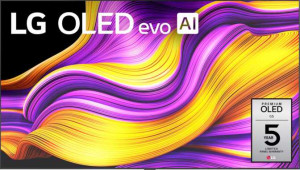
LG OLED97G5WUA 97"
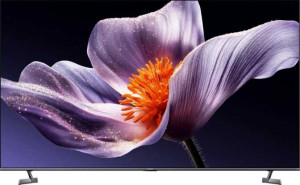
Xiaomi TV S Pro Mini LED 2026 55"

LG OLED97G5WUA 97" Xiaomi TV S Pro Mini LED 2026 55"

Overview

Welcome to our in-depth spec comparison between the LG OLED97G5WUA 97″ and the Xiaomi TV S Pro Mini LED 2026 55″. These two televisions represent very different philosophies in modern display technology, with one leaning on the proven strengths of OLED panel technology at a massive screen size, and the other embracing a compact Mini-LED LCD approach with a higher refresh rate. In this comparison, we examine their key battlegrounds including display technology and picture quality, connectivity options, audio capabilities, and overall design to help you find the right fit for your living room.

Common Features

  • Both TVs have a 4K (UHD) display resolution of 3840 x 2160 px.
  • Both TVs display 1070 million colors with a 10-bit bit depth.
  • HDR10 support is available on both products.
  • Dolby Vision support is available on both products.
  • HLG support is available on both products.
  • An anti-reflection coating is present on both products.
  • Both TVs include Bluetooth connectivity.
  • Both TVs use HDMI 2.1 ports.
  • Wi-Fi support is available on both products.
  • Both TVs have one RJ45 ethernet port.
  • Miracast support is available on both products.
  • Neither TV has an external memory slot.
  • Neither TV has a VGA connector.
  • Both TVs support DVB-T, DVB-T2, DVB-C, DVB-S, and DVB-S2 standards.
  • Dolby Digital support is available on both products.
  • Digital Out support is available on both products.
  • SRS TheaterSound HD is not available on either product.
  • Stereo speakers are present on both products.
  • Dolby Atmos support is available on both products.
  • Dolby Audio support is available on both products.
  • Dolby Virtual support is not available on either product.
  • DTS:X support is available on both products.
  • Both TVs support VESA mounting.
  • Both TVs have a maximum operating temperature of 40 °C and a minimum of 0 °C.
  • Chromecast built-in is available on both products.
  • AirPlay support is available on both products.
  • A built-in smart TV platform is present on both products.
  • Google Assistant compatibility is available on both products.
  • Neither TV works with Siri or Apple HomeKit.
  • Remote smartphone control is supported on both products.
  • Neither TV has a rechargeable remote control.
  • USB recording is supported on both products.

Main Differences

  • Display type is OLED/AMOLED on LG OLED97G5WUA 97″ and QLED Mini-LED LCD on Xiaomi TV S Pro Mini LED 2026 55″.
  • Screen size is 97.4″ on LG OLED97G5WUA 97″ and 55″ on Xiaomi TV S Pro Mini LED 2026 55″.
  • Pixel density is 45 ppi on LG OLED97G5WUA 97″ and 80 ppi on Xiaomi TV S Pro Mini LED 2026 55″.
  • Refresh rate is 120Hz on LG OLED97G5WUA 97″ and 144Hz on Xiaomi TV S Pro Mini LED 2026 55″.
  • HDR10+ support is present on Xiaomi TV S Pro Mini LED 2026 55″ but not available on LG OLED97G5WUA 97″.
  • HDMI port count is 4 on LG OLED97G5WUA 97″ and 3 on Xiaomi TV S Pro Mini LED 2026 55″.
  • Wi-Fi 6E (802.11ax) support is present on LG OLED97G5WUA 97″ but not available on Xiaomi TV S Pro Mini LED 2026 55″.
  • Bluetooth version is 5.3 on LG OLED97G5WUA 97″ and 5.2 on Xiaomi TV S Pro Mini LED 2026 55″.
  • USB port count is 3 on LG OLED97G5WUA 97″ and 2 on Xiaomi TV S Pro Mini LED 2026 55″.
  • A 3.5 mm audio jack socket is present on Xiaomi TV S Pro Mini LED 2026 55″ but not available on LG OLED97G5WUA 97″.
  • Dolby Digital Plus support is present on Xiaomi TV S Pro Mini LED 2026 55″ but not available on LG OLED97G5WUA 97″.
  • A built-in subwoofer is present on LG OLED97G5WUA 97″ but not available on Xiaomi TV S Pro Mini LED 2026 55″.
  • Width is 2153.9 mm on LG OLED97G5WUA 97″ and 1225 mm on Xiaomi TV S Pro Mini LED 2026 55″.
  • Height is 1229.4 mm on LG OLED97G5WUA 97″ and 709 mm on Xiaomi TV S Pro Mini LED 2026 55″.
  • Thickness is 27.9 mm on LG OLED97G5WUA 97″ and 71 mm on Xiaomi TV S Pro Mini LED 2026 55″.
  • Weight is 64002 g on LG OLED97G5WUA 97″ and 12900 g on Xiaomi TV S Pro Mini LED 2026 55″.
  • Alexa compatibility is present on LG OLED97G5WUA 97″ but not available on Xiaomi TV S Pro Mini LED 2026 55″.
  • Operating power consumption is 300W on LG OLED97G5WUA 97″ and 230W on Xiaomi TV S Pro Mini LED 2026 55″.
  • Warranty period is 5 years on LG OLED97G5WUA 97″ and 1 year on Xiaomi TV S Pro Mini LED 2026 55″.
Specs Comparison
LG OLED97G5WUA 97"

LG OLED97G5WUA 97"

Xiaomi TV S Pro Mini LED 2026 55"

Xiaomi TV S Pro Mini LED 2026 55"

Display:
display resolution 4K (UHD) 4K (UHD)
Display type OLED/AMOLED QLED, LED-backlit, LCD, Mini-LED
screen size 97.4" 55"
resolution 3840 x 2160 px 3840 x 2160 px
pixel density 45 ppi 80 ppi
display colors 1070 million 1070 million
bit depth 10-bit 10-bit
refresh rate 120Hz 144Hz
supports HDR10
supports HDR10+
supports Dolby Vision
supports HLG
has anti-reflection coating
has an ambient light sensor
maximum horizontal viewing angle 178º 178º
maximum vertical viewing angle 178º 178º

The most fundamental divide between these two displays is technology and scale. The LG OLED97G5WUA uses a self-emissive OLED panel at a commanding 97.4″, meaning each pixel produces its own light and can switch off completely — delivering true, absolute blacks and near-infinite contrast. The Xiaomi TV S Pro 55″, by contrast, uses a Mini-LED backlit LCD panel: a significant step up from conventional LED LCD, with far more dimming zones for better local contrast, but still fundamentally limited by a backlight layer that OLED doesn't need. In practice, the LG will produce deeper blacks and more cinematic shadow detail, while the Xiaomi can achieve higher sustained peak brightness typical of LED-based panels.

On paper, the Xiaomi holds two notable spec advantages: a higher 144Hz refresh rate versus the LG's 120Hz, and support for HDR10+, the dynamic metadata format that the LG omits. The refresh rate edge benefits fast gaming and motion-heavy content at close viewing distances. HDR10+ support means the Xiaomi is compatible with a broader range of HDR-mastered content from studios and streaming services that use that standard. The LG counters exclusively with Dolby Vision, which both sets share, so neither has a complete HDR coverage gap. One area where the size gap matters technically: the LG's 45 ppi pixel density versus the Xiaomi's 80 ppi reflects the same 4K resolution spread across a nearly double-sized screen — but at typical living-room viewing distances for a 97″ display, this is not a perceptible disadvantage.

Overall, the LG OLED97G5WUA has a clear display quality edge due to its OLED panel's inherent contrast superiority and its massive screen real estate, which makes it a different category of product entirely. The Xiaomi S Pro 55″ counters with practical advantages — a higher refresh rate and HDR10+ compatibility — that matter most for gaming and content variety in a more typical room size. The right choice depends on priorities: absolute picture quality and immersion favor the LG; refresh rate, HDR format breadth, and a more manageable footprint favor the Xiaomi.
Connectivity:
Has Bluetooth
HDMI version HDMI 2.1 HDMI 2.1
HDMI ports 4 3
supports Wi-Fi
Wi-Fi version Wi-Fi 4 (802.11n), Wi-Fi 5 (802.11ac), Wi-Fi 6 (802.11ax), Wi-Fi 6E (802.11ax) Wi-Fi 4 (802.11n), Wi-Fi 5 (802.11ac), Wi-Fi 6 (802.11ax)
Bluetooth version 5.3 5.2
USB ports 3 2
RJ45 ports 1 1
supports Miracast
has a socket for a 3.5 mm audio jack
has an external memory slot
has a VGA connector
DVB standards DVB-T, DVB-T2, DVB-C, DVB-S, DVB-S2 DVB-T, DVB-T2, DVB-C, DVB-S, DVB-S2
has a DVI connector

Port count is where the LG pulls ahead most visibly: 4 HDMI 2.1 ports versus the Xiaomi's 3, and 3 USB ports against the Xiaomi's 2. For a 97″ flagship television likely to anchor a complex home theater setup — game consoles, soundbars, media players, streaming sticks all competing for inputs — that extra HDMI slot is genuinely practical, not just a paper spec. Both sets run HDMI 2.1, so bandwidth capability is equal; it's purely a matter of how many devices you can keep connected simultaneously without swapping cables.

Wireless connectivity tells a similar story. The LG supports Wi-Fi 6E (802.11ax), extending into the 6GHz band, while the Xiaomi tops out at Wi-Fi 6. In real-world terms, Wi-Fi 6E offers less congestion and potentially lower latency in dense wireless environments, though its advantage depends heavily on whether the user's router supports that band. Bluetooth follows the same pattern — the LG's Bluetooth 5.3 versus the Xiaomi's 5.2 is a minor generational step with marginal practical difference for typical TV use cases like connecting a remote or headphones.

The one area where the Xiaomi has an exclusive feature is its 3.5mm audio jack, absent on the LG. For users who want to plug in wired headphones directly to the TV — useful for private listening without a dedicated headphone amp or Bluetooth pairing — this is a meaningful convenience the LG simply doesn't offer. That said, on balance, the LG OLED97G5WUA holds a clear connectivity edge thanks to superior port count and Wi-Fi 6E support, making it the stronger choice for feature-dense home theater environments.

Audio:
supports Dolby Digital
supports Digital Out
supports Dolby Digital Plus
has SRS TheaterSound HD
has stereo speakers
has Dolby Atmos
has Dolby Audio
supports Dolby Virtual
has a subwoofer
has DTS:X
HDMI ARC / eARC HDMI ARC, HDMI eARC HDMI ARC, HDMI eARC

Both televisions share a strong audio foundation: Dolby Atmos, Dolby Audio, DTS:X, and HDMI eARC are all present on each, meaning neither is at a disadvantage when it comes to passing high-quality audio formats to an external soundbar or AV receiver. For users relying on external audio gear — which is common at these price tiers — this parity is the most relevant takeaway, as eARC ensures lossless audio passthrough regardless of which set you choose.

Where the specs diverge is in built-in speaker hardware. The LG includes a built-in subwoofer, which the Xiaomi lacks. A dedicated subwoofer in the cabinet means the LG's internal speaker system can reproduce low-frequency content — bass, rumble, cinematic impact — without relying entirely on the main drivers. The Xiaomi counters with support for Dolby Digital Plus, an enhanced version of Dolby Digital that carries higher bitrate audio data, which the LG does not list. In practice, Dolby Digital Plus is relevant mostly for streaming services that encode at higher bitrates, so it edges out the LG in software-side audio decoding breadth.

These two differences effectively trade off against each other: the LG's subwoofer gives it an advantage for standalone out-of-the-box listening, while the Xiaomi's Dolby Digital Plus support offers marginally wider streaming compatibility. Neither gap is decisive for users pairing the TV with a proper external audio system. For those using the TV's built-in speakers as the primary audio output, though, the LG OLED97G5WUA holds a practical edge thanks to its integrated subwoofer delivering fuller sound without any additional equipment.

Design:
width 2153.9 mm 1225 mm
weight 64002 g 12900 g
thickness 27.9 mm 71 mm
height 1229.4 mm 709 mm
volume 73879.330014 cm³ 61665.275 cm³
Supports VESA mount
maximum operating temperature 40 °C 40 °C
lowest potential operating temperature 0 °C 0 °C

These two televisions occupy entirely different physical categories, and the numbers make that stark. The LG weighs 64 kg against the Xiaomi's 12.9 kg — nearly five times heavier — and spans over 2.1 meters wide compared to the Xiaomi's 1.2 meters. Installation of the LG is a multi-person undertaking by necessity, and wall-mounting a 64 kg panel requires careful assessment of wall structure and mounting hardware rated for that load. The Xiaomi, at under 13 kg, is well within the range a single person can manage with standard mounting equipment.

An interesting inversion appears in thickness: despite being the larger, premium OLED set, the LG is dramatically slimmer at 27.9 mm versus the Xiaomi's 71 mm. This reflects OLED's structural advantage — without a separate backlight assembly, the panel stack is inherently thinner. The Xiaomi's Mini-LED backlighting adds mechanical depth to the chassis. For wall-mount installations where a flush, low-profile look is a priority, the LG sits considerably closer to the wall.

Operating temperature range is identical on both — 0 °C to 40 °C — so neither has an advantage in environmental tolerance. Both also support VESA mounting, keeping installation options equal in that regard. Overall, there is no single ″winner″ in design: the LG's remarkable slimness is a genuine achievement for its size, but its weight and footprint demand serious logistical planning. The Xiaomi is simply a far more manageable product to install and reposition, making it the more practical choice for typical home environments.

Features:
release date March 2025 September 2025
has Chromecast built-in
has AirPlay
has built-in smart TV
compatible with Google Assistant
works with Alexa
works with Siri/Apple HomeKit
supports a remote smartphone
has a rechargeable remote control
supports USB recording
operating power consumption 300W 230W
standby power consumption 0.5W 0.5W
has a search browser
has a sleep timer
has a child lock
warranty period 5 years 1 years
has voice commands

Smart platform parity is high between these two sets: both offer Chromecast built-in, AirPlay, Google Assistant, voice commands, and smartphone remote support, making either a capable hub for a modern connected home. The one meaningful ecosystem divergence is that the LG additionally supports Amazon Alexa, while the Xiaomi does not. For households already invested in Alexa-based smart home devices, that compatibility removes friction — controlling the TV through the same voice ecosystem as lights, thermostats, and speakers is a genuine convenience the Xiaomi can't replicate.

Power consumption reflects the expected size difference: the LG draws up to 300W during operation against the Xiaomi's 230W, a direct consequence of driving a panel nearly four times larger. Neither is surprising for their respective screen sizes. Standby consumption is identical at 0.5W on both, so long-term idle efficiency is a wash.

The most consequential differentiator in this group, however, is warranty coverage. The LG carries a 5-year warranty compared to the Xiaomi's 1-year warranty — a fivefold difference that has real financial implications for a high-value product. A longer warranty signals stronger manufacturer confidence and provides meaningful protection against panel or component failure on an expensive device. This alone gives the LG OLED97G5WUA a clear overall edge in this category, reinforced further by its broader voice assistant compatibility.

Comparison Summary & Verdict

After reviewing all specifications, these two TVs serve clearly different audiences. The LG OLED97G5WUA 97″ is built for those who want a truly cinematic, large-format experience: its 97.4-inch OLED panel, built-in subwoofer, four HDMI 2.1 ports, Wi-Fi 6E support, Alexa compatibility, and an impressive 5-year warranty make it a premium long-term investment for dedicated home theater enthusiasts. The Xiaomi TV S Pro Mini LED 2026 55″, on the other hand, appeals to value-conscious buyers who still want cutting-edge features: its 144Hz refresh rate, HDR10+ support, Dolby Digital Plus, higher pixel density of 80 ppi, and 3.5 mm audio jack offer a compelling and versatile package in a much more manageable size and weight. Neither TV is objectively superior — your ideal choice depends entirely on your space, budget, and viewing priorities.

LG OLED97G5WUA 97
Buy LG OLED97G5WUA 97" if...

Buy the LG OLED97G5WUA 97″ if you want the largest possible OLED screen with a built-in subwoofer, Wi-Fi 6E, four HDMI ports, Alexa support, and the peace of mind of a 5-year warranty.

Xiaomi TV S Pro Mini LED 2026 55
Buy Xiaomi TV S Pro Mini LED 2026 55" if...

Buy the Xiaomi TV S Pro Mini LED 2026 55″ if you prefer a compact, lighter TV with a 144Hz refresh rate, HDR10+ support, higher pixel density, and a 3.5 mm audio jack at a more manageable size.