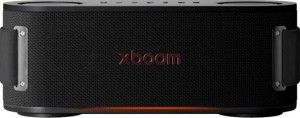
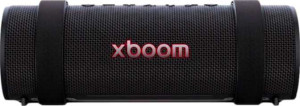
Connectivity is largely a mirror image between these two speakers, with one meaningful exception. Both support multipoint pairing with up to 2 devices simultaneously, share an identical 10 m Bluetooth range, include a USB Type-C port, and offer Auracast broadcast audio — a modern Bluetooth feature that allows a single speaker to stream audio to multiple listeners nearby, useful in shared listening scenarios. Neither supports Wi-Fi, AUX input, aptX variants, LDAC, AirPlay, or Chromecast, so the wireless feature set is lean but consistent across both.
The single differentiator in this group is Bluetooth LE Audio, which the XBoom Bounce supports and the XBoom Grab does not. LE Audio is the next-generation Bluetooth audio standard built on the Low Complexity Communication Codec (LC3), designed to deliver improved audio quality at lower bitrates while also reducing power consumption. It also serves as the underlying protocol that enables Auracast functionality at its fullest capability. The Grab's support for Auracast without LE Audio suggests a more limited implementation of that feature.
On connectivity, the XBoom Bounce holds a narrow but forward-looking edge. For most everyday use cases — pairing a phone, streaming music, connecting two devices — both speakers perform identically. But users who want compatibility with the evolving LE Audio ecosystem or who expect Auracast to work with maximum interoperability will find the Bounce the more future-proof option. The Grab is not deficient in any practical current-day scenario, but the Bounce is simply a step ahead on the Bluetooth technology curve.