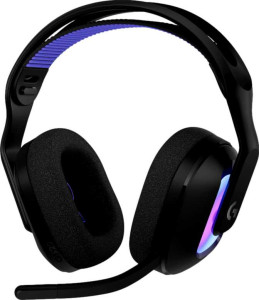
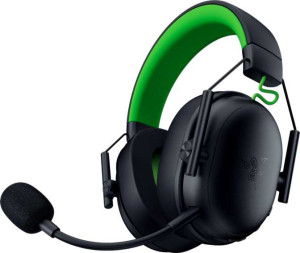
The driver specs tell a revealing story here. The BlackShark V3 X HyperSpeed equips 50 mm drivers with a neodymium magnet, compared to the G522 Lightspeed's 40 mm non-neodymium units. Larger drivers move more air, which generally supports deeper, more impactful bass reproduction, while neodymium magnets improve magnetic flux efficiency — meaning the BlackShark's drivers can theoretically deliver more precise, powerful sound from the same electrical input.
The frequency and sensitivity figures reinforce this advantage. The BlackShark stretches from 12 Hz to 28,000 Hz, well beyond the G522's standard 20 Hz–20,000 Hz range, suggesting greater low-end extension and high-frequency headroom. Its sound pressure level of 106 dB/mW versus the G522's 97 dB/mW means it can reach higher perceived volumes at the same power draw — relevant for users who want impactful audio without pushing amplification hard. The G522's slightly higher impedance of 39 Ohms versus 32 Ohms also means it demands marginally more voltage to drive to the same level, which can matter on lower-powered sources like mobile devices.
Both headsets share virtual surround sound, spatial audio support, passive noise reduction, and a dual-driver configuration, so the core feature set is equivalent. But on raw acoustic specifications, the BlackShark V3 X HyperSpeed holds a clear edge — its wider frequency range, higher sensitivity, more efficient driver technology, and lower impedance collectively point to a more capable sound profile on paper.