Mammotion Yuka 1000
Mammotion Yuka mini 800H

Mammotion Yuka 1000 Mammotion Yuka mini 800H

Overview

Welcome to our in-depth spec comparison between the Mammotion Yuka 1000 and the Mammotion Yuka mini 800H, two robotic lawn mowers from the same family that share a surprising amount of DNA yet diverge in key areas. Both models arrive with smart connectivity, auto docking, and obstacle sensing built in, but the real questions lie in their coverage capacity, cutting performance, and physical footprint. Read on to discover which mower is the right fit for your lawn and lifestyle.

Common Features

  • Both products produce an audible noise level of 60 dB during standard operation.
  • Both products produce an audible noise level of 50 dB in eco mode.
  • Both products have a dedicated smartphone app.
  • Both products support Wi-Fi connectivity.
  • Both products have Bluetooth.
  • Both products are electric.
  • Both products support remote control via smartphone.
  • Both products weigh 10433 g.
  • Both products have an obstacle sensor.
  • Both products have a rain sensor.
  • Both products can be scheduled.
  • Both products have anti-theft features.
  • Both products support auto docking.
  • Both products work with Alexa.
  • Both products are compatible with Google Assistant.
  • Both products have a display.
  • Both products have a slope performance of 50%.
  • Both products offer 5 cutting height settings.
  • Both products have a removable battery.
  • Both products operate at a voltage of 36.7V and a wattage of 88W.

Main Differences

  • Cutting width is 32 cm on Mammotion Yuka 1000 and 21 cm on Mammotion Yuka mini 800H.
  • Height is 330 mm on Mammotion Yuka 1000 and 282 mm on Mammotion Yuka mini 800H.
  • Recommended area is 1012 m² on Mammotion Yuka 1000 and 809 m² on Mammotion Yuka mini 800H.
  • Lawn area coverage is 1214 m² on Mammotion Yuka 1000 and 971 m² on Mammotion Yuka mini 800H.
  • Thickness is 648 mm on Mammotion Yuka 1000 and 526 mm on Mammotion Yuka mini 800H.
  • Width is 518 mm on Mammotion Yuka 1000 and 414 mm on Mammotion Yuka mini 800H.
  • Volume is 110769.12 cm³ on Mammotion Yuka 1000 and 61409.448 cm³ on Mammotion Yuka mini 800H.
  • Mowing time is 100 m on Mammotion Yuka 1000 and 55 m on Mammotion Yuka mini 800H.
  • Maximum cutting height is 102 mm on Mammotion Yuka 1000 and 89 mm on Mammotion Yuka mini 800H.
  • Minimum cutting height is 31 mm on Mammotion Yuka 1000 and 51 mm on Mammotion Yuka mini 800H.
  • Working area capacity is 364 m²/h on Mammotion Yuka 1000 and 162 m²/h on Mammotion Yuka mini 800H.
  • Charge time is 1 hour on Mammotion Yuka 1000 and 1.5 hours on Mammotion Yuka mini 800H.
Specs Comparison
Mammotion Yuka 1000

Mammotion Yuka 1000

Mammotion Yuka mini 800H

Mammotion Yuka mini 800H

General info:
audible noise 60 dB 60 dB
Has a dedicated smartphone app
supports Wi-Fi
audible noise (eco) 50 dB 50 dB
Has Bluetooth
cutting width 32 cm 21 cm
Is electric
height 330 mm 282 mm
recommended area 1012 m² 809 m²
release date April 2025 January 2025
supports a remote smartphone
lawn area coverage 1214 m² 971 m²
thickness 648 mm 526 mm
volume 110769.12 cm³ 61409.448 cm³
weight 10433 g 10433 g
width 518 mm 414 mm

Both the Mammotion Yuka 1000 and the Yuka mini 800H share the same connectivity foundation — Wi-Fi, Bluetooth, a dedicated smartphone app, and remote smartphone support — so neither has an edge in terms of smart-home integration or user control. Their noise output is also identical: 60 dB standard and 50 dB in eco mode. In practice, this means both mowers will produce a similar acoustic footprint in your garden, roughly comparable to a normal conversation at close range.

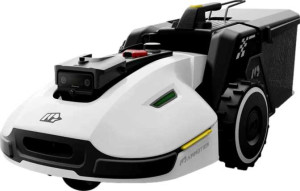
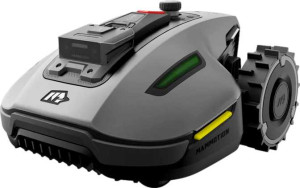
The real divergence is in physical size and coverage capacity. The Yuka 1000 carries a 32 cm cutting width versus the mini 800H's 21 cm — a 52% wider blade pass — which directly translates into fewer total passes needed per session and faster overall mowing. This is reflected in the coverage figures: the 1000 handles a recommended area of 1,012 m² (up to 1,214 m² lawn area coverage), while the mini 800H is rated for 809 m² (up to 971 m²). The Yuka 1000 is also physically larger across every dimension — taller, wider, and thicker — resulting in a volume nearly 80% greater than the mini 800H. Surprisingly, both units weigh exactly 10,433 g, which suggests the mini 800H uses denser or heavier internal components relative to its frame.

The Yuka 1000 holds a clear edge for anyone with a medium-to-large lawn approaching or exceeding 800 m², thanks to its wider cut and higher coverage rating. The Yuka mini 800H, on the other hand, is the stronger fit for smaller, more complex gardens where its more compact footprint — notably 104 mm shorter and 122 mm narrower — may help it navigate tighter spaces despite carrying the same weight.
Features:
has an obstacle sensor
Has a rain sensor
can be scheduled
has anti-theft features
auto docking
works with Alexa
compatible with Google Assistant
Has a display
has a frost sensor
Has mulching feature
adapts to weather conditions
works in rain

Across every feature in this category, the Mammotion Yuka 1000 and Yuka mini 800H are in complete lockstep. Both carry the full suite of environmental intelligence: a rain sensor, frost sensor, and weather adaptation mean each mower can autonomously decide when conditions are unsuitable and reschedule itself — a meaningful quality-of-life advantage over basic robotic mowers that mow blindly regardless of weather. The ability to work in rain adds further operational flexibility, allowing mowing to continue in light precipitation if the user chooses to override.

On the automation and security front, both units offer auto docking, scheduling, obstacle sensing, and anti-theft features — a combination that covers the core concerns of any robotic mower owner. Obstacle detection protects both the mower and garden objects, while anti-theft safeguards are increasingly important as robotic mowers become higher-value targets. The inclusion of an on-device display on both models is a practical touch, allowing quick status checks without pulling out a phone. Voice assistant compatibility with both Alexa and Google Assistant rounds out the smart-home integration story.

This group results in a complete tie. There is not a single feature differentiator between the two models here — a buyer choosing between the Yuka 1000 and Yuka mini 800H on the basis of features alone will find no reason to prefer one over the other. The decision will therefore hinge entirely on other factors such as lawn size and physical dimensions, as analyzed in the General Info group.

Performance:
slope performance 50% 50%
mowing time 100 m 55 m
number of cutting height settings 5 5
maximum cutting height 102 mm 89 mm
minimum cutting height 31 mm 51 mm
working area capacity 364 m²/h 162 m²/h

The most striking gap in this group is working area capacity: the Yuka 1000 covers 364 m²/h compared to the mini 800H's 162 m²/h — more than double the throughput. Combined with a longer single mowing session of 100 minutes versus 55 minutes, the Yuka 1000 can cover significantly more ground before needing to dock, which matters most on larger lawns where frequent recharge cycles would otherwise fragment the mowing schedule and extend total completion time across the day.

Cutting height flexibility is another area where the two diverge. Both offer 5 height settings, but the Yuka 1000 spans a wider range — from 31 mm at the lowest to 102 mm at the highest — while the mini 800H is constrained between 51 mm and 89 mm. In practical terms, the 1000 can cut shorter for a formal lawn aesthetic or cope with taller, more overgrown grass, whereas the mini 800H operates within a narrower mid-range band. For users who want precise control over lawn presentation, this 71 mm range versus 38 mm range difference is meaningful. Slope handling, however, is identical at 50%, so neither unit has an advantage on inclined terrain.

The Yuka 1000 wins this group decisively. Its superior working area capacity and broader cutting height range make it a more capable and versatile performer across a wider variety of lawn conditions, while the mini 800H's more limited range and lower throughput position it as better suited to smaller, more uniform lawns where those constraints are less likely to be felt.

Power:
charge time 1 hours 1.5 hours
has a removable battery
voltage 36.7V 36.7V
wattage 88W 88W

On voltage and wattage, these two mowers are identical — both run on 36.7V at 88W — meaning they draw the same power during operation and share the same electrical architecture. Both also feature a removable battery, which is a noteworthy practical advantage over sealed designs: if the battery degrades over time, it can be swapped out rather than requiring a full unit replacement or a service visit.

The only differentiator in this group is charge time. The Yuka 1000 fully recharges in 1 hour, while the mini 800H requires 1.5 hours — 50% longer. Given that both mowers operate at the same wattage, this difference most likely reflects a smaller battery capacity in the Yuka 1000 rather than a faster charging circuit, which is consistent with its shorter mowing session time noted in the Performance group. For the mini 800H, the longer charge time means a slightly larger window of downtime between mowing cycles, which could be a minor inconvenience on days when the mower needs to complete multiple sessions to cover the full lawn.

The Yuka 1000 holds a narrow edge here solely on the basis of its faster 1-hour charge time, which reduces downtime between sessions. For users managing lawns that require the mower to dock and resume multiple times per day, this 30-minute difference can meaningfully affect overall mowing efficiency. The removable battery on both models is equally valuable and cancels out as a differentiator.

Comparison Summary & Verdict

After reviewing all available specifications, the two mowers reveal a clear split in ambition. The Mammotion Yuka 1000 is the more capable machine on paper: its 32 cm cutting width, 364 m²/h working area capacity, and recommended coverage of 1012 m² make it the stronger choice for larger gardens where efficiency matters. It also offers a wider cutting height range, going as low as 31 mm, and charges in just one hour. The Mammotion Yuka mini 800H, by contrast, is a more compact and lighter-footprint option with a narrower 21 cm cutting width and a recommended area of 809 m², better suited to smaller lawns where maneuverability and a smaller physical size are priorities. Both share identical noise levels, smart features, slope performance, and battery voltage, so neither compromises on everyday usability. Your decision ultimately comes down to lawn size and how quickly you need the job done.

Mammotion Yuka 1000
Buy Mammotion Yuka 1000 if...

Buy the Mammotion Yuka 1000 if you have a larger lawn and need faster mowing coverage, a wider cutting width of 32 cm, and a lower minimum cutting height of 31 mm.

Mammotion Yuka mini 800H
Buy Mammotion Yuka mini 800H if...

Buy the Mammotion Yuka mini 800H if you have a smaller garden and prefer a more compact mower with a reduced physical footprint that is easier to store and maneuver.