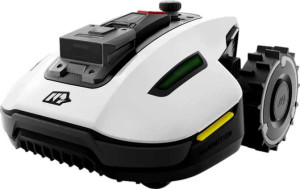
Mammotion Yuka mini 600H
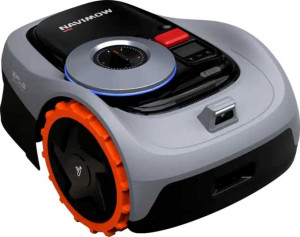
Segway Navimow i105

Mammotion Yuka mini 600H Segway Navimow i105

Overview

Welcome to our in-depth specification comparison between the Mammotion Yuka mini 600H and the Segway Navimow i105. Both robotic mowers share a strong feature foundation — including app control, rain sensing, and auto docking — yet they take very different approaches when it comes to lawn coverage capacity, slope handling, and cutting height range. Read on to discover which model best fits your garden and lifestyle.

Common Features

  • Both products have a dedicated smartphone app.
  • Both products support Wi-Fi connectivity.
  • Both products produce 50 dB of audible noise in eco mode.
  • Both products have Bluetooth connectivity.
  • Both products are electric.
  • Both products support remote control via a smartphone.
  • Both products have an obstacle sensor.
  • Both products have a rain sensor.
  • Both products can be scheduled.
  • Both products have anti-theft features.
  • Both products support auto docking.
  • Both products work with Alexa.
  • Both products are compatible with Google Assistant.
  • Both products have a display.
  • Both products have a charge time of 1.5 hours.
  • Both products have a removable battery.

Main Differences

  • Audible noise is 60 dB on Mammotion Yuka mini 600H and 58 dB on Segway Navimow i105.
  • Cutting width is 21 cm on Mammotion Yuka mini 600H and 18 cm on Segway Navimow i105.
  • Height is 282 mm on Mammotion Yuka mini 600H and 285 mm on Segway Navimow i105.
  • Recommended area is 607 m² on Mammotion Yuka mini 600H and 400 m² on Segway Navimow i105.
  • Lawn area coverage is 809 m² on Mammotion Yuka mini 600H and 500 m² on Segway Navimow i105.
  • Thickness is 526 mm on Mammotion Yuka mini 600H and 545 mm on Segway Navimow i105.
  • Volume is 61409.448 cm³ on Mammotion Yuka mini 600H and 59800.125 cm³ on Segway Navimow i105.
  • Weight is 10433 g on Mammotion Yuka mini 600H and 10900 g on Segway Navimow i105.
  • Width is 414 mm on Mammotion Yuka mini 600H and 385 mm on Segway Navimow i105.
  • Slope performance is 50% on Mammotion Yuka mini 600H and 30% on Segway Navimow i105.
  • Mowing time is 55 minutes on Mammotion Yuka mini 600H and 60 minutes on Segway Navimow i105.
  • Number of cutting height settings is 5 on Mammotion Yuka mini 600H and 6 on Segway Navimow i105.
  • Maximum cutting height is 89 mm on Mammotion Yuka mini 600H and 60 mm on Segway Navimow i105.
  • Minimum cutting height is 51 mm on Mammotion Yuka mini 600H and 20 mm on Segway Navimow i105.
  • Working area capacity is 162 m²/h on Mammotion Yuka mini 600H and 85 m²/h on Segway Navimow i105.
  • Voltage is 36.7V on Mammotion Yuka mini 600H and 11V on Segway Navimow i105.
  • Wattage is 88W on Mammotion Yuka mini 600H and 367W on Segway Navimow i105.
Specs Comparison
Mammotion Yuka mini 600H

Mammotion Yuka mini 600H

Segway Navimow i105

Segway Navimow i105

General info:
audible noise 60 dB 58 dB
Has a dedicated smartphone app
supports Wi-Fi
audible noise (eco) 50 dB 50 dB
Has Bluetooth
cutting width 21 cm 18 cm
Is electric
height 282 mm 285 mm
recommended area 607 m² 400 m²
release date January 2025 January 2025
supports a remote smartphone
lawn area coverage 809 m² 500 m²
thickness 526 mm 545 mm
volume 61409.448 cm³ 59800.125 cm³
weight 10433 g 10900 g
width 414 mm 385 mm

Both the Mammotion Yuka mini 600H and the Segway Navimow i105 share the same fundamental feature set — electric operation, dedicated smartphone app, Wi-Fi, Bluetooth, and remote smartphone control — so neither holds an edge on connectivity or smart-home integration. In eco mode, both produce an identical 50 dB, making them equally neighbor-friendly during quieter operation cycles.

Where the two diverge meaningfully is in coverage capability and cutting efficiency. The Yuka mini 600H offers a 21 cm cutting width versus the i105's 18 cm, a 17% wider blade pass that directly translates to fewer laps per session and faster overall mowing — a real advantage on larger plots. This aligns with its significantly higher recommended area of 607 m² (vs. 400 m²) and lawn area coverage of 809 m² (vs. 500 m²), meaning the Yuka is genuinely rated for medium-sized gardens where the i105 is better suited to compact lawns. The Yuka also comes in ~467 g lighter at 10,433 g, which matters for manual repositioning or installation on uneven terrain.

The i105 does edge out the Yuka on peak noise — 58 dB vs. 60 dB — a marginal but real difference if the mower runs during sensitive hours, and its slightly narrower footprint (width 385 mm vs. 414 mm) may help it navigate tighter garden corridors. Overall, however, the Yuka mini 600H holds a clear advantage for anyone with a lawn above ~400 m², thanks to its wider cutting deck, greater coverage ratings, and lighter build, while the i105 is the more fitting choice only for smaller, space-constrained gardens where its quieter peak operation and narrower profile become genuine selling points.
Features:
has an obstacle sensor
Has a rain sensor
can be scheduled
has anti-theft features
auto docking
works with Alexa
compatible with Google Assistant
Has a display
has a frost sensor
Has mulching feature
adapts to weather conditions
works in rain

Across every feature in this group, the Mammotion Yuka mini 600H and the Segway Navimow i105 are in complete lockstep. Both carry a full suite of environmental intelligence — rain sensor, frost sensor, and weather adaptation — meaning neither mower will blindly operate in conditions that could damage the lawn or the unit itself. The practical upshot is a genuinely set-and-forget ownership experience on either device.

On the automation and safety front, the picture is equally balanced: both support scheduling, auto docking, and anti-theft protection, and both can operate in rain, which is a meaningful differentiator from entry-level robotic mowers that park themselves at the first drizzle. The inclusion of a mulching feature on both units adds quiet value — finely cut clippings returned to the soil reduce the need for supplemental fertilizer over time.

Smart-home integration is also a draw, with Alexa and Google Assistant compatibility present on both, alongside an on-unit display for direct interaction without reaching for a phone. Given that every single feature in this group is shared identically, this is a complete tie — neither product holds any advantage here, and a buyer's decision should rest entirely on the differentiators found in other specification groups.

Performance:
slope performance 50% 30%
mowing time 55 m 60 m
number of cutting height settings 5 6
maximum cutting height 89 mm 60 mm
minimum cutting height 51 mm 20 mm
working area capacity 162 m²/h 85 m²/h

The performance gap between these two mowers is substantial in several key areas. Most striking is the working area capacity: the Yuka mini 600H covers 162 m²/h versus the i105's 85 m²/h — nearly double the throughput. Combined with its wider cutting deck noted elsewhere, this means the Yuka will complete the same mowing job in roughly half the active time, a genuinely significant operational difference for anyone with a medium-to-large lawn.

Terrain capability is another area where the two diverge sharply. The Yuka is rated for slopes up to 50% (approximately 27°), while the i105 tops out at 30% (about 17°). In practice, a 50% slope rating handles everything from gentle garden terracing to quite steep embankments, whereas the i105 is better confined to relatively flat or mildly undulating ground. If your garden has any serious inclines, this spec alone is a deciding factor. The i105 does edge ahead on cutting height range, though: its minimum of 20 mm can achieve a tighter, lawn-like finish compared to the Yuka's 51 mm floor, and its 60 mm maximum — while lower than the Yuka's 89 mm ceiling — suits most ornamental lawns. The i105's extra cutting height setting (6 vs. 5) offers marginally finer granularity within that narrower band.

On balance, the Yuka mini 600H holds a clear performance advantage for most users — its superior slope handling and dramatically higher area capacity make it the more capable and efficient machine. The i105's only genuine performance niche is for owners who prioritize a closely cropped, low-cut finish on flat terrain, where its lower minimum cutting height becomes the relevant differentiator.

Power:
charge time 1.5 hours 1.5 hours
has a removable battery
voltage 36.7V 11V
wattage 88W 367W

Two specs here create an immediate point of parity: both mowers share an identical 1.5-hour charge time and both feature a removable battery. The removable battery is a practical convenience often overlooked at purchase — it allows charging indoors without needing a power outlet near the docking station, and simplifies future battery replacement as the unit ages.

The voltage and wattage figures tell a more complex story. The Yuka mini 600H runs at 36.7V / 88W, while the i105 operates at 11V / 367W. The i105's dramatically higher wattage figure indicates a much greater peak power draw, which in cutting terms can translate to more aggressive motor torque — potentially useful in dense or overgrown grass. The Yuka's higher voltage with lower wattage suggests a more energy-efficient power architecture, prioritizing sustained, controlled operation over raw power bursts. In typical well-maintained lawn conditions this distinction may rarely surface, but in demanding cutting situations the i105's power headroom could prove relevant.

On the whole, this group is evenly matched on the specs that affect day-to-day usability — charge time and battery removability are identical. The power architecture difference is notable but its real-world impact depends heavily on use case; neither configuration is categorically superior based on these figures alone, and users should weigh this alongside the performance and coverage data from other groups to form a complete picture.

Comparison Summary & Verdict

After examining every specification, these two robotic mowers clearly target different gardening profiles. The Mammotion Yuka mini 600H stands out with its impressive 50% slope performance, larger recommended area of 607 m², and a higher maximum cutting height of 89 mm, making it the stronger choice for owners with demanding or uneven terrain and bigger lawns. Its working area capacity of 162 m²/h also means it gets the job done significantly faster. The Segway Navimow i105, on the other hand, offers a lower minimum cutting height of 20 mm and one extra cutting height setting, giving it an edge for users who prefer a finely manicured, low-cut lawn on flatter, smaller plots. Both products charge in 1.5 hours and share an equally rich smart-home feature set, so the decision ultimately comes down to lawn size, terrain complexity, and your preferred grass height preferences.

Mammotion Yuka mini 600H
Buy Mammotion Yuka mini 600H if...

Buy the Mammotion Yuka mini 600H if you have a larger lawn, steep slopes to tackle, or need a faster mowing rate — its 50% slope handling and 162 m²/h working capacity make it the clear choice for demanding gardens.

Segway Navimow i105
Buy Segway Navimow i105 if...

Buy the Segway Navimow i105 if you maintain a smaller, flatter lawn and prefer a lower, more precise cut, as its 20 mm minimum cutting height and six cutting height settings give you finer control over grass length.