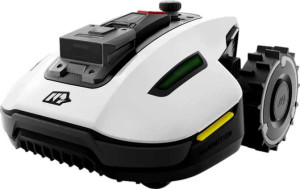
Mammotion Yuka mini 600H
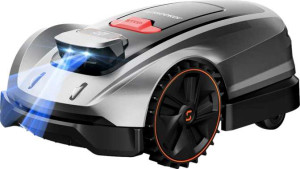
Sunseeker X3 Plus

Mammotion Yuka mini 600H Sunseeker X3 Plus

Overview

Choosing the right robotic lawn mower means weighing factors like coverage capacity, slope handling, and cutting flexibility. In this head-to-head comparison between the Mammotion Yuka mini 600H and the Sunseeker X3 Plus, we put two capable electric mowers side by side to examine how they differ across performance, power, and physical design — helping you decide which one truly fits your garden and lifestyle.

Common Features

  • Both products produce an audible noise level of 60 dB during standard operation.
  • Both products produce an audible noise level of 50 dB in eco mode.
  • A dedicated smartphone app is available on both products.
  • Wi-Fi connectivity is supported on both products.
  • Bluetooth is available on both products.
  • Remote smartphone control is supported on both products.
  • Obstacle sensing is available on both products.
  • A rain sensor is present on both products.
  • Scheduled mowing can be configured on both products.
  • Anti-theft features are available on both products.
  • Auto docking is supported on both products.
  • Alexa compatibility is available on both products.
  • Google Assistant compatibility is available on both products.
  • A display is present on both products.
  • The charge time is 1.5 hours on both products.

Main Differences

  • Cutting width is 21 cm on Mammotion Yuka mini 600H and 20 cm on Sunseeker X3 Plus.
  • Height is 282 mm on Mammotion Yuka mini 600H and 250 mm on Sunseeker X3 Plus.
  • Recommended area is 607 m² on Mammotion Yuka mini 600H and 960 m² on Sunseeker X3 Plus.
  • Lawn area coverage is 809 m² on Mammotion Yuka mini 600H and 1200 m² on Sunseeker X3 Plus.
  • Thickness is 526 mm on Mammotion Yuka mini 600H and 608 mm on Sunseeker X3 Plus.
  • Volume is 61409.448 cm³ on Mammotion Yuka mini 600H and 57760 cm³ on Sunseeker X3 Plus.
  • Weight is 10433 g on Mammotion Yuka mini 600H and 9000 g on Sunseeker X3 Plus.
  • Width is 414 mm on Mammotion Yuka mini 600H and 380 mm on Sunseeker X3 Plus.
  • Slope performance is 50% on Mammotion Yuka mini 600H and 30% on Sunseeker X3 Plus.
  • Mowing time is 55 minutes on Mammotion Yuka mini 600H and 90 minutes on Sunseeker X3 Plus.
  • Number of cutting height settings is 5 on Mammotion Yuka mini 600H and 3 on Sunseeker X3 Plus.
  • Maximum cutting height is 89 mm on Mammotion Yuka mini 600H and 80 mm on Sunseeker X3 Plus.
  • Minimum cutting height is 51 mm on Mammotion Yuka mini 600H and 40 mm on Sunseeker X3 Plus.
  • Working area capacity is 162 m²/h on Mammotion Yuka mini 600H and 243 m²/h on Sunseeker X3 Plus.
  • A removable battery is available on Mammotion Yuka mini 600H but not available on Sunseeker X3 Plus.
  • Voltage is 36.7V on Mammotion Yuka mini 600H and 20V on Sunseeker X3 Plus.
  • Wattage is 88W on Mammotion Yuka mini 600H and 100W on Sunseeker X3 Plus.
Specs Comparison
Mammotion Yuka mini 600H

Mammotion Yuka mini 600H

Sunseeker X3 Plus

Sunseeker X3 Plus

General info:
audible noise 60 dB 60 dB
Has a dedicated smartphone app
supports Wi-Fi
audible noise (eco) 50 dB 50 dB
Has Bluetooth
cutting width 21 cm 20 cm
Is electric
height 282 mm 250 mm
recommended area 607 m² 960 m²
release date January 2025 April 2025
supports a remote smartphone
lawn area coverage 809 m² 1200 m²
thickness 526 mm 608 mm
volume 61409.448 cm³ 57760 cm³
weight 10433 g 9000 g
width 414 mm 380 mm

Both the Mammotion Yuka mini 600H and the Sunseeker X3 Plus share an identical connectivity and noise profile: both are electric, offer Wi-Fi, Bluetooth, a dedicated smartphone app, and remote control support, and both produce 60 dB of audible noise during normal operation, dropping to a quieter 50 dB in eco mode. This means neither product has an edge in terms of smart-home integration or neighborhood-friendliness — they are effectively tied on these fronts.

Where the two diverge significantly is in coverage capacity and physical footprint. The X3 Plus is rated for a recommended area of 960 m² with a maximum lawn coverage of 1,200 m², compared to the Yuka mini 600H's 607 m² recommended and 809 m² maximum. That is roughly a 50% larger operational range, making the X3 Plus a considerably better fit for medium-to-large gardens. The Yuka mini 600H, as its name implies, is better suited for compact or moderately sized lawns. On physical dimensions, the X3 Plus is lighter at 9,000 g versus the Yuka mini's 10,433 g — a difference of nearly 1.5 kg that matters when lifting the mower for maintenance or storage. The Yuka mini is thinner (526 mm vs 608 mm), which could aid storage in tight spaces, but the X3 Plus is shorter in height (250 mm vs 282 mm).

Overall, the Sunseeker X3 Plus holds a clear advantage in this group for users with larger lawns, thanks to its substantially higher coverage capacity and lower weight. The Mammotion Yuka mini 600H is the more appropriate choice only if your lawn falls well within the 600–800 m² range and compact thickness is a storage priority.
Features:
has an obstacle sensor
Has a rain sensor
can be scheduled
has anti-theft features
auto docking
works with Alexa
compatible with Google Assistant
Has a display
has a frost sensor
Has mulching feature
adapts to weather conditions
works in rain

Across the entire Features specification group, the Mammotion Yuka mini 600H and the Sunseeker X3 Plus are in complete lockstep — every single capability listed is present on both models. This is a notable finding in itself: both robotic mowers have reached what could be considered a full-featured baseline for modern autonomous lawn care, leaving no functional gap between them on this dimension.

The shared feature set is genuinely comprehensive and worth contextualizing. Obstacle detection, rain sensing, and frost sensing work together to create an adaptive mowing system that can protect itself and your lawn from damage without user intervention — frost sensing in particular is a premium touch that prevents mowing on frozen or frost-covered grass, which can cause lasting turf damage. Auto docking combined with scheduling means the mower operates as a fully autonomous loop, returning to its base to charge and resuming on its own timetable. The addition of Alexa and Google Assistant compatibility extends control into any smart-home ecosystem, while the onboard display provides local status feedback without needing a phone. The mulching feature is a meaningful lawn health benefit, recycling clippings as fine fertilizer rather than collecting them.

With no differentiating data points in this group, the verdict is an unambiguous tie. A buyer cannot use the Features category to distinguish between these two products — the decision will need to rest on other specification groups such as performance, coverage, or cutting mechanics.

Performance:
slope performance 50% 30%
mowing time 55 m 90 m
number of cutting height settings 5 3
maximum cutting height 89 mm 80 mm
minimum cutting height 51 mm 40 mm
working area capacity 162 m²/h 243 m²/h

Performance is where these two mowers diverge most sharply, and the trade-offs are meaningful. The Sunseeker X3 Plus operates at a working area capacity of 243 m²/h — 50% faster than the Yuka mini 600H's 162 m²/h — and runs for 90 minutes per mowing session versus the Yuka mini's 55 minutes. In practical terms, the X3 Plus will cover a given lawn in fewer sessions with less frequent trips back to the dock, translating to greater day-to-day efficiency on larger plots.

Terrain capability tells a very different story, however. The Yuka mini 600H handles slopes of up to 50% — a steep incline that equates to roughly 27 degrees — while the X3 Plus is rated to only 30% (about 17 degrees). For gardens with embankments, terraces, or rolling terrain, this is a decisive specification: the X3 Plus would simply be unable to safely navigate slopes that the Yuka mini handles with ease. On cutting height, the Yuka mini offers 5 adjustment settings ranging from 51 mm to 89 mm, giving users finer-grained control over grass length and the ability to maintain taller, more ornamental grass styles. The X3 Plus provides only 3 settings but reaches a lower minimum of 40 mm, suiting those who prefer a shorter, tighter cut.

There is no single winner in this group — it is a question of which performance dimension matters most to the buyer. The X3 Plus has the edge for flat, larger lawns where speed and session length are priorities. The Yuka mini 600H is the stronger choice for hilly or uneven terrain, and for users who want more precision in how tall their grass is kept.

Power:
charge time 1.5 hours 1.5 hours
has a removable battery
voltage 36.7V 20V
wattage 88W 100W

Charging time is the one point of parity here — both mowers replenish fully in 1.5 hours, meaning neither has a recovery advantage between mowing sessions. Beyond that shared trait, the power profiles diverge in instructive ways. The Yuka mini 600H operates at 36.7V compared to the X3 Plus's 20V, a substantial voltage difference that generally indicates a higher-capacity battery system capable of sustaining output more consistently under load, particularly on demanding terrain. The X3 Plus counters with a slightly higher motor draw of 100W versus the Yuka mini's 88W, suggesting it pushes more power through its cutting system — which may help explain its faster area coverage rate seen in the Performance group.

The most practically significant differentiator in this group is battery removability. The Yuka mini 600H features a removable battery, which opens up meaningful real-world flexibility: a user can purchase a spare pack and hot-swap it to extend runtime without waiting for a charge cycle, and battery replacement at end-of-life is straightforward. The X3 Plus has a non-removable battery, which simplifies the mower's physical design but means the unit must dock to recharge and that long-term battery degradation requires a service intervention rather than a simple swap.

On balance, the Yuka mini 600H holds the edge in this group. Its higher operating voltage points to a more robust power architecture, and the removable battery is a tangible convenience and longevity advantage that the X3 Plus simply cannot match.

Comparison Summary & Verdict

Both mowers share a strong common foundation — identical noise levels, full app connectivity, rain and obstacle sensors, and auto docking — so the decision comes down to your specific needs. The Mammotion Yuka mini 600H stands out with a superior slope performance of 50%, a removable battery, five cutting height settings reaching up to 89 mm, and a higher voltage of 36.7V, making it the stronger pick for uneven or hilly terrain where adaptability matters. The Sunseeker X3 Plus, on the other hand, excels for larger flat lawns, covering up to 1200 m² with a working area capacity of 243 m²/h, while also being notably lighter at 9000 g and offering a longer single mowing time of 90 minutes. Choose the Yuka mini 600H for challenging terrain and battery flexibility; choose the X3 Plus for wide, flat spaces where coverage speed and lighter handling are the priority.

Mammotion Yuka mini 600H
Buy Mammotion Yuka mini 600H if...

Buy the Mammotion Yuka mini 600H if your lawn includes steep slopes or uneven terrain, or if having a removable battery and greater cutting height flexibility is important to you.

Sunseeker X3 Plus
Buy Sunseeker X3 Plus if...

Buy the Sunseeker X3 Plus if you have a large, relatively flat lawn and want faster area coverage, a lighter machine, and a longer single mowing session.