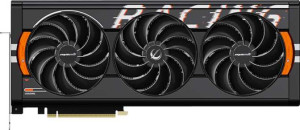
Manli Gallardo GeForce RTX 5090 OC
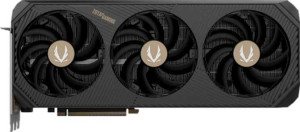
Zotac Gaming GeForce RTX 5090 Solid

Manli Gallardo GeForce RTX 5090 OC Zotac Gaming GeForce RTX 5090 Solid

Overview

Welcome to this detailed specification face-off between the Manli Gallardo GeForce RTX 5090 OC and the Zotac Gaming GeForce RTX 5090 Solid. Both cards are built on the same Blackwell architecture and share a substantial amount of common ground, yet they diverge in meaningful ways across GPU turbo clocks, memory performance, and physical dimensions. Read on to discover which card best suits your build and priorities.

Common Features

  • Both cards share a base GPU clock speed of 2017 MHz.
  • Both cards have a GPU memory speed of 1750 MHz.
  • Both cards feature 21760 shading units.
  • Both cards include 680 texture mapping units (TMUs).
  • Both cards have 176 render output units (ROPs).
  • Double Precision Floating Point (DPFP) is supported on both cards.
  • Both cards come with 32GB of VRAM.
  • Both cards use GDDR7 memory.
  • Both cards have a 512-bit memory bus width.
  • ECC memory is supported on both cards.
  • Both cards support DirectX 12 Ultimate.
  • Both cards support OpenGL version 4.6.
  • Both cards support OpenCL version 3.
  • Multi-display technology is supported on both cards.
  • Ray tracing is supported on both cards.
  • 3D support is available on both cards.
  • DLSS is supported on both cards.
  • XeSS (XMX) is not available on either card.
  • Both cards have one HDMI 2.1b output and three DisplayPort outputs.
  • Neither card includes USB-C, DVI, or mini DisplayPort outputs.
  • Both cards are built on the Blackwell GPU architecture using a 5 nm process.
  • Both cards have a Thermal Design Power (TDP) of 575W.
  • Both cards use PCIe version 5.
  • Both cards feature 92,200 million transistors.
  • Air-water cooling is not available on either card.

Main Differences

  • GPU turbo clock speed is 2482 MHz on Manli Gallardo GeForce RTX 5090 OC and 2407 MHz on Zotac Gaming GeForce RTX 5090 Solid.
  • Pixel rate is 436.8 GPixel/s on Manli Gallardo GeForce RTX 5090 OC and 423.6 GPixel/s on Zotac Gaming GeForce RTX 5090 Solid.
  • Floating-point performance is 108 TFLOPS on Manli Gallardo GeForce RTX 5090 OC and 104.8 TFLOPS on Zotac Gaming GeForce RTX 5090 Solid.
  • Texture rate is 1688 GTexels/s on Manli Gallardo GeForce RTX 5090 OC and 1637 GTexels/s on Zotac Gaming GeForce RTX 5090 Solid.
  • Effective memory speed is 30000 MHz on Manli Gallardo GeForce RTX 5090 OC and 28000 MHz on Zotac Gaming GeForce RTX 5090 Solid.
  • Maximum memory bandwidth is 1792 GB/s on Manli Gallardo GeForce RTX 5090 OC and 1790 GB/s on Zotac Gaming GeForce RTX 5090 Solid.
  • Card width is 359 mm on Manli Gallardo GeForce RTX 5090 OC and 329.7 mm on Zotac Gaming GeForce RTX 5090 Solid.
  • Card height is 145 mm on Manli Gallardo GeForce RTX 5090 OC and 137.8 mm on Zotac Gaming GeForce RTX 5090 Solid.
Specs Comparison
Manli Gallardo GeForce RTX 5090 OC

Manli Gallardo GeForce RTX 5090 OC

Zotac Gaming GeForce RTX 5090 Solid

Zotac Gaming GeForce RTX 5090 Solid

Performance:
GPU clock speed 2017 MHz 2017 MHz
GPU turbo 2482 MHz 2407 MHz
pixel rate 436.8 GPixel/s 423.6 GPixel/s
floating-point performance 108 TFLOPS 104.8 TFLOPS
texture rate 1688 GTexels/s 1637 GTexels/s
GPU memory speed 1750 MHz 1750 MHz
shading units 21760 21760
texture mapping units (TMUs) 680 680
render output units (ROPs) 176 176
Has Double Precision Floating Point (DPFP)

Both cards share an identical foundation: the same 2017 MHz base clock, 21,760 shading units, 680 TMUs, 176 ROPs, and 1750 MHz memory speed. This means that under light or sustained workloads where the GPU doesn't fully boost, the two cards are effectively indistinguishable in architecture and throughput potential.

The meaningful separation appears under peak boost conditions. The Manli Gallardo OC reaches a 2482 MHz turbo clock versus the Zotac Solid's 2407 MHz — a 75 MHz advantage that directly cascades into every derived performance metric. This translates to a higher pixel rate of 436.8 GPixel/s (vs 423.6), a floating-point performance of 108 TFLOPS (vs 104.8), and a texture rate of 1688 GTexels/s (vs 1637). In real-world terms, the higher turbo clock gives the Manli a consistent edge in GPU-bound scenarios — particularly in rasterization-heavy workloads, high-resolution rendering, and compute tasks — where peak throughput is the bottleneck.

The performance edge clearly belongs to the Manli Gallardo OC, courtesy of its factory overclock pushing a higher sustained boost frequency. The gap is modest — roughly 3% across the board — so users won't see dramatic frame rate differences, but the Manli does deliver measurably more headroom out of the box without any manual tuning required.

Memory:
effective memory speed 30000 MHz 28000 MHz
maximum memory bandwidth 1792 GB/s 1790 GB/s
VRAM 32GB 32GB
GDDR version GDDR7 GDDR7
memory bus width 512-bit 512-bit
Supports ECC memory

The Manli Gallardo GeForce RTX 5090 OC and the Zotac Gaming GeForce RTX 5090 Solid both offer 32GB of VRAM, ensuring ample memory for demanding tasks. Both GPUs are equipped with GDDR7 memory, providing the latest in memory technology, and feature a 512-bit memory bus width, offering broad memory access for high-performance operations.

However, there is a slight difference in effective memory speed. The Manli GPU boasts an effective memory speed of 30000 MHz, while the Zotac GPU has a slightly lower effective memory speed of 28000 MHz. This results in a marginal difference in memory throughput between the two products.

Both models have a very close maximum memory bandwidth, with the Manli achieving 1792 GB/s and the Zotac slightly behind at 1790 GB/s. Both products also support ECC (Error-Correcting Code) memory, ensuring data integrity during intensive computational tasks.

Features:
DirectX version DirectX 12 Ultimate DirectX 12 Ultimate
OpenGL version 4.6 4.6
OpenCL version 3 3
Supports multi-display technology
supports ray tracing
Supports 3D
supports DLSS
has XeSS (XMX)
AMD SAM / Intel Resizable BAR Intel Resizable BAR Intel Resizable BAR
has LHR
has RGB lighting
supported displays 4 4

The Manli Gallardo GeForce RTX 5090 OC and the Zotac Gaming GeForce RTX 5090 Solid are nearly identical in terms of features. Both support DirectX 12 Ultimate, OpenGL 4.6, and OpenCL 3, ensuring compatibility with modern gaming and graphics applications. They also both support multi-display technology, ray tracing, 3D, and DLSS, making them well-suited for immersive, high-performance experiences.

Additionally, both products do not feature XeSS (XMX) support and both are equipped with Intel Resizable BAR, which allows for optimized communication between the CPU and GPU. Neither product has LHR (Lite Hash Rate), indicating that they are not limited in terms of mining performance.

On the aesthetic side, both models come with RGB lighting for customization, and both can support up to 4 displays simultaneously. There are no differences between the two in terms of these features.

Ports:
has an HDMI output
HDMI ports 1 1
HDMI version HDMI 2.1b HDMI 2.1b
DisplayPort outputs 3 3
USB-C ports 0 0
DVI outputs 0 0
mini DisplayPort outputs 0 0

Both the Manli Gallardo GeForce RTX 5090 OC and the Zotac Gaming GeForce RTX 5090 Solid share identical port configurations. Each model features 1 HDMI port with HDMI 2.1b support, 3 DisplayPort outputs, and no USB-C, DVI, or mini DisplayPort outputs.

These port setups offer the same display connectivity options, ensuring both products are capable of supporting high-definition video output across multiple monitors with modern HDMI and DisplayPort standards.

As a result, there are no differences in the ports and connectivity features between the two products.

General info:
GPU architecture Blackwell Blackwell
release date February 2025 January 2025
Thermal Design Power (TDP) 575W 575W
PCI Express (PCIe) version 5 5
semiconductor size 5 nm 5 nm
number of transistors 92200 million 92200 million
Has air-water cooling
width 359 mm 329.7 mm
height 145 mm 137.8 mm

The Manli Gallardo GeForce RTX 5090 OC and the Zotac Gaming GeForce RTX 5090 Solid are built on the same GPU architecture, Blackwell, and share identical specifications for thermal design power (TDP) at 575W, PCI Express version 5, semiconductor size at 5 nm, and the number of transistors at 92,200 million.

Neither model has air-water cooling, so cooling solutions are likely to be traditional air-based. The main difference between the two products lies in their physical dimensions. The Manli model is wider at 359 mm and taller at 145 mm, while the Zotac model is more compact, with a width of 329.7 mm and a height of 137.8 mm.

Overall, these products share the same core specifications, with the only notable difference being the size, with the Manli GPU being slightly larger than the Zotac GPU.

Comparison Summary & Verdict

After a thorough look at the specs, the Manli Gallardo GeForce RTX 5090 OC consistently edges ahead in raw performance metrics: it boasts a higher GPU turbo clock of 2482 MHz, a greater floating-point output of 108 TFLOPS, a faster effective memory speed of 30000 MHz, and a slightly higher maximum memory bandwidth. These advantages make it the stronger choice for enthusiasts who want to extract every last drop of performance. The Zotac Gaming GeForce RTX 5090 Solid, on the other hand, operates at a lower turbo clock of 2407 MHz but compensates with a noticeably more compact form factor at 329.7 x 137.8 mm versus 359 x 145 mm, making it a better fit for tighter chassis builds. Both cards share the same 32GB GDDR7 memory, 575W TDP, and identical feature sets including ray tracing and DLSS, so the decision ultimately comes down to peak performance versus physical footprint.

Manli Gallardo GeForce RTX 5090 OC
Buy Manli Gallardo GeForce RTX 5090 OC if...

Buy the Manli Gallardo GeForce RTX 5090 OC if you want maximum GPU performance, with a higher turbo clock, greater floating-point output, and faster effective memory speed, and your case has ample room to accommodate its larger dimensions.

Zotac Gaming GeForce RTX 5090 Solid
Buy Zotac Gaming GeForce RTX 5090 Solid if...

Buy the Zotac Gaming GeForce RTX 5090 Solid if you need a more compact card that fits in tighter builds, while still delivering the same core feature set and near-identical memory bandwidth.