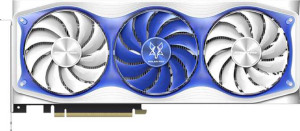
Manli Polar Fox GeForce RTX 5080 OC
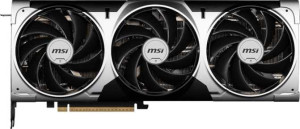
MSI GeForce RTX 5080 Ventus 3X

Manli Polar Fox GeForce RTX 5080 OC MSI GeForce RTX 5080 Ventus 3X

Overview

Welcome to our detailed specification comparison between the Manli Polar Fox GeForce RTX 5080 OC and the MSI GeForce RTX 5080 Ventus 3X. Both cards are built on the same Blackwell architecture and share an identical memory configuration, yet they differ in areas such as boosted clock speeds, physical dimensions, and aesthetic features. Read on to discover how these two RTX 5080 cards stack up across performance, design, and features.

Common Features

  • Both cards share the same base GPU clock speed of 2295 MHz.
  • Both cards have a GPU memory speed of 1875 MHz.
  • Both cards feature 10752 shading units.
  • Both cards have 336 texture mapping units (TMUs).
  • Both cards have 112 render output units (ROPs).
  • Double Precision Floating Point (DPFP) is supported on both cards.
  • Both cards have an effective memory speed of 30000 MHz.
  • Both cards offer a maximum memory bandwidth of 960 GB/s.
  • Both cards come with 16GB of VRAM.
  • Both cards use GDDR7 memory.
  • Both cards have a 256-bit memory bus width.
  • ECC memory is supported on both cards.
  • Both cards support DirectX 12 Ultimate.
  • Both cards support OpenGL version 4.6.
  • Both cards support OpenCL version 3.
  • Multi-display technology is supported on both cards.
  • Ray tracing is supported on both cards.
  • DLSS is supported on both cards.
  • 3D support is available on both cards.
  • XeSS (XMX) is not available on either card.
  • Both cards have one HDMI output using HDMI version 2.1b.
  • Both cards feature 3 DisplayPort outputs.
  • Neither card has USB-C, DVI, or mini DisplayPort outputs.
  • Both cards are based on the Blackwell GPU architecture.
  • Both cards have a Thermal Design Power (TDP) of 360W.
  • Both cards use PCIe version 5.
  • Both cards are manufactured on a 5 nm semiconductor process.
  • Both cards contain 45600 million transistors.
  • Neither card uses air-water cooling.

Main Differences

  • GPU turbo clock speed is 2640 MHz on Manli Polar Fox GeForce RTX 5080 OC and 2617 MHz on MSI GeForce RTX 5080 Ventus 3X.
  • Pixel rate is 295.7 GPixel/s on Manli Polar Fox GeForce RTX 5080 OC and 293.1 GPixel/s on MSI GeForce RTX 5080 Ventus 3X.
  • Floating-point performance is 56.77 TFLOPS on Manli Polar Fox GeForce RTX 5080 OC and 56.28 TFLOPS on MSI GeForce RTX 5080 Ventus 3X.
  • Texture rate is 887 GTexels/s on Manli Polar Fox GeForce RTX 5080 OC and 879.3 GTexels/s on MSI GeForce RTX 5080 Ventus 3X.
  • RGB lighting is present on Manli Polar Fox GeForce RTX 5080 OC but not available on MSI GeForce RTX 5080 Ventus 3X.
  • Card width is 312 mm on Manli Polar Fox GeForce RTX 5080 OC and 303 mm on MSI GeForce RTX 5080 Ventus 3X.
  • Card height is 127 mm on Manli Polar Fox GeForce RTX 5080 OC and 121 mm on MSI GeForce RTX 5080 Ventus 3X.
Specs Comparison
Manli Polar Fox GeForce RTX 5080 OC

Manli Polar Fox GeForce RTX 5080 OC

MSI GeForce RTX 5080 Ventus 3X

MSI GeForce RTX 5080 Ventus 3X

Performance:
GPU clock speed 2295 MHz 2295 MHz
GPU turbo 2640 MHz 2617 MHz
pixel rate 295.7 GPixel/s 293.1 GPixel/s
floating-point performance 56.77 TFLOPS 56.28 TFLOPS
texture rate 887 GTexels/s 879.3 GTexels/s
GPU memory speed 1875 MHz 1875 MHz
shading units 10752 10752
texture mapping units (TMUs) 336 336
render output units (ROPs) 112 112
Has Double Precision Floating Point (DPFP)

At the core, both the Manli Polar Fox RTX 5080 OC and the MSI Ventus 3X share an identical foundation: the same 2295 MHz base clock, 10752 shading units, 336 TMUs, 112 ROPs, and 1875 MHz memory speed. This means their theoretical performance ceiling is defined almost entirely by how aggressively each card boosts beyond that base — and that is where a small but meaningful gap appears.

The Manli Polar Fox OC edges ahead with a 2640 MHz boost clock versus the MSI Ventus 3X's 2617 MHz — a 23 MHz advantage that directly flows into every derived metric. Its floating-point throughput reaches 56.77 TFLOPS against 56.28 TFLOPS, its texture rate hits 887 GTexels/s versus 879.3 GTexels/s, and its pixel fill rate stands at 295.7 GPixel/s compared to 293.1 GPixel/s. In practice, a ~0.9% performance difference across these metrics is unlikely to be perceptible in typical gaming workloads — frame times and real-world rendering are influenced by far noisier variables — but it does confirm the Manli card carries a legitimate factory overclock over the MSI's more conservative tune.

Both cards support Double Precision Floating Point (DPFP), which matters for compute and professional workloads beyond gaming. Overall, the Manli Polar Fox OC holds a narrow but consistent performance edge in this group, purely by virtue of its higher boost clock. For users focused solely on out-of-the-box GPU throughput, the Manli wins — though the delta is slim enough that thermal behavior, power delivery, and cooling efficiency (outside this spec group) could easily close or reverse the gap in sustained real-world use.

Memory:
effective memory speed 30000 MHz 30000 MHz
maximum memory bandwidth 960 GB/s 960 GB/s
VRAM 16GB 16GB
GDDR version GDDR7 GDDR7
memory bus width 256-bit 256-bit
Supports ECC memory

The memory specifications for the Manli Polar Fox GeForce RTX 5080 OC and the MSI GeForce RTX 5080 Ventus 3X are identical across all key categories. Both products feature an effective memory speed of 30000 MHz and a maximum memory bandwidth of 960 GB/s. Additionally, each graphics card comes with 16GB of VRAM, ensuring ample memory for demanding tasks.

Both models also utilize the same GDDR7 memory type, and the memory bus width is consistent at 256-bit for both products. Furthermore, both cards support Error-Correcting Code (ECC) memory, ensuring data integrity and reliability.

With no differences in memory specifications between the Manli and MSI models, users can expect the same memory performance and capabilities from both cards.

Features:
DirectX version DirectX 12 Ultimate DirectX 12 Ultimate
OpenGL version 4.6 4.6
OpenCL version 3 3
Supports multi-display technology
supports ray tracing
Supports 3D
supports DLSS
has XeSS (XMX)
AMD SAM / Intel Resizable BAR Intel Resizable BAR Intel Resizable BAR
has LHR
has RGB lighting
supported displays 4 4

The Manli Polar Fox GeForce RTX 5080 OC and the MSI GeForce RTX 5080 Ventus 3X share most of their features, with a few key differences. Both products support DirectX 12 Ultimate, OpenGL 4.6, and OpenCL 3, ensuring compatibility with a wide range of applications. Additionally, both support multi-display technology, ray tracing, 3D, and DLSS, which are essential for immersive gaming and advanced graphical tasks.

Both cards also feature Intel Resizable BAR support, allowing for more efficient memory usage. Neither model has XeSS (XMX) support, and both lack LHR (Lite Hash Rate) functionality, indicating that both are equally suitable for gaming and non-mining tasks.

The main difference between the two models is in RGB lighting. The Manli Polar Fox includes RGB lighting, adding a customizable aesthetic to your setup, while the MSI Ventus 3X does not offer this feature. Both cards can support up to four displays, ensuring they are well-suited for multi-monitor setups.

Ports:
has an HDMI output
HDMI ports 1 1
HDMI version HDMI 2.1b HDMI 2.1b
DisplayPort outputs 3 3
USB-C ports 0 0
DVI outputs 0 0
mini DisplayPort outputs 0 0

The Manli Polar Fox GeForce RTX 5080 OC and the MSI GeForce RTX 5080 Ventus 3X have identical port configurations. Both products feature one HDMI output with HDMI 2.1b support, allowing for high-quality video and audio transmission. Each card also has three DisplayPort outputs, providing ample display connectivity options for multi-monitor setups.

Neither card includes USB-C, DVI, or mini DisplayPort outputs, making them focused on the more traditional HDMI and DisplayPort connections.

Overall, the port offerings are the same on both the Manli and MSI models, providing similar flexibility in terms of display connectivity.

General info:
GPU architecture Blackwell Blackwell
release date February 2025 January 2025
Thermal Design Power (TDP) 360W 360W
PCI Express (PCIe) version 5 5
semiconductor size 5 nm 5 nm
number of transistors 45600 million 45600 million
Has air-water cooling
width 312 mm 303 mm
height 127 mm 121 mm

The general specifications of the Manli Polar Fox GeForce RTX 5080 OC and the MSI GeForce RTX 5080 Ventus 3X are virtually identical. Both cards are based on the Blackwell GPU architecture and have a thermal design power (TDP) of 360W, indicating similar power consumption. They also both use PCI Express version 5, ensuring high-speed data transfer capabilities, and feature a semiconductor size of 5 nm along with 45,600 million transistors, highlighting their advanced and efficient design.

In terms of physical dimensions, the Manli model is slightly larger, with a width of 312 mm and a height of 127 mm, while the MSI is more compact, measuring 303 mm in width and 121 mm in height. Both cards do not feature air-water cooling.

Overall, the two products are closely matched in their general specs, with the main distinction being the size, where the Manli card is slightly larger than the MSI model.

Comparison Summary & Verdict

After examining all available specifications, both the Manli Polar Fox GeForce RTX 5080 OC and the MSI GeForce RTX 5080 Ventus 3X prove to be highly capable cards sharing the same 16GB GDDR7 memory, 360W TDP, and Blackwell architecture. The Manli card edges ahead with a marginally higher GPU turbo clock of 2640 MHz, slightly better floating-point performance at 56.77 TFLOPS, and the added bonus of RGB lighting, though it is also the larger of the two physically. The MSI Ventus 3X is the more compact option at 303 mm wide and 121 mm tall, making it the better fit for builds with tighter clearance. Choose the Manli Polar Fox if you want every last drop of clock speed and a lit-up aesthetic; choose the MSI Ventus 3X if a smaller form factor and clean look are your priorities.

Manli Polar Fox GeForce RTX 5080 OC
Buy Manli Polar Fox GeForce RTX 5080 OC if...

Buy the Manli Polar Fox GeForce RTX 5080 OC if you want the highest possible boost clock and floating-point performance from an RTX 5080, and if RGB lighting is an important part of your build aesthetic.

MSI GeForce RTX 5080 Ventus 3X
Buy MSI GeForce RTX 5080 Ventus 3X if...

Buy the MSI GeForce RTX 5080 Ventus 3X if you need a more compact card that fits in tighter cases, and you prefer a clean, no-RGB design without sacrificing the core RTX 5080 performance.