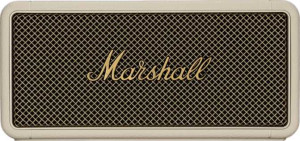
Marshall Kilburn III
Marshall Middleton II

Marshall Kilburn III Marshall Middleton II

Common Features

  • Both products have a control panel placed on a device.
  • Neither product includes a travel bag.
  • Neither product has a touch screen.
  • Neither product has RGB lighting.
  • Neither product is a neckband speaker.
  • Neither product has a remote control.
  • Both products have stereo speakers.
  • Neither product has a subwoofer.
  • Both products have the same highest frequency of 20000 Hz.
  • Neither product has magnetic shielding.
  • Both products have a rechargeable battery.
  • Neither product has a removable battery.
  • Both products support a battery level indicator.
  • Both products have the same charge time of 3 hours.
  • Both products have multipoint support with a count of 2.
  • Both products support Bluetooth version 5.3.
  • Both products can be used wirelessly.
  • Both products support remote smartphone control.
  • Both products have voice prompts.
  • Both products have a sleep timer.

Main Differences

  • Ingress Protection (IP) rating is IP54 on Marshall Kilburn III and IP67 on Marshall Middleton II.
  • The volume is 6920.55 cm³ on Marshall Kilburn III and 2479.4 cm³ on Marshall Middleton II.
  • Marshall Kilburn III does not have a neodymium magnet, while Marshall Middleton II does.
  • Water resistance is sweat resistant on Marshall Kilburn III and waterproof on Marshall Middleton II.
  • Marshall Kilburn III has a detachable cable, while Marshall Middleton II does not.
  • Marshall Kilburn III weighs 2800 g, while Marshall Middleton II weighs 1800 g.
  • Marshall Kilburn III has a height of 169 mm, while Marshall Middleton II has a height of 110 mm.
  • The width is 273 mm on Marshall Kilburn III and 230 mm on Marshall Middleton II.
  • The thickness is 150 mm on Marshall Kilburn III and 98 mm on Marshall Middleton II.
  • The lowest frequency is 50 Hz on Marshall Kilburn III and 45 Hz on Marshall Middleton II.
  • Audio output power is 2 x 36W on Marshall Kilburn III and 4 x 80W on Marshall Middleton II.
  • Marshall Kilburn III does not have a passive radiator, while Marshall Middleton II does.
  • Marshall Kilburn III has no microphones, while Marshall Middleton II has 1 microphone.
  • The sound pressure level is 50 dB/mW on Marshall Kilburn III and 97 dB/mW on Marshall Middleton II.
  • Battery life is 50 hours on Marshall Kilburn III and 30 hours on Marshall Middleton II.
  • Marshall Kilburn III has Auracast support, while Marshall Middleton II does not.
  • The maximum Bluetooth range is 10 m on Marshall Kilburn III and 60 m on Marshall Middleton II.
  • Marshall Middleton II works as a power bank, while Marshall Kilburn III does not.
Specs Comparison
Marshall Kilburn III

Marshall Kilburn III

Marshall Middleton II

Marshall Middleton II

Design:
Ingress Protection (IP) rating IP54 IP67
volume 6920.55 cm³ 2479.4 cm³
has a neodymium magnet
control panel placed on a device
water resistance Sweat resistant Waterproof
travel bag is included
has a touch screen
has RGB lighting
has a detachable cable
is a neckband speaker
has a remote control
weight 2800 g 1800 g
height 169 mm 110 mm
width 273 mm 230 mm
thickness 150 mm 98 mm

The Marshall Kilburn III has an IP54 ingress protection rating, meaning it's sweat resistant, while the Marshall Middleton II offers a higher IP67 rating, making it waterproof. This difference indicates that the Middleton II is better protected against water exposure.

In terms of size, the Kilburn III is significantly larger, with a volume of 6920.55 cm³, compared to the Middleton II’s 2479.4 cm³. The Kilburn III is also heavier at 2800 g, while the Middleton II weighs 1800 g, making the Middleton II more portable.

The Kilburn III is equipped with a detachable cable, whereas the Middleton II does not offer this feature. Both speakers include control panels on the device itself, but neither includes a remote control, touch screen, or RGB lighting. Additionally, neither product comes with a travel bag.

Sound quality:
has stereo speakers
has a subwoofer
highest frequency 20000 Hz 20000 Hz
lowest frequency 50 Hz 45 Hz
audio output power 2 x 36W 4 x 80W
Has a passive radiator
number of microphones 0 1
sound pressure level 50 dB/mW 97 dB/mW
has a magnetic shielding

Both the Marshall Kilburn III and Marshall Middleton II feature stereo speakers, but the Middleton II includes a passive radiator, which the Kilburn III lacks. This difference might affect their overall sound dynamics. In terms of frequency range, the Kilburn III has a lowest frequency of 50 Hz, while the Middleton II can reach 45 Hz, offering slightly deeper bass response.

The audio output power of the two speakers also differs. The Kilburn III provides 2 x 36W, while the Middleton II delivers a more powerful 4 x 80W. This suggests that the Middleton II is designed to produce a louder sound. The sound pressure level for the Kilburn III is 50 dB/mW, whereas the Middleton II is much higher at 97 dB/mW, indicating the Middleton II’s ability to produce significantly more sound pressure.

Neither product features a subwoofer or magnetic shielding, and while the Kilburn III has no microphones, the Middleton II includes one. Both products have the same highest frequency of 20,000 Hz, ensuring a wide range of high-end sound reproduction.

Power:
Battery life 50 hours 30 hours
charge time 3 hours 3 hours
has a battery level indicator
has a rechargeable battery
has a removable battery
has wireless charging

The Marshall Kilburn III offers a longer battery life, providing up to 50 hours of use, compared to the Marshall Middleton II, which lasts 30 hours. Both products have the same charge time of 3 hours. Additionally, both speakers include a battery level indicator, and both feature rechargeable batteries. Neither product has a removable battery or supports wireless charging.

Overall, while both speakers share many similarities in terms of power features, the Kilburn III stands out with its significantly longer battery life.

Connectivity:
multipoint count 2 2
Bluetooth version 5.3 5.3
supports Bluetooth pairing using NFC
has a socket for a 3.5 mm audio jack
has an AUX input
has aptX Lossless
has LDAC
has aptX Adaptive
has aptX HD
has aptX
has aptX Low Latency
has AAC
has AirPlay
has Chromecast built-in
has Auracast
has Bluetooth LE Audio
maximum Bluetooth range 10 m 60 m
supports Wi-Fi
USB ports 1 1
Has USB Type-C
has a 3.5mm male connector
has an external memory slot
is DLNA-certified
supports Ethernet
has a microphone input

Both the Marshall Kilburn III and Marshall Middleton II support multipoint Bluetooth connections, with both capable of connecting to two devices simultaneously. They also share the same Bluetooth version, 5.3. However, the Middleton II has a significantly longer Bluetooth range of 60 m, compared to the Kilburn III's 10 m range.

Neither product supports Bluetooth pairing via NFC or has an AUX input or 3.5mm audio jack. Both speakers support AAC audio codec, but the Kilburn III also has Auracast, while the Middleton II does not. Both speakers have USB Type-C ports, with the Kilburn III offering one USB port, and the Middleton II providing the same.

Neither product supports Wi-Fi, Ethernet, or a microphone input, and neither has an external memory slot or is DLNA-certified. Additionally, neither speaker supports AirPlay or Chromecast built-in.

Features:
release date May 2025 July 2025
Can be used wirelessly
supports a remote smartphone
has fast pairing
has voice commands
Has a radio
Has voice prompts
works as a power bank
has a sleep timer

Both the Marshall Kilburn III and Marshall Middleton II can be used wirelessly and support remote smartphone control. Neither product features fast pairing, voice commands, or a radio. Both also include voice prompts to assist with operation.

The Kilburn III has a sleep timer feature, which the Middleton II also includes. However, the Middleton II offers an additional feature that the Kilburn III lacks: the ability to work as a power bank, allowing it to charge other devices.

Miscellaneous:
supports pairing for stereo sound

Neither the Marshall Kilburn III nor the Marshall Middleton II supports pairing for stereo sound. Both products lack this feature, meaning they cannot be paired together to create a stereo setup.

Comparison Summary

This is a specification comparison between the Marshall Kilburn III and Marshall Middleton II. Both models have stereo speakers, a rechargeable battery, and can be used wirelessly. However, there are some key differences, such as the Ingress Protection (IP) rating, with the Kilburn III rated at IP54 and the Middleton II at IP67. The audio output power is 2 x 36W on the Kilburn III and 4 x 80W on the Middleton II. The battery life is 50 hours on the Kilburn III and 30 hours on the Middleton II. Additionally, the maximum Bluetooth range is 10 m on the Kilburn III and 60 m on the Middleton II.