Marshall Kilburn III
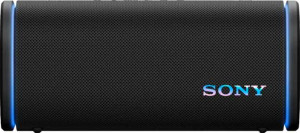
Sony ULT Field 5

Marshall Kilburn III Sony ULT Field 5

Common Features

  • Both products have a control panel placed on a device.
  • Both products have a rechargeable battery.
  • Both products have a battery level indicator.
  • Both products support Bluetooth version 5.3.
  • Both products can be used wirelessly.
  • Both products support a remote smartphone.
  • Both products have voice prompts.
  • Both products have a sleep timer.
  • Both products have the same highest frequency of 20000 Hz.
  • Both products do not have aptX support.
  • Both products do not have wireless charging.
  • Both products do not have a 3.5 mm audio jack.
  • Both products are not neckband speakers.
  • Both products do not have a touch screen.
  • Both products do not include a travel bag.
  • Both products do not have a subwoofer.
  • Both products do not have a remote control.
  • Both products do not support pairing using NFC.
  • Both products do not have a detachable cable.

Main Differences

  • Ingress Protection (IP) rating is IP54 on Marshall Kilburn III and IP66 on Sony ULT Field 5.
  • Volume is 6920.55 cm³ on Marshall Kilburn III and 5760 cm³ on Sony ULT Field 5.
  • Water resistance is sweat resistant on Marshall Kilburn III and water resistant on Sony ULT Field 5.
  • RGB lighting is not available on Marshall Kilburn III but is present on Sony ULT Field 5.
  • Marshall Kilburn III has a detachable cable, while Sony ULT Field 5 does not.
  • Weight is 2800 g on Marshall Kilburn III and 3300 g on Sony ULT Field 5.
  • Height is 169 mm on Marshall Kilburn III and 144 mm on Sony ULT Field 5.
  • Width is 273 mm on Marshall Kilburn III and 320 mm on Sony ULT Field 5.
  • Thickness is 150 mm on Marshall Kilburn III and 125 mm on Sony ULT Field 5.
  • Lowest frequency is 50 Hz on Marshall Kilburn III and 20 Hz on Sony ULT Field 5.
  • Marshall Kilburn III does not have a passive radiator, while Sony ULT Field 5 does.
  • Battery life is 50 hours on Marshall Kilburn III and 25 hours on Sony ULT Field 5.
  • AUX input is not available on Marshall Kilburn III but is present on Sony ULT Field 5.
  • LDAC support is not available on Marshall Kilburn III but is present on Sony ULT Field 5.
  • AAC support is available on Marshall Kilburn III but not on Sony ULT Field 5.
  • Auracast support is available on Marshall Kilburn III but not on Sony ULT Field 5.
  • Marshall Kilburn III does not work as a power bank, while Sony ULT Field 5 does.
  • Marshall Kilburn III does not support pairing for stereo sound, while Sony ULT Field 5 does.
Specs Comparison
Marshall Kilburn III

Marshall Kilburn III

Sony ULT Field 5

Sony ULT Field 5

Design:
Ingress Protection (IP) rating IP54 IP66
volume 6920.55 cm³ 5760 cm³
has a neodymium magnet
control panel placed on a device
water resistance Sweat resistant Water resistant
travel bag is included
has a touch screen
has RGB lighting
has a detachable cable
is a neckband speaker
has a remote control
weight 2800 g 3300 g
height 169 mm 144 mm
width 273 mm 320 mm
thickness 150 mm 125 mm

The Marshall Kilburn III and Sony ULT Field 5 differ in several key design aspects. Both have a control panel placed on the device, but the Marshall speaker has a detachable cable, while the Sony model does not. The Sony ULT Field 5 is rated with a higher Ingress Protection (IP) rating of IP66, compared to the Kilburn III's IP54, indicating better overall water resistance, which is further reflected in the Sony’s description as being ‘Water resistant’ versus the Kilburn’s ‘Sweat resistant’ rating. The Sony model also has RGB lighting, which the Marshall speaker lacks.

In terms of size and weight, the Marshall Kilburn III is slightly smaller, measuring 169 mm in height, 273 mm in width, and 150 mm in thickness, with a weight of 2800 g. In comparison, the Sony ULT Field 5 is a bit bulkier at 144 mm in height, 320 mm in width, and 125 mm in thickness, weighing 3300 g. Additionally, the Sony speaker has a slightly smaller internal volume of 5760 cm³ compared to the Kilburn’s 6920.55 cm³.

Both products do not include a travel bag, and neither features a touch screen, neckband design, or remote control. The Marshall Kilburn III lacks RGB lighting, a feature present in the Sony ULT Field 5. Neither speaker includes a neodymium magnet, and both products are not equipped with remote controls or travel bags.

Sound quality:
has a subwoofer
highest frequency 20000 Hz 20000 Hz
lowest frequency 50 Hz 20 Hz
Has a passive radiator

The Marshall Kilburn III and Sony ULT Field 5 share some similarities in sound quality, but they have a few distinct differences. Both speakers do not include a subwoofer, which may affect deep bass output. They also share the same highest frequency of 20000 Hz, meaning both are capable of delivering the highest audible frequencies. However, the Kilburn III has a lowest frequency of 50 Hz, while the Sony ULT Field 5 reaches a lower 20 Hz, potentially offering a deeper bass response.

Another difference is that the Sony ULT Field 5 includes a passive radiator, which can enhance bass performance by allowing for more air movement. The Marshall Kilburn III, in contrast, does not have this feature.

In summary, the main differences between the two are the lower frequency range of the Sony ULT Field 5 and its inclusion of a passive radiator, both of which may contribute to a different sound experience compared to the Marshall Kilburn III.

Power:
Battery life 50 hours 25 hours
has a battery level indicator
has a rechargeable battery
has a removable battery
has wireless charging

The Marshall Kilburn III and Sony ULT Field 5 both feature rechargeable batteries, but they differ in battery life. The Kilburn III offers a significantly longer battery life of 50 hours, compared to the Sony ULT Field 5’s 25 hours. Both speakers include a battery level indicator, so users can easily monitor power levels during use. Neither product offers a removable battery, and neither supports wireless charging.

In summary, the Marshall Kilburn III provides a more extended battery life, making it a better option for longer listening sessions, while the Sony ULT Field 5 offers half the battery life but shares similar features such as the battery level indicator and rechargeable battery.

Connectivity:
Bluetooth version 5.3 5.3
supports Bluetooth pairing using NFC
has a socket for a 3.5 mm audio jack
has an AUX input
has aptX Lossless
has LDAC
has aptX Adaptive
has aptX HD
has aptX
has aptX Low Latency
has AAC
has AirPlay
has Chromecast built-in
has Auracast
has Bluetooth LE Audio
maximum Bluetooth range 10 m 10 m
supports Wi-Fi
USB ports 1 1
Has USB Type-C
has a 3.5mm male connector
has an external memory slot
is DLNA-certified
supports Ethernet
has a microphone input

The Marshall Kilburn III and Sony ULT Field 5 both support Bluetooth version 5.3 and have a maximum Bluetooth range of 10 meters, ensuring similar wireless connectivity performance. Neither speaker supports Bluetooth pairing via NFC. While both models feature a USB port and USB Type-C connectivity, neither offers a 3.5mm male connector or an external memory slot. The Kilburn III supports AAC and includes Auracast, but it does not support LDAC, aptX codecs, or Bluetooth LE Audio. The Sony ULT Field 5, on the other hand, supports LDAC but lacks AAC and Auracast support. Additionally, it offers an AUX input, which the Kilburn III does not.

Neither product supports Wi-Fi, Ethernet, AirPlay, or Chromecast. Both products lack microphone input and DLNA certification. The Sony ULT Field 5 has more flexibility in terms of wired connections with its AUX input, while the Kilburn III offers Auracast for additional Bluetooth audio broadcasting capabilities.

In summary, the two speakers share similar Bluetooth features, but the Sony ULT Field 5 stands out with its support for LDAC and an AUX input, while the Marshall Kilburn III features AAC support and Auracast for extended Bluetooth capabilities.

Features:
release date May 2025 April 2025
Can be used wirelessly
supports a remote smartphone
has fast pairing
has voice commands
Has a radio
Has voice prompts
works as a power bank
has a sleep timer

Both the Marshall Kilburn III and Sony ULT Field 5 can be used wirelessly and support remote smartphone control, offering similar convenience for wireless operation. Neither model supports fast pairing, and both lack voice commands. However, they both feature voice prompts, making it easier to interact with the devices.

While both models include a sleep timer, the key difference lies in their ability to function as a power bank. The Marshall Kilburn III does not have this feature, while the Sony ULT Field 5 can be used as a power bank, allowing it to charge other devices when needed.

In summary, the two speakers are quite similar in features, with both offering wireless use, smartphone control, voice prompts, and a sleep timer. The main distinction is that the Sony ULT Field 5 includes the added functionality of acting as a power bank, a feature not available with the Marshall Kilburn III.

Miscellaneous:
supports pairing for stereo sound

The Marshall Kilburn III does not support pairing for stereo sound, meaning it can only function as a single speaker. In contrast, the Sony ULT Field 5 supports pairing for stereo sound, allowing users to pair two units together for a more immersive listening experience.

In summary, while both speakers offer high-quality sound individually, the Sony ULT Field 5 has the added flexibility of stereo pairing, which the Marshall Kilburn III does not support.

Comparison Summary

This is a specification comparison between the Marshall Kilburn III and Sony ULT Field 5. Both models have a rechargeable battery with a battery level indicator, and can be used wirelessly. They share features such as Bluetooth version 5.3 and voice prompts. However, there are key differences: the Marshall Kilburn III has a longer battery life at 50 hours compared to the 25 hours of the Sony ULT Field 5, while the Sony model has RGB lighting and LDAC support, features not available on the Marshall speaker. The Marshall Kilburn III is also larger in volume, height, and thickness, while the Sony ULT Field 5 offers stereo pairing support, which the Marshall model lacks.