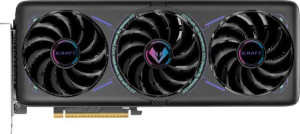
Maxsun GeForce RTX 5060 Ti iCraft OC 16GB
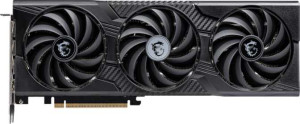
MSI GeForce RTX 5070 Gaming Duke 3X OC

Maxsun GeForce RTX 5060 Ti iCraft OC 16GB MSI GeForce RTX 5070 Gaming Duke 3X OC

Common Features

  • Both products have a GPU memory speed of 1750 MHz.
  • Both products support double precision floating point (DPFP).
  • Both products support DirectX version 12 Ultimate.
  • Both products support OpenGL version 4.6.
  • Both products support OpenCL version 3.
  • Both products support multi-display technology.
  • Both products support ray tracing.
  • Both products support 3D.
  • Both products support DLSS.
  • Both products have HDMI 2.1b output.
  • Both products have one HDMI port.
  • Both products have three DisplayPort outputs.
  • Both products have a PCI Express version 5 interface.
  • Both products use a 5 nm semiconductor size.
  • Both products do not have air-water cooling.
  • Both products have an HDMI output.
  • Both products have no USB-C ports.
  • Both products have no DVI outputs.
  • Both products have no mini DisplayPort outputs.

Main Differences

  • GPU clock speed is 2407 MHz on Maxsun GeForce RTX 5060 Ti iCraft OC 16GB and 2325 MHz on MSI GeForce RTX 5070 Gaming Duke 3X OC.
  • GPU turbo is 2662 MHz on Maxsun GeForce RTX 5060 Ti iCraft OC 16GB and 2557 MHz on MSI GeForce RTX 5070 Gaming Duke 3X OC.
  • Pixel rate is 127.8 GPixel/s on Maxsun GeForce RTX 5060 Ti iCraft OC 16GB and 204.6 GPixel/s on MSI GeForce RTX 5070 Gaming Duke 3X OC.
  • Floating-point performance is 24.53 TFLOPS on Maxsun GeForce RTX 5060 Ti iCraft OC 16GB and 31.42 TFLOPS on MSI GeForce RTX 5070 Gaming Duke 3X OC.
  • Texture rate is 383.3 GTexels/s on Maxsun GeForce RTX 5060 Ti iCraft OC 16GB and 490.9 GTexels/s on MSI GeForce RTX 5070 Gaming Duke 3X OC.
  • Shading units are 4608 on Maxsun GeForce RTX 5060 Ti iCraft OC 16GB and 6144 on MSI GeForce RTX 5070 Gaming Duke 3X OC.
  • Texture mapping units (TMUs) are 144 on Maxsun GeForce RTX 5060 Ti iCraft OC 16GB and 192 on MSI GeForce RTX 5070 Gaming Duke 3X OC.
  • Render output units (ROPs) are 48 on Maxsun GeForce RTX 5060 Ti iCraft OC 16GB and 80 on MSI GeForce RTX 5070 Gaming Duke 3X OC.
  • Maximum memory bandwidth is 448 GB/s on Maxsun GeForce RTX 5060 Ti iCraft OC 16GB and 672 GB/s on MSI GeForce RTX 5070 Gaming Duke 3X OC.
  • VRAM is 16GB on Maxsun GeForce RTX 5060 Ti iCraft OC 16GB and 12GB on MSI GeForce RTX 5070 Gaming Duke 3X OC.
  • Memory bus width is 128-bit on Maxsun GeForce RTX 5060 Ti iCraft OC 16GB and 192-bit on MSI GeForce RTX 5070 Gaming Duke 3X OC.
  • Thermal Design Power (TDP) is 180W on Maxsun GeForce RTX 5060 Ti iCraft OC 16GB and 250W on MSI GeForce RTX 5070 Gaming Duke 3X OC.
  • Number of transistors is 21900 million on Maxsun GeForce RTX 5060 Ti iCraft OC 16GB and 31100 million on MSI GeForce RTX 5070 Gaming Duke 3X OC.
  • Width is 320 mm on Maxsun GeForce RTX 5060 Ti iCraft OC 16GB and 325 mm on MSI GeForce RTX 5070 Gaming Duke 3X OC.
  • Height is 132 mm on Maxsun GeForce RTX 5060 Ti iCraft OC 16GB and 121 mm on MSI GeForce RTX 5070 Gaming Duke 3X OC.
Specs Comparison
Maxsun GeForce RTX 5060 Ti iCraft OC 16GB

Maxsun GeForce RTX 5060 Ti iCraft OC 16GB

MSI GeForce RTX 5070 Gaming Duke 3X OC

MSI GeForce RTX 5070 Gaming Duke 3X OC

Performance:
GPU clock speed 2407 MHz 2325 MHz
GPU turbo 2662 MHz 2557 MHz
pixel rate 127.8 GPixel/s 204.6 GPixel/s
floating-point performance 24.53 TFLOPS 31.42 TFLOPS
texture rate 383.3 GTexels/s 490.9 GTexels/s
GPU memory speed 1750 MHz 1750 MHz
shading units 4608 6144
texture mapping units (TMUs) 144 192
render output units (ROPs) 48 80
Has Double Precision Floating Point (DPFP)

The Maxsun GeForce RTX 5060 Ti iCraft OC 16GB and MSI GeForce RTX 5070 Gaming Duke 3X OC have some notable differences in their performance specifications. The Maxsun model features a GPU clock speed of 2407 MHz and a GPU turbo of 2662 MHz, whereas the MSI model has a slightly lower GPU clock speed of 2325 MHz but a turbo of 2557 MHz. Both cards support Double Precision Floating Point (DPFP), so there’s no difference there.

In terms of pixel rate, the MSI RTX 5070 leads with a significantly higher 204.6 GPixel/s compared to the Maxsun’s 127.8 GPixel/s. The MSI also outpaces the Maxsun in floating-point performance, offering 31.42 TFLOPS versus 24.53 TFLOPS. This shows the MSI’s greater computational power, particularly for tasks requiring high precision.

Looking at texture rates, the MSI RTX 5070 again holds an advantage with a texture rate of 490.9 GTexels/s, which is much higher than the Maxsun’s 383.3 GTexels/s. Additionally, the MSI card has more shading units (6144) and texture mapping units (TMUs, 192) compared to the Maxsun’s 4608 shading units and 144 TMUs. The MSI also has more render output units (ROPs) at 80, versus the Maxsun’s 48. These differences all contribute to the MSI’s potential for better performance in rendering and graphics-intensive tasks.

Memory:
effective memory speed 28000 MHz 28000 MHz
maximum memory bandwidth 448 GB/s 672 GB/s
VRAM 16GB 12GB
GDDR version GDDR7 GDDR7
memory bus width 128-bit 192-bit
Supports ECC memory

The Maxsun GeForce RTX 5060 Ti iCraft OC 16GB and MSI GeForce RTX 5070 Gaming Duke 3X OC share similar memory technologies, but there are some key differences in their memory specifications. Both cards feature the same effective memory speed of 28000 MHz and utilize GDDR7 memory, which indicates they are built on the latest memory standard. However, the MSI card offers a higher maximum memory bandwidth of 672 GB/s, compared to the Maxsun’s 448 GB/s.

Regarding VRAM, the Maxsun comes equipped with 16GB of memory, while the MSI card has 12GB. This gives the Maxsun a slight edge in terms of raw memory capacity, which could be advantageous for applications that demand larger memory pools, such as 4K gaming or intensive rendering tasks.

Both cards feature a memory bus width that differs, with the Maxsun having a 128-bit bus width, while the MSI card has a wider 192-bit bus width. This broader bus width on the MSI card allows for potentially more efficient data transfer, which complements its higher memory bandwidth. Both products support ECC memory, ensuring data integrity in their operations.

Features:
DirectX version DirectX 12 Ultimate DirectX 12 Ultimate
OpenGL version 4.6 4.6
OpenCL version 3 3
Supports multi-display technology
supports ray tracing
Supports 3D
supports DLSS
has XeSS (XMX)
AMD SAM / Intel Resizable BAR Intel Resizable BAR Intel Resizable BAR
has LHR
has RGB lighting
supported displays 4 4

The Maxsun GeForce RTX 5060 Ti iCraft OC 16GB and MSI GeForce RTX 5070 Gaming Duke 3X OC have identical feature sets across the board. Both support DirectX 12 Ultimate, OpenGL 4.6, and OpenCL 3, ensuring they can handle the latest APIs and software requirements. Additionally, both cards support multi-display technology, ray tracing, 3D, DLSS, and Intel Resizable BAR (formerly known as AMD SAM), which means they are well-equipped for modern gaming and demanding workloads.

Neither of the two cards features XeSS (XMX), which is a specific technology for upscaling, but both support RGB lighting, adding a visual flair to their designs. Both also lack LHR (Lite Hash Rate) limitations, indicating that they are not restricted for cryptocurrency mining purposes.

Both products can support up to 4 displays, making them a good fit for multi-monitor setups. Overall, the feature sets are exactly the same between the Maxsun and MSI cards, offering a well-rounded set of capabilities for gamers and professionals alike.

Ports:
has an HDMI output
HDMI ports 1 1
HDMI version HDMI 2.1b HDMI 2.1b
DisplayPort outputs 3 3
USB-C ports 0 0
DVI outputs 0 0
mini DisplayPort outputs 0 0

The Maxsun GeForce RTX 5060 Ti iCraft OC 16GB and MSI GeForce RTX 5070 Gaming Duke 3X OC are identical in terms of their port configurations. Both cards feature one HDMI output with HDMI 2.1b support, as well as three DisplayPort outputs. Neither card includes USB-C, DVI, or mini DisplayPort outputs, which means they are focused on more traditional display connections.

Overall, the port setups are the same for both products, offering flexibility for multi-monitor setups but with no significant differences in terms of connectivity options.

General info:
GPU architecture Blackwell Blackwell
release date May 2025 April 2025
Thermal Design Power (TDP) 180W 250W
PCI Express (PCIe) version 5 5
semiconductor size 5 nm 5 nm
number of transistors 21900 million 31100 million
Has air-water cooling
width 320 mm 325 mm
height 132 mm 121 mm

Both the Maxsun GeForce RTX 5060 Ti iCraft OC 16GB and MSI GeForce RTX 5070 Gaming Duke 3X OC use the Blackwell GPU architecture and feature the same semiconductor size of 5 nm. The two cards also share the same PCI Express (PCIe) version 5, ensuring fast data transfer speeds between the card and the system.

The Maxsun card has a Thermal Design Power (TDP) of 180W, while the MSI card has a higher TDP of 250W. This suggests that the MSI card may require more power to operate, likely due to its higher performance capabilities. In terms of physical size, the Maxsun card is 320 mm in width and 132 mm in height, while the MSI card is slightly wider at 325 mm and shorter in height at 121 mm.

Both cards have no air-water cooling system, indicating that they rely on traditional cooling methods. The Maxsun card has 21.9 billion transistors, while the MSI card contains 31.1 billion transistors, reflecting a difference in the complexity and possible processing power of the two GPUs.

Comparison Summary

This is a specification comparison between Maxsun GeForce RTX 5060 Ti iCraft OC 16GB and MSI GeForce RTX 5070 Gaming Duke 3X OC. Both models feature a GPU memory speed of 1750 MHz, support DirectX 12 Ultimate, and have three DisplayPort outputs. However, the Maxsun model has a GPU clock speed of 2407 MHz, while the MSI model has 2325 MHz. The Maxsun card also offers 16GB of VRAM compared to the MSI’s 12GB. Additionally, the Maxsun model has a TDP of 180W, whereas the MSI’s TDP is 250W. The Maxsun has fewer shading units at 4608 compared to 6144 on the MSI card.