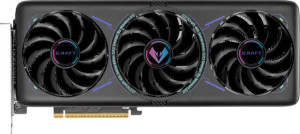
Maxsun GeForce RTX 5060 Ti iCraft OC 8GB
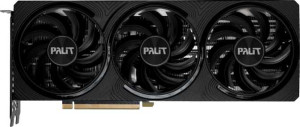
Palit GeForce RTX 4070 Ti Super Infinity 3 OC

Maxsun GeForce RTX 5060 Ti iCraft OC 8GB Palit GeForce RTX 4070 Ti Super Infinity 3 OC

Overview

Welcome to our in-depth specification comparison between the Maxsun GeForce RTX 5060 Ti iCraft OC 8GB and the Palit GeForce RTX 4070 Ti Super Infinity 3 OC. These two graphics cards come from different GPU generations — Blackwell versus Ada Lovelace — and take notably different approaches to memory technology, raw compute throughput, and power consumption. Whether you care most about efficiency, shading performance, or VRAM capacity, this comparison breaks down every key specification to help you make an informed choice.

Common Features

  • Both GPUs support Double Precision Floating Point (DPFP).
  • Both GPUs support ECC memory.
  • Both GPUs use a 5 nm semiconductor manufacturing process.
  • DirectX 12 Ultimate is supported on both products.
  • OpenGL version 4.6 is supported on both products.
  • OpenCL version 3 is supported on both products.
  • Multi-display technology is supported on both products.
  • Ray tracing is supported on both products.
  • 3D support is available on both products.
  • DLSS is supported on both products.
  • XeSS (XMX) support is not available on either product.
  • Both GPUs include one HDMI output.
  • Both GPUs include three DisplayPort outputs.
  • Neither GPU has any USB-C ports.
  • Neither GPU has any DVI outputs.
  • Neither GPU has any mini DisplayPort outputs.
  • Air-water cooling is not available on either product.

Main Differences

  • GPU clock speed is 2407 MHz on Maxsun GeForce RTX 5060 Ti iCraft OC 8GB and 2340 MHz on Palit GeForce RTX 4070 Ti Super Infinity 3 OC.
  • GPU turbo clock is 2662 MHz on Maxsun GeForce RTX 5060 Ti iCraft OC 8GB and 2640 MHz on Palit GeForce RTX 4070 Ti Super Infinity 3 OC.
  • Pixel rate is 127.8 GPixel/s on Maxsun GeForce RTX 5060 Ti iCraft OC 8GB and 253.4 GPixel/s on Palit GeForce RTX 4070 Ti Super Infinity 3 OC.
  • Floating-point performance is 24.53 TFLOPS on Maxsun GeForce RTX 5060 Ti iCraft OC 8GB and 44.61 TFLOPS on Palit GeForce RTX 4070 Ti Super Infinity 3 OC.
  • Texture rate is 383.3 GTexels/s on Maxsun GeForce RTX 5060 Ti iCraft OC 8GB and 697 GTexels/s on Palit GeForce RTX 4070 Ti Super Infinity 3 OC.
  • GPU memory speed is 1750 MHz on Maxsun GeForce RTX 5060 Ti iCraft OC 8GB and 1313 MHz on Palit GeForce RTX 4070 Ti Super Infinity 3 OC.
  • Shading units count is 4608 on Maxsun GeForce RTX 5060 Ti iCraft OC 8GB and 8448 on Palit GeForce RTX 4070 Ti Super Infinity 3 OC.
  • Texture mapping units (TMUs) number 144 on Maxsun GeForce RTX 5060 Ti iCraft OC 8GB and 264 on Palit GeForce RTX 4070 Ti Super Infinity 3 OC.
  • Render output units (ROPs) number 48 on Maxsun GeForce RTX 5060 Ti iCraft OC 8GB and 96 on Palit GeForce RTX 4070 Ti Super Infinity 3 OC.
  • Effective memory speed is 28000 MHz on Maxsun GeForce RTX 5060 Ti iCraft OC 8GB and 21000 MHz on Palit GeForce RTX 4070 Ti Super Infinity 3 OC.
  • Maximum memory bandwidth is 448 GB/s on Maxsun GeForce RTX 5060 Ti iCraft OC 8GB and 672 GB/s on Palit GeForce RTX 4070 Ti Super Infinity 3 OC.
  • VRAM is 8GB on Maxsun GeForce RTX 5060 Ti iCraft OC 8GB and 16GB on Palit GeForce RTX 4070 Ti Super Infinity 3 OC.
  • GDDR version is GDDR7 on Maxsun GeForce RTX 5060 Ti iCraft OC 8GB and GDDR6X on Palit GeForce RTX 4070 Ti Super Infinity 3 OC.
  • Memory bus width is 128-bit on Maxsun GeForce RTX 5060 Ti iCraft OC 8GB and 256-bit on Palit GeForce RTX 4070 Ti Super Infinity 3 OC.
  • RGB lighting is present on Maxsun GeForce RTX 5060 Ti iCraft OC 8GB but not available on Palit GeForce RTX 4070 Ti Super Infinity 3 OC.
  • HDMI version is 2.1b on Maxsun GeForce RTX 5060 Ti iCraft OC 8GB and 2.1a on Palit GeForce RTX 4070 Ti Super Infinity 3 OC.
  • GPU architecture is Blackwell on Maxsun GeForce RTX 5060 Ti iCraft OC 8GB and Ada Lovelace on Palit GeForce RTX 4070 Ti Super Infinity 3 OC.
  • Thermal Design Power (TDP) is 180W on Maxsun GeForce RTX 5060 Ti iCraft OC 8GB and 285W on Palit GeForce RTX 4070 Ti Super Infinity 3 OC.
  • PCIe version is 5 on Maxsun GeForce RTX 5060 Ti iCraft OC 8GB and 4 on Palit GeForce RTX 4070 Ti Super Infinity 3 OC.
  • Number of transistors is 21900 million on Maxsun GeForce RTX 5060 Ti iCraft OC 8GB and 76300 million on Palit GeForce RTX 4070 Ti Super Infinity 3 OC.
  • Card width is 320 mm on Maxsun GeForce RTX 5060 Ti iCraft OC 8GB and 294 mm on Palit GeForce RTX 4070 Ti Super Infinity 3 OC.
  • Card height is 132 mm on Maxsun GeForce RTX 5060 Ti iCraft OC 8GB and 116 mm on Palit GeForce RTX 4070 Ti Super Infinity 3 OC.
Specs Comparison
Maxsun GeForce RTX 5060 Ti iCraft OC 8GB

Maxsun GeForce RTX 5060 Ti iCraft OC 8GB

Palit GeForce RTX 4070 Ti Super Infinity 3 OC

Palit GeForce RTX 4070 Ti Super Infinity 3 OC

Performance:
GPU clock speed 2407 MHz 2340 MHz
GPU turbo 2662 MHz 2640 MHz
pixel rate 127.8 GPixel/s 253.4 GPixel/s
floating-point performance 24.53 TFLOPS 44.61 TFLOPS
texture rate 383.3 GTexels/s 697 GTexels/s
GPU memory speed 1750 MHz 1313 MHz
shading units 4608 8448
texture mapping units (TMUs) 144 264
render output units (ROPs) 48 96
Has Double Precision Floating Point (DPFP)

Looking at raw compute throughput, the Palit RTX 4070 Ti Super holds a commanding lead over the Maxsun RTX 5060 Ti. With 8448 shading units versus 4608, nearly double the TMUs (264 vs 144), and twice the ROPs (96 vs 48), the 4070 Ti Super is fundamentally a much wider GPU — meaning it can process significantly more geometry, texture, and pixel work in parallel per clock cycle. This directly translates into higher sustained frame rates and better headroom at demanding resolutions and quality settings.

The raw throughput numbers tell the same story: the 4070 Ti Super delivers 44.61 TFLOPS of floating-point performance compared to 24.53 TFLOPS on the 5060 Ti — an approximately 82% advantage. Its texture rate (697 GTexels/s vs 383.3 GTexels/s) and pixel fill rate (253.4 GPixel/s vs 127.8 GPixel/s) are similarly about twice as high. In practice, this gap means the 4070 Ti Super handles high-resolution rendering, complex shader-heavy scenes, and demanding ray-tracing workloads with considerably more ease. The 5060 Ti does edge ahead slightly in clock speeds (2662 MHz turbo vs 2640 MHz) and memory bus speed (1750 MHz vs 1313 MHz), but these marginal gains cannot offset the enormous deficit in execution-unit count.

The Palit RTX 4070 Ti Super has a decisive performance advantage in this group. Every major throughput metric — TFLOPS, pixel rate, texture rate, and shader count — points overwhelmingly in its favor. The 5060 Ti's slightly higher clock and memory speeds are real but inconsequential at this scale of difference. Both cards support Double Precision Floating Point, so that is a non-differentiator here.
Memory:
effective memory speed 28000 MHz 21000 MHz
maximum memory bandwidth 448 GB/s 672 GB/s
VRAM 8GB 16GB
GDDR version GDDR7 GDDR6X
memory bus width 128-bit 256-bit
Supports ECC memory

The memory subsystems of these two cards represent a fascinating generational trade-off. The Maxsun RTX 5060 Ti uses newer GDDR7 with an effective speed of 28000 MHz, while the Palit RTX 4070 Ti Super relies on GDDR6X at 21000 MHz. On a per-pin basis, GDDR7 is clearly the faster technology — but memory bandwidth is the product of speed and bus width, and that is where the picture shifts dramatically.

The 4070 Ti Super's 256-bit bus is twice as wide as the 5060 Ti's 128-bit bus, and the resulting bandwidth gap is significant: 672 GB/s versus 448 GB/s. In GPU workloads — particularly at high resolutions, with large textures, or in tasks like video editing and AI inference — memory bandwidth is often the critical bottleneck. The 4070 Ti Super's ~50% bandwidth advantage means it can feed its GPU cores more data per second, sustaining performance in bandwidth-hungry scenarios where the 5060 Ti may start to stall. Compounding this, the 4070 Ti Super carries 16GB of VRAM compared to just 8GB on the 5060 Ti — a decisive difference for high-resolution gaming with large texture packs, or for AI and creative workloads where models and assets can easily exceed 8GB.

The Palit RTX 4070 Ti Super holds a clear and meaningful edge in this group. Despite the 5060 Ti's more modern GDDR7 technology, the 4070 Ti Super's wider bus translates that speed disadvantage into a higher absolute bandwidth, while its doubled VRAM capacity offers substantially more headroom for demanding, memory-intensive use cases. Both cards support ECC memory, so that is a wash.

Features:
DirectX version DirectX 12 Ultimate DirectX 12 Ultimate
OpenGL version 4.6 4.6
OpenCL version 3 3
Supports multi-display technology
supports ray tracing
Supports 3D
supports DLSS
has XeSS (XMX)
AMD SAM / Intel Resizable BAR Intel Resizable BAR Intel Resizable BAR
has LHR
has RGB lighting
supported displays 4 4

From a feature compatibility standpoint, these two cards are virtually identical. Both support DirectX 12 Ultimate, OpenGL 4.6, and OpenCL 3, meaning they are equally capable of running the full breadth of modern games and GPU-accelerated applications. Ray tracing, DLSS, multi-display output across up to 4 screens, and Intel Resizable BAR are all present on both — so neither card has a functional edge in terms of what software and workflows it can support.

The only differentiator in this group is aesthetic: the Maxsun RTX 5060 Ti iCraft OC includes RGB lighting, while the Palit RTX 4070 Ti Super Infinity 3 OC does not. For builders who prioritize a visually cohesive or illuminated system, this is a genuine — if subjective — point in the Maxsun's favor. For those indifferent to aesthetics, it is entirely inconsequential.

This group is effectively a tie on all functional specs. The shared feature set is strong and modern, and the sole distinction — RGB lighting on the Maxsun — carries no performance or compatibility implications whatsoever. Buyers should not let this group influence their decision in any meaningful way beyond personal preference for case aesthetics.

Ports:
has an HDMI output
HDMI ports 1 1
HDMI version HDMI 2.1b HDMI 2.1a
DisplayPort outputs 3 3
USB-C ports 0 0
DVI outputs 0 0
mini DisplayPort outputs 0 0

Port selection is nearly identical across both cards: each offers 1 HDMI output and 3 DisplayPort outputs, supporting up to four simultaneous displays with no USB-C or legacy DVI connections on either. For the vast majority of users — whether running a single monitor or a multi-display setup — this configuration is fully adequate and practically equivalent between the two.

The only distinction worth noting is the HDMI revision: the Maxsun RTX 5060 Ti carries HDMI 2.1b, while the Palit RTX 4070 Ti Super uses HDMI 2.1a. This is a minor generational step, and for most display use cases the difference will be imperceptible. Both revisions support high-resolution, high-refresh-rate output well beyond what typical consumer displays currently require.

This group is essentially a tie. The Maxsun's marginally newer HDMI revision gives it a technical edge on paper, but it is unlikely to matter in any practical scenario today. Neither card has a meaningful advantage in connectivity configuration.

General info:
GPU architecture Blackwell Ada Lovelace
release date May 2025 September 2025
Thermal Design Power (TDP) 180W 285W
PCI Express (PCIe) version 5 4
semiconductor size 5 nm 5 nm
number of transistors 21900 million 76300 million
Has air-water cooling
width 320 mm 294 mm
height 132 mm 116 mm

These two cards come from different architectural generations — the Maxsun RTX 5060 Ti is built on NVIDIA's newer Blackwell architecture, while the Palit RTX 4070 Ti Super is based on the previous-generation Ada Lovelace design. Both are manufactured on a 5 nm process node, so neither has a fabrication advantage. However, the transistor counts tell a striking story: the 4070 Ti Super packs 76,300 million transistors against just 21,900 million on the 5060 Ti. This near four-fold difference reflects the fundamentally larger die at the heart of the 4070 Ti Super — consistent with the much wider execution resources seen in its performance and memory specs.

Power consumption is where the 5060 Ti earns a genuine, practical advantage. Its 180W TDP is dramatically lower than the 4070 Ti Super's 285W — a 58% difference that has real consequences. A lower TDP means reduced electricity costs over time, less heat output into the case, quieter fan operation under load, and more lenient PSU requirements. For builders working with compact cases or modest power supplies, the 5060 Ti is simply far easier to accommodate. The 5060 Ti is also physically larger in both dimensions (320 mm long vs 294 mm, and 132 mm tall vs 116 mm), which is a mild consideration for smaller chassis despite its lower power envelope.

The Maxsun RTX 5060 Ti holds a clear edge in this group on efficiency and platform friendliness, thanks to its significantly lower TDP and newer architecture. The 4070 Ti Super's vastly higher transistor count underscores that it is a much larger and more power-hungry chip by design — a trade-off that buyers should weigh carefully against their system build constraints and running costs.

Comparison Summary & Verdict

After examining all the specifications, both cards serve distinct audiences. The Palit GeForce RTX 4070 Ti Super Infinity 3 OC holds a commanding lead in raw compute power, with nearly double the floating-point performance at 44.61 TFLOPS, twice the shading units, a wider 256-bit memory bus, and 16GB of GDDR6X VRAM — making it the stronger choice for demanding workloads like 4K gaming, content creation, and GPU-accelerated rendering. In contrast, the Maxsun GeForce RTX 5060 Ti iCraft OC 8GB benefits from the newer Blackwell architecture, a significantly lower TDP of just 180W, faster GDDR7 memory with a higher effective clock, PCIe 5.0 support, and RGB lighting — making it well suited for energy-conscious builds or compact systems where power efficiency and future-proofing matter most.

Maxsun GeForce RTX 5060 Ti iCraft OC 8GB
Buy Maxsun GeForce RTX 5060 Ti iCraft OC 8GB if...

Buy the Maxsun GeForce RTX 5060 Ti iCraft OC 8GB if you want a power-efficient card from the latest Blackwell generation with faster GDDR7 memory, PCIe 5.0 support, and a lower 180W TDP for an energy-conscious or compact build.

Palit GeForce RTX 4070 Ti Super Infinity 3 OC
Buy Palit GeForce RTX 4070 Ti Super Infinity 3 OC if...

Buy the Palit GeForce RTX 4070 Ti Super Infinity 3 OC if you need maximum raw performance, with significantly higher floating-point throughput, 16GB of VRAM, a wider 256-bit memory bus, and greater bandwidth for demanding 4K or professional workloads.