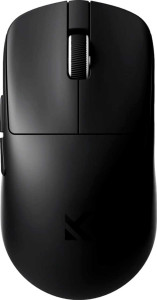
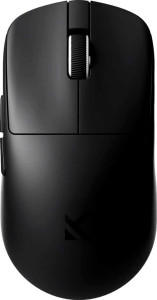
MCHOSE L7 Ultra (500mAh)
MCHOSE L7 Ultra Plus

MCHOSE L7 Ultra (500mAh) MCHOSE L7 Ultra Plus

Overview

Welcome to our in-depth specification comparison between the MCHOSE L7 Ultra (500mAh) and the MCHOSE L7 Ultra Plus. Both are wireless gaming mice sharing the same high-end PixArt PAW3950 sensor and an impressive 8000 Hz polling rate, yet they differ in key areas such as physical dimensions and maximum tracking speed. Read on to explore how these two mice stack up across every measurable specification.

Common Features

  • Both mice have a polling rate of 8000 Hz.
  • Both mice have a maximum acceleration of 50G.
  • Both mice have a maximum DPI of 42000 DPI.
  • Both mice have a minimum DPI of 200 DPI.
  • Both mice have adjustable DPI.
  • Both mice are classified as gaming mice.
  • Both mice support 2.4GHz wireless, USB, and Bluetooth connectivity.
  • Both mice use a PixArt PAW3950 sensor.
  • Both mice have no onboard memory profiles.
  • Both mice use Bluetooth version 5.
  • Both mice do not have gesture support.
  • Both mice have a battery life of 200 hours.
  • Both mice can be used while charging.
  • Both mice have 6 buttons in total.
  • Both mice have 2 side buttons.
  • Both mice have 6 programmable buttons.
  • Both mice have a DPI switching button.
  • Neither mouse has a profile switching button.
  • Both mice have an ambidextrous orientation.
  • Neither mouse has RGB lighting.
  • Neither mouse has a tilting scroll wheel.
  • Neither mouse has a thumb scroll wheel.
  • Neither mouse has extra weights.
  • Both mice have a cable length of 1.8 m.

Main Differences

  • Maximum speed is 750 IPS on MCHOSE L7 Ultra (500mAh) and 650 IPS on MCHOSE L7 Ultra Plus.
  • Weight is 46 g on MCHOSE L7 Ultra (500mAh) and 48 g on MCHOSE L7 Ultra Plus.
  • Volume is 252.558524328 cm³ on MCHOSE L7 Ultra (500mAh) and 286.620204 cm³ on MCHOSE L7 Ultra Plus.
  • Thickness is 36.04 mm on MCHOSE L7 Ultra (500mAh) and 38.1 mm on MCHOSE L7 Ultra Plus.
  • Height is 115.62 mm on MCHOSE L7 Ultra (500mAh) and 119.6 mm on MCHOSE L7 Ultra Plus.
  • Width is 60.61 mm on MCHOSE L7 Ultra (500mAh) and 62.9 mm on MCHOSE L7 Ultra Plus.
Specs Comparison
MCHOSE L7 Ultra (500mAh)

MCHOSE L7 Ultra (500mAh)

MCHOSE L7 Ultra Plus

MCHOSE L7 Ultra Plus

Performance:
polling rate 8000 Hz 8000 Hz
maximum speed 750 IPS 650 IPS
maximum acceleration 50G 50G
maximum DPI 42000 DPI 42000 DPI
minimum DPI 200 DPI 200 DPI
has adjustable DPI

Both the MCHOSE L7 Ultra (500mAh) and the MCHOSE L7 Ultra Plus share a strong performance foundation: an 8000 Hz polling rate, 50G maximum acceleration, and a DPI range spanning 200 to 42,000 DPI with full adjustability. The 8000 Hz polling rate is particularly noteworthy — it means the sensor reports its position up to eight times per millisecond, delivering exceptionally low latency that competitive players will appreciate. The wide DPI range ensures both mice can serve everything from precise low-sensitivity FPS play to high-speed desktop navigation.

The one spec that separates them is maximum tracking speed. The L7 Ultra (500mAh) reaches 750 IPS, while the L7 Ultra Plus tops out at 650 IPS. In practice, IPS (inches per second) defines how fast you can physically move the mouse before the sensor loses accurate tracking. The 100 IPS gap means the L7 Ultra (500mAh) can handle more violent, abrupt swipes without the cursor skipping or de-syncing — a real advantage for players who use low DPI with wide, fast arm movements.

For the vast majority of users, 650 IPS is already well beyond what daily use or even competitive gaming demands, so the L7 Ultra Plus is not at a meaningful disadvantage in typical scenarios. However, on raw sensor performance alone, the L7 Ultra (500mAh) holds a clear edge in this group thanks to its higher maximum tracking speed.

General info:
Type Gaming Gaming
connection type 2.4GHz wireless, USB, Bluetooth 2.4GHz wireless, USB, Bluetooth
sensor PixArt PAW3950 PixArt PAW3950
onboard memory profiles 0 0
Bluetooth version 5 5
has gesture support
Battery life 200 hours 200 hours
can use while charging
has wireless charging
has a rechargeable battery
has a removable battery
warranty period 1 years 1 years
release date July 2025 July 2025

Across every spec in this group, the MCHOSE L7 Ultra (500mAh) and the MCHOSE L7 Ultra Plus are identical. Both are gaming mice built around the PixArt PAW3950 sensor — a high-end optical sensor well-regarded for its accuracy and consistency — and both offer the same three-mode connectivity: 2.4GHz wireless, USB wired, and Bluetooth 5. That combination covers virtually every use case, from zero-compromise competitive play over 2.4GHz to low-power Bluetooth connectivity for travel or secondary devices.

The battery situation is also a wash. Each mouse is rated for an impressive 200 hours of battery life, supports pass-through charging so you can keep playing while plugged in, and uses a built-in rechargeable cell — meaning no removable battery swap option, but that trade-off is standard for this class of mouse. Neither offers wireless charging, which is a minor omission compared to some premium competitors.

Since this group reveals zero differentiation between the two products, it is a complete tie. A buyer choosing between these mice based solely on general features and connectivity will find no reason to favor one over the other — the decision will have to come down to specs from other groups.

Buttons:
number of buttons 6 6
number of side buttons 2 2
number of programmable buttons 6 6
has a DPI switching button
has a profile switching button

The button layout is another area where these two mice offer no distinction whatsoever. Each comes with 6 total buttons, including 2 side buttons, and every one of those 6 is programmable — meaning users get full remapping flexibility across the entire button set, not just a subset. That is a meaningful feature for gamers who rely on custom bindings for macros, weapon swaps, or ability shortcuts.

A dedicated DPI switching button is present on both, allowing on-the-fly sensitivity adjustments without diving into software — a practical convenience during gaming sessions where different scenarios demand different sensitivities. Neither mouse includes a profile switching button, which would have allowed instant hardware-level profile swaps; users who frequently juggle multiple configuration profiles will need to switch through software instead.

With every spec in this group mirrored exactly, this is a complete tie. The button configuration gives neither the L7 Ultra (500mAh) nor the L7 Ultra Plus any advantage, and buyers can expect an identical control layout and programmability experience from both.

Design:
Orientation Ambidextrous Ambidextrous
weight 46 g 48 g
has RGB lighting
has a tilting scroll wheel
has a thumb scroll wheel
has extra weights
cable length 1.8 m 1.8 m
volume 252.558524328 cm³ 286.620204 cm³
thickness 36.04 mm 38.1 mm
height 115.62 mm 119.6 mm
width 60.61 mm 62.9 mm

Shape-wise, both mice are ambidextrous and neither carries RGB lighting or any extra weight customization — a design philosophy clearly oriented toward keeping things lean and functional. Where they diverge is in physical size and weight. The L7 Ultra (500mAh) measures 115.62 × 60.61 × 36.04 mm and weighs 46 g, while the L7 Ultra Plus comes in at 119.6 × 62.9 × 38.1 mm and weighs 48 g. The differences are modest in absolute terms, but they are consistent across every dimension.

In practice, a 2 g weight difference and roughly 4 mm of extra length and width mean the L7 Ultra Plus offers a slightly more substantial feel in hand — potentially preferable for users with larger hands or those who favor a fuller palm grip. The L7 Ultra (500mAh), being the more compact and lighter option, suits players who prioritize effortless control and fast directional changes, particularly during extended sessions where fatigue becomes a factor. At just 46 g, it sits firmly in the ultralight category.

The L7 Ultra (500mAh) holds a design edge for users who prioritize low weight and a smaller footprint, while the L7 Ultra Plus may feel more ergonomically comfortable for those with larger hands. Neither is objectively superior — it comes down to hand size and grip preference — but from a pure weight standpoint, the L7 Ultra (500mAh) has the advantage.

Comparison Summary & Verdict

After a thorough review, both the MCHOSE L7 Ultra (500mAh) and the MCHOSE L7 Ultra Plus prove themselves as capable, feature-rich gaming mice built around the same core platform. They share identical connectivity options, the same PixArt PAW3950 sensor, a remarkable 200-hour battery life, and an 8000 Hz polling rate. Where they diverge is in size and speed: the L7 Ultra (500mAh) offers a lighter 46 g frame, a more compact footprint, and a higher maximum tracking speed of 750 IPS, making it the stronger pick for players who value agility and a smaller hand feel. The L7 Ultra Plus, with its slightly larger and heavier 48 g body, may suit gamers who prefer a bigger grip surface. Neither model includes RGB lighting or extra weights, keeping both firmly focused on pure performance.

MCHOSE L7 Ultra (500mAh)
Buy MCHOSE L7 Ultra (500mAh) if...

Buy the MCHOSE L7 Ultra (500mAh) if you want a lighter, more compact mouse with a higher maximum tracking speed of 750 IPS.

MCHOSE L7 Ultra Plus
Buy MCHOSE L7 Ultra Plus if...

Buy the MCHOSE L7 Ultra Plus if you prefer a slightly larger grip with more volume and a wider body for added comfort during long sessions.