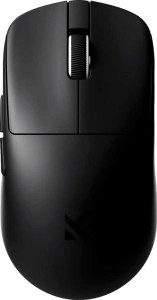
MCHOSE L7
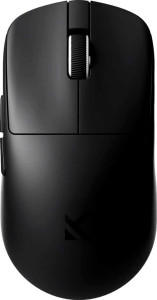
MCHOSE L7 Ultra Plus

MCHOSE L7 MCHOSE L7 Ultra Plus

Common Features

  • Both products have a maximum speed of 650 IPS.
  • Both products have a maximum acceleration of 50G.
  • Both products have a minimum DPI of 200 DPI.
  • Both products have adjustable DPI.
  • Both products support 2.4GHz wireless, USB, and Bluetooth connection types.
  • Both products have Bluetooth version 5.
  • Both products have 6 buttons.
  • Both products have 2 side buttons.
  • Both products have 6 programmable buttons.
  • Both products have a DPI switching button.
  • Both products cannot use profiles for switching.
  • Both products have an ambidextrous orientation.
  • Both products do not have RGB lighting.
  • Both products do not have a tilting scroll wheel.
  • Both products do not have a thumb scroll wheel.
  • Both products do not have extra weights.
  • Both products have a cable length of 1.8 m.

Main Differences

  • Polling rate is 1000 Hz on MCHOSE L7 and 8000 Hz on MCHOSE L7 Ultra Plus.
  • Maximum DPI is 26000 DPI on MCHOSE L7 and 42000 DPI on MCHOSE L7 Ultra Plus.
  • Sensor is PixArt PAW3395 on MCHOSE L7 and PixArt PAW3950 on MCHOSE L7 Ultra Plus.
  • Battery life is 100 hours on MCHOSE L7 and 200 hours on MCHOSE L7 Ultra Plus.
  • Weight is 39 g on MCHOSE L7 and 48 g on MCHOSE L7 Ultra Plus.
  • Volume is 252.558524328 cm³ on MCHOSE L7 and 286.620204 cm³ on MCHOSE L7 Ultra Plus.
  • Thickness is 36.04 mm on MCHOSE L7 and 38.1 mm on MCHOSE L7 Ultra Plus.
  • Height is 115.62 mm on MCHOSE L7 and 119.6 mm on MCHOSE L7 Ultra Plus.
  • Width is 60.61 mm on MCHOSE L7 and 62.9 mm on MCHOSE L7 Ultra Plus.
Specs Comparison
MCHOSE L7

MCHOSE L7

MCHOSE L7 Ultra Plus

MCHOSE L7 Ultra Plus

Performance:
polling rate 1000 Hz 8000 Hz
maximum speed 650 IPS 650 IPS
maximum acceleration 50G 50G
maximum DPI 26000 DPI 42000 DPI
minimum DPI 200 DPI 200 DPI
has adjustable DPI

The MCHOSE L7 and MCHOSE L7 Ultra Plus both offer high performance, but with some notable differences in their specs. The MCHOSE L7 has a polling rate of 1000 Hz, while the L7 Ultra Plus significantly increases this to 8000 Hz, which can provide faster communication between the mouse and the computer, leading to potentially smoother and more responsive input.

In terms of maximum speed, both mice have the same 650 IPS, ensuring excellent precision and movement accuracy. Both also feature a maximum acceleration of 50G, meaning they can handle quick movements without losing tracking accuracy. These specifications are identical between the two models, making them both suitable for high-speed gaming and precise tasks.

When it comes to DPI, the L7 offers a maximum of 26000 DPI, while the L7 Ultra Plus tops out at 42000 DPI. This significant difference in DPI range gives the Ultra Plus a higher potential for precision, particularly at extreme sensitivities. Both models allow for adjustable DPI settings, and both share a minimum DPI of 200, providing flexibility in sensitivity adjustments across a wide range of tasks.

General info:
Type Gaming Gaming
connection type 2.4GHz wireless, USB, Bluetooth 2.4GHz wireless, USB, Bluetooth
sensor PixArt PAW3395 PixArt PAW3950
onboard memory profiles 0 0
Bluetooth version 5 5
has gesture support
Battery life 100 hours 200 hours
can use while charging
has wireless charging
has a rechargeable battery
has a removable battery
warranty period 1 years 1 years
release date July 2025 July 2025

The MCHOSE L7 and MCHOSE L7 Ultra Plus are both gaming mice with similar core features, but some differences in performance and battery life. Both use the PixArt sensor technology, with the L7 featuring the PAW3395 sensor and the L7 Ultra Plus using the PAW3950 sensor. The exact difference between these two sensors is not specified, but they are both high-end sensors designed for precise tracking.

In terms of connectivity, both mice offer the same options: 2.4GHz wireless, USB, and Bluetooth, and both support Bluetooth version 5. However, the L7 Ultra Plus has a significant advantage when it comes to battery life, lasting up to 200 hours compared to the L7’s 100 hours. Both mice have rechargeable batteries and can be used while charging, but neither supports wireless charging, and neither has a removable battery.

As for customization and additional features, both mice have no onboard memory profiles and do not support gesture control. The warranty period for both products is identical at 1 year, offering the same level of manufacturer support.

Buttons:
number of buttons 6 6
number of side buttons 2 2
number of programmable buttons 6 6
has a DPI switching button
has a profile switching button

Both the MCHOSE L7 and MCHOSE L7 Ultra Plus offer the same button layout and features. Each mouse has 6 buttons in total, including 2 side buttons, with all 6 buttons being programmable. Additionally, both models include a DPI switching button, but neither has a profile switching button. This means both mice offer similar customization options in terms of button functions, with no distinction in the button configuration between the two products.

Overall, the button specifications are identical between the MCHOSE L7 and L7 Ultra Plus, so users can expect the same level of functionality from both models when it comes to button count and programmability.

Design:
Orientation Ambidextrous Ambidextrous
weight 39 g 48 g
has RGB lighting
has a tilting scroll wheel
has a thumb scroll wheel
has extra weights
cable length 1.8 m 1.8 m
volume 252.558524328 cm³ 286.620204 cm³
thickness 36.04 mm 38.1 mm
height 115.62 mm 119.6 mm
width 60.61 mm 62.9 mm

The MCHOSE L7 and MCHOSE L7 Ultra Plus are both ambidextrous mice, making them suitable for both left- and right-handed users. However, they differ in weight, with the L7 weighing 39 g and the L7 Ultra Plus slightly heavier at 48 g. This difference in weight could affect the feel and maneuverability of the mice, with the L7 Ultra Plus being a bit more substantial.

In terms of design features, both models are quite similar. Neither mouse includes RGB lighting, a tilting scroll wheel, or a thumb scroll wheel. Both also lack extra weights, offering a streamlined, lightweight design. The cable length is identical for both at 1.8 meters, providing ample flexibility for most setups.

When it comes to size, the MCHOSE L7 has a volume of 252.56 cm³, while the L7 Ultra Plus is slightly larger at 286.62 cm³. The Ultra Plus is also slightly thicker (38.1 mm vs 36.04 mm), taller (119.6 mm vs 115.62 mm), and wider (62.9 mm vs 60.61 mm) compared to the L7, meaning it may offer a slightly different ergonomic feel for users.

Comparison Summary

This is a specification comparison between MCHOSE L7 and MCHOSE L7 Ultra Plus. Both products share features such as a maximum speed of 650 IPS, adjustable DPI, and 6 programmable buttons. However, key differences include the polling rate (1000 Hz on MCHOSE L7 vs 8000 Hz on MCHOSE L7 Ultra Plus), maximum DPI (26000 on MCHOSE L7 vs 42000 on MCHOSE L7 Ultra Plus), and battery life (100 hours on MCHOSE L7 vs 200 hours on MCHOSE L7 Ultra Plus). The sensor is PixArt PAW3395 on MCHOSE L7 and PixArt PAW3950 on MCHOSE L7 Ultra Plus, and the weight is 39 g on MCHOSE L7 compared to 48 g on MCHOSE L7 Ultra Plus.