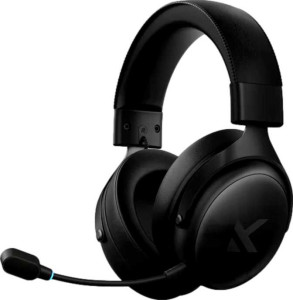
MCHOSE V9 Pro
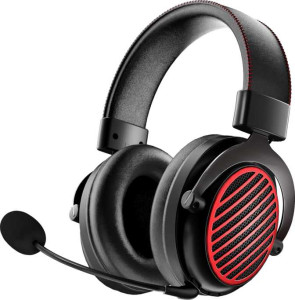
Redragon H540 Wireless

MCHOSE V9 Pro Redragon H540 Wireless

Overview

Welcome to our in-depth spec comparison between the MCHOSE V9 Pro and the Redragon H540 Wireless, two over-ear wireless gaming headsets competing in a crowded market. Both share a strong foundation of features, but key battlegrounds emerge around sound frequency range, battery design, and platform compatibility. Read on to see how every specification stacks up before you decide which headset belongs on your desk.

Common Features

  • Both headsets use an over-ear fit.
  • Both headsets come with a detachable cable.
  • Neither headset features RGB lighting.
  • Neither headset can be folded.
  • Neither headset uses an open-back design.
  • Both headsets have stereo speakers.
  • Neither headset has active noise cancellation (ANC).
  • Both headsets offer virtual surround sound.
  • Both headsets use a 53 mm driver unit size.
  • Both headsets include a neodymium magnet.
  • Both headsets provide passive noise reduction.
  • Both headsets have 2 drivers.
  • Both headsets include a noise-canceling microphone.
  • Both headsets feature a removable microphone.
  • Both headsets have a mute function.
  • Both headsets share a mic sensitivity of -38dBV/Pa.
  • Both headsets have a single microphone.
  • Both headsets have a rechargeable battery.
  • Both headsets can be used wirelessly.
  • Both headsets feature a USB Type-C connection.
  • Both headsets have a control panel placed on the device.
  • Both headsets can be used as a headset.
  • Neither headset has a vibration function.

Main Differences

  • Weight is 272 g on MCHOSE V9 Pro and 275 g on Redragon H540 Wireless.
  • Lowest frequency is 20 Hz on MCHOSE V9 Pro and 15 Hz on Redragon H540 Wireless.
  • Highest frequency is 20000 Hz on MCHOSE V9 Pro and 30000 Hz on Redragon H540 Wireless.
  • Sound pressure level is 113 dB/mW on MCHOSE V9 Pro and 117 dB/mW on Redragon H540 Wireless.
  • A removable battery is not available on MCHOSE V9 Pro but is present on Redragon H540 Wireless.
  • Connectivity options include USB, 2.4GHz wireless, and Bluetooth on MCHOSE V9 Pro, while Redragon H540 Wireless also adds a 3.5mm connection.
  • Xbox compatibility is not available on MCHOSE V9 Pro but is supported on Redragon H540 Wireless, while both support PlayStation, PC, and Nintendo Switch.
Specs Comparison
MCHOSE V9 Pro

MCHOSE V9 Pro

Redragon H540 Wireless

Redragon H540 Wireless

Design:
Fit Over-ear Over-ear
has a detachable cable
weight 272 g 275 g
has RGB lighting
can be folded
has an open-back design
has stereo speakers

In terms of design, the MCHOSE V9 Pro and Redragon H540 Wireless are remarkably similar. Both are closed-back, over-ear headsets with stereo speakers, detachable cables, and no folding mechanism — a profile that prioritizes passive noise isolation and audio immersion over portability.

The most tangible difference lies in weight: the V9 Pro comes in at 272 g versus the H540's 275 g. While a 3-gram gap is negligible in practice and will be imperceptible during extended sessions, it confirms neither headset leans into a lightweight-first design philosophy. Both fall into a moderate weight class typical for full-featured gaming headsets.

Given how closely matched these two are across every design spec, this category is effectively a tie. Neither product offers a structural or ergonomic design advantage over the other based on the available data.

Sound quality:
lowest frequency 20 Hz 15 Hz
highest frequency 20000 Hz 30000 Hz
has active noise cancellation (ANC)
Surround sound Virtual Virtual
driver unit size 53 mm 53 mm
sound pressure level 113 dB/mW 117 dB/mW
has a neodymium magnet
has passive noise reduction
drivers count 2 2

The shared foundation here is solid: both headsets use 53 mm neodymium drivers, offer virtual surround sound, and rely on passive noise reduction rather than active noise cancellation. These are conventional but capable building blocks for a gaming headset in this class.

Where the Redragon H540 Wireless pulls ahead is in its extended frequency response — 15 Hz to 30,000 Hz versus the V9 Pro's standard 20 Hz to 20,000 Hz. The lower floor of 15 Hz means the H540 can reproduce deeper sub-bass rumble, which translates to more visceral impact in explosions or low-frequency game audio. The upper ceiling of 30 kHz exceeds human hearing range, but a wider high-frequency headroom can contribute to perceived airiness and detail at the top end. The H540 also edges ahead in sound pressure level at 117 dB/mW versus 113 dB/mW, meaning it can achieve louder output from the same input signal — useful for users who prefer higher listening volumes without distortion.

The H540 Wireless holds a clear advantage in this category. Its broader frequency range and higher SPL give it measurably more sonic headroom on paper, making it the stronger choice for users who prioritize audio range and output power.

Microphone:
has a noise-canceling microphone
has a removable microphone
has a mute function
mic sensitivity -38dBV/Pa -38dBV/Pa
number of microphones 1 1

Across every microphone specification provided, the MCHOSE V9 Pro and Redragon H540 Wireless are identical. Both feature a single noise-canceling microphone with a sensitivity of -38 dBV/Pa, and both offer the convenience of a removable mic with a dedicated mute function.

The -38 dBV/Pa sensitivity rating sits in the typical range for gaming headset microphones — sensitive enough to pick up voice clearly without requiring the user to speak loudly, while the noise-canceling implementation aims to filter out background interference during calls and in-game communication. The removable design adds flexibility, allowing the headset to double as a casual listening device when the mic is not needed.

This category is a complete tie. There is no differentiating factor between the two headsets based on the available microphone specs, and neither product holds any advantage here.

Power:
has a rechargeable battery
has a removable battery

Both headsets are rechargeable, but the Redragon H540 Wireless separates itself with a removable battery — a feature the MCHOSE V9 Pro lacks. This distinction has meaningful practical implications for power users and long gaming sessions.

A removable battery means the H540 can be kept running indefinitely by swapping in a charged spare, eliminating the downtime associated with tethered charging. The V9 Pro's built-in battery, by contrast, requires the headset to be taken out of use while it recharges. Over time, a non-removable battery is also more susceptible to capacity degradation with no user-serviceable remedy, whereas the H540 allows the battery itself to be replaced when its health declines.

The H540 Wireless holds a clear edge in this category. The ability to hot-swap batteries is a tangible convenience advantage, particularly for users who game for extended periods or who want long-term serviceability from their headset.

Connectivity:
connectivity USB, 2.4GHz wireless, Bluetooth 3.5mm, USB, 2.4GHz wireless, Bluetooth
compatibility PlayStation, PC, Nintendo Switch PlayStation, PC, Nintendo Switch, Xbox
Can be used wirelessly
Has USB Type-C

Both headsets share a strong wireless foundation — 2.4GHz wireless, Bluetooth, and USB connectivity, along with USB Type-C charging. The 2.4GHz option is particularly valuable for gaming, as it offers lower latency than Bluetooth, making it the preferred mode for competitive or latency-sensitive play.

The differences, while not dramatic, are meaningful. The Redragon H540 Wireless adds a 3.5mm analog jack, giving it a wired fallback that the V9 Pro lacks entirely. This matters in scenarios where wireless isn't viable — a depleted battery, a device without USB, or a platform that only supports analog audio. The H540 also extends platform compatibility to include Xbox, whereas the V9 Pro is limited to PlayStation, PC, and Nintendo Switch. For multi-console households or Xbox owners specifically, this is a decisive differentiator.

The H540 Wireless takes a clear edge in connectivity. Its additional 3.5mm input and broader platform support make it the more versatile option across devices and use scenarios, while the V9 Pro's connectivity set, though capable, is more constrained.

Features:
release date March 2025 March 2025
control panel placed on a device
can be used as a headset
has a vibration function

The features category offers no differentiation between these two headsets. Both include an on-device control panel, function as a headset with microphone support, and neither offers a vibration function — a feature more common in specialized haptic gaming peripherals than mainstream wireless headsets.

An on-device control panel is a practical convenience worth noting: having volume, mute, or other controls accessible directly on the earcup means users can make quick adjustments without reaching for a controller or software UI mid-session. That both headsets include this is a shared strength, but it does nothing to separate them from each other.

This category is a complete tie. The available specs reveal no meaningful feature advantage on either side, and users should weigh other categories — such as connectivity, sound quality, or power — when making their decision.

Comparison Summary & Verdict

After reviewing all the specifications, both headsets prove to be remarkably similar in construction and core functionality, making the differences count even more. The Redragon H540 Wireless pulls ahead on audio performance, offering a wider frequency range of 15–30000 Hz, a higher sound pressure level of 117 dB/mW, and the added convenience of a removable battery and Xbox compatibility. It also gains versatility with a 3.5mm wired option alongside the shared USB and 2.4GHz wireless modes. The MCHOSE V9 Pro, meanwhile, is marginally lighter and still covers the standard 20–20000 Hz audio range suitable for most gamers. If you want broader platform support and future-proof audio specs, the Redragon H540 Wireless is the stronger all-rounder. If you primarily game on PlayStation, PC, or Nintendo Switch and prefer a slightly trimmer build, the MCHOSE V9 Pro remains a capable and competitive choice.

MCHOSE V9 Pro
Buy MCHOSE V9 Pro if...

Buy the MCHOSE V9 Pro if you game exclusively on PlayStation, PC, or Nintendo Switch and want a marginally lighter headset that still covers all the core wireless connectivity options.

Redragon H540 Wireless
Buy Redragon H540 Wireless if...

Buy the Redragon H540 Wireless if you want a wider frequency range, higher sound pressure level, a removable battery for easy replacement, Xbox compatibility, and the flexibility of a 3.5mm wired connection.