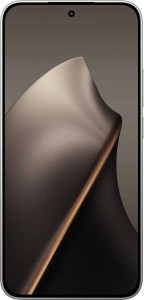
The shared connectivity foundation is strong on both sides — 5G, NFC, dual SIM, infrared sensor, GPS with Galileo, and fingerprint scanning are all present on each device. The meaningful splits emerge in four specific areas. Starting with wireless: the Meizu 22 supports Wi-Fi 7 (802.11be), the latest generation standard, while the Xiaomi 15T tops out at Wi-Fi 6E. Wi-Fi 7 brings significantly higher throughput and lower latency in compatible environments — relevant now for users with Wi-Fi 7 routers and increasingly so over the phone's lifespan. The 15T counters with Bluetooth 6.0 versus the Meizu 22's 5.4, a newer version that improves connection reliability, range accuracy, and energy efficiency with compatible peripherals.
The USB difference is the most practically impactful spec in this group for many users. The Meizu 22 uses USB 3.2, enabling data transfer speeds up to 10 Gbps, while the Xiaomi 15T is limited to USB 2.0 — a ceiling of just 480 Mbps. For anyone who transfers large files, uses the phone as an external drive, or connects it to a PC regularly, this is a substantial real-world gap. On the cellular side, the 15T edges ahead with a peak download speed of 5170 Mbps versus the Meizu 22's 4200 Mbps, though both figures far exceed what current networks practically deliver.
This category ends in a genuine trade-off rather than a clean win. The Meizu 22 holds the advantage for users who value future-proof Wi-Fi and high-speed wired data transfers, while the Xiaomi 15T offers a newer Bluetooth version and marginally higher cellular throughput. On balance, the Meizu 22's USB 3.2 and Wi-Fi 7 combination represents the more impactful set of advantages for day-to-day use cases.