Meizu Mblu 22 Pro
ZTE Blade V70 Max

Meizu Mblu 22 Pro ZTE Blade V70 Max

Overview

Welcome to our in-depth comparison of the Meizu Mblu 22 Pro and the ZTE Blade V70 Max, two budget-friendly Android 15 smartphones that share a surprising amount of common ground while diverging in some critical areas. From battery capacity and raw performance to audio quality and storage, this head-to-head breakdown will help you decide which device truly fits your needs.

Common Features

  • Neither product has water resistance.
  • Neither product has a rugged build.
  • Neither product can be folded.
  • Both products use an LCD IPS display type.
  • Both products have a 120Hz refresh rate.
  • Neither product has branded damage-resistant glass.
  • Neither product supports HDR10.
  • Neither product supports HDR10+.
  • Neither product has an Always-On Display.
  • Neither product supports Dolby Vision.
  • Neither product has a secondary screen.
  • Both products come with 8GB of RAM.
  • Both products achieve a Geekbench 6 multi-core score of 1391.
  • Both products have integrated LTE.
  • Both products use a 12 nm semiconductor size.
  • Both products support 64-bit processing.
  • Both products support DirectX 12.
  • Both products have integrated graphics.
  • Both products support OpenGL ES version 3.2.
  • Both products have a main camera with 50 and 2 MP sensors.
  • Both products share a main camera wide aperture of 2.4 and 1.8f.
  • Both products have a dual-lens main camera.
  • Both products have an 8MP front camera.
  • Neither product has built-in optical image stabilization.
  • Both products record main camera video at 1080p 30fps.
  • Neither product has a dual-tone LED flash.
  • Both products have a single LED flash.
  • Both products run Android 15.
  • Both products have clipboard warnings.
  • Both products have location privacy options.
  • Both products have camera and microphone privacy options.
  • Neither product has Mail Privacy Protection.
  • Both products support theme customization.
  • Both products can block app tracking.
  • Neither product blocks cross-site tracking.
  • Neither product supports wireless charging.
  • Both products support fast charging.
  • Neither product has a removable battery.
  • Both products have a battery level indicator.
  • Both products have a rechargeable battery.
  • Both products have a 3.5mm audio jack.
  • Neither product supports aptX.
  • Neither product supports LDAC.
  • Neither product supports aptX HD.
  • Neither product supports aptX Adaptive.
  • Neither product supports aptX Lossless.
  • Neither product supports 5G.
  • Both products have dual SIM card slots.
  • Both products have an external memory slot.
  • Both products have USB Type-C.
  • Both products use USB version 2.
  • Both products have NFC.
  • Both products have a download speed of 300 MBits/s.
  • Both products have an upload speed of 100 MBits/s.
  • Both products have a video light.
  • Neither product has a sapphire glass display.
  • Neither product has a curved display.
  • Neither product has an e-paper display.

Main Differences

  • Weight is 200 g on Meizu Mblu 22 Pro and 218 g on ZTE Blade V70 Max.
  • Thickness is 8.6 mm on Meizu Mblu 22 Pro and 8.3 mm on ZTE Blade V70 Max.
  • Width is 77.5 mm on Meizu Mblu 22 Pro and 78.4 mm on ZTE Blade V70 Max.
  • Height is 170.8 mm on Meizu Mblu 22 Pro and 171.8 mm on ZTE Blade V70 Max.
  • Volume is 113.84 cm³ on Meizu Mblu 22 Pro and 111.79 cm³ on ZTE Blade V70 Max.
  • Screen size is 6.79″ on Meizu Mblu 22 Pro and 6.9″ on ZTE Blade V70 Max.
  • Pixel density is 264 ppi on Meizu Mblu 22 Pro and 254 ppi on ZTE Blade V70 Max.
  • Resolution is 720 x 1640 px on Meizu Mblu 22 Pro and 720 x 1600 px on ZTE Blade V70 Max.
  • Internal storage is 256GB on Meizu Mblu 22 Pro and 128GB on ZTE Blade V70 Max.
  • The chipset is MediaTek Helio G81 Ultra on Meizu Mblu 22 Pro and Unisoc T606 on ZTE Blade V70 Max.
  • The GPU is Mali G52 MP2 on Meizu Mblu 22 Pro and Mali G57 MP1 on ZTE Blade V70 Max.
  • CPU speed is 2 x 2 and 6 x 1.8 GHz on Meizu Mblu 22 Pro and 2 x 1.6 and 6 x 1.6 GHz on ZTE Blade V70 Max.
  • Geekbench 6 single-core score is 420 on Meizu Mblu 22 Pro and 371 on ZTE Blade V70 Max.
  • Geekbench 5 multi-core score is 1300 on Meizu Mblu 22 Pro and 1175 on ZTE Blade V70 Max.
  • Geekbench 5 single-core score is 350 on Meizu Mblu 22 Pro and 313 on ZTE Blade V70 Max.
  • RAM speed is 1800 MHz on Meizu Mblu 22 Pro and 1600 MHz on ZTE Blade V70 Max.
  • Maximum memory bandwidth is 13.41 GB/s on Meizu Mblu 22 Pro and 12.8 GB/s on ZTE Blade V70 Max.
  • L2 cache is 0.3 MB on Meizu Mblu 22 Pro and 2 MB on ZTE Blade V70 Max.
  • Maximum memory amount is 8GB on Meizu Mblu 22 Pro and 14GB on ZTE Blade V70 Max.
  • GPU execution units number 2 on Meizu Mblu 22 Pro and 1 on ZTE Blade V70 Max.
  • RAW photo shooting is not available on Meizu Mblu 22 Pro but is supported on ZTE Blade V70 Max.
  • Battery capacity is 5000 mAh on Meizu Mblu 22 Pro and 6000 mAh on ZTE Blade V70 Max.
  • Charging speed is 18W on Meizu Mblu 22 Pro and 22.5W on ZTE Blade V70 Max.
  • Stereo speakers are present on Meizu Mblu 22 Pro but not available on ZTE Blade V70 Max.
  • Wi-Fi support covers Wi-Fi 4 only on Meizu Mblu 22 Pro and both Wi-Fi 4 and Wi-Fi 5 on ZTE Blade V70 Max.
  • Bluetooth version is 5.0 on Meizu Mblu 22 Pro and 5.2 on ZTE Blade V70 Max.
Specs Comparison
Meizu Mblu 22 Pro

Meizu Mblu 22 Pro

ZTE Blade V70 Max

ZTE Blade V70 Max

Design:
water resistance None None
weight 200 g 218 g
thickness 8.6 mm 8.3 mm
width 77.5 mm 78.4 mm
height 170.8 mm 171.8 mm
volume 113.8382 cm³ 111.793696 cm³
has a rugged build
can be folded

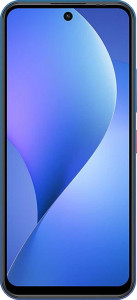
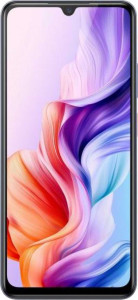
In terms of overall dimensions, the Meizu Mblu 22 Pro and ZTE Blade V70 Max are remarkably close siblings. Both are tall, wide-screen devices, with the ZTE edging slightly larger at 171.8 × 78.4 mm versus the Meizu's 170.8 × 77.5 mm. In practice, this difference is negligible — neither phone will feel meaningfully more pocketable or one-hand-friendly than the other.

Where a more tangible distinction emerges is in the weight-versus-thickness trade-off. The Mblu 22 Pro is noticeably lighter at 200 g compared to the Blade V70 Max's 218 g — an 18 g gap that becomes perceptible during extended one-handed use or long calls. However, the ZTE achieves a marginally slimmer profile at 8.3 mm thick versus the Meizu's 8.6 mm, suggesting a denser internal layout. For users who prioritize comfort in hand over sleekness in pocket, the Meizu has the edge; for those sensitive to bulk, the ZTE's slimmer waistline partially compensates.

Both devices share the same key limitations: no water resistance and no rugged certification, meaning neither is suited for wet or demanding environments. Overall, the Meizu Mblu 22 Pro holds a modest but real advantage in this group, primarily due to its lower weight, which has the most direct impact on daily handling comfort.

Display:
Display type LCD, IPS LCD, IPS
screen size 6.79" 6.9"
pixel density 264 ppi 254 ppi
resolution 720 x 1640 px 720 x 1600 px
refresh rate 120Hz 120Hz
has branded damage-resistant glass
supports HDR10
supports HDR10+
Always-On Display
supports Dolby Vision
Has a secondary screen
has a touch screen

Both the Meizu Mblu 22 Pro and ZTE Blade V70 Max use an LCD IPS panel with a 120Hz refresh rate — a meaningful shared strength at this price tier, as the smoother scrolling and animations it enables are genuinely noticeable in everyday use compared to standard 60Hz screens. Neither device offers AMOLED, HDR support of any kind, or always-on display functionality, so users seeking richer contrast or vibrant colors will find both equally limited.

The most practical differentiator here is sharpness. The Mblu 22 Pro delivers 264 ppi on its 6.79″ panel at a 720 × 1640 resolution, while the Blade V70 Max spreads a slightly lower 720 × 1600 resolution across a marginally larger 6.9″ screen, yielding 254 ppi. A 10 ppi gap is subtle but measurable — fine text and icons will render with a touch more clarity on the Meizu. Neither reaches the 300+ ppi threshold where pixel structure becomes truly invisible, but the Mblu 22 Pro is closer to that threshold.

The Meizu Mblu 22 Pro takes a narrow but clear edge in this category. Its higher pixel density is the only meaningful differentiator between two otherwise identically specified displays, and crisper rendering matters for reading-heavy or detail-oriented users. Neither phone should be chosen over the other for display quality alone, but if the screen is a priority, the Mblu 22 Pro is the slightly more refined option.

Performance:
internal storage 256GB 128GB
RAM 8GB 8GB
Chipset (SoC) name MediaTek Helio G81 Ultra Unisoc T606
GPU name Mali G52 MP2 Mali G57 MP1
CPU speed 2 x 2 & 6 x 1.8 GHz 2 x 1.6 & 6 x 1.6 GHz
Geekbench 6 result (multi) 1391 1391
Geekbench 6 result (single) 420 371
Geekbench 5 result (multi) 1300 1175
Geekbench 5 result (single) 350 313
Has integrated LTE
RAM speed 1800 MHz 1600 MHz
semiconductor size 12 nm 12 nm
Supports 64-bit
DirectX version DirectX 12 DirectX 12
Has integrated graphics
OpenGL ES version 3.2 3.2
Uses big.LITTLE technology
CPU threads 8 threads 8 threads
Has TrustZone
maximum memory bandwidth 13.41 GB/s 12.8 GB/s
OpenCL version 2 2
L2 cache 0.3 MB 2 MB
eMMC version 5.1 5.1
maximum memory amount 8GB 14GB
GPU execution units 2 1
GPU turbo 950 MHz 650 MHz
Thermal Design Power (TDP) 5W 10W
DDR memory version 4 4
shading units 32 64
L3 cache 1 MB 1 MB

Chip choice tells a revealing story here. The Meizu Mblu 22 Pro runs on the MediaTek Helio G81 Ultra, while the ZTE Blade V70 Max relies on the Unisoc T606 — and the gap between them shows up clearly in benchmarks. Single-core Geekbench 6 scores of 420 vs 371 reflect a meaningful CPU frequency advantage for the Meizu, whose performance cores clock at 2.0 GHz compared to the ZTE's uniform 1.6 GHz across all cores. Since single-core performance governs most everyday tasks — app launches, UI responsiveness, typing — this translates into a noticeably snappier feel in daily use.

The graphics and storage picture reinforces the Meizu's lead. Its GPU boosts to 950 MHz versus the ZTE's 650 MHz, and it ships with 256 GB of internal storage compared to the Blade V70 Max's 128 GB — a practical doubling that matters for media-heavy users. The Mblu 22 Pro also benefits from faster 1800 MHz RAM and slightly higher memory bandwidth. One counterpoint in the ZTE's favor is its larger 2 MB L2 cache and higher maximum supported RAM, but these advantages are architectural footnotes that rarely surface in real-world performance at this tier. More notably, the Blade V70 Max carries a 10W TDP against the Meizu's 5W, suggesting the Unisoc chip works harder to deliver less — a sign of lower power efficiency.

The Meizu Mblu 22 Pro wins this category clearly. It outpaces the Blade V70 Max in CPU speed, GPU clock, benchmark scores, storage capacity, and power efficiency simultaneously. For users who care about smooth, sustained performance and long-term storage headroom, the Mblu 22 Pro is the more capable device by a meaningful margin.

Cameras:
megapixels (main camera) 50 & 2 MP 50 & 2 MP
wide aperture (main camera) 2.4 & 1.8f 2.4 & 1.8f
Has a dual-lens (or multi-lens) main camera
megapixels (front camera) 8MP 8MP
has built-in optical image stabilization
video recording (main camera) 1080 x 30 fps 1080 x 30 fps
Has a dual-tone LED flash
number of flash LEDs 1 1
has a BSI sensor
has a CMOS sensor
has continuous autofocus when recording movies
Has phase-detection autofocus for photos
supports slow-motion video recording
has a built-in HDR mode
has manual exposure
has a flash
optical zoom 0x 0x
has manual ISO
has a serial shot mode
has manual focus
has a front camera
Has laser autofocus
Shoots 360° panorama
has manual white balance
shoots raw
has touch autofocus
has manual shutter speed
can create panoramas in-camera
Has timelapse function
Has a front-facing LED flash
has a dual-lens (or multi-lens) front camera
supports HDR10 recording
supports Dolby Vision recording
has a front-facing camera under the display
Has a RGB LED flash
has 3D photo/video recording capabilities

Rarely does a camera comparison come down to a single feature, but that is precisely the case here. The Meizu Mblu 22 Pro and ZTE Blade V70 Max share an almost perfectly mirrored camera specification: identical 50 MP + 2 MP dual rear setups, matching apertures, the same 8 MP front camera, and equivalent video capability capped at 1080p at 30 fps. Both rely on CMOS sensors without optical image stabilization, and both support the same suite of manual controls — ISO, exposure, white balance, and manual focus — alongside phase-detection autofocus, continuous autofocus during video, HDR mode, and slow-motion recording.

The one meaningful divergence is RAW shooting support, which the Blade V70 Max offers and the Mblu 22 Pro does not. For casual users, this is irrelevant — JPEGs are perfectly adequate for social sharing and everyday photography. But for anyone who edits photos post-capture, RAW files retain significantly more tonal and color data than compressed JPEGs, enabling greater recovery of highlights and shadows in editing software. It is a feature that signals the ZTE is more accommodating of users with a serious interest in mobile photography workflow.

The ZTE Blade V70 Max earns the edge in this category solely on the strength of its RAW capture capability. Every other spec is functionally identical, making this a tie for users who shoot and share directly from the phone — but a clear ZTE advantage for those who invest time in post-processing their images.
Operating system:
Android version Android 15 Android 15
has clipboard warnings
has location privacy options
has camera/microphone privacy options
has Mail Privacy Protection
has theme customization
can block app tracking
blocks cross-site tracking
has on-device machine learning
has notification permissions
has media picker
Can play games while they download
has dark mode
has Wi-Fi password sharing
has battery health check
has an extra dim mode
has focus modes
has dynamic theming
can offload apps
Has customizable notifications
has Live Text
has full-page screenshots
supports split screen
gets direct OS updates
has PiP
Can be used as a PC
Has sharing intents
has a child lock
Supports widgets
Is free and open source
Has offline voice recognition
has voice commands
Tracks the current position of a mobile device
is a multi-user system
has Quick Start

This is a clean sweep for parity. The Meizu Mblu 22 Pro and ZTE Blade V70 Max run identical software foundations — both launch on Android 15 and share every single feature tracked in this category without a single point of divergence. From privacy controls like location and camera/microphone permissions to usability features like split-screen multitasking, Picture-in-Picture, dynamic theming, and offline voice recognition, the two devices are indistinguishable on paper.

The shared feature set is genuinely well-rounded for this segment. On-device machine learning, Live Text, battery health monitoring, and an extra dim mode are all present — capabilities that were considered premium not long ago. Both devices also lack direct OS update pipelines, meaning software patches will depend on their respective manufacturers rather than arriving straight from Google, which is a shared limitation worth noting for long-term software support expectations.

This category is an absolute tie. There is no basis in the provided data to prefer one device over the other from a software standpoint. A buyer's decision here should rest entirely on the differences identified in other specification groups.

Battery:
battery power 5000 mAh 6000 mAh
has wireless charging
Supports fast charging
charging speed 18W 22.5W
has a removable battery
has a battery level indicator
has a rechargeable battery

Battery is where the ZTE Blade V70 Max makes its strongest case. Its 6000 mAh cell holds a substantial 1000 mAh advantage over the Mblu 22 Pro's 5000 mAh — a 20% larger reserve that, all else being equal, translates directly into more screen-on time between charges. For heavy users, commuters, or anyone frequently away from a power source, that gap can represent the difference between ending the day with charge to spare and scrambling for a cable by evening.

The charging speed advantage also lands with the ZTE: 22.5W versus the Meizu's 18W. Faster charging matters most when battery capacity is lower, so the Mblu 22 Pro — which both starts with less energy and replenishes it more slowly — is doubly disadvantaged in this category. Neither device supports wireless charging, which is a shared omission at this price tier but worth flagging for users who value that convenience.

The ZTE Blade V70 Max wins this group decisively. A larger battery paired with faster wired charging makes it the clearly more capable device for endurance-focused users. Those who prioritize staying unplugged longer will find the Blade V70 Max a more reassuring daily companion on this dimension alone.

Audio:
has a socket for a 3.5 mm audio jack
has stereo speakers
has aptX
has LDAC
has aptX HD
has aptX Adaptive
has aptX Lossless

Audio hardware is lean on both devices, but one distinction stands out immediately. The Meizu Mblu 22 Pro features stereo speakers, while the ZTE Blade V70 Max does not. For media consumption — whether streaming video, playing games, or listening to music without headphones — stereo output creates a noticeably wider and more immersive soundstage compared to mono. It is one of those specs that sounds minor on paper but makes a genuine qualitative difference in everyday use.

Both phones include a 3.5 mm headphone jack, a feature increasingly absent from mainstream devices. Its presence here gives wired headphone users a plug-and-play option without needing an adapter. Neither device supports advanced Bluetooth audio codecs such as aptX or LDAC, so wireless audio quality will be governed by standard SBC or AAC performance — adequate for casual listening, but not a strong suit for audiophiles.

The Meizu Mblu 22 Pro takes a clear win in this category. The addition of stereo speakers is a tangible, everyday advantage for anyone who regularly uses their phone as a media device without headphones, and it is the sole but meaningful differentiator in an otherwise evenly matched audio profile.

Connectivity & Features:
release date May 2025 February 2025
has 5G support
Wi-Fi version Wi-Fi 4 (802.11n) Wi-Fi 4 (802.11n), Wi-Fi 5 (802.11ac)
SIM cards 2 SIM 2 SIM
Bluetooth version 5 5.2
has an external memory slot
Has USB Type-C
USB version 2 2
has NFC
download speed 300 MBits/s 300 MBits/s
upload speed 100 MBits/s 100 MBits/s
Has a fingerprint scanner
has emergency SOS via satellite
has crash detection
is DLNA-certified
has a gyroscope
supports ANT+
Has a heart rate monitor
has GPS
has a compass
supports Wi-Fi
Has an infrared sensor
has an accelerometer
has a cellular module
Has a barometer
has an HDMI output
Uses 3D facial recognition
Has an iris scanner
Stylus included
supports Galileo
Has motion tracking
Has optical tracking
Has a built-in projector

Across the broad connectivity landscape, these two devices are closely matched — dual SIM, USB Type-C, NFC, GPS with Galileo support, expandable storage, and a fingerprint scanner all feature on both. Neither supports 5G, which places them squarely in the budget 4G tier with identical peak download and upload speeds. For most users in this segment, that shared foundation covers everyday needs without issue.

The gaps that do exist favor the ZTE Blade V70 Max. Its Bluetooth 5.2 implementation is a step ahead of the Mblu 22 Pro's Bluetooth 5.0, bringing improvements in connection stability and audio synchronization — a modest but real benefit for wireless headphone and accessory users. More significantly, the ZTE also supports Wi-Fi 5 (802.11ac) alongside Wi-Fi 4, while the Meizu is limited to Wi-Fi 4 (802.11n) only. Wi-Fi 5 operates on the less congested 5 GHz band and supports substantially higher throughput, which translates into faster file transfers, smoother streaming on crowded networks, and lower latency — tangible advantages in dense environments like apartments or offices.

The ZTE Blade V70 Max earns the edge here. Its superior Wi-Fi 5 support is the more impactful differentiator — faster and more reliable wireless connectivity affects daily usage far more than the Bluetooth version gap. Neither win is dramatic, but together they give the ZTE a meaningful connectivity advantage over the Meizu in real-world conditions.

Miscellaneous:
has a video light
Has sapphire glass display
Has a curved display
Has an e-paper display

The miscellaneous category offers nothing to separate these two devices. The Meizu Mblu 22 Pro and ZTE Blade V70 Max share every attribute tracked here: both include a video light, and neither features a sapphire glass display, a curved screen, or an e-paper panel. There are no differentiators to analyze.

This is a complete tie. The decision between these two phones rests entirely on the distinctions uncovered in other specification groups.

Comparison Summary & Verdict

After a thorough look at both devices, the choice comes down to your priorities. The Meizu Mblu 22 Pro stands out with its lighter build, stereo speakers, and 256GB of internal storage, making it a strong pick for media enthusiasts who value sound quality and generous onboard space. Its chipset also delivers a measurable performance edge in Geekbench scores. On the other hand, the ZTE Blade V70 Max counters with a larger 6000 mAh battery, faster 22.5W charging, broader Wi-Fi 5 support, and the ability to shoot in RAW format, appealing to photography-minded users and those who demand all-day endurance. With expandable memory up to 14GB, it also suits multitaskers who push their devices hard.

Meizu Mblu 22 Pro
Buy Meizu Mblu 22 Pro if...

Buy the Meizu Mblu 22 Pro if you want stereo speakers, more internal storage at 256GB, and a lighter device with a stronger overall chipset performance.

ZTE Blade V70 Max
Buy ZTE Blade V70 Max if...

Buy the ZTE Blade V70 Max if you prioritize a larger 6000 mAh battery, faster 22.5W charging, Wi-Fi 5 support, and RAW camera shooting capability.