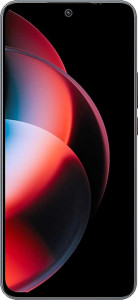
Meizu Note 22 4G
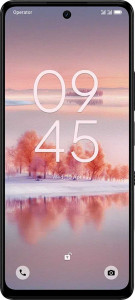
TCL 60 NxtPaper

Meizu Note 22 4G TCL 60 NxtPaper

Overview

Welcome to our in-depth spec comparison between the Meizu Note 22 4G and the TCL 60 NxtPaper. These two mid-range Android 15 smartphones share a surprising number of features, yet diverge sharply when it comes to display quality, connectivity options, camera capabilities, and charging performance. Whether you value a vivid screen and fast charging or prefer 5G connectivity and a more compact build, this side-by-side breakdown will help you find the right fit.

Common Features

  • Both phones have an IP54 ingress protection rating and are water resistant.
  • Neither phone has a rugged build.
  • Neither phone can be folded.
  • Both phones share a width of 75.5 mm.
  • Both phones have a 120Hz display refresh rate.
  • Neither phone has branded damage-resistant glass.
  • HDR10 support is not available on either product.
  • HDR10+ support is not available on either product.
  • Always-On Display is not available on either product.
  • Dolby Vision support is not available on either product.
  • Both phones have a touchscreen.
  • Both phones have 8GB of RAM.
  • Both phones use a 6 nm semiconductor process.
  • Both phones support 64-bit processing and use big.LITTLE CPU technology with 8 threads.
  • Both phones have integrated LTE and integrated graphics.
  • Both phones feature a multi-lens main camera.
  • Optical image stabilization is not present on either phone.
  • Both phones have a CMOS sensor, phase-detection autofocus, built-in HDR mode, and continuous autofocus during video recording.
  • Both phones run Android 15 and share the same privacy features including clipboard warnings, location privacy options, camera and microphone privacy options, theme customization, and the ability to block app tracking.
  • Cross-site tracking blocking is not available on either phone.
  • Neither phone supports wireless charging, but both support fast charging and come with a charger.
  • Both phones have a non-removable rechargeable battery with a battery level indicator.
  • Neither phone supports aptX, LDAC, aptX HD, aptX Adaptive, or aptX Lossless audio codecs.
  • Both phones have a built-in radio.
  • Both phones support Wi-Fi 4 and Wi-Fi 5, have dual SIM card slots, USB Type-C with USB 2.0, NFC, and a fingerprint scanner.
  • Emergency SOS via satellite is not available on either phone.
  • Crash detection is not available on either phone.
  • Both phones have a video light, no sapphire glass display, and no curved display.

Main Differences

  • Weight is 204 g on Meizu Note 22 4G and 190 g on TCL 60 NxtPaper.
  • Thickness is 8.4 mm on Meizu Note 22 4G and 7.85 mm on TCL 60 NxtPaper.
  • Height is 165.2 mm on Meizu Note 22 4G and 167.3 mm on TCL 60 NxtPaper.
  • Volume is 104.77 cm³ on Meizu Note 22 4G and 99.15 cm³ on TCL 60 NxtPaper.
  • The display type is OLED/AMOLED on Meizu Note 22 4G and LCD IPS on TCL 60 NxtPaper.
  • Screen size is 6.78″ on Meizu Note 22 4G and 6.7″ on TCL 60 NxtPaper.
  • Pixel density is 393 ppi on Meizu Note 22 4G and 262 ppi on TCL 60 NxtPaper.
  • Resolution is 1080 x 2436 px on Meizu Note 22 4G and 720 x 1600 px on TCL 60 NxtPaper.
  • Internal storage is 1024 GB on Meizu Note 22 4G and 256 GB on TCL 60 NxtPaper.
  • The chipset is Mediatek Helio G99 on Meizu Note 22 4G and MediaTek Dimensity 6300 on TCL 60 NxtPaper.
  • CPU speed is 2 x 2.2 & 6 x 2 GHz on Meizu Note 22 4G and 2 x 2.4 & 6 x 2 GHz on TCL 60 NxtPaper.
  • Geekbench 6 multi-core score is 1979 on Meizu Note 22 4G and 2012 on TCL 60 NxtPaper.
  • Geekbench 6 single-core score is 729 on Meizu Note 22 4G and 782 on TCL 60 NxtPaper.
  • RAM speed is 4266 MHz on Meizu Note 22 4G and 2133 MHz on TCL 60 NxtPaper.
  • DirectX version is DirectX 11 on Meizu Note 22 4G and DirectX 12 on TCL 60 NxtPaper.
  • Main camera resolution is 108 & 8 & 2 MP on Meizu Note 22 4G and 50 & 5 MP on TCL 60 NxtPaper.
  • Front camera resolution is 32 MP on Meizu Note 22 4G and 8 MP on TCL 60 NxtPaper.
  • The number of flash LEDs is 1 on Meizu Note 22 4G and 2 on TCL 60 NxtPaper.
  • Slow-motion video recording is supported on Meizu Note 22 4G but not available on TCL 60 NxtPaper.
  • Timelapse function is present on Meizu Note 22 4G but not available on TCL 60 NxtPaper.
  • Battery capacity is 5000 mAh on Meizu Note 22 4G and 5200 mAh on TCL 60 NxtPaper.
  • Charging speed is 40W on Meizu Note 22 4G and 18W on TCL 60 NxtPaper.
  • A 3.5 mm audio jack is absent on Meizu Note 22 4G but present on TCL 60 NxtPaper.
  • Stereo speakers are present on Meizu Note 22 4G but not available on TCL 60 NxtPaper.
  • 5G support is not available on Meizu Note 22 4G but is present on TCL 60 NxtPaper.
  • Bluetooth version is 6 on Meizu Note 22 4G and 5.4 on TCL 60 NxtPaper.
  • An external memory slot is absent on Meizu Note 22 4G but present on TCL 60 NxtPaper.
  • Download speed is 650 Mbit/s on Meizu Note 22 4G and 3300 Mbit/s on TCL 60 NxtPaper.
  • A barometer is absent on Meizu Note 22 4G but present on TCL 60 NxtPaper.
  • An e-paper display is absent on Meizu Note 22 4G but present on TCL 60 NxtPaper.
Specs Comparison
Meizu Note 22 4G

Meizu Note 22 4G

TCL 60 NxtPaper

TCL 60 NxtPaper

Design:
water resistance Water resistant Water resistant
weight 204 g 190 g
thickness 8.4 mm 7.85 mm
width 75.5 mm 75.5 mm
height 165.2 mm 167.3 mm
volume 104.76984 cm³ 99.1545275 cm³
Ingress Protection (IP) rating IP54 IP54
has a rugged build
can be folded

Both the Meizu Note 22 4G and the TCL 60 NxtPaper share an IP54 water-resistance rating, meaning neither is fully submersible but both can handle splashes and light rain — a practical baseline for everyday use. Neither device offers a rugged build or a foldable form factor, so they compete squarely as standard candy-bar smartphones.

Where they diverge is in physical dimensions and weight. The TCL 60 NxtPaper is noticeably lighter at 190 g versus 204 g for the Meizu — a 14 g difference that is genuinely perceptible during prolonged one-handed use or when holding the phone up for extended viewing. The TCL is also slimmer at 7.85 mm compared to 8.4 mm, which contributes to a more pocket-friendly profile. Interestingly, the TCL is slightly taller (167.3 mm vs. 165.2 mm) while sharing the exact same 75.5 mm width, yet its overall volume is smaller at 99.15 cm³ versus 104.77 cm³ — indicating a more efficiently packed chassis.

In terms of design, the TCL 60 NxtPaper holds a clear edge: it is lighter, thinner, and more compact by volume, all of which translate to a more comfortable in-hand feel without any trade-off in water resistance or build protection. The Meizu Note 22 4G offers no design advantage in this group to offset its bulkier, heavier profile.

Display:
Display type OLED/AMOLED LCD, IPS
screen size 6.78" 6.7"
pixel density 393 ppi 262 ppi
resolution 1080 x 2436 px 720 x 1600 px
refresh rate 120Hz 120Hz
has branded damage-resistant glass
supports HDR10
supports HDR10+
Always-On Display
supports Dolby Vision
Has a secondary screen
has a touch screen

The display is arguably where these two phones diverge most dramatically. The Meizu Note 22 4G uses an OLED/AMOLED panel, while the TCL 60 NxtPaper relies on an LCD IPS screen — a fundamental technology gap that affects contrast, color depth, and black levels. OLED panels produce true blacks by switching off individual pixels entirely, delivering richer visuals and better power efficiency when rendering dark content, none of which an LCD can replicate.

The resolution gap compounds this further. The Meizu resolves at 1080 x 2436 px across a 6.78″ screen, yielding a sharp 393 ppi pixel density. The TCL, on a nearly identical 6.7″ panel, outputs only 720 x 1600 px — resulting in a significantly softer 262 ppi. That 131 ppi difference is not subtle; text edges, fine UI details, and photo clarity will all appear noticeably less crisp on the TCL in direct side-by-side use. The one spec the two phones share is a 120Hz refresh rate, meaning scrolling and animations feel equally fluid on both — but smoothness cannot compensate for the TCL's sharpness deficit.

The Meizu Note 22 4G holds a decisive advantage in this category. Its OLED technology and full-HD+ resolution represent a qualitatively superior viewing experience across virtually every use case — media consumption, reading, gaming, and everyday navigation — leaving the TCL 60 NxtPaper's HD+ LCD display with no meaningful ground to stand on here.

Performance:
internal storage 1024GB 256GB
RAM 8GB 8GB
Chipset (SoC) name Mediatek Helio G99 MediaTek Dimensity 6300
GPU name Mali G57 Arm Mali-G57 MC2
CPU speed 2 x 2.2 & 6 x 2 GHz 2 x 2.4 & 6 x 2 GHz
Geekbench 6 result (multi) 1979 2012
Geekbench 6 result (single) 729 782
GPU clock speed 950 MHz 950 MHz
Has integrated LTE
RAM speed 4266 MHz 2133 MHz
semiconductor size 6 nm 6 nm
Supports 64-bit
DirectX version DirectX 11 DirectX 12
Has integrated graphics
Uses big.LITTLE technology
CPU threads 8 threads 8 threads
Uses HMP
maximum memory bandwidth 17.1 GB/s 17.07 GB/s
maximum memory amount 12GB 12GB
DDR memory version 4 4

At first glance, these two phones look nearly identical on paper — both run on a 6 nm MediaTek chip with 8-thread big.LITTLE CPU architectures, 8 GB of RAM, and near-identical memory bandwidth. But dig into the details and meaningful distinctions emerge. The TCL 60 NxtPaper's Dimensity 6300 edges out the Meizu Note 22 4G's Helio G99 in raw benchmark scores — Geekbench 6 single-core of 782 vs. 729 and multi-core of 2012 vs. 1979 — suggesting marginally snappier CPU responsiveness in everyday tasks. The TCL also supports DirectX 12 versus the Meizu's DirectX 11, a forward-looking advantage for any GPU-accelerated workloads or future graphics APIs.

However, the Meizu pushes back in two areas that matter. Its RAM operates at 4266 MHz compared to the TCL's 2133 MHz — exactly double the speed — which can translate to faster data throughput between the CPU and memory, potentially smoothing out memory-intensive multitasking even if raw benchmark differences are modest. More practically, the Meizu ships with a staggering 1024 GB of internal storage versus the TCL's 256 GB, a fourfold difference that is enormously consequential for users who store large media libraries, games, or offline content without relying on cloud services.

This category resists a simple winner. The TCL 60 NxtPaper has a slight CPU performance edge and a more modern graphics API, but the gap is narrow enough to be imperceptible in daily use. What tips the scales depends on the user: those prioritizing raw responsiveness lean TCL, while those who need generous local storage — or benefit from faster RAM in multitasking — will find the Meizu Note 22 4G more compelling. On balance, the Meizu's storage advantage is the more tangible real-world differentiator.

Cameras:
megapixels (main camera) 108 & 8 & 2 MP 50 & 5 MP
Has a dual-lens (or multi-lens) main camera
megapixels (front camera) 32MP 8MP
has built-in optical image stabilization
Has a dual-tone LED flash
number of flash LEDs 1 2
has a BSI sensor
has a CMOS sensor
has continuous autofocus when recording movies
Has phase-detection autofocus for photos
supports slow-motion video recording
has a built-in HDR mode
has manual exposure
has a flash
optical zoom 0x 0x
has manual ISO
has a serial shot mode
has manual focus
has a front camera
Has laser autofocus
Shoots 360° panorama
has manual white balance
shoots raw
has touch autofocus
has manual shutter speed
can create panoramas in-camera
wide aperture (front camera) 2f 2f
Has timelapse function
Has a front-facing LED flash
has a dual-lens (or multi-lens) front camera
supports HDR10 recording
supports Dolby Vision recording
has a front-facing camera under the display
Has a RGB LED flash
has 3D photo/video recording capabilities

The rear camera systems tell a clear story. The Meizu Note 22 4G fields a triple-lens array led by a 108 MP primary sensor, supplemented by an 8 MP and a 2 MP lens, while the TCL 60 NxtPaper makes do with a dual-lens setup topped by a 50 MP main shooter and a 5 MP secondary. Higher megapixel counts allow for more aggressive cropping while retaining detail, and the Meizu's third lens — even at 2 MP — adds compositional flexibility the TCL simply lacks. Both share phase-detection autofocus and continuous autofocus during video, so focusing speed is on equal footing.

The feature gap widens when looking beyond still photography. The Meizu supports slow-motion video recording and a timelapse mode, neither of which the TCL offers — meaningful omissions for users who enjoy creative video formats. On the selfie side, the Meizu's 32 MP front camera dwarfs the TCL's 8 MP, a difference that directly impacts portrait clarity and the ability to crop selfies without losing resolution. The TCL counters with a dual-LED flash on the rear versus the Meizu's single LED, which can improve flash coverage consistency, but this is a minor offset against the broader feature deficit.

The Meizu Note 22 4G holds a commanding advantage in this category. Its higher-resolution sensors on both front and rear, an additional rear lens, slow-motion video, and timelapse capability collectively represent a substantially more versatile camera system. The TCL 60 NxtPaper's camera setup is functional for everyday snapshots but lacks the depth and creative range the Meizu provides.

Operating system:
Android version Android 15 Android 15
has clipboard warnings
has location privacy options
has camera/microphone privacy options
has Mail Privacy Protection
has theme customization
can block app tracking
blocks cross-site tracking
has on-device machine learning
has notification permissions
has media picker
Can play games while they download
has dark mode
has Wi-Fi password sharing
has battery health check
has an extra dim mode
has focus modes
has dynamic theming
can offload apps
Has customizable notifications
has Live Text
has full-page screenshots
supports split screen
gets direct OS updates
has PiP
Can be used as a PC
Has sharing intents
has a child lock
Supports widgets
Is free and open source
Has offline voice recognition
has voice commands
Tracks the current position of a mobile device
is a multi-user system
has Quick Start

Rarely does a spec group produce such a definitive result: the Meizu Note 22 4G and the TCL 60 NxtPaper are identical across every single operating system data point provided. Both ship with Android 15, share the same privacy controls — location, camera, microphone, and app tracking — and offer the same productivity and usability features, including split-screen multitasking, Picture-in-Picture, dynamic theming, dark mode, offline voice recognition, and multi-user support.

This is a complete tie, and the data leaves no room for differentiation. Choosing between these two phones on OS grounds alone is impossible — a user buying either device will land in the same software environment with the same capabilities and the same limitations, including the shared absence of direct OS updates and cross-site tracking blocking.

Battery:
battery power 5000 mAh 5200 mAh
has wireless charging
Supports fast charging
charging speed 40W 18W
comes with a charger
has a removable battery
has a battery level indicator
has a rechargeable battery

Battery capacity is close but not identical: the TCL 60 NxtPaper carries a 5200 mAh cell versus the Meizu Note 22 4G's 5000 mAh. A 200 mAh gap is modest — in practice, it translates to a marginal difference in endurance that most users would not notice day-to-day. Both phones sit comfortably in the large-battery tier, capable of supporting a full day of typical use for most people.

Where the comparison sharpens is charging speed. The Meizu pulls ahead decisively with 40W fast charging against the TCL's 18W — more than double the wattage. That gap is meaningful in real life: a faster charger can recover a significant portion of battery in a short lunch break, while 18W demands considerably longer to achieve the same result. Both phones include a charger in the box, so neither user needs an additional purchase to take advantage of their respective speeds.

This category produces a split verdict. The TCL 60 NxtPaper holds a slight edge in raw capacity, but the Meizu Note 22 4G wins on replenishment speed by a wide margin. For users who charge overnight and rarely top up during the day, the TCL's extra headroom is the more relevant factor. For those who depend on quick top-ups throughout the day, the Meizu's 40W charging is the more practical advantage — and arguably the more impactful one.

Audio:
has a socket for a 3.5 mm audio jack
has stereo speakers
has aptX
has LDAC
has aptX HD
has aptX Adaptive
has aptX Lossless
Has a radio

Audio is a study in trade-offs. The Meizu Note 22 4G omits the 3.5 mm headphone jack but compensates with stereo speakers, while the TCL 60 NxtPaper takes the opposite approach — retaining the headphone jack but offering only a mono speaker setup. Neither phone supports any high-resolution Bluetooth audio codec such as aptX or LDAC, and both include an FM radio, so those features are a wash.

The real-world implications depend entirely on how a user consumes audio. The Meizu's stereo speakers produce a wider, more spatially immersive soundstage for media playback, gaming, and speakerphone calls — a meaningful upgrade over mono in daily use. The TCL's headphone jack, on the other hand, is a lifeline for users with wired headphone collections or those who find wireless earbuds inconvenient, offering zero-latency, plug-and-play audio without Bluetooth pairing friction or battery concerns.

There is no universal winner here — this is a genuine preference split. Users who primarily listen through speakers will find the Meizu Note 22 4G more satisfying, while those who rely on wired headphones will strongly prefer the TCL 60 NxtPaper's retained jack. Neither choice is objectively superior; it comes down entirely to personal listening habits.

Connectivity & Features:
release date March 2025 March 2025
has 5G support
Wi-Fi version Wi-Fi 4 (802.11n), Wi-Fi 5 (802.11ac) Wi-Fi 4 (802.11n), Wi-Fi 5 (802.11ac)
SIM cards 2 SIM 2 SIM
Bluetooth version 6 5.4
has an external memory slot
Has USB Type-C
USB version 2 2
has NFC
download speed 650 MBits/s 3300 MBits/s
Has a fingerprint scanner
has emergency SOS via satellite
has crash detection
is DLNA-certified
has a gyroscope
supports ANT+
Has a heart rate monitor
has GPS
has a compass
supports Wi-Fi
Has an infrared sensor
has an accelerometer
has a cellular module
Has a barometer
has an HDMI output
Uses 3D facial recognition
Has an iris scanner
Stylus included
supports Galileo
Has motion tracking
Has optical tracking
Has a built-in projector

The connectivity gap between these two phones is substantial, and it runs squarely in the TCL 60 NxtPaper's favor. Most critically, the TCL supports 5G while the Meizu Note 22 4G is limited to 4G — a distinction that affects not just current speeds but future-proofing as 5G networks continue to expand. This is reflected directly in their peak download figures: 3300 Mbits/s for the TCL versus 650 Mbits/s for the Meizu, a fivefold difference that becomes tangible when streaming high-resolution content, downloading large files, or using the phone as a mobile hotspot in a congested area.

Beyond cellular, the TCL adds two further advantages: a microSD card slot for expandable storage — particularly valuable given its more modest 256 GB base — and a barometer, a sensor useful for weather apps, altitude tracking, and navigation accuracy. The Meizu counters with Bluetooth 6 versus the TCL's Bluetooth 5.4, which on paper offers improved connection stability and efficiency, though both versions are modern enough that real-world differences will be subtle for most users. Everything else — Wi-Fi versions, NFC, USB-C 2.0, dual SIM, GPS, gyroscope, and fingerprint scanner — is identical between the two.

The TCL 60 NxtPaper holds a clear advantage in this category. Its 5G support alone is a compelling differentiator for anyone on a compatible network or planning to stay on their device for several years, and the expandable storage and barometer add further practical utility that the Meizu cannot match. The Meizu's newer Bluetooth version is a real but comparatively minor offset.
Miscellaneous:
has a video light
Has sapphire glass display
Has a curved display
Has an e-paper display

This group is small but carries one genuinely distinctive data point. Both phones share a video light and lack sapphire glass or a curved display — none of which meaningfully differentiates them. The single standout feature belongs exclusively to the TCL 60 NxtPaper: an e-paper display capability, which the Meizu Note 22 4G does not offer.

An e-paper mode is a niche but purposeful feature, particularly valued by users who read for extended periods or want to reduce eye strain in low-light environments. E-paper rendering mimics the appearance of ink on paper, producing a softer, reflection-resistant image that is far easier on the eyes during prolonged reading sessions than a conventional backlit panel. It also tends to be significantly more power-efficient when active, which can meaningfully extend battery life during static content consumption like e-books or documents.

For the specific audience this feature targets — readers, students, or anyone who spends long stretches looking at text — the TCL 60 NxtPaper holds a clear and unique advantage in this category. The Meizu offers nothing in this group to counter it. That said, for users with no interest in e-paper reading, this distinction carries little weight in the overall decision.

Comparison Summary & Verdict

After a thorough comparison, both phones serve distinct audiences. The Meizu Note 22 4G stands out with its superior OLED display offering 393 ppi pixel density, a massive 1024 GB of internal storage, a versatile triple-lens 108 MP camera system, a 32 MP front camera, 40W fast charging, stereo speakers, and Bluetooth 6 — making it the stronger pick for multimedia enthusiasts and photography fans. The TCL 60 NxtPaper, on the other hand, counters with 5G connectivity, a lighter and slimmer design, a higher Geekbench score, expandable storage, a 3.5 mm headphone jack, a larger 5200 mAh battery, and a unique e-paper display mode, appealing to users who prioritize modern connectivity, everyday versatility, and longer battery endurance.

Meizu Note 22 4G
Buy Meizu Note 22 4G if...

Buy the Meizu Note 22 4G if you want a sharp OLED display, a high-resolution triple-lens camera system, massive built-in storage, stereo speakers, and faster 40W charging.

TCL 60 NxtPaper
Buy TCL 60 NxtPaper if...

Buy the TCL 60 NxtPaper if you need 5G connectivity, a lighter build, expandable storage, a headphone jack, longer battery life, and the unique e-paper display feature.