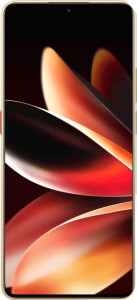
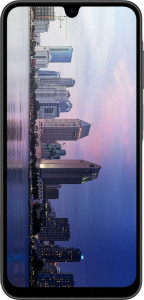
Rear camera versatility is where the gap between these two phones becomes apparent. The Meizu Note 22 5G has a dual-lens setup (50 MP + 2 MP), where the secondary sensor is a low-resolution depth assistant with limited standalone utility. The Samsung Galaxy A26 5G counters with a triple-lens system (50 MP + 8 MP + 2 MP) — the addition of an 8 MP ultrawide lens is a meaningful real-world upgrade, enabling wider field-of-view shots for landscapes, architecture, and group photos that the Meizu simply cannot capture. Beyond lens count, the A26's main camera opens at f/1.8 versus the Meizu's f/2.4 on its primary shooter — a wider aperture lets in significantly more light, which directly translates to better low-light and indoor photography.
The Samsung also holds an exclusive advantage with optical image stabilization (OIS) on its main lens, a feature absent on the Meizu. OIS physically compensates for hand movement during capture, reducing blur in handheld shots and improving video smoothness — particularly noticeable in low-light conditions or when shooting while moving. For selfie shooters, the A26's 13 MP front camera outresolves the Meizu's 8 MP unit, though the Meizu's front aperture of f/2.0 is slightly wider than the A26's f/2.2, offering a minor light-gathering edge in self-portrait scenarios.
Across both cameras, the feature sets are broadly identical — both support phase-detection autofocus, slow-motion, HDR mode, manual controls, and timelapse. But the hardware fundamentals tell a decisive story: the Samsung Galaxy A26 5G has a clear advantage in this group, driven by its triple-lens rear system, significantly wider main aperture, and the presence of OIS — three factors that collectively deliver more capable and flexible photography in everyday conditions.