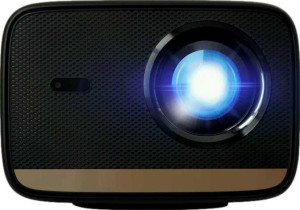
Miroir L710S Pro
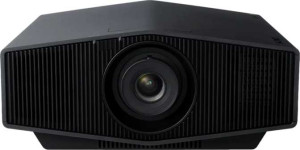
Sony Bravia Projector 7

Miroir L710S Pro Sony Bravia Projector 7

Overview

Welcome to our in-depth specification comparison between the Miroir L710S Pro and the Sony Bravia Projector 7. These two projectors sit at very different ends of the spectrum, and choosing between them comes down to what matters most to you. From resolution and projection size to portability, connectivity, and smart features, this comparison explores every key battleground to help you make a fully informed decision.

Common Features

  • Neither product supports motorized zoom.
  • Both products have 1 USB port.
  • Neither product has a VGA connector.
  • Neither product has an S/PDIF Out port.
  • Both products come with a remote control.
  • Neither product has an external memory slot.
  • Neither product supports voice commands.

Main Differences

  • Laser light source is present on Sony Bravia Projector 7 but not on Miroir L710S Pro.
  • Width is 200 mm on Miroir L710S Pro and 460 mm on Sony Bravia Projector 7.
  • Height is 170 mm on Miroir L710S Pro and 200 mm on Sony Bravia Projector 7.
  • Thickness is 200 mm on Miroir L710S Pro and 470 mm on Sony Bravia Projector 7.
  • Weight is 2000 g on Miroir L710S Pro and 12700 g on Sony Bravia Projector 7.
  • Volume is 6800 cm³ on Miroir L710S Pro and 43240 cm³ on Sony Bravia Projector 7.
  • A dedicated smartphone app is available on Miroir L710S Pro but not on Sony Bravia Projector 7.
  • Output resolution is 1080p on Miroir L710S Pro and 4K on Sony Bravia Projector 7.
  • Motorized focus is available on Miroir L710S Pro but not on Sony Bravia Projector 7.
  • Manual focus is available on Sony Bravia Projector 7 but not on Miroir L710S Pro.
  • Maximum projection size is 140″ on Miroir L710S Pro and 300″ on Sony Bravia Projector 7.
  • Bit depth is 8-bit on Miroir L710S Pro and 10-bit on Sony Bravia Projector 7.
  • Minimum throw distance is 1 m on Miroir L710S Pro and 2.9 m on Sony Bravia Projector 7.
  • HDMI ports number 1 on Miroir L710S Pro and 2 on Sony Bravia Projector 7.
  • AirPlay is supported on Miroir L710S Pro but not on Sony Bravia Projector 7.
  • Bluetooth is available on Miroir L710S Pro but not on Sony Bravia Projector 7.
  • Wi-Fi is supported on Miroir L710S Pro but not on Sony Bravia Projector 7.
  • Chromecast built-in is present on Miroir L710S Pro but not on Sony Bravia Projector 7.
  • DLNA certification is present on Miroir L710S Pro but absent on Sony Bravia Projector 7.
  • A DVI connector is available on Miroir L710S Pro but not on Sony Bravia Projector 7.
  • Miracast is supported on Miroir L710S Pro but not on Sony Bravia Projector 7.
  • RJ45 ports number 0 on Miroir L710S Pro and 1 on Sony Bravia Projector 7.
  • Stereo speakers are present on Miroir L710S Pro but not on Sony Bravia Projector 7.
  • Vertical lens shift is available on Sony Bravia Projector 7 but not on Miroir L710S Pro.
  • Horizontal lens shift is available on Sony Bravia Projector 7 but not on Miroir L710S Pro.
  • Built-in smart TV functionality is present on Miroir L710S Pro but not on Sony Bravia Projector 7.
  • A built-in speaker is present on Miroir L710S Pro but not on Sony Bravia Projector 7.
  • A 3.5 mm audio jack socket is available on Miroir L710S Pro but not on Sony Bravia Projector 7.
Specs Comparison
Miroir L710S Pro

Miroir L710S Pro

Sony Bravia Projector 7

Sony Bravia Projector 7

General info:
has laser light source
release date September 2025 July 2025
width 200 mm 460 mm
height 170 mm 200 mm
thickness 200 mm 470 mm
weight 2000 g 12700 g
Has a dedicated smartphone app
volume 6800 cm³ 43240 cm³

The most consequential difference in this group is the light source: the Sony Bravia Projector 7 uses a laser light source, while the Miroir L710S Pro does not. In practical terms, laser projectors deliver superior brightness consistency, significantly longer lifespan before light degradation, and faster warm-up times compared to lamp-based alternatives. For a product intended for serious home cinema or professional use, this is a fundamental architectural advantage for the Sony.

Form factor tells an equally important story. The Miroir L710S Pro weighs just 2000 g and occupies roughly 6800 cm³, making it a genuinely portable device you can move between rooms or pack for travel. The Sony, at 12700 g and 43240 cm³, is more than six times heavier and over six times larger by volume — this is a stationary, installation-style projector that you set up once and leave in place. These are fundamentally different use-case profiles.

The one area where the Miroir counters is ecosystem convenience: it includes a dedicated smartphone app, which the Sony lacks, giving users a more accessible control and configuration experience from their phone. However, this does not offset the Sony's structural advantages. Overall, the Sony Bravia Projector 7 holds a clear edge on core projection technology, while the Miroir L710S Pro is the obvious choice for users who prioritize portability above all else.

Projection quality:
output resolution 1080p 4K
has motorized focus
maximum projection size 140" 300"
has motorized zoom
bit depth 8-bit 10-bit
has manual focus
minimum throw distance 1 m 2.9 m

Resolution and bit depth define the ceiling of image quality, and here the Sony Bravia Projector 7 holds a commanding lead. Its 4K output delivers four times the pixel density of the Miroir's 1080p, and its 10-bit color depth means over a billion renderable colors versus the Miroir's 8-bit palette of 16 million — a difference that becomes plainly visible in subtle gradients, skin tones, and HDR content. For a large-screen cinema experience, these are not incremental improvements; they represent a fundamentally richer image.

Screen size potential reinforces this gap. The Sony can fill up to a 300″ diagonal, more than double the Miroir's 140″ ceiling, though it demands considerably more space to do so — its minimum throw distance of 2.9 m means it cannot be placed close to the wall. The Miroir, by contrast, can project from as little as 1 m away, making it far more practical in compact rooms. Focus control also diverges: the Miroir offers motorized focus for hands-free adjustment, while the Sony relies on manual focus — a minor convenience trade-off, but one worth noting for users who frequently reposition their projector.

Taken together, the Sony Bravia Projector 7 has a clear and decisive advantage in raw projection quality — resolution, color depth, and maximum image size all favor it for dedicated home theater setups. The Miroir L710S Pro trades peak image fidelity for short-throw flexibility, making it the more pragmatic option in space-constrained environments, but it cannot match the Sony's picture quality ceiling.

Connectivity:
HDMI ports 1 2
has AirPlay
Has Bluetooth
supports Wi-Fi
USB ports 1 1
has Chromecast built-in
has a VGA connector
is DLNA-certified
has a DVI connector
supports Miracast
RJ45 ports 0 1
Has S/PDIF Out port

Wireless connectivity is where these two projectors diverge most sharply. The Miroir L710S Pro supports Wi-Fi, Bluetooth, AirPlay, Chromecast, Miracast, and DLNA — a comprehensive suite that covers virtually every mainstream wireless streaming and casting standard. Whether you're an iPhone user relying on AirPlay, an Android user preferring Miracast or Chromecast, or streaming from a NAS drive via DLNA, the Miroir accommodates it all without a single cable. The Sony Bravia Projector 7, by contrast, supports none of these wireless protocols — no Wi-Fi, no Bluetooth, no casting of any kind.

This absence is significant in practice. The Sony's connectivity model is entirely wired: it offers 2 HDMI ports and a single RJ45 Ethernet port, suggesting it is designed to sit within a fixed AV rack setup, fed by dedicated source devices like media players, Blu-ray players, or streaming boxes. This is a coherent philosophy for a permanent home theater installation, but it means the projector itself is entirely dependent on external hardware to deliver any content. The Miroir, with its single HDMI and equal USB count, is comparatively leaner on physical ports but offsets that through its wireless breadth.

For connectivity, the Miroir L710S Pro has a clear and substantial advantage in flexibility and out-of-the-box usability — it can stream content immediately without additional hardware. The Sony's wired-only approach is a deliberate design choice suited to fixed, high-end installations, but users who want plug-and-play wireless convenience will find it notably limiting.
Features:
has stereo speakers
has lens shift (vertical)
has lens shift (horizontal)
has a remote control
has built-in smart TV
has a built-in speaker
has a socket for a 3.5 mm audio jack
has an external memory slot
has voice commands

Two very different feature philosophies emerge here. The Miroir L710S Pro is built as a self-contained entertainment device: it includes a built-in smart TV platform, stereo speakers, and a 3.5 mm audio jack, meaning it can function as a fully independent unit without any external source device, soundbar, or receiver. For casual use, travel, or rooms without a dedicated AV setup, this all-in-one approach is genuinely practical. The Sony Bravia Projector 7 offers none of these — no smart TV, no built-in speaker, no audio output jack — reinforcing its identity as a display component within a larger, purpose-built home theater system.

Where the Sony asserts itself is in installation precision. It supports both vertical and horizontal lens shift, a feature absent on the Miroir. Lens shift allows the projected image to be repositioned without physically moving the projector, which is critical for achieving a perfectly aligned picture when ceiling-mounting or placing the unit off-center from the screen. Without it, as is the case with the Miroir, placement must be far more exact, limiting flexibility in room setup. For a permanent installation, this matters considerably.

Neither product supports voice commands or external memory slots, and both include a remote control, so those points are a wash. Overall, this group reflects a clear split in intended use: the Miroir has the advantage for standalone versatility and out-of-the-box usability, while the Sony's lens shift capability gives it the edge for precision installation in a dedicated theater environment.

Comparison Summary & Verdict

After reviewing the full spec sheet, it is clear that these two projectors serve distinct audiences. The Miroir L710S Pro is a compact, versatile solution weighing just 2000 g, packed with wireless connectivity including Wi-Fi, Bluetooth, AirPlay, Chromecast, and Miracast, along with built-in smart TV, stereo speakers, and a dedicated smartphone app — making it ideal for everyday home use and on-the-go flexibility. The Sony Bravia Projector 7, on the other hand, is built for serious home cinema enthusiasts who demand 4K resolution, 10-bit color depth, a massive 300″ maximum projection size, a laser light source, and precise optical control via horizontal and vertical lens shift. If portability and all-in-one smart features are your priority, the Miroir wins. If you want uncompromising image quality on a grand scale, the Sony is the clear choice.

Miroir L710S Pro
Buy Miroir L710S Pro if...

Buy the Miroir L710S Pro if you want a lightweight, portable projector with built-in smart TV, wireless connectivity (Wi-Fi, Bluetooth, AirPlay, Chromecast), and integrated speakers for versatile everyday use.

Sony Bravia Projector 7
Buy Sony Bravia Projector 7 if...

Buy the Sony Bravia Projector 7 if you prioritize top-tier image quality with 4K resolution, 10-bit color depth, a laser light source, and a massive 300″ maximum projection size for a dedicated home cinema setup.