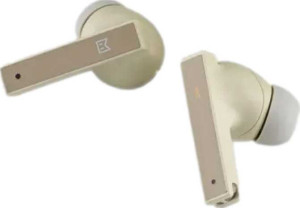
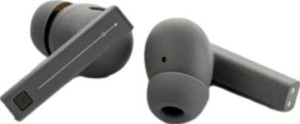
Moondrop Moca
Moondrop Space Travel 2 Ultra

Moondrop Moca Moondrop Space Travel 2 Ultra

Overview

Welcome to our in-depth spec comparison between the Moondrop Moca and the Moondrop Space Travel 2 Ultra. Both are true wireless in-ear earbuds sharing a strong foundation — active noise cancellation, fast charging, and USB Type-C — yet they diverge in meaningful ways. From driver size and codec support to battery endurance and wireless charging, each model makes distinct engineering trade-offs worth examining closely before you decide.

Common Features

  • Both products use an in-ear fit.
  • Neither product has wires or cables.
  • Neither product is a neckband earbud design.
  • Neither product includes wingtips.
  • Neither product has RGB lighting.
  • Both products have stereo speakers.
  • Neither product has a UV light.
  • Neither product has a display.
  • Both products have active noise cancellation (ANC).
  • Both products have passive noise reduction.
  • Both products have a lowest frequency of 20 Hz.
  • Both products have a highest frequency of 20000 Hz.
  • Neither product supports spatial audio.
  • Neither product has Dolby Atmos.
  • Neither product has Dirac Virtuo.
  • Both products have a charge time of 1.5 hours.
  • Neither product has a solar power battery.
  • Both products have a battery level indicator.
  • Both products have a rechargeable battery.
  • Neither product supports fast pairing.
  • Both products have USB Type-C connectivity.
  • Neither product has LDHC support.
  • Neither product has aptX Adaptive support.
  • Neither product has aptX Low Latency support.
  • Neither product has aptX HD support.
  • Neither product has aptX support.
  • Neither product has aptX Lossless support.
  • Both products have an ambient sound mode.
  • Neither product has a find device feature.
  • Both products support fast charging.
  • Neither product can read notifications.
  • Both products have a mute function.
  • Both products can be used as a headset.
  • Both products have a control panel placed on the device.
  • Both products have voice prompts.
  • Both products have a noise-canceling microphone.

Main Differences

  • Driver unit size is 10 mm on Moondrop Moca and 13 mm on Moondrop Space Travel 2 Ultra.
  • A neodymium magnet is present on Moondrop Moca but not available on Moondrop Space Travel 2 Ultra.
  • Battery life is 6 hours on Moondrop Moca and 7 hours on Moondrop Space Travel 2 Ultra.
  • Battery life of the charging case is 15 hours on Moondrop Moca and 24 hours on Moondrop Space Travel 2 Ultra.
  • Wireless charging is supported on Moondrop Moca but not available on Moondrop Space Travel 2 Ultra.
  • Bluetooth version is 5.4 on Moondrop Moca and 6 on Moondrop Space Travel 2 Ultra.
  • LDAC support is present on Moondrop Space Travel 2 Ultra but not available on Moondrop Moca.
  • Bluetooth LE Audio support is present on Moondrop Moca but not available on Moondrop Space Travel 2 Ultra.
  • In/on-ear detection is present on Moondrop Moca but not available on Moondrop Space Travel 2 Ultra.
  • The number of microphones is 4 on Moondrop Moca and 2 on Moondrop Space Travel 2 Ultra.
Specs Comparison
Moondrop Moca

Moondrop Moca

Moondrop Space Travel 2 Ultra

Moondrop Space Travel 2 Ultra

Design:
Fit In-ear In-ear
has no wires or cables
are neckband earbuds
wingtips included
has RGB lighting
has stereo speakers
has UV light
Has a display

From a design standpoint, the Moondrop Moca and the Moondrop Space Travel 2 Ultra are virtually identical across every measured attribute in this category. Both adopt an in-ear fit, are fully wireless with no cables or neckband, omit wingtips, skip RGB lighting and UV light, and feature stereo speakers without any display.

Because there are no differentiating specs within this group, neither product holds a design edge over the other based solely on the provided data. Users choosing between the two cannot use design characteristics as a deciding factor — they will need to look to other specification groups, such as audio performance, battery life, or connectivity, to find meaningful differences.

Sound quality:
has active noise cancellation (ANC)
has passive noise reduction
driver unit size 10 mm 13 mm
lowest frequency 20 Hz 20 Hz
highest frequency 20000 Hz 20000 Hz
supports spatial audio
has Dolby Atmos
has Dirac Virtuo
has a neodymium magnet

Both earbuds share the same frequency range of 20 Hz to 20,000 Hz and both offer active noise cancellation alongside passive noise reduction — a solid foundation for blocking out ambient sound. Neither supports spatial audio, Dolby Atmos, or Dirac Virtuo, so immersive audio processing is off the table for both.

The most meaningful divergence here is in driver size and magnet type. The Space Travel 2 Ultra uses a larger 13 mm driver, compared to the Moca's 10 mm driver. A bigger driver moves more air, which generally translates to a more expansive soundstage and stronger low-frequency presence — though actual tuning and driver quality ultimately determine the listening experience. The Moca, however, counters with a neodymium magnet, which the Space Travel 2 Ultra lacks. Neodymium magnets enhance magnetic flux density, improving driver efficiency and potentially yielding tighter, more controlled sound reproduction.

On balance, the Space Travel 2 Ultra holds a slight edge in raw driver scale, while the Moca's neodymium magnet adds a meaningful engineering advantage in driver precision. These two factors pull in different directions, making this category a nuanced draw rather than a clear-cut win for either side.

Power:
Battery life 6 hours 7 hours
Battery life of charging case 15 hours 24 hours
charge time 1.5 hours 1.5 hours
has wireless charging
Has a solar power battery
has a battery level indicator
has a rechargeable battery

Battery endurance is where the Space Travel 2 Ultra pulls ahead in a concrete, measurable way. Its earbuds last 7 hours per charge versus 6 hours for the Moca — a modest but real difference for long commutes or extended listening sessions. More significantly, the Space Travel 2 Ultra's charging case extends total playback to 24 hours, compared to just 15 hours for the Moca. That 9-hour gap means fewer trips to a wall outlet over the course of a day or multi-day trip.

The Moca fights back with wireless charging support, a convenience feature the Space Travel 2 Ultra lacks entirely. For users who have a Qi pad on their desk or nightstand, this removes the friction of hunting for a cable — a small but genuinely appreciated quality-of-life advantage. Charge time is identical at 1.5 hours for both, so that metric is a wash.

Overall, the Space Travel 2 Ultra has the clear edge in raw battery capacity, making it the stronger pick for power users and travelers. The Moca's wireless charging is a meaningful perk, but it does not offset the substantially shorter total battery life. Users who prioritize staying unplugged longer should favor the Space Travel 2 Ultra; those who value charging convenience may lean toward the Moca.

Connectivity:
has fast pairing
Has USB Type-C
Bluetooth version 5.4 6
has LDAC
has LDHC
has Bluetooth LE Audio
has aptX Adaptive
has aptX Low Latency
has aptX HD
has aptX
has aptX Lossless
audio latency 55 ms 55 ms
has aptX Voice
has Auracast
maximum Bluetooth range 10 m 10 m
supports Bluetooth pairing using NFC
Can be used wirelessly
has AAC

The two most consequential differences in this category come down to Bluetooth version and codec support. The Space Travel 2 Ultra runs on Bluetooth 6, the latest generation, while the Moca uses Bluetooth 5.4. Bluetooth 6 introduces improvements in connection precision and efficiency, though real-world range and stability differences may be subtle for everyday listening given both share the same 10 m maximum range.

On the codec front, the tradeoff is more meaningful. The Space Travel 2 Ultra supports LDAC, Sony's high-resolution audio codec that transmits up to three times more data than standard Bluetooth audio — a significant perk for audiophiles streaming lossless or hi-res content from compatible Android devices. The Moca counters with Bluetooth LE Audio, a next-generation framework that brings improved audio efficiency and multi-stream capabilities. Neither advantage cancels the other out — they serve different use cases. LDAC is more relevant for users prioritizing audio fidelity today, while LE Audio is a forward-looking feature with broader ecosystem potential.

Audio latency is identical at 55 ms for both, and shared support for AAC keeps iPhone users on equal footing. On balance, the Space Travel 2 Ultra holds a slight edge for listeners who actively want high-bitrate wireless audio via LDAC, while the Moca's LE Audio support may appeal to those investing in longer-term connectivity standards. Neither product dominates this category outright.

Features:
release date January 2025 September 2025
has ambient sound mode
has in/on-ear detection
has find device feature
Supports fast charging
can read notifications
has a mute function
can be used as a headset
control panel placed on a device
Has voice prompts
travel bag is included
Has an in-line control panel
Has a temperature sensor
Has a built-in camera remote control function

Across the features category, these two earbuds are remarkably well-matched. Ambient sound mode, fast charging, mute, on-device controls, voice prompts, headset functionality, and an included travel bag are all present on both — a strong shared feature set that covers the essentials most users care about daily.

The single differentiator in this group is in-ear detection, which the Moca supports and the Space Travel 2 Ultra does not. This sensor automatically pauses playback when an earbud is removed from the ear and resumes when it is reinserted — a convenience that feels small until you are constantly pulling out an earbud to hold a quick conversation. Its absence on the Space Travel 2 Ultra means users must manually pause and resume, which adds minor but recurring friction.

The Moca takes this category by a narrow margin solely on the strength of its in-ear detection. It is not a decisive feature for most buyers, but for those who frequently switch between listening and speaking, it represents a genuine quality-of-life advantage that the Space Travel 2 Ultra simply does not offer.

Microphone:
number of microphones 4 2
has a noise-canceling microphone

Microphone hardware is where the Moondrop Moca establishes a clear structural advantage. It deploys 4 microphones versus just 2 on the Space Travel 2 Ultra — and that difference matters in practice. More microphones enable more sophisticated beamforming algorithms, where the device triangulates the direction of the speaker's voice and suppresses sound arriving from other angles. The result is typically cleaner voice capture in noisy environments like busy streets, cafés, or open offices.

Both earbuds do include noise-canceling microphone technology, so the Space Travel 2 Ultra is not without voice pickup capability. However, with half the microphone count, it has less raw hardware to work with when isolating a caller's voice from background noise — a limitation that tends to show up most in challenging acoustic conditions rather than quiet rooms.

The Moca wins this category outright. For users who frequently take calls or use voice assistants on the go, its 4-microphone array offers a meaningful advantage in call clarity potential over the Space Travel 2 Ultra's more modest 2-microphone setup.

Comparison Summary & Verdict

Both earbuds share a solid core, but their differences reveal clearly different target audiences. The Moondrop Moca stands out with its neodymium magnet driver, wireless charging, Bluetooth LE Audio, in/on-ear detection, and a superior 4-microphone array — making it the stronger pick for hands-free calls and smart convenience features. The Moondrop Space Travel 2 Ultra, on the other hand, counters with a larger 13 mm driver, LDAC high-resolution audio codec, Bluetooth 6, a longer 7-hour playback life, and a significantly extended 24-hour charging case. If audio fidelity and all-day battery endurance are your top priorities, the Space Travel 2 Ultra has the edge. If you value smarter features, wireless charging, and call quality, the Moca is the more well-rounded daily companion.

Moondrop Moca
Buy Moondrop Moca if...

Buy the Moondrop Moca if you want wireless charging, smarter wear detection, Bluetooth LE Audio, and a 4-microphone setup for clearer calls and greater day-to-day convenience.

Moondrop Space Travel 2 Ultra
Buy Moondrop Space Travel 2 Ultra if...

Buy the Moondrop Space Travel 2 Ultra if you prioritize high-resolution audio via LDAC, a larger 13 mm driver, Bluetooth 6, and longer total battery life with a 24-hour charging case.