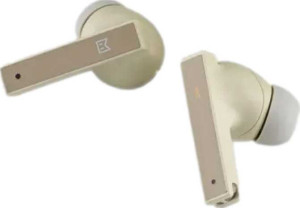
Moondrop Moca
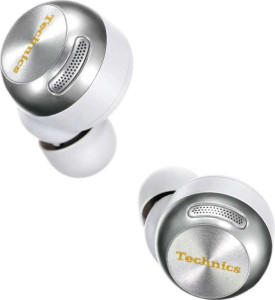
Technics EAH-AZ100

Moondrop Moca Technics EAH-AZ100

Overview

Choosing between the Moondrop Moca and the Technics EAH-AZ100 is no straightforward decision, as both contenders arrive as fully wireless in-ear earbuds equipped with active noise cancellation, Bluetooth LE Audio, and wireless charging. Yet the two products diverge notably when it comes to battery endurance, audio capabilities, and connectivity options. Dive into this detailed specification breakdown to discover which pair truly aligns with your listening habits and daily needs.

Common Features

  • Both products have an in-ear fit.
  • Both products are wireless with no cables.
  • Neither product is a neckband earbud.
  • Neither product includes wingtips.
  • Neither product has RGB lighting.
  • Both products have stereo speakers.
  • Neither product has a UV light.
  • Neither product has a display.
  • Both products have active noise cancellation (ANC).
  • Both products offer passive noise reduction.
  • Both products use a 10 mm driver unit.
  • Both products have a lowest frequency of 20 Hz.
  • Dirac Virtuo support is not available on either product.
  • Both products support wireless charging.
  • Neither product has a solar power battery.
  • Both products have a battery level indicator.
  • Both products have a rechargeable battery.
  • Both products have a USB Type-C connection.
  • LDHC support is not available on either product.
  • Both products support Bluetooth LE Audio.
  • aptX Adaptive support is not available on either product.
  • aptX Low Latency support is not available on either product.
  • aptX HD support is not available on either product.
  • aptX support is not available on either product.
  • aptX Lossless support is not available on either product.
  • Both products have an ambient sound mode.
  • Both products have in/on-ear detection.
  • Both products support fast charging.
  • Neither product can read notifications.
  • Both products have a mute function.
  • Both products can be used as a headset.
  • Both products have a control panel placed on the device.
  • Both products have voice prompts.
  • Both products have a noise-canceling microphone.

Main Differences

  • Weight is 8.84 g on Moondrop Moca and 11.8 g on Technics EAH-AZ100.
  • Highest frequency is 20000 Hz on Moondrop Moca and 40000 Hz on Technics EAH-AZ100.
  • Spatial audio support is present on Technics EAH-AZ100 but not available on Moondrop Moca.
  • Dolby Atmos support is present on Technics EAH-AZ100 but not available on Moondrop Moca.
  • A neodymium magnet is present on Moondrop Moca but not on Technics EAH-AZ100.
  • Battery life is 6 hours on Moondrop Moca and 12 hours on Technics EAH-AZ100.
  • Battery life of the charging case is 15 hours on Moondrop Moca and 18 hours on Technics EAH-AZ100.
  • Charge time is 1.5 hours on Moondrop Moca and 2 hours on Technics EAH-AZ100.
  • Fast pairing is supported on Technics EAH-AZ100 but not available on Moondrop Moca.
  • Bluetooth version is 5.4 on Moondrop Moca and 5.3 on Technics EAH-AZ100.
  • LDAC support is present on Technics EAH-AZ100 but not available on Moondrop Moca.
  • A find device feature is present on Technics EAH-AZ100 but not available on Moondrop Moca.
  • The number of microphones is 4 on Moondrop Moca and 6 on Technics EAH-AZ100.
Specs Comparison
Moondrop Moca

Moondrop Moca

Technics EAH-AZ100

Technics EAH-AZ100

Design:
Fit In-ear In-ear
weight 8.84 g 11.8 g
has no wires or cables
are neckband earbuds
wingtips included
has RGB lighting
has stereo speakers
has UV light
Has a display

Both the Moondrop Moca and the Technics EAH-AZ100 share the same fundamental design philosophy: true wireless, in-ear earbuds with stereo playback and no extras like RGB lighting, neckband, wingtips, a display, or UV light. For users evaluating design at a glance, these two are functionally identical in form factor and feature set — the differences lie in the details.

The one meaningful differentiator is weight. The Moca comes in at 8.84 g per earbud, while the EAH-AZ100 weighs 11.8 g — roughly 34% heavier. In practice, that gap can matter during extended listening sessions: lighter earbuds reduce ear fatigue and are less likely to feel like they are pulling out of the ear canal over time, especially during movement. Nearly 3 grams per side is a noticeable difference for users who wear earbuds for hours at a stretch or use them during workouts.

On design alone, the Moondrop Moca holds a clear edge due to its lower weight, which directly translates to better long-term wearing comfort. All other design attributes are identical between the two products, so weight becomes the sole deciding factor in this category.

Sound quality:
has active noise cancellation (ANC)
has passive noise reduction
driver unit size 10 mm 10 mm
lowest frequency 20 Hz 20 Hz
highest frequency 20000 Hz 40000 Hz
supports spatial audio
has Dolby Atmos
has Dirac Virtuo
has a neodymium magnet

At the foundation, the Moondrop Moca and Technics EAH-AZ100 share several strong similarities: both offer active noise cancellation, passive noise reduction, and a 10 mm driver unit — meaning neither has a raw hardware size advantage. The low-end frequency floor is identical at 20 Hz for both, covering the full range of human hearing on the bass end.

Where they diverge is at the top of the frequency range. The Moca reaches up to 20,000 Hz — the standard ceiling of human hearing — while the EAH-AZ100 extends to 40,000 Hz, well into the high-resolution audio territory. While most listeners cannot consciously perceive frequencies above 20 kHz, a wider driver response can contribute to a cleaner, more natural reproduction of audible upper frequencies and is particularly relevant for hi-res audio formats. On top of that, the EAH-AZ100 adds spatial audio and Dolby Atmos support — features the Moca entirely lacks — which meaningfully expand the immersive listening experience for compatible content like movies, games, and spatial music mixes.

The Technics EAH-AZ100 holds a clear advantage in this category. Its extended high-frequency response, spatial audio support, and Dolby Atmos compatibility give it a broader and more versatile sound profile, especially for users who consume hi-res or immersive audio content. The Moca covers the basics competently, but the EAH-AZ100 offers a more feature-rich and technically ambitious sound experience based strictly on the provided specs.
Power:
Battery life 6 hours 12 hours
Battery life of charging case 15 hours 18 hours
charge time 1.5 hours 2 hours
has wireless charging
Has a solar power battery
has a battery level indicator
has a rechargeable battery

Battery life is where these two products diverge most starkly. The Technics EAH-AZ100 delivers 12 hours of playback per charge, exactly double the Moondrop Moca's 6 hours. For daily commuters or office users, 6 hours may be sufficient, but frequent travelers or all-day listeners will feel that ceiling quickly. Combined with their respective charging cases, the EAH-AZ100 offers a total of 30 hours of combined playback versus the Moca's 21 hours — a gap that compounds meaningfully on longer trips away from a power source.

The Moca does reclaim some ground with a faster charge time of 1.5 hours compared to the EAH-AZ100's 2 hours, which is a modest but real advantage if you need a quick top-up. Both earbuds support wireless charging and include a battery level indicator, so neither holds a qualitative edge on convenience features.

Overall, the Technics EAH-AZ100 wins this category decisively. Its lead in both earbud and total system battery life is too significant to offset with the Moca's faster charge time. Users who prioritize endurance over quick recharge cycles will find the EAH-AZ100 considerably more practical for extended use.

Connectivity:
has fast pairing
Has USB Type-C
Bluetooth version 5.4 5.3
has LDAC
has LDHC
has Bluetooth LE Audio
has aptX Adaptive
has aptX Low Latency
has aptX HD
has aptX
has aptX Lossless
has aptX Voice
has Auracast
maximum Bluetooth range 10 m 10 m
supports Bluetooth pairing using NFC
Can be used wirelessly
has AAC

Across most connectivity fundamentals — USB-C, Bluetooth LE Audio, AAC, a 10 m wireless range, and wireless operation — these two earbuds are evenly matched. The Moondrop Moca does carry a marginally newer Bluetooth 5.4 radio compared to the EAH-AZ100's 5.3, which in theory offers incremental improvements in connection efficiency, though the practical difference in everyday use is minimal.

The more consequential gap lies in codec and pairing support. The Technics EAH-AZ100 includes LDAC, Sony's high-resolution wireless codec capable of transmitting audio at up to three times the bitrate of standard Bluetooth — a significant advantage for listeners who own LDAC-compatible source devices and want to preserve audio fidelity wirelessly. The Moca offers no equivalent high-res codec, relying solely on AAC, which is solid but a clear step below LDAC in raw data throughput. The EAH-AZ100 also supports fast pairing, streamlining the initial device connection experience, while the Moca requires a standard manual pairing process.

The Technics EAH-AZ100 takes this category, and the margin is meaningful. LDAC alone is a standout feature for audio enthusiasts, and fast pairing adds day-to-day convenience. The Moca's newer Bluetooth version is not enough to compensate for the absence of a high-fidelity codec.

Features:
release date January 2025 January 2025
has ambient sound mode
has in/on-ear detection
has find device feature
Supports fast charging
can read notifications
has a mute function
can be used as a headset
control panel placed on a device
Has voice prompts
travel bag is included
Has an in-line control panel
Has a temperature sensor
Has a built-in camera remote control function

Feature parity is remarkably high between these two earbuds. Both offer ambient sound mode, in-ear detection, fast charging, a mute function, on-device controls, voice prompts, and even a included travel bag — a convenience accessory not always guaranteed at any price point. For the vast majority of daily-use scenarios, neither product leaves the user wanting for a feature the other provides.

The single differentiator in this category is the find device feature on the Technics EAH-AZ100, which the Moondrop Moca lacks. In practice, this means EAH-AZ100 users can locate a misplaced earbud or charging case through a companion app or device ecosystem, a genuinely useful safeguard given how easy small true wireless earbuds are to misplace.

Given how closely matched the two products are here, the Technics EAH-AZ100 holds a narrow edge by virtue of that one additional feature. It is not a transformative advantage, but find-device functionality has tangible real-world utility and represents a meaningful omission on the Moca's part. Users who are prone to misplacing small accessories will feel that gap more acutely than others.

Microphone:
number of microphones 4 6
has a noise-canceling microphone

Both the Moondrop Moca and the Technics EAH-AZ100 feature noise-canceling microphones, ensuring that call quality benefits from active voice isolation on both sides. That baseline capability is table stakes for modern true wireless earbuds, so the real question here is whether the microphone array size makes a tangible difference.

It does, at least on paper. The EAH-AZ100 is equipped with 6 microphones compared to the Moca's 4. More microphones allow for more sophisticated beamforming and noise-cancellation algorithms — the system has more spatial data points to work with when isolating the speaker's voice and suppressing ambient sound. This tends to translate into cleaner call audio in noisy environments like streets, cafes, or offices.

The Technics EAH-AZ100 has the edge here. While both earbuds offer noise-canceling mic capability, the additional two microphones give the EAH-AZ100 a structural advantage in voice pickup quality, particularly in challenging acoustic conditions. For users who frequently take calls or use voice assistants in noisy settings, that difference is worth noting.

Comparison Summary & Verdict

After examining every available specification, both the Moondrop Moca and the Technics EAH-AZ100 share a solid foundation: ANC, Bluetooth LE Audio, ambient sound mode, fast charging, and wireless charging. However, the differences are meaningful. The Technics EAH-AZ100 pulls ahead with its impressive 12-hour battery life, spatial audio and Dolby Atmos support, LDAC codec, six-microphone array, and fast pairing, making it the stronger choice for audiophiles and frequent travelers who demand premium, feature-rich performance. The Moondrop Moca, by contrast, appeals to those who value a lighter 8.84 g form factor, the latest Bluetooth 5.4 standard, and a quicker 1.5-hour charge time. If a lighter fit and faster top-up are your priorities, the Moca is a worthy pick; if immersive audio and all-day endurance matter most, the EAH-AZ100 is the clear frontrunner.

Moondrop Moca
Buy Moondrop Moca if...

Buy the Moondrop Moca if you prioritize a lighter build at 8.84 g, the newer Bluetooth 5.4 standard, and a faster 1.5-hour charge time.

Technics EAH-AZ100
Buy Technics EAH-AZ100 if...

Buy the Technics EAH-AZ100 if you want double the battery life, spatial audio with Dolby Atmos, LDAC support, and a superior six-microphone setup for calls and voice clarity.