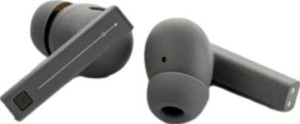
Moondrop Space Travel 2 Ultra
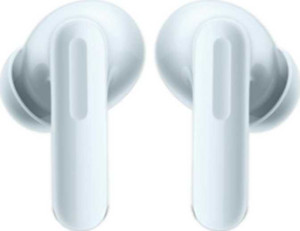
Oppo Enco Free 4

Moondrop Space Travel 2 Ultra Oppo Enco Free 4

Overview

Welcome to our in-depth spec comparison between the Moondrop Space Travel 2 Ultra and the Oppo Enco Free 4. Both are fully wireless, ANC-equipped in-ear earbuds sharing a number of core features, yet they diverge in meaningful ways. From battery endurance and charging speed to codec support and microphone count, each model makes distinct trade-offs. Read on to discover which one aligns best with your listening habits and daily needs.

Common Features

  • Both products use an in-ear fit design.
  • Neither product has wires or cables.
  • Neither product is a neckband earbud style.
  • Neither product includes wingtips.
  • Neither product features RGB lighting.
  • Both products have stereo speakers.
  • Neither product has a UV light.
  • Neither product has a display.
  • Both products support active noise cancellation (ANC).
  • Both products offer passive noise reduction.
  • The lowest frequency on both products is 20 Hz.
  • The highest frequency on both products is 20000 Hz.
  • Spatial audio is not supported on either product.
  • Dolby Atmos is not available on either product.
  • Neither product uses a neodymium magnet.
  • Wireless charging is not available on either product.
  • Neither product has a solar power battery.
  • Both products have a battery level indicator.
  • Both products have a rechargeable battery.
  • Fast pairing is not available on either product.
  • Both products have a USB Type-C port.
  • Bluetooth LE Audio is not supported on either product.
  • aptX Adaptive is not supported on either product.
  • aptX Low Latency is not supported on either product.
  • aptX HD is not supported on either product.
  • aptX is not supported on either product.
  • aptX Lossless is not supported on either product.
  • Both products support ambient sound mode.
  • In-ear or on-ear detection is not available on either product.
  • Both products support fast charging.
  • Neither product can read notifications.
  • Both products have a mute function.
  • Both products can be used as a headset.
  • Both products have a control panel placed on the device.
  • Both products have voice prompts.
  • Both products have a noise-canceling microphone.

Main Differences

  • Driver unit size is 13 mm on Moondrop Space Travel 2 Ultra and 11 mm on Oppo Enco Free 4.
  • Battery life is 7 hours on Moondrop Space Travel 2 Ultra and 11 hours on Oppo Enco Free 4.
  • Battery life of the charging case is 24 hours on Moondrop Space Travel 2 Ultra and 34 hours on Oppo Enco Free 4.
  • Charge time is 1.5 hours on Moondrop Space Travel 2 Ultra and 0.85 hours on Oppo Enco Free 4.
  • Battery power is 35 mAh on Moondrop Space Travel 2 Ultra and 62 mAh on Oppo Enco Free 4.
  • Charging case battery power is 380 mAh on Moondrop Space Travel 2 Ultra and 530 mAh on Oppo Enco Free 4.
  • Bluetooth version is 6 on Moondrop Space Travel 2 Ultra and 5.4 on Oppo Enco Free 4.
  • LDAC support is present on Moondrop Space Travel 2 Ultra but not available on Oppo Enco Free 4.
  • LDHC support is present on Oppo Enco Free 4 but not available on Moondrop Space Travel 2 Ultra.
  • Maximum Bluetooth range is 10 m on Moondrop Space Travel 2 Ultra and 40 m on Oppo Enco Free 4.
  • A built-in translator is present on Oppo Enco Free 4 but not available on Moondrop Space Travel 2 Ultra.
  • The number of microphones is 2 on Moondrop Space Travel 2 Ultra and 6 on Oppo Enco Free 4.
Specs Comparison
Moondrop Space Travel 2 Ultra

Moondrop Space Travel 2 Ultra

Oppo Enco Free 4

Oppo Enco Free 4

Design:
Fit In-ear In-ear
has no wires or cables
are neckband earbuds
wingtips included
has RGB lighting
has stereo speakers
has UV light
Has a display

In terms of design, the Moondrop Space Travel 2 Ultra and the Oppo Enco Free 4 are virtually identical across every measured attribute. Both use an in-ear fit, are fully wireless with no cables or neckband, omit wingtips, skip RGB lighting, and offer stereo audio — with no display or UV light on either device.

Because every design spec is a direct match, there is no meaningful differentiator between the two products in this category. Users prioritizing a clean, wireless, standard in-ear form factor will find both options equally suitable.

Sound quality:
has active noise cancellation (ANC)
has passive noise reduction
driver unit size 13 mm 11 mm
lowest frequency 20 Hz 20 Hz
highest frequency 20000 Hz 20000 Hz
supports spatial audio
has Dolby Atmos
has Dirac Virtuo
has a neodymium magnet

Both earbuds share the same frequency range of 20 Hz – 20,000 Hz, full ANC, and passive noise reduction — so the core noise-blocking and tonal range foundations are equivalent. The one measurable differentiator here is driver size: the Moondrop Space Travel 2 Ultra uses a 13 mm driver versus the 11 mm unit in the Oppo Enco Free 4.

A larger driver typically moves more air, which can translate to a more authoritative low-end response and greater overall sound pressure — though real-world results depend heavily on tuning and acoustic chamber design. That said, within the context of these specs alone, the Space Travel 2 Ultra holds a modest structural advantage in potential driver performance.

Neither product supports spatial audio, Dolby Atmos, or Dirac Virtuo, so users seeking an immersive or processing-enhanced soundstage will find both equally limited. On balance, the Moondrop Space Travel 2 Ultra has a slight edge in this category, driven solely by its larger 13 mm driver unit.

Power:
Battery life 7 hours 11 hours
Battery life of charging case 24 hours 34 hours
charge time 1.5 hours 0.85 hours
battery power 35 mAh 62 mAh
battery power (charging case) 380mAh 530mAh
has wireless charging
Has a solar power battery
has a battery level indicator
has a rechargeable battery

Power is where the Oppo Enco Free 4 pulls ahead decisively. It delivers 11 hours of earbud battery life against just 7 hours on the Moondrop Space Travel 2 Ultra — a 57% difference that is immediately felt during long travel days, extended work sessions, or back-to-back listening. Combined with its 34-hour charging case (versus 24 hours for the Space Travel 2 Ultra), the Enco Free 4 offers a total of 45 hours of use before needing a wall outlet, compared to 31 hours for the Moondrop.

The capacity gap is backed by the raw battery figures: the Enco Free 4 packs a 62 mAh earbud cell and a 530 mAh case battery, compared to 35 mAh and 380 mAh respectively on the Space Travel 2 Ultra. Larger cells directly enable those longer runtimes. Charge time also favors the Oppo — it refills in roughly 51 minutes versus 90 minutes for the Moondrop, making it significantly more convenient for quick top-ups on the go.

Neither product supports wireless charging, so both require a cable. Still, the Oppo Enco Free 4 is the clear winner in this category across every measurable dimension — longer playtime, a larger case reserve, and faster charging make it the stronger choice for users who prioritize endurance.

Connectivity:
has fast pairing
Has USB Type-C
Bluetooth version 6 5.4
has LDAC
has LDHC
has Bluetooth LE Audio
has aptX Adaptive
has aptX Low Latency
has aptX HD
has aptX
has aptX Lossless
has aptX Voice
has Auracast
maximum Bluetooth range 10 m 40 m
supports Bluetooth pairing using NFC
Can be used wirelessly
has AAC

The most striking connectivity divergence is Bluetooth range: the Oppo Enco Free 4 reaches up to 40 meters, while the Moondrop Space Travel 2 Ultra tops out at 10 meters. In practice, this means the Enco Free 4 can maintain a stable connection when a phone is left in another room, a bag across a gym, or a desk while the user moves around — scenarios where the Space Travel 2 Ultra is more likely to drop or degrade the signal.

On codec support, the two products take different paths. The Space Travel 2 Ultra runs Bluetooth 6 and supports LDAC — Sony's high-resolution codec capable of transmitting up to 990 kbps, making it the stronger choice for audiophiles streaming high-quality audio from compatible Android devices. The Enco Free 4 counters with LDHC, a competing high-res wireless codec that also targets lossless-quality transmission but is more tightly tied to the Oppo/HONOR ecosystem. Both also support AAC, which covers Apple device users adequately on either side.

Choosing between them depends on use case: the Space Travel 2 Ultra offers a more cutting-edge Bluetooth version and broader high-res codec recognition with LDAC, while the Enco Free 4 wins on raw wireless range. For users who value freedom of movement, the Enco Free 4 has a clear practical edge; for audio quality-focused listeners on Android, the Space Travel 2 Ultra's LDAC support is a meaningful advantage.

Features:
release date September 2025 April 2025
has ambient sound mode
has in/on-ear detection
Supports fast charging
can read notifications
Has a built-in translator
has a mute function
can be used as a headset
control panel placed on a device
Has voice prompts
travel bag is included
Has an in-line control panel
Has a temperature sensor
Has a built-in camera remote control function

Across the majority of features, these two earbuds are evenly matched — both offer ambient sound mode, fast charging, a mute function, headset capability, on-device controls, voice prompts, and an included travel bag. For everyday use, this shared foundation means neither product feels noticeably more capable than the other in core functionality.

The single differentiator in this category is the built-in translator, which is present on the Oppo Enco Free 4 but absent on the Moondrop Space Travel 2 Ultra. For frequent travelers or multilingual users, this is a genuinely useful addition that removes the need for a separate translation app during conversations — a convenience that goes beyond audio playback and adds real-world utility in international contexts.

The Oppo Enco Free 4 takes this category by a narrow but meaningful margin. The translator feature is the only distinction, but it is a practical one that could be a deciding factor for a specific type of user. Those who have no need for real-time translation will find both products functionally identical here.

Microphone:
number of microphones 2 6
has a noise-canceling microphone

Microphone hardware is where the gap between these two products is hard to ignore. The Oppo Enco Free 4 is equipped with 6 microphones, compared to just 2 on the Moondrop Space Travel 2 Ultra. Both feature noise-canceling microphone processing, but the sheer number of pickup points fundamentally changes what that processing has to work with.

More microphones enable more sophisticated beamforming — the ability to isolate the user's voice from multiple angles while simultaneously suppressing ambient noise from other directions. A 6-mic array can more accurately model and reject wind, crowd noise, and environmental interference, which translates to noticeably cleaner call quality in demanding real-world conditions like busy streets or open offices. A 2-mic setup handles controlled environments well but has less spatial data to draw from when conditions get noisy.

The Oppo Enco Free 4 is the clear winner in this category. For users who frequently take calls or participate in voice meetings on the go, its 6-microphone configuration offers a structural advantage in call clarity that the Space Travel 2 Ultra's 2-mic setup cannot match on hardware grounds alone.

Comparison Summary & Verdict

After examining all the evidence, both earbuds prove to be capable ANC-equipped companions, but they cater to different priorities. The Moondrop Space Travel 2 Ultra stands out with its larger 13 mm driver unit, support for the LDAC codec, and the newer Bluetooth 6 standard, making it a compelling choice for audio enthusiasts who value higher-quality wireless transmission. The Oppo Enco Free 4, on the other hand, delivers a clear edge in battery life — 11 hours versus 7 — faster charging at 0.85 hours, a much broader 40 m Bluetooth range, six microphones for superior call quality, a built-in translator, and LDHC codec support. For most everyday users who prioritize longevity, convenience, and communication features, the Oppo Enco Free 4 is the more practical pick.

Moondrop Space Travel 2 Ultra
Buy Moondrop Space Travel 2 Ultra if...

Buy the Moondrop Space Travel 2 Ultra if you prioritize high-fidelity LDAC audio transmission, a larger 13 mm driver, and the latest Bluetooth 6 connectivity for an audiophile-leaning wireless experience.

Oppo Enco Free 4
Buy Oppo Enco Free 4 if...

Buy the Oppo Enco Free 4 if you need longer battery life, faster charging, a wider Bluetooth range of 40 m, more microphones for clearer calls, and a handy built-in translator for on-the-go use.