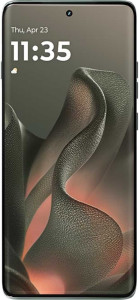
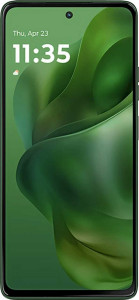
Most of the connectivity fundamentals are shared between the two phones — both support 5G, dual SIM, USB Type-C, NFC, fingerprint scanning, GPS with Galileo, and the same core sensor suite including gyroscope, accelerometer, and compass. For everyday tasks like tap-to-pay, navigation, and mobile data, users will find no practical difference between them.
The divergences are pointed but meaningful in opposite directions. The Motorola Edge (2025) supports Wi-Fi 6E in addition to Wi-Fi 6 and older standards, while the Moto G Power (2025) tops out at Wi-Fi 5. Wi-Fi 6E opens access to the less congested 6 GHz band, delivering faster throughput and lower latency in environments with many competing devices — a tangible benefit in dense apartments or busy offices. The Edge also includes a barometer, which enables more accurate altitude readings and can improve GPS precision indoors. The G Power, meanwhile, counters with an external memory slot — something the Edge lacks entirely. For users who want to expand storage affordably with a microSD card rather than paying upfront for higher built-in capacity, that slot is a practical and cost-effective advantage.
Weighing both sides, the Edge (2025) holds a slight overall advantage here: Wi-Fi 6E is an increasingly relevant capability as routers catch up, and the barometer adds genuine utility. The G Power's memory expansion slot is a legitimate consolation — especially given its lower base storage — but it does not fully offset the Edge's wireless networking lead.