Motorola Edge (2025)
Samsung Galaxy A36 5G

Motorola Edge (2025) Samsung Galaxy A36 5G

Overview

When choosing between the Motorola Edge (2025) and the Samsung Galaxy A36 5G, shoppers face a genuinely competitive mid-range matchup. Both phones share a 6.7″ OLED display, 120Hz refresh rate, Android 15, and 5G connectivity, yet they diverge meaningfully in areas like display quality and brightness, camera versatility, and charging capabilities. This detailed spec comparison breaks down every key category to help you decide which device best fits your needs.

Common Features

  • Both phones are waterproof.
  • Neither phone has a rugged build.
  • Neither phone can be folded.
  • Both phones feature an OLED/AMOLED display with a 6.7″ screen size.
  • Both phones have a 120Hz refresh rate.
  • Both phones have damage-resistant branded glass.
  • HDR10+ support is available on both phones.
  • Always-On Display is available on both phones.
  • Neither phone has a secondary screen.
  • Both phones run Android 15.
  • Both phones have clipboard warnings.
  • Both phones have location privacy options.
  • Both phones have camera and microphone privacy options.
  • Both phones support blocking app tracking.
  • Both phones support fast charging.
  • Neither phone comes with a charger in the box.
  • Both phones have a non-removable battery.
  • Both phones have stereo speakers.
  • Neither phone has a 3.5mm audio jack.
  • Both phones support 5G, NFC, USB Type-C, and have a fingerprint scanner.
  • Both phones have 256GB of internal storage and a 4nm semiconductor.
  • Both main cameras support optical image stabilization and 4K video recording at 30fps.
  • Both phones have a CMOS sensor on the main camera.
  • Both phones have continuous autofocus when recording video.

Main Differences

  • Weight is 181g on Motorola Edge (2025) and 195g on Samsung Galaxy A36 5G.
  • Thickness is 8mm on Motorola Edge (2025) and 7.4mm on Samsung Galaxy A36 5G.
  • Width is 73.1mm on Motorola Edge (2025) and 78.2mm on Samsung Galaxy A36 5G.
  • IP rating is IP69 on Motorola Edge (2025) and IP67 on Samsung Galaxy A36 5G.
  • Pixel density is 444 ppi on Motorola Edge (2025) and 385 ppi on Samsung Galaxy A36 5G.
  • Resolution is 1220 x 2712 px on Motorola Edge (2025) and 1080 x 2340 px on Samsung Galaxy A36 5G.
  • Typical brightness is 1700 nits on Motorola Edge (2025) and 1200 nits on Samsung Galaxy A36 5G.
  • The display is protected by Gorilla Glass 7i on Motorola Edge (2025) and Gorilla Glass Victus on Samsung Galaxy A36 5G.
  • Dolby Vision support is present on Motorola Edge (2025) but not available on Samsung Galaxy A36 5G.
  • HDR10 support is present on Samsung Galaxy A36 5G but not available on Motorola Edge (2025).
  • RAM is 8GB on Motorola Edge (2025) and 12GB on Samsung Galaxy A36 5G.
  • The chipset is MediaTek Dimensity 7400 on Motorola Edge (2025) and Qualcomm Snapdragon 6 Gen 3 on Samsung Galaxy A36 5G.
  • GPU is Mali G615 MC2 on Motorola Edge (2025) and Adreno 710 on Samsung Galaxy A36 5G.
  • GPU clock speed is 1047 MHz on Motorola Edge (2025) and 800 MHz on Samsung Galaxy A36 5G.
  • Maximum memory amount is 16GB on Motorola Edge (2025) and 12GB on Samsung Galaxy A36 5G.
  • Main camera megapixels are 50 & 50 & 10 MP on Motorola Edge (2025) and 50 & 8 & 5 MP on Samsung Galaxy A36 5G.
  • Front camera resolution is 50MP on Motorola Edge (2025) and 12MP on Samsung Galaxy A36 5G.
  • Optical zoom is 3x on Motorola Edge (2025) and not available on Samsung Galaxy A36 5G.
  • Battery capacity is 5200 mAh on Motorola Edge (2025) and 5000 mAh on Samsung Galaxy A36 5G.
  • Wireless charging is supported on Motorola Edge (2025) but not available on Samsung Galaxy A36 5G.
  • Charging speed is 68W on Motorola Edge (2025) and 45W on Samsung Galaxy A36 5G.
  • Wi-Fi 6E support is present on Motorola Edge (2025) but not available on Samsung Galaxy A36 5G.
  • A barometer is present on Motorola Edge (2025) but not available on Samsung Galaxy A36 5G.
  • A curved display is featured on Motorola Edge (2025) but not on Samsung Galaxy A36 5G.
Specs Comparison
Motorola Edge (2025)

Motorola Edge (2025)

Samsung Galaxy A36 5G

Samsung Galaxy A36 5G

Design:
water resistance Waterproof Waterproof
weight 181 g 195 g
thickness 8 mm 7.4 mm
width 73.1 mm 78.2 mm
height 161.2 mm 162.9 mm
volume 94.26976 cm³ 94.266972 cm³
Ingress Protection (IP) rating IP69 IP67
has a rugged build
can be folded

In terms of physical handling, the Motorola Edge (2025) has a meaningful advantage in day-to-day comfort. It is 14 grams lighter (181 g vs. 195 g) and 5.1 mm narrower (73.1 mm vs. 78.2 mm), which translates directly into a more one-hand-friendly grip and less fatigue during extended use. The Samsung Galaxy A36 5G, by contrast, is slightly taller and noticeably wider, which may feel less secure in smaller hands. Interestingly, both phones occupy virtually the same total volume (~94.27 cm³), meaning the A36 redistributes that space into a broader, flatter footprint, while the Edge is thicker (8 mm vs. 7.4 mm) but more compact in width.

On water resistance, the Edge (2025) holds a clear technical edge with an IP69 rating versus the A36's IP67. While both are rated waterproof, IP67 certifies submersion up to 1 meter for 30 minutes, whereas IP69 adds protection against high-pressure, high-temperature water jets — a more demanding standard. For most everyday scenarios like rain or accidental splashes, both phones perform equally well, but the IP69 rating on the Edge offers a meaningfully higher safety margin in rugged or outdoor conditions.

Overall, the Motorola Edge (2025) has the design advantage in this group. Its lighter weight, narrower form factor, and superior IP69 rating make it the more practical and better-protected choice, without sacrificing significantly on overall size. The A36's slimmer profile is a modest counterpoint but does not outweigh the Edge's broader ergonomic and durability benefits.
Display:
Display type OLED/AMOLED OLED/AMOLED
screen size 6.7" 6.7"
pixel density 444 ppi 385 ppi
resolution 1220 x 2712 px 1080 x 2340 px
refresh rate 120Hz 120Hz
brightness (typical) 1700 nits 1200 nits
has branded damage-resistant glass
Gorilla Glass version Gorilla Glass 7i Gorilla Glass Victus
supports HDR10
supports HDR10+
Always-On Display
supports Dolby Vision
Has a secondary screen
has a touch screen

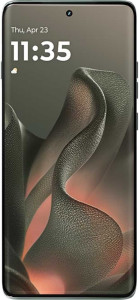
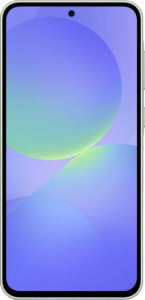
Both phones share the same 6.7″ OLED/AMOLED panel and 120Hz refresh rate, so the baseline viewing experience — smooth scrolling, deep blacks, vivid colors — is comparable on paper. Where they diverge meaningfully is in resolution and brightness. The Motorola Edge (2025) renders at 1220 x 2712 px (~444 ppi), versus the A36's 1080 x 2340 px (~385 ppi). That 59 ppi gap is perceptible: text appears crisper and fine detail in photos or video is noticeably sharper on the Edge, especially when viewing content up close.

The brightness gap is equally consequential. The Edge's 1700 nits typical brightness significantly outpaces the A36's 1200 nits, which means better legibility in direct sunlight — a practical, everyday advantage. On the HDR front, the Edge supports Dolby Vision but not base HDR10, while the A36 covers HDR10 and HDR10+ but skips Dolby Vision. Both handle HDR10+, so streaming from major platforms will look excellent on either device, but the Edge has an edge for Dolby Vision-mastered content from services like Apple TV+. On glass protection, the A36 uses Gorilla Glass Victus — a generation ahead of the Edge's Gorilla Glass 7i — offering modestly better drop resistance, which is a minor but real counterpoint in the A36's favor.

Taking the display group as a whole, the Motorola Edge (2025) wins on the metrics that matter most to visual quality: sharper resolution and substantially higher brightness. The A36's Victus glass is a practical durability advantage, but it does not offset the Edge's superiority in the core display experience.

Performance:
internal storage 256GB 256GB
RAM 8GB 12GB
Chipset (SoC) name MediaTek Dimensity 7400 Qualcomm Snapdragon 6 Gen 3
GPU name Mali G615 MC2 Adreno 710
CPU speed 4 x 2.6 & 4 x 2 GHz 4 x 2.4 & 4 x 1.8 GHz
GPU clock speed 1047 MHz 800 MHz
Has integrated LTE
RAM speed 6400 MHz 2750 MHz
semiconductor size 4 nm 4 nm
Supports 64-bit
DirectX version DirectX 12 DirectX 12
Has integrated graphics
Uses big.LITTLE technology
CPU threads 8 threads 8 threads
Uses HMP
maximum memory bandwidth 25.6 GB/s 25.6 GB/s
maximum memory amount 16GB 12GB
DDR memory version 5 5
supported displays 1 1

Both chips are built on a 4nm process and use an 8-core big.LITTLE configuration, so their efficiency credentials are comparable. The meaningful split comes in raw performance figures. The Motorola Edge (2025)'s Dimensity 7400 runs its performance cores at 2.6 GHz — faster than the A36's Snapdragon 6 Gen 3 at 2.4 GHz — and its GPU clock is substantially higher at 1047 MHz versus 800 MHz on the Adreno 710. For sustained gaming or graphically intensive tasks, that GPU clock gap is the single most telling number here, suggesting the Edge has a tangible advantage in rendering throughput.

The RAM story cuts the other way. The Galaxy A36 5G ships with 12GB of RAM compared to the Edge's 8GB, which gives the A36 more headroom for aggressive multitasking — keeping more apps alive in the background and reducing reload times when switching between demanding applications. The Edge counters with a dramatically faster RAM speed of 6400 MHz versus the A36's 2750 MHz, meaning the data it does have in memory moves to the processor far more quickly. Both chips share an identical peak memory bandwidth of 25.6 GB/s, so real-world throughput gains from the clock speed difference may be partially constrained by the pipeline, but lower latency operations still benefit from faster memory.

This group produces a genuinely split verdict. The Motorola Edge (2025) has the edge in raw processing speed and graphics performance, making it the stronger choice for gaming and CPU-bound workloads. The Samsung Galaxy A36 5G wins on multitasking capacity thanks to its larger RAM pool. Users who juggle many apps simultaneously will appreciate the A36's headroom, while those prioritizing snappy performance and graphics should lean toward the Edge.

Cameras:
megapixels (main camera) 50 & 50 & 10 MP 50 & 8 & 5 MP
wide aperture (main camera) 1.8 & 2 & 2f 1.8 & 2.2 & 2.4f
Has a dual-lens (or multi-lens) main camera
megapixels (front camera) 50MP 12MP
has built-in optical image stabilization
video recording (main camera) 2160 x 30 fps 2160 x 30 fps
Has a dual-tone LED flash
number of flash LEDs 1 1
has a BSI sensor
has a CMOS sensor
has continuous autofocus when recording movies
Has phase-detection autofocus for photos
supports slow-motion video recording
has a built-in HDR mode
has manual exposure
has a flash
optical zoom 3x 0x
has manual ISO
has a serial shot mode
has manual focus
has a front camera
Has laser autofocus
Shoots 360° panorama
has manual white balance
shoots raw
has touch autofocus
has manual shutter speed
can create panoramas in-camera
wide aperture (front camera) 1.9f 2.2f
Has timelapse function
Has a front-facing LED flash
has a dual-lens (or multi-lens) front camera
supports HDR10 recording
supports Dolby Vision recording
has a front-facing camera under the display
Has a RGB LED flash
has 3D photo/video recording capabilities

The main cameras share an identical 50MP primary sensor and aperture (f/1.8), along with OIS, phase-detection autofocus, and 4K at 30fps video — so at the primary lens level, the two phones are evenly matched. The gap opens up decisively with the secondary and tertiary lenses. The Motorola Edge (2025) pairs its main shooter with a second 50MP camera and a 10MP telephoto, while the Galaxy A36 5G relies on an 8MP ultrawide and a 5MP macro. In practical terms, the Edge's secondary 50MP lens captures significantly more detail whether used as an ultrawide or depth camera, and its dedicated telephoto enables 3x optical zoom — the A36 offers no optical zoom at all, meaning any zoomed shots on the A36 are digitally cropped and therefore lower in quality.

The front camera difference is the starkest in this group. The Edge's 50MP selfie camera versus the A36's 12MP is not just a numbers game — it means the Edge can capture far more detail, crop more aggressively without quality loss, and produce sharper results in well-lit conditions. The Edge also has a wider front aperture of f/1.9 compared to the A36's f/2.2, admitting more light and delivering better selfie performance in low-light environments. For users who prioritize self-portraits or video calls, this is a meaningful real-world advantage.

The Motorola Edge (2025) wins this group clearly. Its superior secondary camera resolution, 3x optical zoom capability, and a dramatically higher-resolution front camera with a brighter aperture give it a comprehensive advantage across nearly every shooting scenario. The A36 matches it only at the primary lens level, which is not enough to offset the Edge's broader versatility.

Operating system:
Android version Android 15 Android 15
has clipboard warnings
has location privacy options
has camera/microphone privacy options
has Mail Privacy Protection
has theme customization
can block app tracking
blocks cross-site tracking
has on-device machine learning
has notification permissions
has media picker
Can play games while they download
has dark mode
has Wi-Fi password sharing
has battery health check
has an extra dim mode
has focus modes
has dynamic theming
can offload apps
Has customizable notifications
has Live Text
has full-page screenshots
supports split screen
gets direct OS updates
has PiP
Can be used as a PC
Has sharing intents
has a child lock
Supports widgets
Is free and open source
Has offline voice recognition
has voice commands
Tracks the current position of a mobile device
is a multi-user system
has Quick Start

This is a rare case of complete parity. Both the Motorola Edge (2025) and the Samsung Galaxy A36 5G run Android 15 and share an identical feature set across every tracked operating system specification — from privacy controls like location and camera/microphone permissions, to productivity features like split-screen, Picture-in-Picture, and widgets, to quality-of-life additions like dynamic theming, extra dim mode, and on-device machine learning. There is not a single differentiating data point in this group.

It is worth noting what both phones lack as well as what they share. Neither receives direct OS updates — meaning updates are routed through the manufacturer rather than pushed straight from Google — and neither supports Wi-Fi password sharing or focus modes. These are consistent limitations on both sides, not a disadvantage unique to either device.

The verdict here is a complete tie. From a software feature standpoint as defined by the provided specs, a buyer choosing between these two phones gains or loses nothing regardless of which they pick. Any differentiation in the overall software experience would come from each manufacturer's custom Android skin, which falls outside the scope of the data provided.

Battery:
battery power 5200 mAh 5000 mAh
has wireless charging
Supports fast charging
charging speed 68W 45W
comes with a charger
has a removable battery
has a battery level indicator
has a rechargeable battery

The Motorola Edge (2025) holds advantages across every meaningful battery specification in this group. Its 5200 mAh capacity edges out the A36's 5000 mAh — a modest 200 mAh difference that, in isolation, would translate to only a marginal gain in endurance. The more impactful differentiator is charging speed: the Edge supports 68W fast charging versus the A36's 45W, meaning the Edge can recover from a low battery significantly faster — a real convenience advantage for users who charge on the go or during short breaks.

The single most decisive specification in this group is the Edge's support for wireless charging, a feature the Galaxy A36 5G entirely lacks. Wireless charging adds meaningful flexibility to daily use — dropping the phone on a pad at a desk or nightstand without fumbling for a cable is a quality-of-life convenience that, once adopted, is hard to give up. The A36's omission of this feature is a notable gap, particularly at the mid-range price tier where wireless charging is increasingly common. Notably, neither phone comes with a charger in the box, so both users will need to source their own.

The Motorola Edge (2025) wins this group decisively. It combines a slightly larger battery, substantially faster wired charging, and exclusive wireless charging support — a clean sweep that makes it the stronger choice for users who prioritize battery versatility and top-up speed in their daily routine.

Audio:
has a socket for a 3.5 mm audio jack
has stereo speakers
has LDAC
has aptX Lossless
Has a radio

The audio specifications for these two phones are identical across every tracked data point. Both the Motorola Edge (2025) and the Samsung Galaxy A36 5G feature stereo speakers, omit a 3.5mm headphone jack, lack high-resolution Bluetooth codecs like LDAC or aptX Lossless, and include no built-in radio. There is simply no differentiator to analyze in this group.

The shared absence of a headphone jack means both users are committed to Bluetooth or USB-C audio for wired listening. The lack of LDAC and aptX Lossless on either device is a limitation worth noting for audiophiles — neither phone can transmit lossless-quality audio to compatible wireless headphones, capping the ceiling of wireless audio fidelity on both sides equally.

This group is a complete tie. Audio hardware is not a factor that distinguishes these two phones from each other, and buyers with strong preferences around sound quality should look to other specification groups — or external audio accessories — to inform their decision.

Connectivity & Features:
release date May 2025 March 2025
has 5G support
Wi-Fi version Wi-Fi 4 (802.11n), Wi-Fi 5 (802.11ac), Wi-Fi 6 (802.11ax), Wi-Fi 6E (802.11ax) Wi-Fi 4 (802.11n), Wi-Fi 5 (802.11ac), Wi-Fi 6 (802.11ax)
SIM cards 2 SIM 1 SIM, 1 eSIM, 2 SIM, 2 eSIM
has an external memory slot
Has USB Type-C
has NFC
Has a fingerprint scanner
has emergency SOS via satellite
has crash detection
is DLNA-certified
has a gyroscope
supports ANT+
Has a heart rate monitor
has GPS
has a compass
supports Wi-Fi
Has an infrared sensor
has an accelerometer
has a cellular module
Has a barometer
has an HDMI output
Uses 3D facial recognition
Has an iris scanner
Stylus included
supports Galileo
Has motion tracking
Has optical tracking
Has a built-in projector

Across the core connectivity checklist — 5G, NFC, USB-C, GPS with Galileo support, gyroscope, accelerometer, and compass — these two phones are perfectly matched. The first real differentiator is Wi-Fi: the Motorola Edge (2025) supports Wi-Fi 6E, extending connectivity into the less congested 6GHz band, while the Galaxy A36 5G tops out at Wi-Fi 6. In environments with many competing devices, such as offices or apartments with dense network traffic, Wi-Fi 6E can deliver meaningfully lower latency and more consistent throughput — a tangible advantage for the Edge wherever a compatible router is present.

SIM flexibility cuts in the A36's favor. The Galaxy A36 5G offers a notably versatile arrangement, supporting combinations of physical SIMs and eSIM — including dual eSIM configurations — whereas the Edge is limited to two physical SIM cards with no eSIM support. For frequent travelers or users who want to maintain a separate data plan without carrying a second physical card, the A36's eSIM capability is a meaningful practical advantage. The Edge counters with a built-in barometer, absent on the A36, which enables more accurate altitude readings and can enhance navigation precision in certain use cases — useful but a niche benefit compared to eSIM flexibility.

This group results in a nuanced split. The Motorola Edge (2025) holds the advantage for wireless network performance via Wi-Fi 6E, while the Samsung Galaxy A36 5G wins on SIM versatility with its eSIM support. Which edge matters more depends entirely on the user: frequent travelers or dual-SIM power users will value the A36's flexibility, while those prioritizing fast and stable home or office Wi-Fi will benefit more from the Edge's 6E capability.

Miscellaneous:
has a video light
Has sapphire glass display
Has a curved display
Has an e-paper display

This group is lean on data, but it does contain one clear differentiator: the Motorola Edge (2025) features a curved display, while the Samsung Galaxy A36 5G uses a flat panel. Curved screens wrap the edges of the glass slightly toward the sides of the device, which many users find more premium-feeling in hand and visually immersive. The trade-off is a matter of personal preference — flat displays are generally easier to apply screen protectors to and less prone to accidental edge touches, while curved panels lend a sleeker aesthetic and can make the phone feel narrower than its measurements suggest.

Beyond that, both phones share a video light and neither carries sapphire glass or an e-paper display — none of which create any meaningful distinction between the two devices.

The Motorola Edge (2025) has the marginal advantage in this group purely by virtue of the curved display, which is typically associated with a more premium design tier. Whether that constitutes a genuine benefit or a minor inconvenience depends entirely on the user's preferences around aesthetics and practicality.

Comparison Summary & Verdict

After examining every spec category, both phones prove to be capable mid-range contenders with distinct strengths. The Motorola Edge (2025) stands out with its superior display brightness of 1700 nits, higher pixel density, a versatile triple camera system with 3x optical zoom, wireless charging, faster 68W wired charging, and a stronger IP69 waterproof rating. The Samsung Galaxy A36 5G, on the other hand, counters with 12GB of RAM, the Snapdragon 6 Gen 3 chipset, Gorilla Glass Victus protection, and flexible eSIM support. If raw display performance, camera flexibility, and charging features matter most to you, the Motorola Edge (2025) is the stronger pick. If you prioritize more RAM for multitasking, a trusted chipset, and eSIM compatibility, the Samsung Galaxy A36 5G deserves serious consideration.

Motorola Edge (2025)
Buy Motorola Edge (2025) if...

Buy the Motorola Edge (2025) if you want a brighter, sharper display, optical zoom on the camera, wireless charging, and a higher IP69 waterproof rating.

Samsung Galaxy A36 5G
Buy Samsung Galaxy A36 5G if...

Buy the Samsung Galaxy A36 5G if you prioritize more RAM for smoother multitasking, Gorilla Glass Victus screen protection, and flexible eSIM support.