Motorola Edge 60 Fusion (256GB / 8GB RAM)
Motorola Moto G86 Power

Motorola Edge 60 Fusion (256GB / 8GB RAM) Motorola Moto G86 Power

Overview

Welcome to our detailed spec face-off between the Motorola Edge 60 Fusion (256GB / 8GB RAM) and the Motorola Moto G86 Power. Both phones share the same chipset, display technology, and IP68 waterproofing, making this a remarkably close contest. The real battlegrounds emerge around battery capacity vs. charging speed and design compactness vs. storage space — so read on to find out which device best suits your needs.

Common Features

  • Both phones are waterproof with an IP68 ingress protection rating.
  • Both phones share the same height of 161.2 mm.
  • Neither phone has a rugged build.
  • Neither phone can be folded.
  • Both phones feature a 6.67″ OLED/AMOLED display.
  • Both phones have a pixel density of 446 ppi and a resolution of 1220 x 2712 px.
  • Both phones support a 120Hz refresh rate.
  • Both phones feature Gorilla Glass 7i damage-resistant glass.
  • HDR10 support is available on both phones.
  • Both phones are equipped with 8GB of RAM and the MediaTek Dimensity 7300 chipset.
  • Both phones share the same CPU speed of 4 x 2.5 & 4 x 2 GHz and GPU (Mali G615 MC2) at 1047 MHz.
  • Both phones achieved the same Geekbench 6 single-core score of 1026 and multi-core score of 2932.
  • Both phones have a 50MP main camera sensor and support optical image stabilization.
  • Both phones record video at up to 2160 x 30 fps on the main camera.
  • Both phones have a 32MP front camera.
  • Both phones run Android 15 with the same privacy and theme customization features.
  • Wireless charging is not available on either phone.
  • Both phones support fast charging and have a non-removable rechargeable battery.
  • Neither phone has a 3.5mm audio jack, but both feature stereo speakers.
  • Both phones support 5G, Wi-Fi 6, NFC, USB Type-C (USB 2.0), and have an external memory slot.

Main Differences

  • Weight is 180.1 g on Motorola Edge 60 Fusion (256GB / 8GB RAM) and 198 g on Motorola Moto G86 Power.
  • Thickness is 8.25 mm on Motorola Edge 60 Fusion (256GB / 8GB RAM) and 8.7 mm on Motorola Moto G86 Power.
  • Width is 73.08 mm on Motorola Edge 60 Fusion (256GB / 8GB RAM) and 74.7 mm on Motorola Moto G86 Power.
  • Volume is 97.189092 cm³ on Motorola Edge 60 Fusion (256GB / 8GB RAM) and 104.762268 cm³ on Motorola Moto G86 Power.
  • Internal storage is 256GB on Motorola Edge 60 Fusion (256GB / 8GB RAM) and 512GB on Motorola Moto G86 Power.
  • AnTuTu benchmark score is 738727 on Motorola Edge 60 Fusion (256GB / 8GB RAM) and 777200 on Motorola Moto G86 Power.
  • The secondary camera resolution is 13MP on Motorola Edge 60 Fusion (256GB / 8GB RAM) and 8MP on Motorola Moto G86 Power.
  • Battery capacity is 5200 mAh on Motorola Edge 60 Fusion (256GB / 8GB RAM) and 6720 mAh on Motorola Moto G86 Power.
  • Charging speed is 68W on Motorola Edge 60 Fusion (256GB / 8GB RAM) and 30W on Motorola Moto G86 Power.
  • SIM configuration is dual physical SIM on Motorola Edge 60 Fusion (256GB / 8GB RAM) and one physical SIM plus one eSIM on Motorola Moto G86 Power.
  • Bluetooth version is 5.4 on Motorola Edge 60 Fusion (256GB / 8GB RAM) and 5.3 on Motorola Moto G86 Power.
  • A curved display is present on Motorola Edge 60 Fusion (256GB / 8GB RAM) but not available on Motorola Moto G86 Power.
Specs Comparison
Motorola Edge 60 Fusion (256GB / 8GB RAM)

Motorola Edge 60 Fusion (256GB / 8GB RAM)

Motorola Moto G86 Power

Motorola Moto G86 Power

Design:
water resistance Waterproof Waterproof
weight 180.1 g 198 g
thickness 8.25 mm 8.7 mm
width 73.08 mm 74.7 mm
height 161.2 mm 161.2 mm
volume 97.189092 cm³ 104.762268 cm³
Ingress Protection (IP) rating IP68 IP68
has a rugged build
can be folded

Both phones share the same 161.2 mm height and identical waterproofing credentials — IP68 certification — meaning neither has an edge in terms of protection against dust and water immersion. Neither features a rugged build or a foldable form factor, so they target the same mainstream, everyday-carry use case.

Where the two diverge meaningfully is in their physical footprint. The Motorola Edge 60 Fusion is noticeably slimmer at 8.25 mm versus 8.7 mm, narrower at 73.08 mm versus 74.7 mm, and significantly lighter at 180.1 g compared to 198 g. That nearly 18 g weight difference is perceptible in daily use — it translates to a phone that feels less fatiguing during extended one-handed use and sits more comfortably in a pocket. The smaller overall volume (97.2 cm³ vs 104.8 cm³) reinforces that the Edge 60 Fusion is the more compact device across almost every physical dimension.

From a design standpoint, the Edge 60 Fusion holds a clear advantage: it is lighter, thinner, and narrower while offering the exact same IP68 protection level. For users who prioritize a more refined, pocketable feel without sacrificing water resistance, the Edge 60 Fusion is the stronger choice. The Moto G86 Power's larger volume likely accommodates a bigger battery, but that tradeoff belongs to another spec group — purely on design metrics, the Edge 60 Fusion wins.

Display:
Display type OLED/AMOLED OLED/AMOLED
screen size 6.67" 6.67"
pixel density 446 ppi 446 ppi
resolution 1220 x 2712 px 1220 x 2712 px
refresh rate 120Hz 120Hz
has branded damage-resistant glass
Gorilla Glass version Gorilla Glass 7i Gorilla Glass 7i
supports HDR10
supports HDR10+
Always-On Display
supports Dolby Vision
Has a secondary screen
has a touch screen

These two phones are in complete lockstep on display hardware. Both feature a 6.67″ OLED/AMOLED panel running at 1220 x 2712 px with a pixel density of 446 ppi — sharp enough that individual pixels are imperceptible at normal viewing distances. The 120Hz refresh rate on both ensures equally smooth scrolling and animations.

Protection and color standards are also identical: both are covered by Gorilla Glass 7i and support HDR10+, which means compatible streaming content will display with expanded dynamic range and richer contrast on either device. Neither supports Dolby Vision or an Always-On Display, so there are no hidden perks on either side.

This group is a complete tie. There is no meaningful basis to choose one phone over the other based on display specs alone — every measurable and practical aspect of the screen experience is shared between them.

Performance:
internal storage 256GB 512GB
RAM 8GB 8GB
AnTuTu benchmark score 738727 777200
Chipset (SoC) name MediaTek Dimensity 7300 MediaTek Dimensity 7300
GPU name Mali G615 MC2 Mali G615 MC2
CPU speed 4 x 2.5 & 4 x 2 GHz 4 x 2.5 & 4 x 2 GHz
Geekbench 6 result (multi) 2932 2932
Geekbench 6 result (single) 1026 1026
GPU clock speed 1047 MHz 1047 MHz
Has integrated LTE
RAM speed 6400 MHz 6400 MHz
semiconductor size 4 nm 4 nm
Supports 64-bit
DirectX version DirectX 12 DirectX 12
Has integrated graphics
Uses big.LITTLE technology
CPU threads 8 threads 8 threads
Uses HMP
maximum memory amount 16GB 16GB
number of transistors 6200 million 6200 million
DDR memory version 5 5
supported displays 1 1

Under the hood, these two phones are built on an identical foundation: the same MediaTek Dimensity 7300 chipset fabricated on a 4 nm process, paired with 8GB of DDR5 RAM running at 6400 MHz, and the same Mali G615 MC2 GPU. Geekbench 6 scores confirm this parity exactly — both post 1026 single-core and 2932 multi-core results, meaning day-to-day responsiveness, app launches, and multitasking will feel indistinguishable between them.

The one area of divergence is storage. The Moto G86 Power ships with 512GB of internal storage versus 256GB on the Edge 60 Fusion — a practical advantage for users who store large media libraries or prefer not to manage space actively. The AnTuTu scores differ slightly (777,200 vs 738,727), but this gap is within normal run-to-run variance for the same silicon and should not be interpreted as a real-world performance difference.

For performance, this category is effectively a tie at the CPU and GPU level, but the Moto G86 Power earns a functional edge on storage — twice the capacity means more headroom for apps, photos, and offline content without any compromise in processing power.

Cameras:
megapixels (main camera) 50 & 13 MP 50 & 8 MP
wide aperture (main camera) 2.2 & 1.8f 2.2 & 1.8f
Has a dual-lens (or multi-lens) main camera
megapixels (front camera) 32MP 32MP
has built-in optical image stabilization
video recording (main camera) 2160 x 30 fps 2160 x 30 fps
Has a dual-tone LED flash
number of flash LEDs 1 1
has a BSI sensor
has a CMOS sensor
has continuous autofocus when recording movies
Has phase-detection autofocus for photos
supports slow-motion video recording
has a built-in HDR mode
has manual exposure
has a flash
optical zoom 0x 0x
has manual ISO
has a serial shot mode
has manual focus
has a front camera
Has laser autofocus
Shoots 360° panorama
has manual white balance
has touch autofocus
has manual shutter speed
can create panoramas in-camera
wide aperture (front camera) 2.2f 2.2f
Has timelapse function
Has a front-facing LED flash
has a dual-lens (or multi-lens) front camera
supports HDR10 recording
supports Dolby Vision recording
has a front-facing camera under the display
Has a RGB LED flash
has 3D photo/video recording capabilities

The camera systems on these two phones are nearly identical in architecture: both use a dual-lens rear setup anchored by a 50MP primary sensor with OIS, a 32MP front camera, phase-detection autofocus, and 4K/30fps video recording. Manual controls — ISO, exposure, white balance, and focus — are available on both, giving enthusiast shooters the same degree of hands-on control either way.

The sole hardware difference lies in the secondary rear lens. The Edge 60 Fusion pairs its main sensor with a 13MP secondary camera, while the Moto G86 Power offers only an 8MP secondary lens. A higher-resolution secondary sensor can capture more detail in ultra-wide or depth shots and provides more flexibility when cropping, making the Edge 60 Fusion's setup modestly more capable in that specific role.

Overall, the Edge 60 Fusion holds a narrow edge in cameras strictly due to its higher-resolution secondary sensor. For most users the difference will be subtle, but those who frequently use the secondary lens for wide-angle shots or detail-rich captures will find the 13MP option meaningfully more useful than the 8MP alternative.

Operating system:
Android version Android 15 Android 15
has clipboard warnings
has location privacy options
has camera/microphone privacy options
has Mail Privacy Protection
has theme customization
can block app tracking
blocks cross-site tracking
has on-device machine learning
has notification permissions
has media picker
Can play games while they download
has dark mode
has Wi-Fi password sharing
has battery health check
has an extra dim mode
has focus modes
has dynamic theming
can offload apps
Has customizable notifications
has Live Text
has full-page screenshots
supports split screen
gets direct OS updates
has PiP
Can be used as a PC
Has sharing intents
has a child lock
Supports widgets
Is free and open source
Has offline voice recognition
has voice commands
Tracks the current position of a mobile device
is a multi-user system
has Quick Start

Running Android 15 on both devices, the software experience here is a mirror image. Privacy tooling — including location controls, camera/microphone permissions, clipboard warnings, and app tracking blockers — is equally present on each. Productivity features like split-screen, Picture-in-Picture, widgets, and offline voice recognition round out a capable and modern Android feature set shared across the board.

Neither phone receives direct OS updates, and neither supports features like Wi-Fi password sharing, focus modes, or PC desktop mode. These shared omissions are worth noting for power users, but they apply equally to both devices and do not shift the balance either way.

This category is a complete tie. Every software feature present on one device is identically present on the other. A buyer's choice between these two phones cannot be influenced by operating system or software capabilities — the experience will be functionally identical on both.

Battery:
battery power 5200 mAh 6720 mAh
has wireless charging
Supports fast charging
charging speed 68W 30W
has a removable battery
has a battery level indicator
has a rechargeable battery

Battery is where these two phones make the starkest trade-off against each other. The Moto G86 Power carries a substantial 6720 mAh cell — nearly 30% larger than the 5200 mAh battery in the Edge 60 Fusion. In practical terms, that gap is significant: heavy users who routinely drain their phone in a single day will find the G86 Power's reserve far more forgiving, and lighter users could realistically stretch it to two days between charges.

The Edge 60 Fusion strikes back on charging speed, however. Its 68W fast charging is more than double the 30W ceiling on the G86 Power. That difference translates directly to time spent tethered to a wall — the Edge 60 Fusion can replenish its smaller battery considerably faster, making it the better fit for users who prefer quick top-ups over raw endurance. Neither phone supports wireless charging, so that option is off the table for both.

Declaring an outright winner here depends entirely on usage pattern. For longevity between charges — particularly for heavy users or travelers without reliable outlet access — the Moto G86 Power holds a clear advantage with its much larger battery. But for users who prioritize getting back to full quickly, the Edge 60 Fusion's 68W charging pipeline is the more convenient solution. On balance, the G86 Power's capacity lead is the harder specification to compensate for, giving it the edge in this category.

Audio:
has a socket for a 3.5 mm audio jack
has stereo speakers
has aptX
has LDAC
has aptX HD
has aptX Adaptive
has aptX Lossless

Audio hardware is identical across both devices. Each offers stereo speakers and forgoes a 3.5mm headphone jack, meaning wired audio requires a USB-C adapter on either phone. For casual media consumption and speakerphone use, the stereo setup on both delivers a wider, more immersive soundstage than a mono speaker would.

Wireless audio quality is equally matched — and equally limited. Neither phone supports high-fidelity Bluetooth codecs such as aptX, aptX HD, aptX Adaptive, or LDAC. Users pairing either device with premium wireless headphones will be capped at standard SBC or AAC transmission, which falls short of lossless or near-lossless Bluetooth audio quality. This is a shared limitation, not a differentiator.

This group is a complete tie. The audio feature set is point-for-point identical, with both phones offering the same strengths and the same constraints. Audio quality preferences alone give no reason to choose one over the other.

Connectivity & Features:
release date April 2025 May 2025
has 5G support
Wi-Fi version Wi-Fi 4 (802.11n), Wi-Fi 5 (802.11ac), Wi-Fi 6 (802.11ax) Wi-Fi 4 (802.11n), Wi-Fi 5 (802.11ac), Wi-Fi 6 (802.11ax)
SIM cards 2 SIM 1 SIM, 1 eSIM
Bluetooth version 5.4 5.3
has an external memory slot
Has USB Type-C
USB version 2 2
has NFC
download speed 3270 MBits/s 3270 MBits/s
upload speed 3270 MBits/s 3270 MBits/s
Has a fingerprint scanner
has emergency SOS via satellite
has crash detection
is DLNA-certified
has a gyroscope
supports ANT+
Has a heart rate monitor
has GPS
has a compass
supports Wi-Fi
Has an infrared sensor
has an accelerometer
has a cellular module
Has a barometer
has an HDMI output
Uses 3D facial recognition
Has an iris scanner
Stylus included
supports Galileo
Has motion tracking
Has optical tracking
Has a built-in projector

Across the broad connectivity landscape, these two phones are closely matched. Both support 5G, Wi-Fi 6, NFC, Bluetooth, expandable storage via microSD, and the same identical suite of sensors — gyroscope, accelerometer, GPS, and compass. Download and upload speeds are capped at the same 3270 Mbits/s, and both use USB-C 2.0 for wired connectivity.

Two meaningful differences emerge on closer inspection. First, the Edge 60 Fusion runs Bluetooth 5.4 versus 5.3 on the Moto G86 Power — a minor generational step that brings incremental improvements in connection stability and efficiency, though the practical impact in everyday use is subtle. More notably, the two phones diverge on SIM flexibility: the Edge 60 Fusion supports two physical SIM cards, while the G86 Power offers one physical SIM plus one eSIM. The eSIM approach is increasingly useful for travelers who want to add a local data plan digitally without swapping cards, whereas dual physical SIMs suit users who prefer the tangibility of two active nano-SIMs simultaneously.

Neither phone has a decisive overall advantage here — the right SIM configuration depends entirely on the user's needs. The Edge 60 Fusion has a slight edge in Bluetooth version and suits dual-physical-SIM users, while the G86 Power's eSIM support is the more future-oriented and travel-friendly arrangement. On balance, this category is essentially tied, with the SIM distinction being the most practically relevant differentiator.
Miscellaneous:
has a video light
Has sapphire glass display
Has a curved display
Has an e-paper display

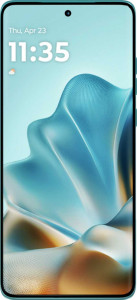
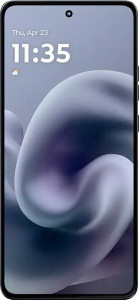
Most of the specs in this group are shared — both phones include a video light and neither features sapphire glass or an e-paper display. The one distinguishing detail is the display curvature: the Edge 60 Fusion sports a curved display, while the Moto G86 Power uses a flat panel.

Curved displays are primarily an aesthetic and ergonomic choice. They can lend a more premium, sculpted feel in the hand and reduce the visibility of bezels from certain angles. On the flip side, flat displays are generally considered more practical — they are easier to apply screen protectors to, less prone to accidental edge touches, and typically more straightforward to replace if damaged.

Whether the curved screen is an advantage or a drawback comes down to personal preference. Users who value a sleeker, more refined look will favor the Edge 60 Fusion, while those who prioritize practicality and repairability may prefer the flat panel of the G86 Power. Based strictly on the provided specs, the Edge 60 Fusion offers the more distinctive hardware feature here, giving it a modest aesthetic edge in this category.

Comparison Summary & Verdict

After examining every specification, these two phones are closely matched at their core, sharing the same OLED display, MediaTek Dimensity 7300 chipset, and IP68 waterproofing. Where they diverge is telling: the Motorola Edge 60 Fusion (256GB / 8GB RAM) stands out with its 68W fast charging, slimmer and lighter build, a higher-resolution secondary camera, Bluetooth 5.4, and a curved display that adds a premium feel. On the other side, the Motorola Moto G86 Power wins decisively on 6720 mAh battery endurance and offers 512GB of internal storage for users who need maximum space. Choose the Edge 60 Fusion if a sleek design and rapid top-ups matter most to you; opt for the Moto G86 Power if all-day battery stamina and generous storage are your top priorities.

Motorola Edge 60 Fusion (256GB / 8GB RAM)
Buy Motorola Edge 60 Fusion (256GB / 8GB RAM) if...

Buy the Motorola Edge 60 Fusion (256GB / 8GB RAM) if you want a lighter, slimmer phone with significantly faster 68W charging, a curved display, and a higher-resolution secondary camera.

Motorola Moto G86 Power
Buy Motorola Moto G86 Power if...

Buy the Motorola Moto G86 Power if long battery life is your top priority, or if you need 512GB of internal storage for media and apps.