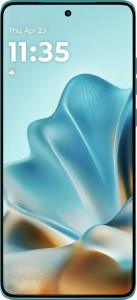
Motorola Edge 60 Fusion
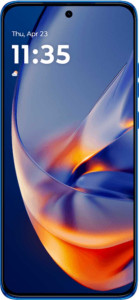
Motorola Edge 60 Neo

Motorola Edge 60 Fusion Motorola Edge 60 Neo

Overview

Welcome to our in-depth comparison of the Motorola Edge 60 Fusion and the Motorola Edge 60 Neo. Both phones share a strong foundation — IP68 waterproofing, a 120Hz OLED display, and 68W fast charging — but they diverge in meaningful ways across camera versatility, display size, chipset choice, and charging features. Whether you prioritize a larger screen or a more compact design, this comparison will help you find your perfect match.

Common Features

  • Both phones are waterproof with an IP68 ingress protection rating.
  • Neither phone has a rugged build.
  • Neither phone can be folded.
  • Both phones feature an OLED/AMOLED display with a 120Hz refresh rate.
  • Both phones have a touch sampling rate of 300Hz.
  • Both phones are protected by Gorilla Glass 7i.
  • HDR10 support is available on both phones.
  • HDR10+ support is available on both phones.
  • Dolby Vision support is not available on either phone.
  • Neither phone has a secondary screen.
  • Both phones offer 512GB of internal storage and 12GB of RAM.
  • Both phones use a Mali G615 MC2 GPU clocked at 1047 MHz.
  • Both phones are built on a 4nm semiconductor process.
  • Both phones have a dual-lens main camera with a 50MP and 13MP setup as the primary sensors.
  • Both phones have a 32MP front camera.
  • Optical image stabilization is available on both phones.
  • Both phones can record video at 2160p at 30fps.
  • Both phones run Android 15.
  • Both phones have a 5200 mAh battery with 68W fast charging and come with a charger included.
  • Both phones have stereo speakers but lack a 3.5mm audio jack.
  • Both phones support 5G, dual SIM, NFC, USB Type-C, external memory, and have a fingerprint scanner.
  • Neither phone supports emergency SOS via satellite.

Main Differences

  • Weight is 180.1g on the Motorola Edge 60 Fusion and 174.5g on the Motorola Edge 60 Neo.
  • Thickness is 8.25mm on the Motorola Edge 60 Fusion and 8.1mm on the Motorola Edge 60 Neo.
  • Width is 73.08mm on the Motorola Edge 60 Fusion and 71.2mm on the Motorola Edge 60 Neo.
  • Height is 161.2mm on the Motorola Edge 60 Fusion and 154.1mm on the Motorola Edge 60 Neo.
  • Screen size is 6.67″ on the Motorola Edge 60 Fusion and 6.36″ on the Motorola Edge 60 Neo.
  • Pixel density is 446 ppi on the Motorola Edge 60 Fusion and 460 ppi on the Motorola Edge 60 Neo.
  • Resolution is 1220 x 2712 px on the Motorola Edge 60 Fusion and 1200 x 2670 px on the Motorola Edge 60 Neo.
  • The AnTuTu benchmark score is 738727 on the Motorola Edge 60 Fusion and 678400 on the Motorola Edge 60 Neo.
  • The chipset is the MediaTek Dimensity 7300 on the Motorola Edge 60 Fusion and the MediaTek Dimensity 7400 on the Motorola Edge 60 Neo.
  • CPU speed is 4 x 2.5 & 4 x 2 GHz on the Motorola Edge 60 Fusion and 4 x 2.6 & 4 x 2 GHz on the Motorola Edge 60 Neo.
  • The Motorola Edge 60 Neo has a triple-lens main camera (50MP, 13MP, 10MP), while the Motorola Edge 60 Fusion has a dual-lens main camera (50MP, 13MP).
  • Optical zoom is not available on the Motorola Edge 60 Fusion, while the Motorola Edge 60 Neo offers 3x optical zoom.
  • Main camera wide aperture is f/2.2 and f/1.8 on the Motorola Edge 60 Fusion, and f/1.8, f/2.2, and f/2.0 on the Motorola Edge 60 Neo.
  • Front camera wide aperture is f/2.2 on the Motorola Edge 60 Fusion and f/2.4 on the Motorola Edge 60 Neo.
  • Wireless charging is available on the Motorola Edge 60 Neo but not on the Motorola Edge 60 Fusion.
  • The Motorola Edge 60 Fusion has a curved display, while the Motorola Edge 60 Neo has a flat display.
Specs Comparison
Motorola Edge 60 Fusion

Motorola Edge 60 Fusion

Motorola Edge 60 Neo

Motorola Edge 60 Neo

Design:
water resistance Waterproof Waterproof
weight 180.1 g 174.5 g
thickness 8.25 mm 8.1 mm
width 73.08 mm 71.2 mm
height 161.2 mm 154.1 mm
volume 97.189092 cm³ 88.872552 cm³
Ingress Protection (IP) rating IP68 IP68
has a rugged build
can be folded

Both the Motorola Edge 60 Fusion and the Edge 60 Neo share the same core durability credentials: a full IP68 waterproof rating, meaning both can withstand submersion in water under standardized conditions. Neither is built as a rugged device or offers a foldable form factor, so on those fronts they are evenly matched.

Where they diverge is in physical size and feel. The Edge 60 Neo is the more compact option across every dimension — shorter at 154.1 mm vs 161.2 mm, narrower at 71.2 mm vs 73.08 mm, and slimmer at 8.1 mm vs 8.25 mm. This translates into a meaningfully smaller overall volume (88.87 cm³ vs 97.19 cm³) and a lighter feel at 174.5 g compared to the Fusion's 180.1 g. In practice, that roughly 5.6 g difference and tighter footprint make the Neo noticeably easier to handle one-handed and more pocketable for everyday carry.

For design, the Edge 60 Neo holds a clear edge for users who prioritize compactness and lighter weight. The Edge 60 Fusion is the larger device, which may suit those who prefer a bigger-screened phone but comes at the cost of bulk. Both deliver the same water-resistance protection, so that should not be a deciding factor here.

Display:
Display type OLED/AMOLED OLED/AMOLED
screen size 6.67" 6.36"
pixel density 446 ppi 460 ppi
resolution 1220 x 2712 px 1200 x 2670 px
refresh rate 120Hz 120Hz
touch sampling rate 300Hz 300Hz
Gorilla Glass version Gorilla Glass 7i Gorilla Glass 7i
supports HDR10
supports HDR10+
supports Dolby Vision
Has a secondary screen
has a touch screen

At the panel technology level, these two phones are essentially identical: both use OLED/AMOLED displays with a 120Hz refresh rate, 300Hz touch sampling, Gorilla Glass 7i protection, and matching HDR10 and HDR10+ support. Color accuracy, smoothness of scrolling, and screen durability are all on equal footing.

The meaningful split is in screen size and pixel density. The Edge 60 Fusion carries a larger 6.67″ panel at 446 ppi, while the Edge 60 Neo fits a 6.36″ screen into its more compact body but actually achieves a marginally higher 460 ppi. In practice, 14 ppi is an imperceptible difference to the human eye — both displays will look razor-sharp — but the size gap is very real. The Fusion gives you meaningfully more screen real estate for media, gaming, and multitasking, while the Neo trades that for a more one-hand-friendly form factor.

For display, the verdict depends on user preference rather than a technical winner. Neither phone has a qualitative advantage in sharpness or panel quality; it comes down to whether you value a larger canvas or a more compact experience. Users who consume a lot of video or play games will lean toward the Edge 60 Fusion, while those prioritizing portability will find the Edge 60 Neo sufficient without any real visual compromise.

Performance:
internal storage 512GB 512GB
RAM 12GB 12GB
AnTuTu benchmark score 738727 678400
Chipset (SoC) name MediaTek Dimensity 7300 MediaTek Dimensity 7400
GPU name Mali G615 MC2 Mali G615 MC2
CPU speed 4 x 2.5 & 4 x 2 GHz 4 x 2.6 & 4 x 2 GHz
GPU clock speed 1047 MHz 1047 MHz
Has integrated LTE
RAM speed 6400 MHz 6400 MHz
semiconductor size 4 nm 4 nm
Supports 64-bit
DirectX version DirectX 12 DirectX 12
Has integrated graphics
Uses big.LITTLE technology
CPU threads 8 threads 8 threads
Uses HMP
maximum memory amount 16GB 16GB
number of transistors 6200 million 6200 million
DDR memory version 5 5
supported displays 1 1

Strip away the model numbers and these two phones share a remarkably similar silicon foundation: both run on a 4 nm MediaTek Dimensity chip, pair 12GB of DDR5 RAM at 6400 MHz with 512GB of internal storage, and use the same Mali G615 MC2 GPU at identical clock speeds. For everyday tasks — app launches, browsing, streaming — users of either phone will have a near-indistinguishable experience.

The nuance lies in the chipset names and what the benchmark numbers reveal. The Edge 60 Fusion carries the Dimensity 7300 and scores 738,727 on AnTuTu, while the Edge 60 Neo uses the newer-named Dimensity 7400 yet posts a lower score of 678,400. The Neo's performance cores are clocked marginally higher at 2.6 GHz vs the Fusion's 2.5 GHz, but that small clock advantage does not translate into overall throughput gains — the benchmark gap of roughly 60,000 points suggests the Dimensity 7300 holds an architectural or efficiency edge in sustained workloads. A newer model number does not automatically mean faster performance.

On raw performance, the Edge 60 Fusion holds the clear advantage. The ~8.6% higher AnTuTu score points to a tangible edge in CPU-intensive tasks and sustained workloads such as gaming or video processing, even if casual users are unlikely to feel it day-to-day. For power users who push their devices hard, the Fusion is the stronger choice in this category.

Cameras:
megapixels (main camera) 50 & 13 MP 50 & 13 & 10 MP
wide aperture (main camera) 2.2 & 1.8f 1.8 & 2.2 & 2f
Has a dual-lens (or multi-lens) main camera
megapixels (front camera) 32MP 32MP
has built-in optical image stabilization
video recording (main camera) 2160 x 30 fps 2160 x 30 fps
Has a dual-tone LED flash
number of flash LEDs 1 1
has a BSI sensor
has a CMOS sensor
has continuous autofocus when recording movies
Has phase-detection autofocus for photos
supports slow-motion video recording
has a built-in HDR mode
has manual exposure
has a flash
optical zoom 0x 3x
has manual ISO
has a serial shot mode
has manual focus
has a front camera
Has laser autofocus
Shoots 360° panorama
has manual white balance
has touch autofocus
has manual shutter speed
can create panoramas in-camera
wide aperture (front camera) 2.2f 2.4f
Has timelapse function
Has a front-facing LED flash
has a dual-lens (or multi-lens) front camera
supports HDR10 recording
supports Dolby Vision recording
has a front-facing camera under the display
Has a RGB LED flash
has 3D photo/video recording capabilities

The shared camera DNA is substantial: both phones lead with a 50 MP main sensor with OIS, a matching 32 MP front camera, and identical 4K at 30fps video recording. Phase-detection autofocus, slow-motion, HDR mode, and a full suite of manual controls are present on both. For standard shooting — portraits, landscapes, social media content — the baseline experience is closely aligned.

The decisive split comes down to one feature the Edge 60 Fusion simply lacks: a third camera. The Edge 60 Neo adds a 10 MP telephoto lens with 3x optical zoom, bringing its rear system to three lenses versus the Fusion's two. Optical zoom is a significant real-world advantage — it captures distant subjects without the quality degradation of digital cropping, making the Neo meaningfully more versatile for travel, events, and any scenario where you cannot physically move closer to your subject. The Fusion's optical zoom stands at 0x, meaning all zoom is digital by default.

On cameras, the Edge 60 Neo holds a clear and practical advantage. The addition of a dedicated telephoto lens with true optical zoom elevates it into a more capable shooting system, and that gap is not offset by anything the Fusion offers exclusively. For users who care about photographic versatility, the Neo is the stronger choice in this category.

Operating system:
Android version Android 15 Android 15
has clipboard warnings
has location privacy options
has camera/microphone privacy options
has Mail Privacy Protection
has theme customization
can block app tracking
blocks cross-site tracking
has on-device machine learning
has notification permissions
has media picker
Can play games while they download
has dark mode
has Wi-Fi password sharing
has battery health check
has an extra dim mode
has focus modes
has dynamic theming
can offload apps
Has customizable notifications
has Live Text
has full-page screenshots
supports split screen
gets direct OS updates
has PiP
Can be used as a PC
Has sharing intents
has a child lock
Supports widgets
Is free and open source
Has offline voice recognition
has voice commands
Tracks the current position of a mobile device
is a multi-user system
has Quick Start

This is a rare category where the comparison is entirely straightforward: the Motorola Edge 60 Fusion and Edge 60 Neo run identical software stacks. Both launch on Android 15, carry the same privacy toolkit — including location controls, camera/microphone permissions, and app tracking blockers — and offer the same quality-of-life features such as dynamic theming, Picture-in-Picture, split-screen multitasking, on-device machine learning, and offline voice recognition. There is not a single feature in the provided specs that one has and the other does not.

A few shared absences are worth noting for prospective buyers. Neither phone receives direct OS updates — meaning updates are routed through Motorola rather than pushed straight from Google — and neither supports Wi-Fi password sharing or cross-site tracking blocking. These are consistent limitations across both devices, not differentiators.

On operating system, this category is a complete tie. Buyers choosing between these two phones gain no software advantage with either model; the decision should rest entirely on the hardware differences identified in other categories.

Battery:
battery power 5200 mAh 5200 mAh
has wireless charging
Supports fast charging
charging speed 68W 68W
comes with a charger
has a removable battery
has a battery level indicator
has a rechargeable battery

Capacity and wired charging speed are identical across both phones: a 5200 mAh battery paired with 68W fast charging, with a charger included in the box. At 68W, a full charge from flat takes well under an hour in practical terms, and the 5200 mAh cell is large enough to comfortably last a full day of heavy use for most users.

The single — but meaningful — differentiator is that the Edge 60 Neo supports wireless charging, while the Edge 60 Fusion does not. Wireless charging adds genuine convenience for users who keep a charging pad on their desk or nightstand, eliminating cable wear and allowing effortless top-ups throughout the day. It is a feature that, once adopted, is hard to go back from.

Given equal capacity and wired charging speeds, the Edge 60 Neo holds the advantage in this category purely by virtue of its wireless charging support. For users who do not use wireless charging pads, the two phones are functionally tied — but for those who do, the Neo offers meaningfully more flexibility.

Audio:
has a socket for a 3.5 mm audio jack
has stereo speakers
Has a radio

Audio hardware is identical on both phones. The Edge 60 Fusion and Edge 60 Neo each feature stereo speakers, omit a 3.5 mm headphone jack, and include no FM radio. Stereo speakers are a genuine upgrade over mono setups — they produce wider soundstage and better channel separation for media playback, making them well-suited for videos, games, and hands-free listening.

The absence of a headphone jack on both devices means wired audio requires a USB-C adapter, which is a consistent trade-off rather than a differentiator. Users who rely on wired headphones should factor this in, but it equally affects both phones.

This category is a complete tie. There is no audio specification in the provided data that favors one device over the other, and the choice between these two phones should be made on the basis of differences found in other categories.

Connectivity & Features:
release date April 2025 September 2025
has 5G support
SIM cards 2 SIM 2 SIM
has an external memory slot
Has USB Type-C
USB version 2 2
has NFC
Has a fingerprint scanner
has emergency SOS via satellite
has crash detection
is DLNA-certified
has a gyroscope
supports ANT+
Has a heart rate monitor
has GPS
has a compass
supports Wi-Fi
Has an infrared sensor
has an accelerometer
has a cellular module
Has a barometer
has an HDMI output
Uses 3D facial recognition
Has an iris scanner
Stylus included
supports Galileo
Has motion tracking
Has optical tracking
Has a built-in projector

Connectivity parity is total here. Both phones support 5G, dual SIM, NFC, Wi-Fi, GPS with Galileo support, and USB Type-C — covering every major connectivity base a modern smartphone user would expect. The sensor suite is equally matched, with a gyroscope, accelerometer, compass, and fingerprint scanner present on both devices.

A couple of shared omissions are worth flagging for specific user groups. Neither phone includes a barometer, an infrared sensor, satellite SOS, or crash detection — features found on some competing devices. The USB 2.0 standard on the Type-C port is also a shared limitation; while fine for charging and basic data transfer, it rules out high-speed file transfers or display output via cable on either model.

Like the audio and OS categories before it, connectivity and features is a complete tie. Every specification in this group is identical across both phones. Buyers will find no advantage on either side here and should weigh other categories — particularly cameras, battery, and design — when making their final decision.

Miscellaneous:
has a video light
Has sapphire glass display
Has a curved display
Has an e-paper display

Most of this category is shared ground: both phones include a video light and neither uses sapphire glass or an e-paper display. The one meaningful differentiator is display geometry — the Edge 60 Fusion features a curved display, while the Edge 60 Neo uses a flat panel.

Curved displays are largely a matter of aesthetic preference, but they do carry practical implications. A curved screen gives the Fusion a more premium, edge-to-edge visual impression and can feel more natural in the hand due to the way the glass flows into the frame. The trade-off is that curved panels are more prone to accidental edge touches and can make screen protectors harder to apply and keep in place. The Neo's flat display, by contrast, is more pragmatic — easier to protect, less prone to unintended inputs, and often preferred by users who prioritize usability over visual flair.

There is no objective winner here — the advantage depends entirely on user preference. Those drawn to a more refined, premium aesthetic will favor the Edge 60 Fusion, while users who prioritize practicality and ease of screen protection will find the Edge 60 Neo's flat panel the more sensible choice.

Comparison Summary & Verdict

After examining every specification, it is clear that both phones serve slightly different user profiles. The Motorola Edge 60 Fusion stands out with its larger 6.67″ OLED display, a higher AnTuTu benchmark score of 738,727, and a curved screen design — making it the stronger choice for users who want more screen real estate and raw performance. On the other hand, the Motorola Edge 60 Neo appeals to those who value compactness and versatility, offering a more pocketable build, a triple-lens camera system with 3x optical zoom, and the added convenience of wireless charging. If camera flexibility and modern charging options are your priorities, the Neo edges ahead. If you prefer a bigger, more immersive display and a slight performance boost, the Fusion is the better fit.

Motorola Edge 60 Fusion
Buy Motorola Edge 60 Fusion if...

Buy the Motorola Edge 60 Fusion if you want a larger 6.67″ display, a curved screen design, and a higher benchmark performance score.

Motorola Edge 60 Neo
Buy Motorola Edge 60 Neo if...

Buy the Motorola Edge 60 Neo if you prefer a more compact build, a triple-lens camera with 3x optical zoom, and the convenience of wireless charging.