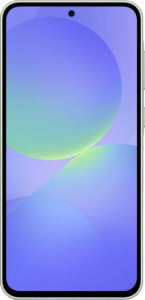
Under the hood, both phones share a 4 nm chip architecture and identical RAM amounts, but their real-world performance tells a differentiated story. The Motorola Edge 60 Fusion's MediaTek Dimensity 7300 scores 738,727 on AnTuTu versus 619,557 for the Samsung Galaxy A36 5G's Snapdragon 6 Gen 3 — a roughly 19% gap that reflects a tangible advantage in sustained, compute-heavy tasks like gaming, video editing, and multitasking under load. Geekbench 6 scores, however, are remarkably close (multi-core: 2932 vs 2917; single-core: 1026 vs 1007), confirming that for everyday single-threaded tasks the two chips feel nearly equivalent.
Where the Edge 60 Fusion widens its lead is in GPU and memory performance. Its GPU runs at 1047 MHz compared to the A36's 800 MHz, meaning noticeably faster graphics rendering in demanding games or GPU-accelerated applications. The RAM subsystem is even more striking: the Motorola operates at 6400 MHz DDR5 versus just 2750 MHz on the Samsung — a more than 2x bandwidth advantage that keeps data flowing quickly between the CPU and memory, reducing micro-stutters during intensive use. The Edge 60 Fusion also supports a maximum of 16 GB of RAM versus the A36's 12 GB ceiling, offering more headroom for future configurations.
Storage is another decisive point: the Edge 60 Fusion comes with 512 GB of internal storage — double the A36's 256 GB — which is a practical, everyday differentiator for users who store large media libraries or avoid cloud reliance. Taken together, the Motorola Edge 60 Fusion holds a clear and consistent performance advantage across GPU speed, memory bandwidth, storage capacity, and peak workload benchmarks.