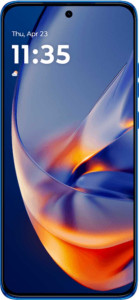
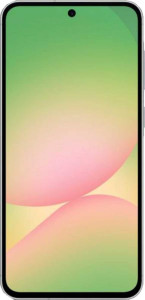
Motorola Edge 60 Neo
Samsung Galaxy A56 5G

Motorola Edge 60 Neo Samsung Galaxy A56 5G

Overview

When choosing between the Motorola Edge 60 Neo and the Samsung Galaxy A56 5G, shoppers face a genuinely competitive mid-range matchup with meaningful trade-offs on both sides. This comparison digs into the key battlegrounds: display quality and size, raw processing performance, camera versatility, battery and charging capabilities, and everyday design choices — to help you decide which device best fits your lifestyle and priorities.

Common Features

  • Both phones are waterproof and share the same water resistance rating category.
  • Neither phone has a rugged build.
  • Neither phone can be folded.
  • Both phones feature an OLED/AMOLED display.
  • Both phones support a 120Hz refresh rate.
  • HDR10 support is available on both phones.
  • HDR10+ support is available on both phones.
  • Dolby Vision support is not available on either phone.
  • Neither phone has a secondary screen.
  • Both phones have a touchscreen.
  • Both phones come with 12GB of RAM.
  • Both phones have integrated LTE.
  • Both phones are built on a 4nm semiconductor process.
  • Both phones support 64-bit processing.
  • Both phones support DirectX 12.
  • Both phones have integrated graphics.
  • Both phones use big.LITTLE technology.
  • Both phones have 8 CPU threads.
  • Both main cameras support optical image stabilization.
  • Both phones record video at up to 2160p at 30fps on the main camera.
  • Neither phone has a dual-tone LED flash.
  • Both phones have a single LED flash.
  • Neither phone has a BSI sensor.
  • Both phones have a CMOS sensor.
  • Both phones support continuous autofocus during video recording.
  • Both phones run Android 15.
  • Both phones have clipboard warnings.
  • Both phones include location privacy options.
  • Both phones include camera and microphone privacy options.
  • Mail Privacy Protection is not available on either phone.
  • Both phones support theme customization.
  • Both phones can block app tracking.
  • Cross-site tracking blocking is not available on either phone.
  • Both phones support fast charging.
  • Neither phone has a removable battery.
  • Both phones have a battery level indicator.
  • Both phones have a rechargeable battery.
  • Neither phone has a 3.5mm audio jack.
  • Both phones have stereo speakers.
  • Neither phone has a built-in radio.
  • Both phones support 5G.
  • Both phones have a USB Type-C connector.
  • Both phones use USB version 2.
  • Both phones have NFC.
  • Both phones have a fingerprint scanner.
  • Emergency SOS via satellite is not available on either phone.
  • Crash detection is not available on either phone.
  • Neither phone is DLNA-certified.
  • Both phones have a multi-lens main camera.
  • Both phones have a video light.
  • Neither phone has a sapphire glass display.
  • Neither phone has a curved display.
  • Neither phone has an e-paper display.

Main Differences

  • Weight is 174.5g on Motorola Edge 60 Neo and 198g on Samsung Galaxy A56 5G.
  • Thickness is 8.1mm on Motorola Edge 60 Neo and 7.4mm on Samsung Galaxy A56 5G.
  • Width is 71.2mm on Motorola Edge 60 Neo and 77.5mm on Samsung Galaxy A56 5G.
  • Height is 154.1mm on Motorola Edge 60 Neo and 162.2mm on Samsung Galaxy A56 5G.
  • Volume is 88.87 cm³ on Motorola Edge 60 Neo and 93.02 cm³ on Samsung Galaxy A56 5G.
  • The IP rating is IP68 on Motorola Edge 60 Neo and IP67 on Samsung Galaxy A56 5G.
  • Screen size is 6.36″ on Motorola Edge 60 Neo and 6.7″ on Samsung Galaxy A56 5G.
  • Pixel density is 460 ppi on Motorola Edge 60 Neo and 385 ppi on Samsung Galaxy A56 5G.
  • Resolution is 1200 x 2670 px on Motorola Edge 60 Neo and 1080 x 2340 px on Samsung Galaxy A56 5G.
  • The display is protected by Gorilla Glass 7i on Motorola Edge 60 Neo and Gorilla Glass Victus on Samsung Galaxy A56 5G.
  • Internal storage is 512GB on Motorola Edge 60 Neo and 256GB on Samsung Galaxy A56 5G.
  • AnTuTu benchmark score is 678,400 on Motorola Edge 60 Neo and 932,578 on Samsung Galaxy A56 5G.
  • The chipset is MediaTek Dimensity 7400 on Motorola Edge 60 Neo and Samsung Exynos 1580 on Samsung Galaxy A56 5G.
  • The GPU is Mali G615 MC2 on Motorola Edge 60 Neo and Xclipse 530 on Samsung Galaxy A56 5G.
  • CPU speed is 4 x 2.6 & 4 x 2 GHz on Motorola Edge 60 Neo and 1 x 2.9 & 3 x 2.6 & 4 x 1.95 GHz on Samsung Galaxy A56 5G.
  • GPU clock speed is 1047 MHz on Motorola Edge 60 Neo and 1300 MHz on Samsung Galaxy A56 5G.
  • RAM speed is 6400 MHz on Motorola Edge 60 Neo and 3200 MHz on Samsung Galaxy A56 5G.
  • Maximum memory bandwidth is 25.6 GB/s on Motorola Edge 60 Neo and 51.2 GB/s on Samsung Galaxy A56 5G.
  • Maximum memory amount supported is 16GB on Motorola Edge 60 Neo and 12GB on Samsung Galaxy A56 5G.
  • Main camera megapixels are 50 & 13 & 10 MP on Motorola Edge 60 Neo and 50 & 12 & 5 MP on Samsung Galaxy A56 5G.
  • Main camera wide aperture is f/1.8 & f/2.2 & f/2.0 on Motorola Edge 60 Neo and f/1.8 & f/2.2 & f/2.4 on Samsung Galaxy A56 5G.
  • Front camera resolution is 32MP on Motorola Edge 60 Neo and 12MP on Samsung Galaxy A56 5G.
  • Optical zoom is 3x on Motorola Edge 60 Neo and not available on Samsung Galaxy A56 5G.
  • Front camera wide aperture is f/2.4 on Motorola Edge 60 Neo and f/2.2 on Samsung Galaxy A56 5G.
  • Battery capacity is 5200 mAh on Motorola Edge 60 Neo and 5000 mAh on Samsung Galaxy A56 5G.
  • Wireless charging is supported on Motorola Edge 60 Neo but not available on Samsung Galaxy A56 5G.
  • Charging speed is 68W on Motorola Edge 60 Neo and 45W on Samsung Galaxy A56 5G.
  • A charger is included in the box with Motorola Edge 60 Neo but not with Samsung Galaxy A56 5G.
  • Motorola Edge 60 Neo supports 2 SIM cards, while Samsung Galaxy A56 5G supports 2 SIM cards and 2 eSIMs.
  • An external memory slot is available on Motorola Edge 60 Neo but not on Samsung Galaxy A56 5G.
Specs Comparison
Motorola Edge 60 Neo

Motorola Edge 60 Neo

Samsung Galaxy A56 5G

Samsung Galaxy A56 5G

Design:
water resistance Waterproof Waterproof
weight 174.5 g 198 g
thickness 8.1 mm 7.4 mm
width 71.2 mm 77.5 mm
height 154.1 mm 162.2 mm
volume 88.872552 cm³ 93.0217 cm³
Ingress Protection (IP) rating IP68 IP67
has a rugged build
can be folded

Both phones are waterproof and share the same non-rugged, non-folding form factor, but they diverge meaningfully in how they balance size, weight, and water resistance. The Motorola Edge 60 Neo is the more compact and lighter of the two at 174.5 g and 154.1 × 71.2 mm, while the Samsung Galaxy A56 5G is noticeably heavier at 198 g and spans a larger 162.2 × 77.5 mm footprint. That 23.5 g weight gap is genuinely perceptible during extended one-handed use — the Edge 60 Neo will feel meaningfully less fatiguing over a long day.

Where the A56 partially compensates is in its slimmer profile: at 7.4 mm thick versus the Edge 60 Neo's 8.1 mm, it slides more easily into a pocket despite its larger frame. However, its greater overall volume (93 cm³ vs 88.9 cm³) means it still occupies more physical space. On water resistance, the difference is more than cosmetic: the Edge 60 Neo carries an IP68 rating, certifying it for submersion beyond the IP67 standard that the A56 meets. In practice, IP68 allows for deeper and potentially longer immersion — a meaningful edge for users who might drop their phone in water.

Overall, the Edge 60 Neo has a clear advantage in this category. It is lighter, more compact, and offers superior water resistance certification. The A56's slimmer build is a genuine plus, but it does not offset the combination of a heavier chassis, larger footprint, and a lower IP rating.

Display:
Display type OLED/AMOLED OLED/AMOLED
screen size 6.36" 6.7"
pixel density 460 ppi 385 ppi
resolution 1200 x 2670 px 1080 x 2340 px
refresh rate 120Hz 120Hz
Gorilla Glass version Gorilla Glass 7i Gorilla Glass Victus
supports HDR10
supports HDR10+
supports Dolby Vision
Has a secondary screen
has a touch screen

Both phones use an OLED/AMOLED panel with a 120Hz refresh rate, and both support HDR10 and HDR10+ — so the fundamentals of display quality are well matched. The real split comes down to size versus sharpness. The Galaxy A56 5G offers a larger 6.7″ canvas, which suits media consumption and multitasking, but its 1080 × 2340 resolution produces a pixel density of only 385 ppi. The Edge 60 Neo, despite its smaller 6.36″ screen, pairs a higher 1200 × 2670 resolution with a noticeably sharper 460 ppi — a 75 ppi gap that is very much visible when reading fine text or viewing detailed imagery up close.

Glass protection tells the opposite story. The A56 ships with Gorilla Glass Victus, Corning's more robust consumer-grade offering, while the Edge 60 Neo uses Gorilla Glass 7i, a variant optimized for mid-range devices and generally considered a step below Victus in scratch and drop resistance. For users who tend to use their phone without a case, this is a practical consideration.

The verdict here depends on what you prioritize. If screen real estate and stronger glass matter most, the A56 5G has the edge. But if display clarity is the priority — and for most everyday use cases it is — the Edge 60 Neo's significantly higher pixel density makes its panel the objectively sharper and more refined of the two, giving it a slight overall advantage in this category.

Performance:
internal storage 512GB 256GB
RAM 12GB 12GB
AnTuTu benchmark score 678400 932578
Chipset (SoC) name MediaTek Dimensity 7400 Samsung Exynos 1580
GPU name Mali G615 MC2 Xclipse 530
CPU speed 4 x 2.6 & 4 x 2 GHz 1 x 2.9 & 3 x 2.6 & 4 x 1.95 GHz
GPU clock speed 1047 MHz 1300 MHz
Has integrated LTE
RAM speed 6400 MHz 3200 MHz
semiconductor size 4 nm 4 nm
Supports 64-bit
DirectX version DirectX 12 DirectX 12
Has integrated graphics
Uses big.LITTLE technology
CPU threads 8 threads 8 threads
Uses HMP
maximum memory bandwidth 25.6 GB/s 51.2 GB/s
maximum memory amount 16GB 12GB
DDR memory version 5 5

Raw performance is where the Samsung Galaxy A56 5G pulls ahead decisively. Its Exynos 1580 chipset scores 932,578 on AnTuTu versus the Edge 60 Neo's 678,400 on the Dimensity 7400 — a gap of roughly 37%, which is substantial enough to be felt in demanding workloads like gaming, video editing, and heavy multitasking. The A56's GPU also runs at a higher clock speed (1300 MHz vs 1047 MHz), reinforcing its advantage in graphically intensive tasks.

Perhaps the starkest technical divergence is in memory bandwidth: the A56 delivers 51.2 GB/s compared to the Edge 60 Neo's 25.6 GB/s — exactly double. Higher bandwidth means the processor can feed data to and from RAM far more quickly, directly benefiting tasks like image processing, app loading, and any scenario requiring rapid data throughput. The Edge 60 Neo counters with a faster RAM bus speed (6400 MHz vs 3200 MHz), but this advantage is effectively neutralized by the A56's wider memory pipeline. Where the Edge 60 Neo does win clearly is in storage capacity — 512 GB versus the A56's 256 GB — and in its higher maximum supported RAM of 16 GB versus 12 GB.

For performance-oriented buyers, the A56 5G has a clear and meaningful advantage in processing and graphics capability. The Edge 60 Neo compensates with twice the base storage, which matters for users who accumulate large media libraries — but if outright speed is the priority, the A56 is the stronger choice in this category.

Cameras:
megapixels (main camera) 50 & 13 & 10 MP 50 & 12 & 5 MP
wide aperture (main camera) 1.8 & 2.2 & 2f 1.8 & 2.2 & 2.4f
Has a dual-lens (or multi-lens) main camera
megapixels (front camera) 32MP 12MP
has built-in optical image stabilization
video recording (main camera) 2160 x 30 fps 2160 x 30 fps
Has a dual-tone LED flash
number of flash LEDs 1 1
has a BSI sensor
has a CMOS sensor
has continuous autofocus when recording movies
Has phase-detection autofocus for photos
supports slow-motion video recording
has a built-in HDR mode
has manual exposure
has a flash
optical zoom 3x 0x
has manual ISO
has a serial shot mode
has manual focus
has a front camera
Has laser autofocus
Shoots 360° panorama
has manual white balance
has touch autofocus
has manual shutter speed
can create panoramas in-camera
wide aperture (front camera) 2.4f 2.2f
Has timelapse function
Has a front-facing LED flash
has a dual-lens (or multi-lens) front camera
supports HDR10 recording
supports Dolby Vision recording
has a front-facing camera under the display
Has a RGB LED flash
has 3D photo/video recording capabilities

The rear camera systems look similar on paper — both lead with a 50 MP main sensor at f/1.8 and share a nearly identical feature set including OIS, phase-detection autofocus, and 4K/30fps video. The meaningful divergence emerges in the telephoto tier and zoom capability. The Edge 60 Neo packs a 10 MP telephoto lens with 3x optical zoom, while the Galaxy A56 5G lists 0x optical zoom despite having a third 5 MP lens — indicating that third sensor does not contribute true optical reach. For users who regularly photograph subjects at a distance, this is a significant practical gap; optical zoom preserves detail in a way that digital cropping simply cannot match.

The selfie camera is another area where the Edge 60 Neo stands apart. Its 32 MP front sensor offers considerably more resolution than the A56's 12 MP unit — an advantage for users who prioritize self-portraits or video calls, as higher resolution retains more detail and allows more cropping flexibility. The A56's front aperture of f/2.2 is marginally wider than the Edge 60 Neo's f/2.4, which could offer a slight low-light edge on the selfie side, but the resolution gap is the more impactful difference for most users.

Across this category, the Edge 60 Neo has a clear advantage. The combination of a true 3x optical zoom telephoto lens and a high-resolution 32 MP front camera gives it more versatility at both ends of the shooting experience, while the A56 offers a broadly similar but less capable rear system and a notably lower-resolution selfie shooter.

Operating system:
Android version Android 15 Android 15
has clipboard warnings
has location privacy options
has camera/microphone privacy options
has Mail Privacy Protection
has theme customization
can block app tracking
blocks cross-site tracking
has on-device machine learning
has notification permissions
has media picker
Can play games while they download
has dark mode
has Wi-Fi password sharing
has battery health check
has an extra dim mode
has focus modes
has dynamic theming
can offload apps
Has customizable notifications
has Live Text
has full-page screenshots
supports split screen
gets direct OS updates
has PiP
Can be used as a PC
Has sharing intents
has a child lock
Supports widgets
Is free and open source
Has offline voice recognition
has voice commands
Tracks the current position of a mobile device
is a multi-user system
has Quick Start

This is a rare case of a complete tie. Every single data point in this category — from the shared Android 15 base to privacy controls, productivity features, and accessibility options — is identical between the Motorola Edge 60 Neo and the Samsung Galaxy A56 5G. Both support split-screen multitasking, Picture-in-Picture, dynamic theming, on-device machine learning, and a full suite of privacy tools including camera/microphone controls and app tracking restrictions. Neither gets direct OS updates, and neither supports features like cross-site tracking blocking, Wi-Fi password sharing, or PC mode.

It is worth noting that while the underlying Android version and feature flags are matched, real-world software experience can still differ due to each manufacturer's custom UI layer — Motorola's near-stock interface versus Samsung's One UI. However, since no data reflecting those differences is present in the provided specs, no distinction can be drawn here.

Based strictly on the data provided, this group is a complete tie. Neither phone holds any software feature advantage over the other within this specification set.

Battery:
battery power 5200 mAh 5000 mAh
has wireless charging
Supports fast charging
charging speed 68W 45W
comes with a charger
has a removable battery
has a battery level indicator
has a rechargeable battery

Across every dimension of battery performance, the Motorola Edge 60 Neo holds a meaningful lead. Its 5200 mAh cell edges out the Galaxy A56 5G's 5000 mAh — a modest but real difference that compounds over a full day of use. More impactful is the charging speed gap: the Edge 60 Neo supports 68W fast charging versus the A56's 45W, which in practical terms can translate to significantly less time tethered to a wall — particularly useful during a quick midday top-up.

The Edge 60 Neo also supports wireless charging, a convenience the A56 entirely lacks. Wireless charging is not a speed advantage, but it meaningfully reduces cable wear and allows for effortless overnight charging on a pad. Adding to the Edge 60 Neo's case, it comes bundled with a charger in the box, while the A56 does not — a practical cost consideration that buyers should factor into the total ownership price.

The Edge 60 Neo wins this category clearly. It offers a larger battery, faster wired charging, wireless charging support, and includes a charger in the box. The A56 5G has no advantage here — this is one of the most one-sided comparisons across the two devices.

Audio:
has a socket for a 3.5 mm audio jack
has stereo speakers
Has a radio

Audio is another category where the two phones land in exactly the same place. Both the Motorola Edge 60 Neo and the Samsung Galaxy A56 5G feature stereo speakers, omit a 3.5mm headphone jack, and lack a built-in radio. Users on either device who prefer wired headphones will need to rely on a USB-C adapter or switch to wireless audio.

This is a complete tie based on the available data. Neither phone offers any audio hardware advantage over the other within this specification set.

Connectivity & Features:
release date September 2025 March 2025
has 5G support
SIM cards 2 SIM 2 SIM, 2 eSIM
has an external memory slot
Has USB Type-C
USB version 2 2
has NFC
Has a fingerprint scanner
has emergency SOS via satellite
has crash detection
is DLNA-certified
has a gyroscope
supports ANT+
Has a heart rate monitor
has GPS
has a compass
supports Wi-Fi
Has an infrared sensor
has an accelerometer
has a cellular module
Has a barometer
has an HDMI output
Uses 3D facial recognition
Has an iris scanner
Stylus included
supports Galileo
Has motion tracking
Has optical tracking
Has a built-in projector

The connectivity foundation is largely shared: both phones support 5G, dual SIM, USB Type-C 2.0, NFC, GPS with Galileo, and an identical sensor suite including gyroscope, accelerometer, and compass. For most users, this common ground covers everything that matters day-to-day. The two key differentiators, however, pull in opposite directions depending on your priorities.

The Galaxy A56 5G adds support for 2 eSIMs on top of its 2 physical SIM slots — a significant flexibility advantage for frequent travelers or users who want to maintain separate personal and work lines without carrying a second physical card. The Edge 60 Neo, by contrast, includes a microSD card slot for expandable storage, which the A56 entirely omits. Given that the A56 already trails in base storage capacity (as noted in the performance comparison), the absence of a memory expansion option is a more consequential omission there than it might be on the Edge 60 Neo's 512 GB base configuration.

This category is effectively an even trade, with each phone offering something the other does not. Users who travel internationally or manage multiple lines will favor the A56's eSIM flexibility; those who prioritize local storage expansion will appreciate the Edge 60 Neo's microSD slot. Neither advantage is universally more valuable — it comes down to individual use case.

Miscellaneous:
has a video light
Has sapphire glass display
Has a curved display
Has an e-paper display

The miscellaneous specs for the Motorola Edge 60 Neo and the Samsung Galaxy A56 5G are identical across every data point provided. Both include a video light, and neither features a sapphire glass display, a curved screen, or an e-paper display. There is nothing here to separate them.

This is a complete tie. The available data in this category reveals no distinguishing feature or advantage for either device.

Comparison Summary & Verdict

After examining every spec, these two phones carve out clearly different niches. The Motorola Edge 60 Neo stands out for users who value a lighter, more compact form factor, a sharper high-density display, optical zoom, wireless charging, an included charger, and expandable storage — all wrapped in a superior IP68 waterproof rating. The Samsung Galaxy A56 5G, on the other hand, appeals to those who want a larger screen, significantly stronger benchmark performance thanks to the Exynos 1580 chipset, higher GPU clock speeds, greater memory bandwidth, and the added flexibility of eSIM support. If portability, camera versatility, and charging convenience are your priorities, the Motorola Edge 60 Neo is the smarter pick. If you demand more raw power and a bigger display for media consumption, the Samsung Galaxy A56 5G is the stronger contender.

Motorola Edge 60 Neo
Buy Motorola Edge 60 Neo if...

Buy the Motorola Edge 60 Neo if you want a lighter and more compact phone with a sharper display, optical zoom, wireless charging, an included charger, expandable storage, and a superior IP68 water resistance rating.

Samsung Galaxy A56 5G
Buy Samsung Galaxy A56 5G if...

Buy the Samsung Galaxy A56 5G if you prioritize stronger processing performance, a larger screen, higher memory bandwidth, and the added flexibility of eSIM support.