Motorola Edge 60 Pro (256GB / 8GB RAM)
Motorola Moto G57 Power

Motorola Edge 60 Pro (256GB / 8GB RAM) Motorola Moto G57 Power

Overview

Welcome to our in-depth comparison between the Motorola Edge 60 Pro (256GB / 8GB RAM) and the Motorola Moto G57 Power. These two smartphones share the same brand DNA but take very different approaches to what matters most in a modern device. From display technology and camera versatility to battery capacity and charging speeds, each phone has carved out a distinct identity. Read on as we break down every key specification to help you decide which one truly fits your needs.

Common Features

  • Both phones do not have a rugged build and cannot be folded.
  • Both phones have a 120Hz refresh rate display.
  • Both phones feature Gorilla Glass 7i for damage-resistant glass protection.
  • Neither phone supports Dolby Vision.
  • Both phones have a touchscreen and no secondary screen.
  • Both phones have 256GB of internal storage.
  • Both phones have integrated LTE and 5G support.
  • Both phones use a 4nm semiconductor process.
  • Both phones support 64-bit processing and use big.LITTLE technology.
  • Both phones have 8 CPU threads.
  • Both phones have integrated graphics and support DirectX 12.
  • Both phones have a multi-lens main camera with a CMOS sensor.
  • Both phones support continuous autofocus and phase-detection autofocus when recording.
  • Both phones support slow-motion video recording.
  • Neither phone has a BSI sensor or a dual-tone LED flash, and each has 1 flash LED.
  • Both phones have the same privacy features: clipboard warnings, location privacy options, and camera/microphone privacy options.
  • Both phones support fast charging and have a non-removable, rechargeable battery with a battery level indicator.
  • Neither phone supports reverse wireless charging.
  • Both phones have stereo speakers, no radio, and 2 microphones.
  • Both phones support 5G, NFC, USB Type-C (USB 2.0), have a fingerprint scanner, support 1 SIM and 1 eSIM, and lack an external memory slot.
  • Neither phone has emergency SOS via satellite.
  • Both phones have a video light, no sapphire glass display, and no e-paper display.
  • Neither phone has Mail Privacy Protection or blocks cross-site tracking, but both support theme customization, on-device machine learning, and can block app tracking.

Main Differences

  • Water resistance is rated as fully waterproof (IP68) on Motorola Edge 60 Pro (256GB / 8GB RAM) and only splash/dust resistant (IP64) on Motorola Moto G57 Power.
  • Weight is 186 g on Motorola Edge 60 Pro (256GB / 8GB RAM) and 210.6 g on Motorola Moto G57 Power.
  • Thickness is 8.2 mm on Motorola Edge 60 Pro (256GB / 8GB RAM) and 8.6 mm on Motorola Moto G57 Power.
  • Width is 73.1 mm on Motorola Edge 60 Pro (256GB / 8GB RAM) and 76.5 mm on Motorola Moto G57 Power.
  • Height is 160.7 mm on Motorola Edge 60 Pro (256GB / 8GB RAM) and 166.2 mm on Motorola Moto G57 Power.
  • Display type is OLED/AMOLED on Motorola Edge 60 Pro (256GB / 8GB RAM) and LCD IPS on Motorola Moto G57 Power.
  • Pixel density is 444 ppi on Motorola Edge 60 Pro (256GB / 8GB RAM) and 392 ppi on Motorola Moto G57 Power.
  • Resolution is 1220 x 2712 px on Motorola Edge 60 Pro (256GB / 8GB RAM) and 1080 x 2400 px on Motorola Moto G57 Power.
  • HDR10 and HDR10+ support is present on Motorola Edge 60 Pro (256GB / 8GB RAM) but not available on Motorola Moto G57 Power.
  • RAM is 8GB on Motorola Edge 60 Pro (256GB / 8GB RAM) and 12GB on Motorola Moto G57 Power.
  • The chipset is MediaTek Dimensity 8350 on Motorola Edge 60 Pro (256GB / 8GB RAM) and Qualcomm Snapdragon 6s Gen 4 on Motorola Moto G57 Power.
  • RAM speed is 8533 MHz on Motorola Edge 60 Pro (256GB / 8GB RAM) and 3200 MHz on Motorola Moto G57 Power.
  • Maximum memory bandwidth is 68.2 GB/s on Motorola Edge 60 Pro (256GB / 8GB RAM) and 17 GB/s on Motorola Moto G57 Power.
  • Memory channels number 4 on Motorola Edge 60 Pro (256GB / 8GB RAM) and 2 on Motorola Moto G57 Power.
  • The main camera setup is 50 & 50 & 10 MP on Motorola Edge 60 Pro (256GB / 8GB RAM) and 50 & 8 MP on Motorola Moto G57 Power.
  • The front camera is 50 MP on Motorola Edge 60 Pro (256GB / 8GB RAM) and 8 MP on Motorola Moto G57 Power.
  • Optical image stabilization is present on Motorola Edge 60 Pro (256GB / 8GB RAM) but not available on Motorola Moto G57 Power.
  • Video recording resolution is 2160p at 30 fps on Motorola Edge 60 Pro (256GB / 8GB RAM) and 1440p at 30 fps on Motorola Moto G57 Power.
  • Optical zoom is 3x on Motorola Edge 60 Pro (256GB / 8GB RAM) and not available on Motorola Moto G57 Power.
  • Android version is Android 15 on Motorola Edge 60 Pro (256GB / 8GB RAM) and Android 16 on Motorola Moto G57 Power.
  • PC mode is available on Motorola Edge 60 Pro (256GB / 8GB RAM) but not on Motorola Moto G57 Power.
  • Battery capacity is 6000 mAh on Motorola Edge 60 Pro (256GB / 8GB RAM) and 7000 mAh on Motorola Moto G57 Power.
  • Wireless charging is supported on Motorola Edge 60 Pro (256GB / 8GB RAM) but not on Motorola Moto G57 Power.
  • Charging speed is 90W on Motorola Edge 60 Pro (256GB / 8GB RAM) and 30W on Motorola Moto G57 Power.
  • A charger is included in the box with Motorola Edge 60 Pro (256GB / 8GB RAM) but not with Motorola Moto G57 Power.
  • A 3.5mm audio jack is absent on Motorola Edge 60 Pro (256GB / 8GB RAM) but present on Motorola Moto G57 Power.
  • aptX Adaptive is supported on Motorola Edge 60 Pro (256GB / 8GB RAM) but not on Motorola Moto G57 Power.
  • Wi-Fi version is Wi-Fi 6E (802.11ax) on Motorola Edge 60 Pro (256GB / 8GB RAM) and Wi-Fi 5 (802.11ac) / Wi-Fi 4 (802.11n) on Motorola Moto G57 Power.
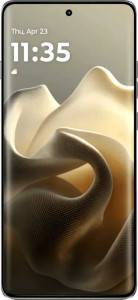
  • A curved display is featured on Motorola Edge 60 Pro (256GB / 8GB RAM) but not on Motorola Moto G57 Power.
Specs Comparison
Motorola Edge 60 Pro (256GB / 8GB RAM)

Motorola Edge 60 Pro (256GB / 8GB RAM)

Motorola Moto G57 Power

Motorola Moto G57 Power

Design:
water resistance Waterproof Water resistant
weight 186 g 210.6 g
thickness 8.2 mm 8.6 mm
width 73.1 mm 76.5 mm
height 160.7 mm 166.2 mm
volume 96.326794 cm³ 109.34298 cm³
Ingress Protection (IP) rating IP68 IP64
has a rugged build
can be folded

In terms of physical form, the Motorola Edge 60 Pro is the more compact and refined device across every dimension — shorter, narrower, thinner, and with a meaningfully smaller overall volume (96.3 cm³ vs 109.3 cm³). Most tangibly, it is 24.6 g lighter than the Moto G57 Power, a difference that is noticeable during prolonged one-handed use or when the phone spends hours in a pocket. The Edge 60 Pro's 8.2 mm thickness versus the G57 Power's 8.6 mm is a smaller gap, but it contributes to an overall slimmer, more premium feel-in-hand profile.

The most significant design differentiator, however, is water protection. The Edge 60 Pro carries an IP68 rating, meaning it is fully waterproof and can withstand submersion in water — a meaningful real-world safeguard against drops in sinks, rain, or accidental spills. The Moto G57 Power is only rated IP64, which provides splash and dust resistance but offers no protection against submersion. For users who frequently use their phone outdoors or in wet environments, this is a consequential gap, not a cosmetic one.

Both phones share a non-rugged, non-foldable standard slab construction, so neither has an edge on those fronts. Overall, the Edge 60 Pro holds a clear design advantage: it is lighter, more pocketable, and significantly better protected against water ingress — three practical benefits that compound in everyday use.

Display:
Display type OLED/AMOLED LCD, IPS
screen size 6.7" 6.72"
pixel density 444 ppi 392 ppi
resolution 1220 x 2712 px 1080 x 2400 px
refresh rate 120Hz 120Hz
has branded damage-resistant glass
Gorilla Glass version Gorilla Glass 7i Gorilla Glass 7i
supports HDR10
supports HDR10+
supports Dolby Vision
Has a secondary screen
has a touch screen

The panel technology gap here is the single most important differentiator in this group. The Edge 60 Pro uses an OLED/AMOLED display, while the Moto G57 Power relies on an LCD IPS panel. In practice, OLED produces true blacks by turning off individual pixels, delivering dramatically higher contrast, more vibrant colors, and better power efficiency at lower brightness levels — advantages that are immediately perceptible when watching video or using the phone in a dark room. The G57 Power's IPS panel is perfectly serviceable for everyday tasks, but it cannot match the visual depth an OLED screen provides.

Sharpness compounds this advantage further. The Edge 60 Pro's 1220 x 2712 px resolution yields a pixel density of 444 ppi, versus the G57 Power's 1080 x 2400 px at 392 ppi. That 52 ppi difference is visible at normal viewing distances — text and fine UI details appear crisper on the Edge 60 Pro. Adding to this, the Edge 60 Pro supports both HDR10 and HDR10+, meaning compatible streaming content renders with a wider dynamic range and more nuanced highlights and shadows. The G57 Power supports neither HDR standard, so it misses out on that content layer entirely.

Both phones share a 120Hz refresh rate and Gorilla Glass 7i protection — meaningful common ground that ensures smooth scrolling and equivalent scratch resistance on both. Still, the Edge 60 Pro holds an unambiguous display advantage: superior panel technology, higher pixel density, and HDR support collectively make it the stronger choice for anyone who cares about screen quality.

Performance:
internal storage 256GB 256GB
RAM 8GB 12GB
Chipset (SoC) name MediaTek Dimensity 8350 Qualcomm Snapdragon 6s Gen 4
CPU speed 1 x 3.35 & 3 x 3.2 & 4 x 2.2 GHz 4 x 2.4 & 4 x 1.8 GHz
Has integrated LTE
RAM speed 8533 MHz 3200 MHz
semiconductor size 4 nm 4 nm
Supports 64-bit
DirectX version DirectX 12 DirectX 12
Has integrated graphics
Uses big.LITTLE technology
CPU threads 8 threads 8 threads
Has NX bit
Uses HMP
Has TrustZone
maximum memory bandwidth 68.2 GB/s 17 GB/s
OpenCL version 2 2
memory channels 4 2
maximum memory amount 24GB 12GB
DDR memory version 5 5

On paper, the Moto G57 Power appears to win one headline stat — it ships with 12GB of RAM versus the Edge 60 Pro's 8GB. For multitasking and keeping many apps suspended in the background, more RAM does help. However, raw RAM quantity tells only part of the story, and the rest of the data swings decisively in the Edge 60 Pro's favor.

The MediaTek Dimensity 8350 in the Edge 60 Pro operates with a memory bandwidth of 68.2 GB/s across 4 memory channels at 8533 MHz. The G57 Power's Snapdragon 6s Gen 4 manages just 17 GB/s across 2 memory channels at 3200 MHz. That is a fourfold bandwidth advantage for the Edge 60 Pro — meaning its processor can feed data to and from memory at a dramatically faster rate, which directly impacts real-world responsiveness in demanding tasks like gaming, image processing, and loading complex apps. The Edge 60 Pro also supports a maximum memory configuration of 24GB, double the G57 Power's ceiling of 12GB, reflecting its higher-tier platform architecture.

Both chips are built on a 4 nm process and share the same 8-thread big.LITTLE layout, DDR5 memory standard, and DirectX 12 graphics support — so the efficiency fundamentals are comparable. The G57 Power's extra RAM is a real-world benefit for heavy multitaskers, but the Edge 60 Pro's substantially more capable chipset and vastly superior memory subsystem give it a clear performance advantage overall.

Cameras:
megapixels (main camera) 50 & 50 & 10 MP 50 & 8 MP
wide aperture (main camera) 1.8 & 2 & 2f 2.2 & 1.8f
Has a dual-lens (or multi-lens) main camera
megapixels (front camera) 50MP 8MP
has built-in optical image stabilization
video recording (main camera) 2160 x 30 fps 1440 x 30 fps
Has a dual-tone LED flash
number of flash LEDs 1 1
has a BSI sensor
has a CMOS sensor
has continuous autofocus when recording movies
Has phase-detection autofocus for photos
supports slow-motion video recording
has a built-in HDR mode
has manual exposure
has a flash
optical zoom 3x 0x
has manual ISO
has a serial shot mode
has manual focus
has a front camera
Has laser autofocus
Shoots 360° panorama
has manual white balance
has touch autofocus
has manual shutter speed
can create panoramas in-camera
wide aperture (front camera) 2f 2.2f
Has timelapse function
Has a front-facing LED flash
has a dual-lens (or multi-lens) front camera
supports HDR10 recording
supports Dolby Vision recording
has a front-facing camera under the display
Has a RGB LED flash
has 3D photo/video recording capabilities

The rear camera systems reveal a meaningful gap in versatility. The Edge 60 Pro fields a triple-lens setup — 50 MP + 50 MP + 10 MP — and crucially includes a dedicated 3x optical zoom lens, enabling true lossless magnification without cropping into the main sensor. The Moto G57 Power is a dual-lens system at 50 MP + 8 MP, and lists 0x optical zoom, meaning any zoom is purely digital and will degrade image quality. For users who regularly photograph subjects at a distance — people, architecture, nature — this is a practical, everyday limitation on the G57 Power.

Stabilization is the other major dividing line. The Edge 60 Pro includes optical image stabilization (OIS), which physically compensates for hand movement during capture. The G57 Power has no OIS. This matters most in low-light photography and video recording, where longer exposures amplify any shake — OIS can be the difference between a sharp shot and a blurry one. Video capability reflects the same hierarchy: the Edge 60 Pro records at 2160p (4K) at 30 fps, while the G57 Power tops out at 1440p, a step below true 4K.

Selfie performance diverges sharply as well — the Edge 60 Pro's 50 MP front camera with an f/2.0 aperture contrasts starkly with the G57 Power's 8 MP front shooter at f/2.2. Both phones otherwise share a solid common feature set: phase-detection autofocus, continuous autofocus during video, slow-motion recording, HDR mode, and a full suite of manual controls. Still, across rear versatility, stabilization, video resolution, and selfie quality, the Edge 60 Pro holds a comprehensive and clear camera advantage.

Operating system:
Android version Android 15 Android 16
has clipboard warnings
has location privacy options
has camera/microphone privacy options
has Mail Privacy Protection
has theme customization
can block app tracking
blocks cross-site tracking
has on-device machine learning
has notification permissions
has media picker
Can play games while they download
has dark mode
has Wi-Fi password sharing
has battery health check
has an extra dim mode
has focus modes
has dynamic theming
can offload apps
Has customizable notifications
has Live Text
has full-page screenshots
supports split screen
gets direct OS updates
has PiP
Can be used as a PC
Has sharing intents
has a child lock
Supports widgets
Is free and open source
Has offline voice recognition
has voice commands
Tracks the current position of a mobile device
is a multi-user system
has Quick Start

This is one of the closest group comparisons across these two devices. The feature list is almost entirely identical — both run stock-adjacent Android with the same privacy controls, dark mode, dynamic theming, split-screen, picture-in-picture, widgets, offline voice recognition, and on-device machine learning. The vast majority of users will experience no practical software difference between them day to day.

Two points break the tie. First, the Moto G57 Power ships with Android 16, while the Edge 60 Pro launches on Android 15. A newer Android version means access to the latest platform security patches, privacy improvements, and API support from day one — a genuine advantage, even if neither phone receives direct OS updates according to the specs. Second, the Edge 60 Pro supports being used as a PC — a desktop mode feature that allows the phone to drive an external display and function more like a computer. The G57 Power lacks this capability, which matters specifically to users who want to consolidate their devices or work from a larger screen using their phone.

Weighing both: the G57 Power's newer OS version is a broader, more universally relevant advantage, while the Edge 60 Pro's PC mode is a niche but meaningful feature for a specific subset of users. On balance, the G57 Power holds a narrow software edge strictly due to its newer Android version at launch.

Battery:
battery power 6000 mAh 7000 mAh
has wireless charging
Supports fast charging
charging speed 90W 30W
has reverse wireless charging
comes with a charger
has a removable battery
has a battery level indicator
has a rechargeable battery

Battery capacity is where the Moto G57 Power makes its strongest case anywhere in this comparison. Its 7000 mAh cell outpaces the Edge 60 Pro's already-generous 6000 mAh by a full 1000 mAh — a difference large enough to translate into a meaningfully longer time between charges for typical users. The G57 Power's name signals that endurance is a core design priority, and the spec backs that up.

Charging speed, however, flips the advantage. The Edge 60 Pro supports 90W fast charging, which can replenish a large battery from near-empty to a usable level in a fraction of the time the G57 Power requires at its 30W maximum. For users who frequently need a quick top-up before heading out, that threefold wired charging speed advantage is highly practical. The Edge 60 Pro also adds wireless charging — a convenience the G57 Power entirely lacks — giving it more flexibility in how and where it can be recharged. Notably, the Edge 60 Pro also comes with a charger in the box, while the G57 Power does not, which is a real out-of-pocket consideration at purchase.

Both phones have non-removable, rechargeable batteries with no reverse wireless charging — so those traits are a wash. Ultimately, which phone wins this group depends on use case: the G57 Power suits users who want maximum battery endurance and charge less frequently, while the Edge 60 Pro suits those who prefer fast top-ups, wireless charging convenience, and are happy with a still-large 6000 mAh cell. As a pure battery category, the two phones are closely contested, but the G57 Power holds a narrow edge on raw capacity while the Edge 60 Pro compensates with a substantially more capable and flexible charging ecosystem.

Audio:
has a socket for a 3.5 mm audio jack
has stereo speakers
has aptX Adaptive
Has a radio
number of microphones 2 2

Audio is a tale of two trade-offs. The Moto G57 Power retains a 3.5 mm headphone jack, which the Edge 60 Pro omits entirely. For users who own wired headphones or prefer the reliability and zero-latency connection of a physical audio port — particularly in situations where Bluetooth is impractical — this is a genuine, everyday convenience the Edge 60 Pro simply cannot offer without an adapter.

Going wireless, the Edge 60 Pro pulls ahead with support for aptX Adaptive, a high-resolution Bluetooth audio codec that dynamically adjusts bitrate to deliver lower latency and higher audio fidelity than standard Bluetooth connections. The G57 Power lacks aptX Adaptive, so users pairing it with compatible wireless headphones will receive a less optimized audio stream. For anyone invested in a quality wireless audio setup, this is a meaningful distinction. Both phones share stereo speakers, no radio, and dual microphones — so speaker and voice capture performance starts from the same baseline on paper.

This group is genuinely split by user preference. The G57 Power wins for wired audio users who value plug-and-play simplicity, while the Edge 60 Pro is the stronger choice for those committed to wireless listening who want the best available Bluetooth audio quality. Neither phone dominates outright — the advantage belongs to whichever audio lifestyle better matches the buyer.

Connectivity & Features:
release date April 2025 November 2025
has 5G support
Wi-Fi version Wi-Fi 6E (802.11ax) Wi-Fi 4 (802.11n), Wi-Fi 5 (802.11ac)
SIM cards 1 SIM, 1 eSIM 1 SIM, 1 eSIM
has an external memory slot
Has USB Type-C
USB version 2 2
has NFC
Has a fingerprint scanner
has emergency SOS via satellite
has crash detection
is DLNA-certified
has a gyroscope
supports ANT+
Has a heart rate monitor
has GPS
has a compass
supports Wi-Fi
Has an infrared sensor
has an accelerometer
has a cellular module
Has a barometer
has an HDMI output
Uses 3D facial recognition
Has an iris scanner
Stylus included
supports Galileo
Has motion tracking
Has optical tracking
Has a built-in projector

Connectivity is broadly well-matched between these two phones, with one standout exception: Wi-Fi. The Edge 60 Pro supports Wi-Fi 6E (802.11ax), the latest generation of Wi-Fi, which operates on the 6 GHz band in addition to the conventional 2.4 GHz and 5 GHz bands. This translates to faster maximum throughput, significantly lower latency, and less congestion in environments with many connected devices — a router upgrade away from being genuinely impactful at home or in busy offices. The Moto G57 Power, by contrast, tops out at Wi-Fi 5 (802.11ac), a generation behind, with no access to the 6 GHz band. For everyday browsing and streaming this gap is rarely felt, but for transferring large files wirelessly or gaming on a congested network, Wi-Fi 6E provides a real ceiling advantage.

Beyond Wi-Fi, the two phones are functionally identical across this entire group. Both support 5G, NFC, USB Type-C, a hybrid SIM tray with one physical SIM and one eSIM, GPS with Galileo, fingerprint scanning, gyroscope, compass, and accelerometer. Neither offers expandable storage, satellite SOS, crash detection, or an infrared sensor — the absences are shared equally.

With everything else at parity, the Edge 60 Pro holds a clear connectivity edge purely on the strength of its Wi-Fi 6E support. It is a future-facing advantage that grows more relevant as Wi-Fi 6E routers become more common, and it costs the G57 Power nothing else to lose — making it an unambiguous win for the Edge 60 Pro in this group.
Miscellaneous:
has a video light
Has sapphire glass display
Has a curved display
Has an e-paper display

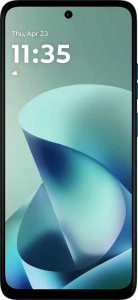
This is a compact group with only one meaningful differentiator: the Edge 60 Pro features a curved display, while the Moto G57 Power has a flat screen. A curved panel wraps gently at the edges, giving the device a more premium, sculpted aesthetic and allowing the display to flow more seamlessly into the frame. It is primarily a design and feel distinction — some users find curved screens more comfortable to hold and visually striking, while others prefer the simplicity and easier screen-protector compatibility of a flat display. Neither approach is objectively superior, but the curved screen is generally associated with higher-tier positioning.

Both phones share a video light and lack sapphire glass or an e-paper display — none of which represent a practical advantage for either device in everyday use. The shared absences are unremarkable given the segment these phones occupy.

With only one functional differentiator in this group, the Edge 60 Pro holds a narrow aesthetic edge by virtue of its curved display, which reinforces its premium character. Whether that translates into a real advantage depends entirely on personal preference for screen curvature.

Comparison Summary & Verdict

After examining every specification, it is clear that both phones serve different audiences. The Motorola Edge 60 Pro (256GB / 8GB RAM) stands out with its premium OLED display with HDR10+ support, superior camera system featuring a 50 MP front camera and 3x optical zoom, faster 90W wired charging plus wireless charging, and a significantly more powerful memory architecture with 68.2 GB/s bandwidth. It is the better pick for users who demand a high-end multimedia and photography experience. The Motorola Moto G57 Power, on the other hand, counters with a larger 7000 mAh battery, 12GB of RAM, a 3.5mm headphone jack, and Android 16 out of the box, making it a compelling choice for users who prioritize all-day endurance and value-oriented practicality over premium features.

Motorola Edge 60 Pro (256GB / 8GB RAM)
Buy Motorola Edge 60 Pro (256GB / 8GB RAM) if...

Buy the Motorola Edge 60 Pro (256GB / 8GB RAM) if you prioritize a premium OLED display, a versatile camera system with optical zoom and OIS, faster 90W charging with wireless charging support, and superior memory performance.

Motorola Moto G57 Power
Buy Motorola Moto G57 Power if...

Buy the Motorola Moto G57 Power if you want maximum battery endurance with its 7000 mAh cell, prefer having a 3.5mm headphone jack, and value having more RAM at 12GB alongside Android 16 out of the box.