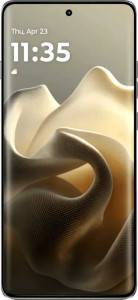
Motorola Edge 60 Pro (256GB / 8GB RAM)
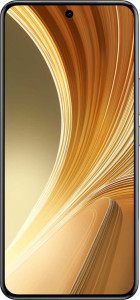
Vivo T4 Ultra 5G

Motorola Edge 60 Pro (256GB / 8GB RAM) Vivo T4 Ultra 5G

Overview

Choosing between the Motorola Edge 60 Pro (256GB / 8GB RAM) and the Vivo T4 Ultra 5G is no easy task, as both smartphones bring compelling strengths to the table. In this detailed comparison, we examine the key battlegrounds: display quality and brightness, raw performance, camera capabilities, battery endurance, and overall build quality — to help you decide which device truly fits your needs.

Common Features

  • Neither product has a rugged build.
  • Neither product can be folded.
  • Both products use an OLED/AMOLED display type.
  • Both products have a 120Hz refresh rate.
  • Neither product supports Dolby Vision.
  • Neither product has a secondary screen.
  • Both products have a touchscreen.
  • Both products have integrated LTE.
  • Both products use a 4 nm semiconductor size.
  • Both products support 64-bit processing.
  • Both products use DirectX 12.
  • Both products have integrated graphics.
  • Both products use big.LITTLE technology.
  • Both products have 8 CPU threads.
  • Both products use HMP technology.
  • Both products have a dual-lens or multi-lens main camera.
  • Both products have built-in optical image stabilization.
  • Both products record main camera video at 2160 x 30 fps.
  • Both products have a single flash LED.
  • Neither product has a BSI sensor.
  • Both products have a CMOS sensor.
  • Both products support continuous autofocus when recording movies.
  • Both products have phase-detection autofocus for photos.
  • Both products run Android 15.
  • Both products have clipboard warnings.
  • Both products have location privacy options.
  • Both products have camera and microphone privacy options.
  • Neither product has Mail Privacy Protection.
  • Both products have theme customization.
  • Both products can block app tracking.
  • Neither product blocks cross-site tracking.
  • Both products support fast charging at 90W.
  • Both products come with a charger in the box.
  • Neither product has a removable battery.
  • Both products have a battery level indicator.
  • Both products have a rechargeable battery.
  • Neither product has a 3.5 mm audio jack.
  • Both products have stereo speakers.
  • Neither product has a radio.
  • Both products support 5G.
  • Neither product has an external memory slot.
  • Both products have USB Type-C with USB version 2.
  • Both products have NFC.
  • Both products have a fingerprint scanner.
  • Neither product has emergency SOS via satellite.
  • Neither product has crash detection.
  • Both products have a video light.
  • Neither product has a sapphire glass display.
  • Neither product has an e-paper display.

Main Differences

  • Water resistance is rated as Waterproof (IP68) on Motorola Edge 60 Pro (256GB / 8GB RAM) and Water resistant (IP64) on Vivo T4 Ultra 5G.
  • Weight is 186 g on Motorola Edge 60 Pro (256GB / 8GB RAM) and 192 g on Vivo T4 Ultra 5G.
  • Thickness is 8.2 mm on Motorola Edge 60 Pro (256GB / 8GB RAM) and 7.5 mm on Vivo T4 Ultra 5G.
  • Width is 73.1 mm on Motorola Edge 60 Pro (256GB / 8GB RAM) and 75 mm on Vivo T4 Ultra 5G.
  • Height is 160.7 mm on Motorola Edge 60 Pro (256GB / 8GB RAM) and 160.6 mm on Vivo T4 Ultra 5G.
  • Volume is 96.326794 cm³ on Motorola Edge 60 Pro (256GB / 8GB RAM) and 90.3375 cm³ on Vivo T4 Ultra 5G.
  • Screen size is 6.7″ on Motorola Edge 60 Pro (256GB / 8GB RAM) and 6.67″ on Vivo T4 Ultra 5G.
  • Pixel density is 444 ppi on Motorola Edge 60 Pro (256GB / 8GB RAM) and 460 ppi on Vivo T4 Ultra 5G.
  • Resolution is 1220 x 2712 px on Motorola Edge 60 Pro (256GB / 8GB RAM) and 1260 x 2800 px on Vivo T4 Ultra 5G.
  • Typical brightness is 4500 nits on Motorola Edge 60 Pro (256GB / 8GB RAM) and 1600 nits on Vivo T4 Ultra 5G.
  • Branded damage-resistant glass is present on Motorola Edge 60 Pro (256GB / 8GB RAM) but not available on Vivo T4 Ultra 5G.
  • HDR10 support is present on Motorola Edge 60 Pro (256GB / 8GB RAM) but not available on Vivo T4 Ultra 5G.
  • HDR10+ support is present on Motorola Edge 60 Pro (256GB / 8GB RAM) but not available on Vivo T4 Ultra 5G.
  • Internal storage is 256GB on Motorola Edge 60 Pro (256GB / 8GB RAM) and 512GB on Vivo T4 Ultra 5G.
  • RAM is 8GB on Motorola Edge 60 Pro (256GB / 8GB RAM) and 12GB on Vivo T4 Ultra 5G.
  • AnTuTu benchmark score is 1,375,600 on Motorola Edge 60 Pro (256GB / 8GB RAM) and 2,136,863 on Vivo T4 Ultra 5G.
  • The chipset is MediaTek Dimensity 8350 on Motorola Edge 60 Pro (256GB / 8GB RAM) and Mediatek Dimensity 9300 Plus on Vivo T4 Ultra 5G.
  • The GPU is Mali G615 MC6 on Motorola Edge 60 Pro (256GB / 8GB RAM) and Arm Immortalis-G720 MC12 on Vivo T4 Ultra 5G.
  • CPU speed is 1 x 3.35 & 3 x 3.2 & 4 x 2.2 GHz on Motorola Edge 60 Pro (256GB / 8GB RAM) and 1 x 3.4 & 3 x 2.85 & 4 x 2 GHz on Vivo T4 Ultra 5G.
  • Geekbench 6 multi-core score is 4700 on Motorola Edge 60 Pro (256GB / 8GB RAM) and 7547 on Vivo T4 Ultra 5G.
  • Geekbench 6 single-core score is 1536 on Motorola Edge 60 Pro (256GB / 8GB RAM) and 2302 on Vivo T4 Ultra 5G.
  • GPU clock speed is 1400 MHz on Motorola Edge 60 Pro (256GB / 8GB RAM) and 1300 MHz on Vivo T4 Ultra 5G.
  • RAM speed is 8533 MHz on Motorola Edge 60 Pro (256GB / 8GB RAM) and 4800 MHz on Vivo T4 Ultra 5G.
  • Maximum memory bandwidth is 68.2 GB/s on Motorola Edge 60 Pro (256GB / 8GB RAM) and 76.8 GB/s on Vivo T4 Ultra 5G.
  • Memory channels number 4 on Motorola Edge 60 Pro (256GB / 8GB RAM) and 2 on Vivo T4 Ultra 5G.
  • Main camera megapixels are 50 & 50 & 10 MP on Motorola Edge 60 Pro (256GB / 8GB RAM) and 50 & 50 & 8 MP on Vivo T4 Ultra 5G.
  • Main camera wide aperture is f/1.8 & f/2 & f/2 on Motorola Edge 60 Pro (256GB / 8GB RAM) and f/1.9 & f/2.6 & f/2.2 on Vivo T4 Ultra 5G.
  • Front camera megapixels are 50 MP on Motorola Edge 60 Pro (256GB / 8GB RAM) and 32 MP on Vivo T4 Ultra 5G.
  • Front camera wide aperture is f/2 on Motorola Edge 60 Pro (256GB / 8GB RAM) and f/2.5 on Vivo T4 Ultra 5G.
  • Minimum focal length is 12 mm on Motorola Edge 60 Pro (256GB / 8GB RAM) and 23 mm on Vivo T4 Ultra 5G.
  • Maximum focal length is 73 mm on Motorola Edge 60 Pro (256GB / 8GB RAM) and 85 mm on Vivo T4 Ultra 5G.
  • Desktop PC mode is available on Motorola Edge 60 Pro (256GB / 8GB RAM) but not available on Vivo T4 Ultra 5G.
  • Battery capacity is 6000 mAh on Motorola Edge 60 Pro (256GB / 8GB RAM) and 5500 mAh on Vivo T4 Ultra 5G.
  • Wireless charging is supported on Motorola Edge 60 Pro (256GB / 8GB RAM) but not available on Vivo T4 Ultra 5G.
  • aptX Adaptive support is present on Motorola Edge 60 Pro (256GB / 8GB RAM) but not available on Vivo T4 Ultra 5G.
  • Wi-Fi version is Wi-Fi 6E (802.11ax) on Motorola Edge 60 Pro (256GB / 8GB RAM) and Wi-Fi 4/5/6 (802.11n/ac/ax) on Vivo T4 Ultra 5G.
  • SIM support is 1 SIM plus 1 eSIM on Motorola Edge 60 Pro (256GB / 8GB RAM) and 2 physical SIMs on Vivo T4 Ultra 5G.
  • A curved display is featured on Motorola Edge 60 Pro (256GB / 8GB RAM) but not on Vivo T4 Ultra 5G.
Specs Comparison
Motorola Edge 60 Pro (256GB / 8GB RAM)

Motorola Edge 60 Pro (256GB / 8GB RAM)

Vivo T4 Ultra 5G

Vivo T4 Ultra 5G

Design:
water resistance Waterproof Water resistant
weight 186 g 192 g
thickness 8.2 mm 7.5 mm
width 73.1 mm 75 mm
height 160.7 mm 160.6 mm
volume 96.326794 cm³ 90.3375 cm³
Ingress Protection (IP) rating IP68 IP64
has a rugged build
can be folded

In terms of overall dimensions, both phones are nearly identical in height (160.7 mm vs 160.6 mm), but they diverge in other ways. The Vivo T4 Ultra is notably slimmer at 7.5 mm thick compared to the Motorola Edge 60 Pro's 8.2 mm, a 0.7 mm difference that is genuinely perceptible in the hand and pocket. However, the Vivo is slightly wider (75 mm vs 73.1 mm), which can affect one-handed reach. Despite its slimmer profile, the Vivo is also slightly heavier at 192 g versus the Motorola's 186 g, suggesting denser internal packing. Neither phone has a rugged build or a foldable form factor.

The most meaningful real-world differentiator in this group is water protection. The Motorola Edge 60 Pro carries an IP68 rating, meaning it is fully waterproof and can withstand submersion in water — typically up to 1.5 meters for 30 minutes. The Vivo T4 Ultra is rated only IP64, which means it is protected against splashes and water jets from any direction but is not rated for submersion. This is a significant distinction for users who want peace of mind near pools, rain, or accidental drops in water.

Overall, the Motorola Edge 60 Pro holds a clear edge in this group thanks to its superior IP68 waterproofing and lighter weight. The Vivo T4 Ultra's slimmer profile is a legitimate ergonomic advantage, but for most users the higher water resistance protection of the Motorola will carry more practical weight.

Display:
Display type OLED/AMOLED OLED/AMOLED
screen size 6.7" 6.67"
pixel density 444 ppi 460 ppi
resolution 1220 x 2712 px 1260 x 2800 px
refresh rate 120Hz 120Hz
brightness (typical) 4500 nits 1600 nits
has branded damage-resistant glass
supports HDR10
supports HDR10+
supports Dolby Vision
Has a secondary screen
has a touch screen

Both phones share the same OLED/AMOLED panel technology and a 120Hz refresh rate, so the baseline viewing experience — deep blacks, punchy colors, and smooth scrolling — is comparable. Screen sizes are virtually identical at 6.7″ and 6.67″, and the Vivo T4 Ultra's marginally higher pixel density of 460 ppi versus 444 ppi is a difference that is essentially invisible to the naked eye at normal viewing distances.

Where the gap becomes impossible to ignore is brightness. The Motorola Edge 60 Pro reaches a staggering 4500 nits of typical brightness, nearly three times the 1600 nits on the Vivo T4 Ultra. In practice, this translates directly to outdoor legibility — the Motorola will remain clearly readable in harsh direct sunlight where the Vivo may struggle. Beyond that, the Motorola also adds support for HDR10+, enabling dynamic tone-mapping for compatible streaming content, and it ships with branded damage-resistant glass for added screen durability — neither of which the Vivo offers.

The Motorola Edge 60 Pro holds a decisive advantage in this group. The brightness differential alone is a major real-world differentiator, and the added HDR10+ support and screen protection tip the scales further. The Vivo T4 Ultra's display is competent, but it cannot match the Motorola's outdoor performance or content-quality credentials.

Performance:
internal storage 256GB 512GB
RAM 8GB 12GB
AnTuTu benchmark score 1375600 2136863
Chipset (SoC) name MediaTek Dimensity 8350 Mediatek Dimensity 9300 Plus
GPU name Mali G615 MC6 Arm Immortalis-G720 MC12
CPU speed 1 x 3.35 & 3 x 3.2 & 4 x 2.2 GHz 1 x 3.4 & 3 x 2.85 & 4 x 2 GHz
Geekbench 6 result (multi) 4700 7547
Geekbench 6 result (single) 1536 2302
GPU clock speed 1400 MHz 1300 MHz
Has integrated LTE
RAM speed 8533 MHz 4800 MHz
semiconductor size 4 nm 4 nm
Supports 64-bit
DirectX version DirectX 12 DirectX 12
Has integrated graphics
Uses big.LITTLE technology
CPU threads 8 threads 8 threads
Uses HMP
maximum memory bandwidth 68.2 GB/s 76.8 GB/s
OpenCL version 2 2
memory channels 4 2
maximum memory amount 24GB 24GB
DDR memory version 5 5
L3 cache 4 MB 18 MB

The chipset gap here is substantial. The Vivo T4 Ultra runs on the MediaTek Dimensity 9300 Plus, a flagship-tier SoC, while the Motorola Edge 60 Pro uses the Dimensity 8350, a strong upper-mid-range chip. Both are built on a 4 nm process, but the generational and tier difference shows clearly in the benchmark numbers: the Vivo scores 2,136,863 on AnTuTu versus 1,375,600 for the Motorola — a roughly 55% lead. Geekbench 6 tells the same story, with the Vivo posting multi-core and single-core scores of 7547 and 2302 against the Motorola's 4700 and 1536. In day-to-day use, this gap translates to faster app launches, smoother sustained multitasking, and considerably more headroom for demanding workloads like gaming or video editing.

The Vivo also ships with 12 GB of RAM and 512 GB of storage compared to the Motorola's 8 GB / 256 GB configuration, giving it more room for background apps and media. The Motorola counters with faster RAM at 8533 MHz versus the Vivo's 4800 MHz, but the Vivo's significantly larger 18 MB L3 cache — versus just 4 MB on the Motorola — and higher maximum memory bandwidth of 76.8 GB/s help offset that advantage, keeping frequently accessed data closer to the CPU for lower latency.

The Vivo T4 Ultra wins this group decisively. Its flagship chipset, higher benchmark scores across the board, greater RAM, and more storage make it the clear choice for users who prioritize raw performance. The Motorola Edge 60 Pro is no slouch, but it is operating in a different performance tier.
Cameras:
megapixels (main camera) 50 & 50 & 10 MP 50 & 50 & 8 MP
wide aperture (main camera) 1.8 & 2 & 2f 1.9 & 2.6 & 2.2f
Has a dual-lens (or multi-lens) main camera
megapixels (front camera) 50MP 32MP
has built-in optical image stabilization
video recording (main camera) 2160 x 30 fps 2160 x 30 fps
number of flash LEDs 1 1
has a BSI sensor
has a CMOS sensor
has continuous autofocus when recording movies
Has phase-detection autofocus for photos
supports slow-motion video recording
has a built-in HDR mode
has manual exposure
has a flash
optical zoom 3x 3x
has manual ISO
has a serial shot mode
has manual focus
has a front camera
Has laser autofocus
Shoots 360° panorama
has manual white balance
has touch autofocus
has manual shutter speed
can create panoramas in-camera
wide aperture (front camera) 2f 2.5f
Has timelapse function
minimum focal length 12 mm 23 mm
maximum focal length 73 mm 85 mm
Has a front-facing LED flash
has a dual-lens (or multi-lens) front camera
supports HDR10 recording
supports Dolby Vision recording
has a front-facing camera under the display
Has a RGB LED flash
has 3D photo/video recording capabilities

The rear camera systems are structurally similar — both offer a triple-lens setup with a 50 MP primary shooter, a 50 MP secondary lens, and a third lower-resolution sensor, plus identical 3x optical zoom and 4K/30fps video recording. The meaningful differences lie in aperture and focal range. The Motorola Edge 60 Pro's primary lens opens to f/1.8 versus the Vivo T4 Ultra's f/1.9 — a slight but real low-light advantage for the Motorola, as wider apertures allow more light to reach the sensor. On the telephoto end, the Vivo reaches a longer 85 mm maximum focal length compared to the Motorola's 73 mm, giving it marginally more reach for compressed background portraits or distant subjects, though the Motorola's wider 12 mm minimum focal length offers a broader field of view at the ultra-wide end.

For selfie shooters, the gap is more clear-cut. The Motorola packs a 50 MP front camera against the Vivo's 32 MP, and its front aperture of f/2.0 is wider than the Vivo's f/2.5 — meaning the Motorola captures more detail and performs better in lower-light selfie scenarios. The feature set across both phones is otherwise remarkably aligned: both include OIS, phase-detection autofocus, continuous autofocus during video, HDR mode, and a full suite of manual controls.

This is a closely contested group, but the Motorola Edge 60 Pro earns a narrow edge. Its wider primary aperture and significantly more capable front camera are tangible real-world advantages for users who prioritize image quality in varied lighting, and its broader ultra-wide reach adds versatility. The Vivo's longer telephoto focal length is a genuine trade-off to consider, but the Motorola's overall camera package is more well-rounded based strictly on these specs.

Operating system:
Android version Android 15 Android 15
has clipboard warnings
has location privacy options
has camera/microphone privacy options
has Mail Privacy Protection
has theme customization
can block app tracking
blocks cross-site tracking
has on-device machine learning
has notification permissions
has media picker
Can play games while they download
has dark mode
has Wi-Fi password sharing
has battery health check
has an extra dim mode
has focus modes
has dynamic theming
can offload apps
Has customizable notifications
has Live Text
has full-page screenshots
supports split screen
gets direct OS updates
has PiP
Can be used as a PC
Has sharing intents
has a child lock
Supports widgets
Is free and open source
Has offline voice recognition
has voice commands
Tracks the current position of a mobile device
is a multi-user system
has Quick Start

At the OS level, these two phones are nearly a mirror image of each other. Both run Android 15 and share an extensive, identical feature set spanning privacy controls, productivity tools, and customization options — including dynamic theming, split-screen multitasking, picture-in-picture, on-device machine learning, offline voice recognition, and a full suite of notification and app-tracking controls. Neither receives direct OS updates from Google, meaning both rely on their respective manufacturers for software support timelines.

Scanning the full spec list for meaningful divergence, only one difference surfaces: the Motorola Edge 60 Pro supports being used as a PC — a desktop mode feature that lets users connect the phone to a monitor and interact with a PC-like interface. The Vivo T4 Ultra does not offer this capability. For power users or professionals who want to occasionally use their phone as a portable workstation, this is a practical differentiator; for the majority of users, it will never come into play.

This group is essentially a tie, with a narrow functional edge going to the Motorola Edge 60 Pro solely due to its PC mode support. The OS experience, privacy toolset, and feature depth are otherwise indistinguishable between the two devices based on the provided data.

Battery:
battery power 6000 mAh 5500 mAh
has wireless charging
Supports fast charging
charging speed 90W 90W
comes with a charger
has a removable battery
has a battery level indicator
has a rechargeable battery

Raw capacity favors the Motorola Edge 60 Pro, which houses a 6000 mAh battery versus the 5500 mAh cell in the Vivo T4 Ultra. That 500 mAh difference is meaningful in practice — all else being equal, it translates to a noticeably longer time between charges, particularly for heavy users pushing through a full day of mixed usage. Both phones support 90W fast charging and both include a charger in the box, so top-up speeds are identical; a near-empty battery on either device can be brought back to full in a comparable amount of time.

The more qualitative differentiator is wireless charging. The Motorola supports it; the Vivo does not. While wireless charging is typically slower than wired, the convenience factor — dropping the phone on a pad at a desk or nightstand without fumbling for a cable — is something many users genuinely rely on daily. Its absence on the Vivo T4 Ultra is a lifestyle limitation worth weighing.

The Motorola Edge 60 Pro wins this group on both counts: a larger battery for longer endurance and wireless charging support that the Vivo simply lacks. For users who prioritize staying unplugged longer and charging more flexibly, the Motorola holds a clear and practical advantage here.

Audio:
has a socket for a 3.5 mm audio jack
has stereo speakers
has aptX Adaptive
Has a radio

The audio spec sheet is lean for both devices, and the shared ground is straightforward: neither phone includes a 3.5 mm headphone jack or a built-in radio, and both feature stereo speakers — a meaningful baseline that ensures decent spatial audio for media consumption without headphones.

The only differentiator, but a relevant one for wireless audio enthusiasts, is that the Motorola Edge 60 Pro supports aptX Adaptive while the Vivo T4 Ultra does not. aptX Adaptive is a high-resolution Bluetooth audio codec that dynamically adjusts bitrate between 276 kbps and 420 kbps, delivering lower latency and higher audio fidelity compared to standard codecs — provided the connected headphones or earbuds also support it. For users invested in compatible wireless audio gear, this translates to a noticeably cleaner, more responsive listening experience, particularly for music and gaming.

The Motorola Edge 60 Pro takes a narrow but meaningful edge in this group. The stereo speaker parity means neither phone has an advantage for casual listening, but the Motorola's aptX Adaptive support adds a layer of wireless audio quality that the Vivo cannot match — making it the stronger pick for anyone who prioritizes premium Bluetooth audio performance.

Connectivity & Features:
release date April 2025 June 2025
has 5G support
Wi-Fi version Wi-Fi 6E (802.11ax) Wi-Fi 4 (802.11n), Wi-Fi 5 (802.11ac), Wi-Fi 6 (802.11ax)
SIM cards 1 SIM, 1 eSIM 2 SIM
has an external memory slot
Has USB Type-C
USB version 2 2
has NFC
Has a fingerprint scanner
has emergency SOS via satellite
has crash detection
is DLNA-certified
has a gyroscope
supports ANT+
Has a heart rate monitor
has GPS
has a compass
supports Wi-Fi
Has an infrared sensor
has an accelerometer
has a cellular module
Has a barometer
has an HDMI output
Uses 3D facial recognition
Has an iris scanner
Stylus included
supports Galileo
Has motion tracking
Has optical tracking
Has a built-in projector

Two differences stand out in an otherwise closely matched connectivity profile. First, the Motorola Edge 60 Pro supports Wi-Fi 6E, which extends Wi-Fi 6 capabilities into the 6 GHz band — a less congested spectrum that delivers faster speeds and lower latency in dense environments like apartments or offices. The Vivo T4 Ultra tops out at Wi-Fi 6, which is still capable but lacks access to the 6 GHz band. For most users in typical home settings this difference is subtle, but in congested wireless environments the Motorola's 6E support can meaningfully reduce interference and improve throughput.

The second differentiator cuts the other way: the Vivo accommodates 2 physical SIM cards, while the Motorola offers only 1 SIM plus 1 eSIM. For frequent travelers or users in regions where eSIM support is limited or uncommon, the Vivo's dual physical SIM capability is a practical advantage — it allows two active lines without relying on carrier eSIM provisioning. The Motorola's eSIM is convenient for those whose carriers support it, but it is not a universal substitute.

This group is a genuine trade-off with no outright winner. The Motorola Edge 60 Pro pulls ahead on wireless performance with Wi-Fi 6E, while the Vivo T4 Ultra offers more SIM flexibility with its dual physical SIM support. The deciding factor comes down to individual priorities — network speed or SIM versatility — as the rest of the connectivity and sensor feature set is effectively identical across both devices.

Miscellaneous:
has a video light
Has sapphire glass display
Has a curved display
Has an e-paper display

This is a short spec group with limited data points, and three of the four are identical — neither phone has sapphire glass or an e-paper display, and both include a video light. The only differentiator is display curvature: the Motorola Edge 60 Pro features a curved display, while the Vivo T4 Ultra uses a flat panel.

Curved displays are a matter of personal preference more than objective superiority. They lend a premium, sleek aesthetic and can make edge-to-edge swiping feel more natural, but they also make screen protectors harder to fit and can introduce unintended touch inputs along the edges. Flat displays, by contrast, are more practical for case and protector compatibility and tend to feel more precise for content creation or gaming. Neither approach is universally preferable — it largely depends on what the user values in day-to-day handling.

Given the subjective nature of curved versus flat displays and the otherwise identical feature set in this group, this is effectively a tie. The Motorola Edge 60 Pro offers the curved screen for those who favor that aesthetic, but it does not represent a clear functional advantage over the Vivo's flat panel based strictly on the provided data.

Comparison Summary & Verdict

After weighing all the evidence, these two phones cater to distinct priorities. The Motorola Edge 60 Pro (256GB / 8GB RAM) stands out with its remarkable 4500-nit peak brightness, superior IP68 waterproofing, a larger 6000 mAh battery with wireless charging, Wi-Fi 6E support, and a capable 50 MP front camera — making it a strong choice for users who value display excellence, durability, and versatile connectivity. The Vivo T4 Ultra 5G, on the other hand, counters with a significantly more powerful Dimensity 9300 Plus chipset, a higher AnTuTu score of over 2.1 million, 12 GB of RAM, and 512 GB of storage, making it the clear pick for performance-demanding users and those who need more onboard space. Both share Android 15, 90W fast charging, and OLED displays, so your decision ultimately hinges on whether you prioritize screen brightness and build quality or raw processing power and storage.

Motorola Edge 60 Pro (256GB / 8GB RAM)
Buy Motorola Edge 60 Pro (256GB / 8GB RAM) if...

Buy the Motorola Edge 60 Pro (256GB / 8GB RAM) if you prioritize an exceptionally bright display, full IP68 waterproofing, wireless charging, and Wi-Fi 6E connectivity.

Vivo T4 Ultra 5G
Buy Vivo T4 Ultra 5G if...

Buy the Vivo T4 Ultra 5G if you need superior raw performance, more RAM, and greater internal storage for a smoother, more powerful everyday experience.