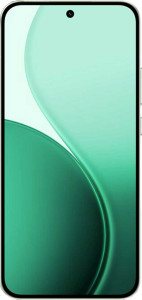
Motorola Edge 60 Pro
Oppo Reno14

Motorola Edge 60 Pro Oppo Reno14

Overview

When comparing the Motorola Edge 60 Pro and the Oppo Reno14, two compelling mid-to-upper-range Android smartphones come face to face. Both share the same MediaTek Dimensity 8350 chipset and a 6000 mAh battery, yet they diverge sharply in areas like storage and RAM configuration, camera capabilities, and software features. This head-to-head breakdown explores every key specification to help you decide which device truly fits your needs.

Common Features

  • Both phones are waterproof with an IP68 ingress protection rating.
  • Neither phone has a rugged build.
  • Neither phone can be folded.
  • Both phones feature an OLED/AMOLED display.
  • Both phones support a 120Hz refresh rate.
  • Both phones have branded damage-resistant glass.
  • Neither phone supports Dolby Vision.
  • Neither phone has a secondary screen.
  • Both phones have a touchscreen.
  • Both phones are powered by the MediaTek Dimensity 8350 chipset with a Mali G615 MC6 GPU.
  • Both phones share the same CPU speed of 1 x 3.35 & 3 x 3.2 & 4 x 2.2 GHz.
  • Both phones scored 4700 on the Geekbench 6 multi-core test and 1536 on the single-core test.
  • Both phones have a RAM speed of 8533 MHz and integrated LTE support.
  • Both phones have a multi-lens main camera with a 50MP front camera and optical image stabilization.
  • Both phones have a CMOS sensor and support continuous autofocus when recording video.
  • Both phones run Android 15 with theme customization, clipboard warnings, and location and camera/microphone privacy options.
  • Both phones support blocking app tracking but do not block cross-site tracking.
  • Both phones have a 6000 mAh battery that supports fast charging and is non-removable.
  • Neither phone has a 3.5mm audio jack, but both feature stereo speakers.
  • Both phones support 5G, NFC, USB Type-C (USB 2.0), and have a fingerprint scanner but no external memory slot.
  • Neither phone supports emergency SOS via satellite or crash detection.

Main Differences

  • Weight is 186 g on the Motorola Edge 60 Pro and 187 g on the Oppo Reno14.
  • Thickness is 8.2 mm on the Motorola Edge 60 Pro and 7.3 mm on the Oppo Reno14.
  • Width is 73.1 mm on the Motorola Edge 60 Pro and 74.7 mm on the Oppo Reno14.
  • Height is 160.7 mm on the Motorola Edge 60 Pro and 157.9 mm on the Oppo Reno14.
  • Volume is 96.33 cm³ on the Motorola Edge 60 Pro and 86.10 cm³ on the Oppo Reno14.
  • Screen size is 6.7″ on the Motorola Edge 60 Pro and 6.59″ on the Oppo Reno14.
  • Pixel density is 444 ppi on the Motorola Edge 60 Pro and 460 ppi on the Oppo Reno14.
  • Resolution is 1220 x 2712 px on the Motorola Edge 60 Pro and 1256 x 2760 px on the Oppo Reno14.
  • HDR10 and HDR10+ support is present on the Motorola Edge 60 Pro but not available on the Oppo Reno14.
  • Internal storage is 512GB on the Motorola Edge 60 Pro and 1024GB on the Oppo Reno14.
  • RAM is 12GB on the Motorola Edge 60 Pro and 16GB on the Oppo Reno14.
  • AnTuTu benchmark score is 1,375,600 on the Motorola Edge 60 Pro and 1,327,873 on the Oppo Reno14.
  • Main camera megapixels are 50 & 50 & 10 MP on the Motorola Edge 60 Pro and 50 & 50 & 8 MP on the Oppo Reno14.
  • Main camera wide aperture is f/1.8, f/2.0, f/2.0 on the Motorola Edge 60 Pro and f/1.8, f/2.8, f/2.2 on the Oppo Reno14.
  • Main camera video recording maxes at 2160p 30fps on the Motorola Edge 60 Pro and 2160p 60fps on the Oppo Reno14.
  • Optical zoom is 3x on the Motorola Edge 60 Pro and 3.5x on the Oppo Reno14.
  • Desktop PC mode is available on the Motorola Edge 60 Pro but not on the Oppo Reno14.
  • Wireless charging is supported on the Motorola Edge 60 Pro but not on the Oppo Reno14.
  • Charging speed is 90W on the Motorola Edge 60 Pro and 80W on the Oppo Reno14.
  • aptX Adaptive audio is supported on the Motorola Edge 60 Pro but not on the Oppo Reno14.
  • Wi-Fi 6E (802.11ax) is supported on the Motorola Edge 60 Pro, while the Oppo Reno14 supports Wi-Fi 4, Wi-Fi 5, and Wi-Fi 6.
  • The Motorola Edge 60 Pro has 1 SIM and 1 eSIM, while the Oppo Reno14 supports 2 physical SIM cards.
  • An infrared sensor is present on the Oppo Reno14 but not on the Motorola Edge 60 Pro.
  • A curved display is featured on the Motorola Edge 60 Pro but not on the Oppo Reno14.
Specs Comparison
Motorola Edge 60 Pro

Motorola Edge 60 Pro

Oppo Reno14

Oppo Reno14

Design:
water resistance Waterproof Waterproof
weight 186 g 187 g
thickness 8.2 mm 7.3 mm
width 73.1 mm 74.7 mm
height 160.7 mm 157.9 mm
volume 96.326794 cm³ 86.104449 cm³
Ingress Protection (IP) rating IP68 IP68
has a rugged build
can be folded

Both the Motorola Edge 60 Pro and the Oppo Reno14 share a strong foundation in design: both are rated IP68, meaning full waterproofing against sustained submersion, and neither adopts a rugged or foldable form factor. For everyday users, this level of water resistance is more than sufficient for rain, splashes, and accidental drops in water.

Where these two diverge is in their physical profile. The Reno14 is notably slimmer at 7.3 mm thick compared to the Edge 60 Pro's 8.2 mm — a difference of nearly a full millimeter that translates to a more pocket-friendly, premium-feeling handset. The Reno14 also occupies significantly less total volume (86.1 cm³ vs 96.3 cm³), making it the more compact device overall despite being marginally wider. The Edge 60 Pro, in turn, is slightly taller at 160.7 mm vs 157.9 mm. Weight is virtually identical at 186 g and 187 g respectively, so neither has a meaningful advantage in hand feel from a mass perspective.

Overall, the Oppo Reno14 holds a clear edge in design compactness — its slimmer profile and lower volume make it the sleeker of the two without any trade-off in water resistance. The Motorola Edge 60 Pro matches it on durability but sits in a bulkier chassis, which may be a consideration for users who prioritize a slim, modern silhouette.

Display:
Display type OLED/AMOLED OLED/AMOLED
screen size 6.7" 6.59"
pixel density 444 ppi 460 ppi
resolution 1220 x 2712 px 1256 x 2760 px
refresh rate 120Hz 120Hz
has branded damage-resistant glass
supports HDR10
supports HDR10+
supports Dolby Vision
Has a secondary screen
has a touch screen

At their core, both displays are closely matched: each uses an OLED/AMOLED panel with a 120Hz refresh rate and branded damage-resistant glass, ensuring smooth scrolling and solid day-to-day durability. The Motorola Edge 60 Pro edges out a slightly larger canvas at 6.7″ versus the Oppo Reno14's 6.59″, but this half-inch gap is barely perceptible in practice.

The more interesting contrast lies in sharpness versus HDR capability. The Reno14 achieves a notably higher pixel density — 460 ppi versus the Edge 60 Pro's 444 ppi — meaning its display is measurably crisper, particularly when reading fine text or viewing detailed images up close. On the other hand, the Edge 60 Pro supports both HDR10 and HDR10+, which enables richer dynamic range and better tone mapping when streaming HDR-graded content from compatible platforms. The Reno14 supports neither standard, so it cannot take full advantage of HDR video sources.

The conclusion here depends on use case. For media consumers who stream HDR content regularly, the Motorola Edge 60 Pro has a meaningful advantage. For users who prioritize sharpness and everyday visual clarity, the Reno14's higher pixel density gives it a slight but real perceptual edge. On balance, the Edge 60 Pro's HDR support is the more impactful real-world differentiator, making it the stronger display for multimedia use.

Performance:
internal storage 512GB 1024GB
RAM 12GB 16GB
AnTuTu benchmark score 1375600 1327873
Chipset (SoC) name MediaTek Dimensity 8350 MediaTek Dimensity 8350
GPU name Mali G615 MC6 Mali G615 MC6
CPU speed 1 x 3.35 & 3 x 3.2 & 4 x 2.2 GHz 1 x 3.35 & 3 x 3.2 & 4 x 2.2 GHz
Geekbench 6 result (multi) 4700 4700
Geekbench 6 result (single) 1536 1536
GPU clock speed 1400 MHz 1400 MHz
Has integrated LTE
RAM speed 8533 MHz 8533 MHz
semiconductor size 4 nm 4 nm
Supports 64-bit
DirectX version DirectX 12 DirectX 12
Has integrated graphics
Uses big.LITTLE technology
CPU threads 8 threads 8 threads
Has NX bit
Uses HMP
Has TrustZone
maximum memory bandwidth 68.2 GB/s 68.2 GB/s
OpenCL version 2 2
memory channels 4 4
maximum memory amount 24GB 24GB
DDR memory version 5 5
L3 core 4 MB/core 4 MB/core
L3 cache 4 MB 4 MB

Under the hood, these two phones are virtually identical — both run on the MediaTek Dimensity 8350 chipset, built on a 4 nm process, with the same GPU, CPU clock configuration, and memory architecture. Benchmark scores reflect this: Geekbench 6 results are exactly tied at 4700 multi-core and 1536 single-core, and AnTuTu scores are within 3.5% of each other (1,375,600 vs 1,327,873) — a gap too small to be felt in real-world usage. For everyday tasks, gaming, and multitasking, both phones will perform identically.

The meaningful differences come down to memory and storage provisioning. The Oppo Reno14 ships with 16 GB of RAM versus the Edge 60 Pro's 12 GB, which translates to more apps staying resident in memory simultaneously and slightly more headroom for demanding workloads over time. More strikingly, the Reno14 offers 1 TB of internal storage — double the Edge 60 Pro's 512 GB — a decisive advantage for users who store large media libraries, shoot high-resolution video, or simply prefer not to manage storage.

Given the hardware parity at the chipset level, the Oppo Reno14 holds a clear practical advantage in this category. More RAM and significantly more storage at the same performance tier make it the stronger long-term proposition, particularly for power users and heavy content creators.

Cameras:
megapixels (main camera) 50 & 50 & 10 MP 50 & 50 & 8 MP
wide aperture (main camera) 1.8 & 2 & 2f 1.8 & 2.8 & 2.2f
Has a dual-lens (or multi-lens) main camera
megapixels (front camera) 50MP 50MP
has built-in optical image stabilization
video recording (main camera) 2160 x 30 fps 2160 x 60 fps
Has a dual-tone LED flash
number of flash LEDs 1 1
has a BSI sensor
has a CMOS sensor
has continuous autofocus when recording movies
Has phase-detection autofocus for photos
supports slow-motion video recording
has a built-in HDR mode
has manual exposure
has a flash
optical zoom 3x 3.5x
has manual ISO
has a serial shot mode
has manual focus
has a front camera
Has laser autofocus
Shoots 360° panorama
has manual white balance
has touch autofocus
has manual shutter speed
can create panoramas in-camera
wide aperture (front camera) 2f 2f
Has timelapse function
Has a front-facing LED flash
has a dual-lens (or multi-lens) front camera
supports HDR10 recording
supports Dolby Vision recording
has a front-facing camera under the display
Has a RGB LED flash
has 3D photo/video recording capabilities

The camera systems on these two phones share a strong common blueprint: triple-lens rear arrays anchored by a 50 MP primary shooter, a matching 50 MP front camera, optical image stabilization, phase-detection autofocus, and a comprehensive set of manual controls. For most shooting scenarios — portraits, landscapes, selfies — users of either phone will be working with fundamentally similar hardware.

The differentiators, however, are worth noting. On video, the Oppo Reno14 pulls ahead decisively by supporting 4K at 60 fps, compared to the Edge 60 Pro's 4K at 30 fps cap. The higher frame rate delivers noticeably smoother motion in video — particularly relevant for action scenes or content creation. The Reno14 also offers a slightly longer 3.5x optical zoom versus the Edge 60 Pro's 3x, giving it a modest but real reach advantage for distant subjects. In return, the Edge 60 Pro's secondary lens has a wider aperture of f/2.0 compared to the Reno14's f/2.8, which means it admits more light through that specific lens — a potential low-light benefit depending on how each manufacturer deploys it.

On balance, the Oppo Reno14 holds the stronger camera profile in this group. The 4K/60fps video capability is a tangible, everyday advantage for videographers, and the marginally greater optical zoom adds versatility. The Edge 60 Pro's secondary aperture advantage is real but narrower in practical impact.

Operating system:
Android version Android 15 Android 15
has clipboard warnings
has location privacy options
has camera/microphone privacy options
has Mail Privacy Protection
has theme customization
can block app tracking
blocks cross-site tracking
has on-device machine learning
has notification permissions
has media picker
Can play games while they download
has dark mode
has Wi-Fi password sharing
has battery health check
has an extra dim mode
has focus modes
has dynamic theming
can offload apps
Has customizable notifications
has Live Text
has full-page screenshots
supports split screen
gets direct OS updates
has PiP
Can be used as a PC
Has sharing intents
has a child lock
Supports widgets
Is free and open source
Has offline voice recognition
has voice commands
Tracks the current position of a mobile device
is a multi-user system
has Quick Start

Running identical versions of Android 15, these two phones deliver a nearly indistinguishable software experience across the board. Privacy controls, dynamic theming, split-screen multitasking, Picture-in-Picture, offline voice recognition, and on-device machine learning are all present on both — leaving very little daylight between them from a feature-set perspective.

Scanning the full spec list, the sole differentiator is that the Motorola Edge 60 Pro supports being used as a PC, while the Oppo Reno14 does not. This capability — typically enabling a desktop-like interface when connected to an external display — can be genuinely useful for productivity-focused users who want to consolidate their devices, turning their phone into a workstation on the go.

This is a narrow but real distinction. For the vast majority of users, both phones will feel functionally equivalent on the software front. But for those who value desktop mode as part of their workflow, the Motorola Edge 60 Pro earns the edge in this category by being the only one of the two to offer it.

Battery:
battery power 6000 mAh 6000 mAh
has wireless charging
Supports fast charging
charging speed 90W 80W
has a removable battery
has a battery level indicator
has a rechargeable battery

Both phones pack an identical 6000 mAh battery — a generous capacity that comfortably places them in the all-day and potentially two-day endurance tier for most users. On that front, neither has an inherent advantage.

The divergence comes in how quickly and flexibly each phone replenishes that capacity. The Motorola Edge 60 Pro charges at 90W versus the Reno14's 80W — a 10W gap that, while not dramatic, does translate to a meaningfully faster top-up in time-sensitive situations. More significantly, the Edge 60 Pro also supports wireless charging, which the Reno14 entirely lacks. Wireless charging at this battery size is a genuine convenience upgrade, allowing users to drop the phone on a pad overnight or at a desk without hunting for a cable.

The Motorola Edge 60 Pro is the clear winner in this category. With a faster wired charging speed and the addition of wireless charging — at the same 6000 mAh capacity — it offers meaningfully more flexibility in how and how quickly users can power up their device.

Audio:
has a socket for a 3.5 mm audio jack
has stereo speakers
has aptX Adaptive
Has a radio

Strip away the one differentiator here and these two phones are audio twins: both drop the 3.5mm headphone jack, both feature stereo speakers, and neither includes a built-in radio. For casual listening through the built-in speakers, the experience will be effectively identical.

Where the Motorola Edge 60 Pro separates itself is Bluetooth audio quality — it supports aptX Adaptive, while the Oppo Reno14 does not. aptX Adaptive is a high-resolution wireless audio codec that dynamically adjusts bitrate and latency, delivering noticeably richer sound and lower lag when paired with compatible headphones or earbuds. For users who invest in premium wireless audio gear, this is a tangible advantage that the Reno14 simply cannot match.

The Motorola Edge 60 Pro takes this category. For speaker-only users the difference is moot, but for anyone who listens through quality Bluetooth headphones, aptX Adaptive support makes the Edge 60 Pro the more capable audio device of the two.

Connectivity & Features:
release date April 2025 May 2025
has 5G support
Wi-Fi version Wi-Fi 6E (802.11ax) Wi-Fi 4 (802.11n), Wi-Fi 5 (802.11ac), Wi-Fi 6 (802.11ax)
SIM cards 1 SIM, 1 eSIM 2 SIM
has an external memory slot
Has USB Type-C
USB version 2 2
has NFC
Has a fingerprint scanner
has emergency SOS via satellite
has crash detection
is DLNA-certified
has a gyroscope
supports ANT+
Has a heart rate monitor
has GPS
has a compass
supports Wi-Fi
Has an infrared sensor
has an accelerometer
has a cellular module
Has a barometer
has an HDMI output
Uses 3D facial recognition
Has an iris scanner
Stylus included
supports Galileo
Has motion tracking
Has optical tracking
Has a built-in projector

The connectivity fundamentals are well-matched: both phones support 5G, NFC, USB Type-C, GPS with Galileo, and a standard fingerprint scanner. For most users, these shared capabilities cover the full range of day-to-day connectivity needs without compromise on either device.

Two trade-offs define this category. On Wi-Fi, the Motorola Edge 60 Pro supports Wi-Fi 6E, which adds access to the less congested 6GHz band — a meaningful advantage in dense environments like offices or apartments where the 5GHz band is saturated. The Reno14 tops out at Wi-Fi 6, which is still fast but lacks that extra headroom. On SIM flexibility, the situation reverses: the Reno14 accommodates 2 physical SIM cards, making it the better choice for users who carry two active numbers, while the Edge 60 Pro offers 1 physical SIM paired with an eSIM — more modern, but less universally practical in regions where eSIM adoption is limited. The Reno14 also adds an infrared sensor, enabling it to function as a universal remote for TVs and other appliances — a niche but genuinely useful feature the Edge 60 Pro skips entirely.

This round is a nuanced split. The Motorola Edge 60 Pro holds the edge for users in Wi-Fi-dense environments, while the Oppo Reno14 is better suited for dual-SIM users and those who value the infrared sensor. Neither phone dominates outright, making the decision here a matter of which specific capabilities align with a user's lifestyle.

Miscellaneous:
has a video light
Has sapphire glass display
Has a curved display
Has an e-paper display

With a lean spec group like this, the only meaningful differentiator is display geometry. The Motorola Edge 60 Pro features a curved display, while the Oppo Reno14 uses a flat panel. Both share a video light and neither employs sapphire glass or an e-paper display.

The curved screen on the Edge 60 Pro is primarily an aesthetic and ergonomic choice — the edges of the display wrap slightly toward the frame, giving the phone a sleeker, more premium look in hand. The trade-off is that curved displays can be marginally more prone to accidental edge touches and are sometimes harder to fit with protective cases. The Reno14's flat display, by contrast, is more case-friendly and arguably more practical for everyday use, even if it sacrifices some visual flair.

Whether this constitutes an advantage depends entirely on personal preference. Users drawn to a flagship aesthetic will lean toward the Edge 60 Pro, while those who prioritize practicality and accessory compatibility may prefer the Reno14's flat panel. Neither choice is objectively superior — this is a design philosophy decision rather than a performance one.

Comparison Summary & Verdict

After a thorough comparison, both phones prove to be strong contenders built on the same core platform, but they target slightly different users. The Motorola Edge 60 Pro stands out with HDR10 and HDR10+ display support, wireless charging at 90W, aptX Adaptive audio, Wi-Fi 6E, a curved display, and desktop PC mode — making it the better pick for multimedia enthusiasts and power users who want premium connectivity extras. The Oppo Reno14, on the other hand, counters with 16GB of RAM and 1TB of storage, a higher 460 ppi display, 4K 60fps video recording, 3.5x optical zoom, dual physical SIM support, and a slimmer 7.3 mm profile — making it ideal for users who prioritize raw capacity, camera versatility, and a sleek form factor. Neither phone is a clear-cut winner; your choice should hinge on whether premium multimedia features or storage headroom and camera performance matter more to you.

Motorola Edge 60 Pro
Buy Motorola Edge 60 Pro if...

Buy the Motorola Edge 60 Pro if you value wireless charging, HDR10+ display support, Wi-Fi 6E, aptX Adaptive audio, and the convenience of a desktop PC mode.

Oppo Reno14
Buy Oppo Reno14 if...

Buy the Oppo Reno14 if you need more RAM and storage, prefer a slimmer design, want 4K 60fps video recording with greater optical zoom, or rely on dual physical SIM support.