Motorola Edge 60 Pro
Samsung Galaxy A56 5G

Motorola Edge 60 Pro Samsung Galaxy A56 5G

Overview

Welcome to our in-depth spec comparison between the Motorola Edge 60 Pro and the Samsung Galaxy A56 5G. Both phones share a surprisingly strong foundation — identical screen sizes, OLED displays, 12GB of RAM, and Android 15 — yet they diverge sharply in areas that matter most to discerning buyers. From raw processing performance and camera versatility to battery capacity and charging speed, this head-to-head breaks down exactly where each device leads and where it falls short.

Common Features

  • Both phones are waterproof with no rugged build and cannot be folded.
  • Both feature a 6.7″ OLED/AMOLED display with a 120Hz refresh rate.
  • Both displays support HDR10 and HDR10+.
  • Dolby Vision support is not available on either phone.
  • Both phones use damage-resistant glass on their displays.
  • Neither phone has a secondary screen.
  • Both phones come with 12GB of RAM.
  • Both chipsets are built on a 4 nm semiconductor process.
  • Both phones support 64-bit processing and use big.LITTLE CPU technology with 8 threads.
  • Both phones have integrated LTE and integrated graphics.
  • Both phones support DirectX 12.
  • Both main cameras feature dual lenses with optical image stabilization and can record 4K video at 30 fps.
  • Both phones have a CMOS sensor, continuous autofocus during video recording, and a single LED flash.
  • A BSI sensor is not present on either phone.
  • Both phones run Android 15 and offer theme customization, clipboard warnings, location privacy options, and camera/microphone privacy options.
  • App tracking can be blocked on both phones, but neither blocks cross-site tracking nor offers Mail Privacy Protection.
  • Both phones support fast charging, have a non-removable rechargeable battery, an ultra power-saving mode, and a battery level indicator.
  • Neither phone has a 3.5 mm audio jack, but both feature stereo speakers and two microphones.
  • Neither phone has a radio.
  • Both phones support 5G, NFC, USB Type-C (USB 2.0), have a fingerprint scanner, and lack an external memory slot.
  • Neither phone supports emergency SOS via satellite or crash detection.
  • Both phones have a video light but lack a sapphire glass display and an e-paper display.

Main Differences

  • Weight is 186 g on Motorola Edge 60 Pro and 198 g on Samsung Galaxy A56 5G.
  • Thickness is 8.2 mm on Motorola Edge 60 Pro and 7.4 mm on Samsung Galaxy A56 5G.
  • Width is 73.1 mm on Motorola Edge 60 Pro and 77.5 mm on Samsung Galaxy A56 5G.
  • Height is 160.7 mm on Motorola Edge 60 Pro and 162.2 mm on Samsung Galaxy A56 5G.
  • IP rating is IP68 on Motorola Edge 60 Pro and IP67 on Samsung Galaxy A56 5G.
  • Pixel density is 444 ppi on Motorola Edge 60 Pro and 385 ppi on Samsung Galaxy A56 5G.
  • Screen resolution is 1220 x 2712 px on Motorola Edge 60 Pro and 1080 x 2340 px on Samsung Galaxy A56 5G.
  • Typical brightness is 4500 nits on Motorola Edge 60 Pro and 1200 nits on Samsung Galaxy A56 5G.
  • Screen protection is Gorilla Glass 7i on Motorola Edge 60 Pro and Gorilla Glass Victus on Samsung Galaxy A56 5G.
  • Internal storage is 512GB on Motorola Edge 60 Pro and 256GB on Samsung Galaxy A56 5G.
  • AnTuTu benchmark score is 1,375,600 on Motorola Edge 60 Pro and 932,578 on Samsung Galaxy A56 5G.
  • The chipset is MediaTek Dimensity 8350 on Motorola Edge 60 Pro and Samsung Exynos 1580 on Samsung Galaxy A56 5G.
  • Geekbench 6 multi-core score is 4700 on Motorola Edge 60 Pro and 3893 on Samsung Galaxy A56 5G.
  • RAM speed is 8533 MHz on Motorola Edge 60 Pro and 3200 MHz on Samsung Galaxy A56 5G.
  • Main camera megapixels are 50 & 50 & 10 MP on Motorola Edge 60 Pro and 50 & 12 & 5 MP on Samsung Galaxy A56 5G.
  • Optical zoom is 3x on Motorola Edge 60 Pro, while Samsung Galaxy A56 5G has no optical zoom.
  • Front camera resolution is 50 MP on Motorola Edge 60 Pro and 12 MP on Samsung Galaxy A56 5G.
  • PC mode is available on Motorola Edge 60 Pro but not on Samsung Galaxy A56 5G.
  • Battery capacity is 6000 mAh on Motorola Edge 60 Pro and 5000 mAh on Samsung Galaxy A56 5G.
  • Wireless charging is supported on Motorola Edge 60 Pro but not on Samsung Galaxy A56 5G.
  • Charging speed is 90W on Motorola Edge 60 Pro and 45W on Samsung Galaxy A56 5G.
  • A charger is included with Motorola Edge 60 Pro but not with Samsung Galaxy A56 5G.
  • Wi-Fi support goes up to Wi-Fi 6E on Motorola Edge 60 Pro, while Samsung Galaxy A56 5G supports up to Wi-Fi 6.
  • SIM configuration is 1 SIM and 1 eSIM on Motorola Edge 60 Pro and 2 SIM and 2 eSIM on Samsung Galaxy A56 5G.
  • A curved display is featured on Motorola Edge 60 Pro but not on Samsung Galaxy A56 5G.
Specs Comparison
Motorola Edge 60 Pro

Motorola Edge 60 Pro

Samsung Galaxy A56 5G

Samsung Galaxy A56 5G

Design:
water resistance Waterproof Waterproof
weight 186 g 198 g
thickness 8.2 mm 7.4 mm
width 73.1 mm 77.5 mm
height 160.7 mm 162.2 mm
volume 96.326794 cm³ 93.0217 cm³
Ingress Protection (IP) rating IP68 IP67
has a rugged build
can be folded

Both phones are waterproof and share a conventional, non-rugged, non-folding form factor, but they diverge in meaningful ways when you look closer at the numbers. The Motorola Edge 60 Pro holds an advantage in water protection with an IP68 rating versus the Galaxy A56's IP67 — a real-world difference that means the Edge 60 Pro can withstand submersion at greater depths and for longer durations. For users who frequently use their phone near water or in unpredictable environments, this is a tangible, not just cosmetic, distinction.

On ergonomics, the two phones make different trade-offs. The Edge 60 Pro is noticeably lighter at 186 g compared to the A56's 198 g, and narrower at 73.1 mm versus 77.5 mm — both factors that directly affect one-handed usability and long-session comfort. The A56, however, is slimmer at 7.4 mm thick against the Edge 60 Pro's 8.2 mm, giving it a sleeker profile in the hand and pocket. Interestingly, despite being thinner, the A56 is actually slightly smaller in total volume (93.02 cm³ vs 96.33 cm³), meaning it packs its footprint more efficiently.

Overall, the Edge 60 Pro has a clearer edge in protection thanks to IP68, and its lighter weight and narrower width make it more comfortable for extended one-handed use. The A56 counters with a slimmer, sleeker silhouette. If water resistance and handling ease are the priority, the Edge 60 Pro wins this category; if a thinner, more pocket-friendly feel matters more, the A56 is the better pick.
Display:
Display type OLED/AMOLED OLED/AMOLED
screen size 6.7" 6.7"
pixel density 444 ppi 385 ppi
resolution 1220 x 2712 px 1080 x 2340 px
refresh rate 120Hz 120Hz
brightness (typical) 4500 nits 1200 nits
has branded damage-resistant glass
Gorilla Glass version Gorilla Glass 7i Gorilla Glass Victus
supports HDR10
supports HDR10+
supports Dolby Vision
Has a secondary screen
has a touch screen

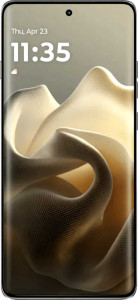
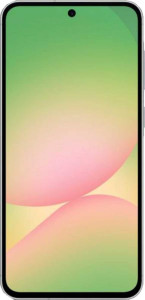
Both phones feature a 6.7″ OLED/AMOLED panel with a 120Hz refresh rate and HDR10+ support — a solid shared foundation that guarantees smooth scrolling and vibrant colors on either device. The differences, however, emerge sharply once you dig into resolution and brightness. The Edge 60 Pro's 1220 x 2712 px resolution translates to a pixel density of 444 ppi, noticeably crisper than the A56's 1080 x 2340 px at 385 ppi. In practice, this gap is visible when reading small text, viewing detailed photos, or watching high-resolution video — the Edge 60 Pro's screen will simply appear sharper to the naked eye.

The brightness gap is arguably the bigger story. The Edge 60 Pro reaches a peak of 4500 nits versus the A56's 1200 nits — a difference so large it's not a minor upgrade but a fundamentally different outdoor experience. At 4500 nits, the Edge 60 Pro remains comfortably legible in direct sunlight; the A56, while adequate indoors, will struggle in bright daylight conditions by comparison. For users who spend significant time outdoors, this alone is a decisive factor.

Where the A56 pushes back is glass protection: it uses Gorilla Glass Victus, a more premium and scratch/drop-resistant solution compared to the Edge 60 Pro's Gorilla Glass 7i, which is positioned as a mid-range variant. Still, the Edge 60 Pro's commanding leads in both sharpness and brightness make it the clear winner for this category — the A56's superior glass is a meaningful but ultimately secondary advantage in a display comparison.

Performance:
internal storage 512GB 256GB
RAM 12GB 12GB
AnTuTu benchmark score 1375600 932578
Chipset (SoC) name MediaTek Dimensity 8350 Samsung Exynos 1580
GPU name Mali G615 MC6 Xclipse 530
CPU speed 1 x 3.35 & 3 x 3.2 & 4 x 2.2 GHz 1 x 2.9 & 3 x 2.6 & 4 x 1.95 GHz
Geekbench 6 result (multi) 4700 3893
Geekbench 6 result (single) 1536 1360
GPU clock speed 1400 MHz 1300 MHz
Has integrated LTE
RAM speed 8533 MHz 3200 MHz
semiconductor size 4 nm 4 nm
Supports 64-bit
DirectX version DirectX 12 DirectX 12
Has integrated graphics
Uses big.LITTLE technology
CPU threads 8 threads 8 threads
Uses HMP
Has TrustZone
maximum memory bandwidth 68.2 GB/s 51.2 GB/s
OpenCL version 2 2
memory channels 4 4
maximum memory amount 24GB 12GB
DDR memory version 5 5
L3 core 4 MB/core 4 MB/core
L3 cache 4 MB 4 MB

Under the hood, both phones are built on a 4nm process with 8-core big.LITTLE architectures and identical RAM amounts of 12GB — but the similarity largely ends there. The Edge 60 Pro's MediaTek Dimensity 8350 posts an AnTuTu score of 1,375,600 versus the Galaxy A56's 932,578 on its Exynos 1580 — a roughly 47% gap that is substantial by any measure. This delta isn't just a benchmark curiosity; it reflects real differences in CPU clock speeds, with the Dimensity 8350's cores running meaningfully faster across all clusters, and translates to snappier app launches, faster image processing, and smoother handling of demanding workloads like gaming or video editing.

Memory architecture further separates the two. The Edge 60 Pro's RAM operates at 8533 MHz compared to the A56's 3200 MHz, and its maximum memory bandwidth reaches 68.2 GB/s versus 51.2 GB/s — meaning data moves between the processor and RAM considerably faster on the Edge 60 Pro. This has a noticeable effect on multitasking fluidity and sustained performance under load. The Edge 60 Pro also supports a maximum memory configuration of 24GB, double the A56's ceiling of 12GB, which matters for future-proofing and heavier RAM-dependent use cases. On storage, the Edge 60 Pro ships with 512GB versus the A56's 256GB, doubling available space for media, apps, and files.

The Edge 60 Pro is the unambiguous winner in this category. It outperforms the Galaxy A56 across every meaningful performance dimension — raw CPU throughput, memory speed, bandwidth, maximum RAM, and storage — while both chips share the same manufacturing node. For users who prioritize performance, the Edge 60 Pro offers a decidedly faster and more capable platform.

Cameras:
megapixels (main camera) 50 & 50 & 10 MP 50 & 12 & 5 MP
wide aperture (main camera) 1.8 & 2 & 2f 1.8 & 2.2 & 2.4f
Has a dual-lens (or multi-lens) main camera
megapixels (front camera) 50MP 12MP
has built-in optical image stabilization
video recording (main camera) 2160 x 30 fps 2160 x 30 fps
Has a dual-tone LED flash
number of flash LEDs 1 1
has a BSI sensor
has a CMOS sensor
has continuous autofocus when recording movies
Has phase-detection autofocus for photos
supports slow-motion video recording
has a built-in HDR mode
has manual exposure
has a flash
optical zoom 3x 0x
has manual ISO
has a serial shot mode
has manual focus
has a front camera
Has laser autofocus
Shoots 360° panorama
has manual white balance
has touch autofocus
has manual shutter speed
can create panoramas in-camera
wide aperture (front camera) 2f 2.2f
Has timelapse function
Has a front-facing LED flash
has a dual-lens (or multi-lens) front camera
supports HDR10 recording
supports Dolby Vision recording
has a front-facing camera under the display
Has a RGB LED flash
has 3D photo/video recording capabilities

The primary cameras are evenly matched on paper — both open with a 50MP f/1.8 main sensor, OIS, phase-detection autofocus, and 4K video at 30fps — but the two systems diverge significantly once you look beyond the main lens. The Edge 60 Pro's triple camera array is configured as 50 + 50 + 10 MP, where that third lens delivers 3x optical zoom. The Galaxy A56, by contrast, lists 0x optical zoom, meaning it relies entirely on digital cropping to simulate telephoto shots. Optical zoom preserves actual detail; digital zoom does not. For anyone who regularly photographs subjects at a distance — events, wildlife, street scenes — this is a fundamental capability gap.

The secondary ultra-wide lens tells a similar story. The Edge 60 Pro pairs its primary with a second 50MP sensor, while the A56's ultra-wide drops to just 12MP. Higher resolution on the ultra-wide means more detail when shooting architecture, landscapes, or tight indoor spaces. The front camera gap is equally stark: the Edge 60 Pro offers a 50MP selfie shooter versus the A56's 12MP, a difference that matters for those who frequently shoot portraits or video calls and want greater cropping flexibility in post.

The Galaxy A56 holds no camera-specific advantages based on the provided specs, and the Edge 60 Pro is the clear winner in this category. The combination of a true 3x optical zoom telephoto, a higher-resolution ultra-wide, and a substantially more detailed front camera gives it a more versatile and capable overall imaging system across virtually every shooting scenario.

Operating system:
Android version Android 15 Android 15
has clipboard warnings
has location privacy options
has camera/microphone privacy options
has Mail Privacy Protection
has theme customization
can block app tracking
blocks cross-site tracking
has on-device machine learning
has notification permissions
has media picker
Can play games while they download
has dark mode
has Wi-Fi password sharing
has battery health check
has an extra dim mode
has focus modes
has dynamic theming
can offload apps
Has customizable notifications
has Live Text
has full-page screenshots
supports split screen
gets direct OS updates
has PiP
Can be used as a PC
Has sharing intents
has a child lock
Supports widgets
Is free and open source
Has offline voice recognition
has voice commands
Tracks the current position of a mobile device
is a multi-user system
has Quick Start

Rarely in a head-to-head comparison do two phones align this closely on software, but the Motorola Edge 60 Pro and Samsung Galaxy A56 are running the same Android 15 base and share an essentially identical feature set across privacy controls, customization, productivity, and accessibility. Both support dynamic theming, split-screen multitasking, Picture-in-Picture, offline voice recognition, on-device machine learning, and a full suite of modern Android privacy tools. For the vast majority of users, the day-to-day software experience will feel functionally equivalent.

Scanning the entire spec list, only one meaningful difference emerges: the Edge 60 Pro supports desktop mode (can be used as a PC), while the Galaxy A56 does not. This feature — typically enabled by connecting the phone to an external display via cable or wirelessly — allows the device to run in a PC-like interface, making it useful for productivity tasks, presentations, or light work on a larger screen without a separate computer. It is a niche capability, but for users who want a single device that can double as a portable desktop, it is a genuine differentiator.

This category is essentially a tie for most users, with the Edge 60 Pro holding a narrow, scenario-specific advantage through its desktop mode support. Neither phone offers a broader or more feature-rich Android implementation than the other based on the provided data.

Battery:
battery power 6000 mAh 5000 mAh
has wireless charging
Supports fast charging
charging speed 90W 45W
comes with a charger
has a removable battery
Has an ultra power-saving mode
has a battery level indicator
has a rechargeable battery

The battery category is one of the Edge 60 Pro's strongest showings in this comparison. Its 6000 mAh cell is 20% larger than the Galaxy A56's 5000 mAh — a gap that, all else being equal, directly translates to more screen-on time and longer intervals between charges. For heavy users or those who travel without easy access to a charger, that extra 1000 mAh provides a meaningful real-world buffer across a full day.

Charging is another area where the Edge 60 Pro pulls ahead on multiple fronts. At 90W, it charges nearly twice as fast as the A56's 45W — meaning the Edge 60 Pro can go from low battery to a usable charge in a fraction of the time. Beyond speed, the Edge 60 Pro also supports wireless charging, a convenience the A56 lacks entirely. Wireless charging won't match wired speeds, but the ability to simply place the phone on a pad — on a desk, nightstand, or car mount — is a quality-of-life feature that users quickly come to rely on. Additionally, the Edge 60 Pro comes with a charger in the box, while the A56 does not, which is a practical cost consideration at purchase.

The Edge 60 Pro wins this category decisively. It offers a larger battery, significantly faster wired charging, wireless charging support, and includes a charger in the box — advantages that stack up across every dimension of the charging and endurance experience.

Audio:
has a socket for a 3.5 mm audio jack
has stereo speakers
Has a radio
number of microphones 2 2

Audio is the most evenly matched category in this entire comparison. The Motorola Edge 60 Pro and Samsung Galaxy A56 share an identical spec sheet here: both offer stereo speakers, dual microphones, and no 3.5mm headphone jack. There is not a single differentiating data point between them.

The shared stereo speaker setup is worth noting positively — stereo output creates a noticeably wider soundstage than mono for media consumption, gaming, and speakerphone calls. The absence of a headphone jack on both devices means wired listening requires a USB-C adapter or Bluetooth headphones, a trade-off that has become standard across modern mid-range and flagship phones. The dual-microphone configuration on each supports noise reduction during calls and voice recording, again on equal footing.

This category is a complete tie. Based strictly on the provided specs, neither phone holds any audio advantage over the other, and users can expect a functionally equivalent experience from both devices in this area.

Connectivity & Features:
release date April 2025 March 2025
has 5G support
Wi-Fi version Wi-Fi 6E (802.11ax) Wi-Fi 4 (802.11n), Wi-Fi 5 (802.11ac), Wi-Fi 6 (802.11ax)
SIM cards 1 SIM, 1 eSIM 2 SIM, 2 eSIM
has an external memory slot
Has USB Type-C
USB version 2 2
has NFC
Has a fingerprint scanner
has emergency SOS via satellite
has crash detection
is DLNA-certified
has a gyroscope
supports ANT+
Has a heart rate monitor
has GPS
has a compass
supports Wi-Fi
Has an infrared sensor
has an accelerometer
has a cellular module
Has a barometer
has an HDMI output
Uses 3D facial recognition
Has an iris scanner
Stylus included
supports Galileo
Has motion tracking
Has optical tracking
Has a built-in projector

Across the broad connectivity landscape — 5G, NFC, GPS, USB-C, fingerprint scanner, gyroscope, accelerometer — these two phones are essentially identical. The meaningful differences narrow down to just two specs, but both are worth understanding. The Edge 60 Pro supports Wi-Fi 6E (802.11ax), which extends Wi-Fi 6 capabilities into the 6GHz frequency band, offering lower congestion and higher potential speeds in environments with many competing devices, such as offices or apartment buildings. The Galaxy A56 tops out at Wi-Fi 6 (802.11ax), which is still a capable standard but lacks access to that less-congested 6GHz band. In practice, the benefit of Wi-Fi 6E depends on having a compatible router — but as 6E routers become more common, this advantage grows over the device's lifespan.

The SIM situation flips the advantage. The Galaxy A56 supports 2 physical SIMs and 2 eSIMs, giving it considerable flexibility for users who juggle multiple numbers — whether for work/personal separation, international travel with a local SIM, or dual-carrier setups. The Edge 60 Pro is limited to 1 physical SIM and 1 eSIM, which covers most users' needs but leaves no room for a second active line without swapping.

This category is a split with no overall winner. The Edge 60 Pro edges ahead for users prioritizing future-ready wireless performance, while the Galaxy A56 is the stronger choice for anyone who needs multi-SIM flexibility. Which advantage matters more comes down entirely to individual use case.

Miscellaneous:
has a video light
Has sapphire glass display
Has a curved display
Has an e-paper display

This is a short spec group with limited data, and most of it is shared — both phones include a video light and neither uses sapphire glass or an e-paper display. The single differentiator is the Edge 60 Pro's curved display, which the Galaxy A56 does not have.

A curved screen wraps the panel gently at the edges, giving the device a more premium, seamless aesthetic and reducing the visual presence of the bezels. It can also make one-handed swiping feel more natural along the sides. The trade-off, which falls outside the provided data, is not something that can be assessed here — the specs simply confirm the feature exists on one phone and not the other. For users who prefer the look and feel of a curved panel, the Edge 60 Pro is the only option of the two.

Based strictly on the provided specs, the Edge 60 Pro holds a narrow advantage in this category solely due to its curved display. The Galaxy A56's flat screen is not a deficiency per se, but it is the less distinctive of the two form factors represented here.

Comparison Summary & Verdict

After a thorough comparison, both phones serve distinct audiences. The Motorola Edge 60 Pro is the stronger all-round performer: it delivers a significantly brighter display at 4500 nits, a higher-resolution front camera, optical zoom, wireless charging, a larger 6000 mAh battery with 90W fast charging, and a notable lead in benchmark scores. It also includes a charger in the box and supports PC mode. The Samsung Galaxy A56 5G, on the other hand, offers a slimmer and slightly more compact build, the trusted Gorilla Glass Victus protection, dual physical SIM support, and a more familiar Samsung ecosystem experience. If you want maximum performance, camera flexibility, and charging convenience, the Edge 60 Pro is the clear choice. If you prefer a sleeker design, dual-SIM flexibility, and Samsung's software reliability at a likely lower price point, the Galaxy A56 5G remains a compelling option.

Motorola Edge 60 Pro
Buy Motorola Edge 60 Pro if...

Buy the Motorola Edge 60 Pro if you want superior display brightness, faster 90W charging with wireless charging included, a larger battery, optical zoom, and top-tier benchmark performance.

Samsung Galaxy A56 5G
Buy Samsung Galaxy A56 5G if...

Buy the Samsung Galaxy A56 5G if you prefer a slimmer design with Gorilla Glass Victus protection, dual physical SIM card support, and a streamlined Samsung experience.