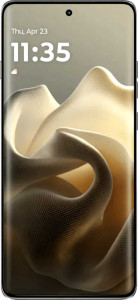
Motorola Edge 60 Pro
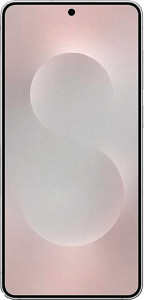
Samsung Galaxy S25 Edge

Motorola Edge 60 Pro Samsung Galaxy S25 Edge

Overview

Welcome to our in-depth specification comparison between the Motorola Edge 60 Pro and the Samsung Galaxy S25 Edge. These two smartphones take strikingly different approaches to the modern flagship experience, and choosing between them is far from straightforward. We examine the key battlegrounds: raw processing performance, battery capacity and charging speed, camera capabilities, and overall design philosophy — to help you decide which device truly fits your lifestyle.

Common Features

  • Both phones are waterproof with an IP68 ingress protection rating.
  • Neither phone has a rugged build.
  • Neither phone can be folded.
  • Both phones feature an OLED/AMOLED display.
  • Both phones share the same screen size of 6.7″.
  • Both phones support a 120Hz refresh rate.
  • Both phones feature branded damage-resistant glass.
  • HDR10 support is available on both phones.
  • HDR10+ support is available on both phones.
  • Dolby Vision support is not available on either phone.
  • Neither phone has a secondary screen.
  • Both phones come with 512GB internal storage and 12GB RAM.
  • Both phones have integrated LTE and 5G support.
  • Both phones use big.LITTLE technology with 8 CPU threads.
  • Both phones support DirectX 12.
  • Both phones feature a multi-lens main camera with built-in optical image stabilization.
  • Both phones run Android 15.
  • Both phones include clipboard warnings and location privacy options.
  • Both phones support wireless charging at 15W.
  • Both phones support fast charging.
  • Reverse wireless charging is not available on either phone.
  • Neither phone has a removable battery.
  • Neither phone has a 3.5mm audio jack.
  • Both phones feature stereo speakers and 2 microphones.
  • Neither phone has a radio.
  • Both phones support 5G, NFC, USB Type-C, and have a fingerprint scanner.
  • Neither phone has an external memory slot.
  • Both phones have a gyroscope.
  • Emergency SOS via satellite is not available on either phone.
  • Both phones have a video light.
  • Neither phone has a sapphire glass or e-paper display.

Main Differences

  • Weight is 186g on Motorola Edge 60 Pro and 163g on Samsung Galaxy S25 Edge.
  • Thickness is 8.2mm on Motorola Edge 60 Pro and 5.8mm on Samsung Galaxy S25 Edge.
  • Width is 73.1mm on Motorola Edge 60 Pro and 75.6mm on Samsung Galaxy S25 Edge.
  • Height is 160.7mm on Motorola Edge 60 Pro and 158.2mm on Samsung Galaxy S25 Edge.
  • Volume is 96.33 cm³ on Motorola Edge 60 Pro and 69.37 cm³ on Samsung Galaxy S25 Edge.
  • Pixel density is 444 ppi on Motorola Edge 60 Pro and 513 ppi on Samsung Galaxy S25 Edge.
  • Resolution is 1220 x 2712 px on Motorola Edge 60 Pro and 1440 x 3120 px on Samsung Galaxy S25 Edge.
  • Screen protection is Gorilla Glass 7i on Motorola Edge 60 Pro and Gorilla Glass Victus 2 on Samsung Galaxy S25 Edge.
  • The chipset is MediaTek Dimensity 8350 on Motorola Edge 60 Pro and Qualcomm Snapdragon 8 Elite on Samsung Galaxy S25 Edge.
  • AnTuTu benchmark score is 1,375,600 on Motorola Edge 60 Pro and 2,265,529 on Samsung Galaxy S25 Edge.
  • Geekbench 6 multi-core score is 4,700 on Motorola Edge 60 Pro and 10,059 on Samsung Galaxy S25 Edge.
  • Geekbench 6 single-core score is 1,536 on Motorola Edge 60 Pro and 3,234 on Samsung Galaxy S25 Edge.
  • The GPU is Mali G615 MC6 on Motorola Edge 60 Pro and Adreno 830 on Samsung Galaxy S25 Edge.
  • Semiconductor size is 4nm on Motorola Edge 60 Pro and 3nm on Samsung Galaxy S25 Edge.
  • Main camera megapixels are 50 & 50 & 10 MP on Motorola Edge 60 Pro and 200 & 12 MP on Samsung Galaxy S25 Edge.
  • Maximum video recording is 2160p at 30fps on Motorola Edge 60 Pro and 4320p at 30fps on Samsung Galaxy S25 Edge.
  • Optical zoom is 3x on Motorola Edge 60 Pro and 0x on Samsung Galaxy S25 Edge.
  • Front camera resolution is 50MP on Motorola Edge 60 Pro and 12MP on Samsung Galaxy S25 Edge.
  • Battery capacity is 6000 mAh on Motorola Edge 60 Pro and 3900 mAh on Samsung Galaxy S25 Edge.
  • Wired charging speed is 90W on Motorola Edge 60 Pro and 25W on Samsung Galaxy S25 Edge.
  • A charger is included in the box with Motorola Edge 60 Pro but not with Samsung Galaxy S25 Edge.
  • aptX Adaptive support is present on Motorola Edge 60 Pro but not available on Samsung Galaxy S25 Edge.
  • Wi-Fi 7 support is present on Samsung Galaxy S25 Edge but not available on Motorola Edge 60 Pro.
  • USB version is 2.0 on Motorola Edge 60 Pro and 3.2 on Samsung Galaxy S25 Edge.
  • SIM support is 1 SIM and 1 eSIM on Motorola Edge 60 Pro and 2 SIM and 2 eSIM on Samsung Galaxy S25 Edge.
  • ANT+ support is present on Samsung Galaxy S25 Edge but not available on Motorola Edge 60 Pro.
  • A barometer is present on Samsung Galaxy S25 Edge but not available on Motorola Edge 60 Pro.
  • A curved display is featured on Motorola Edge 60 Pro but not on Samsung Galaxy S25 Edge.
Specs Comparison
Motorola Edge 60 Pro

Motorola Edge 60 Pro

Samsung Galaxy S25 Edge

Samsung Galaxy S25 Edge

Design:
water resistance Waterproof Waterproof
weight 186 g 163 g
thickness 8.2 mm 5.8 mm
width 73.1 mm 75.6 mm
height 160.7 mm 158.2 mm
volume 96.326794 cm³ 69.367536 cm³
Ingress Protection (IP) rating IP68 IP68
has a rugged build
can be folded

Both phones share the same IP68 waterproofing standard, meaning each can withstand submersion in fresh water under comparable conditions — neither holds an advantage here, and everyday water exposure such as rain or splashes is a non-issue for both.

Where the two diverge sharply is in physical form factor. The Samsung Galaxy S25 Edge is dramatically slimmer at 5.8 mm thick compared to the Motorola's 8.2 mm, a difference of nearly 30% — large enough to be immediately noticeable in-hand and in a pocket. This is compounded by a significant weight gap: the S25 Edge comes in at 163 g versus the Edge 60 Pro's 186 g, making the Samsung 23 grams lighter. Over a full day of use, that reduction in weight and thickness translates to a less fatiguing one-handed grip and a device that sits far more discreetly in a pocket. The total displaced volume tells the full story: the S25 Edge occupies just 69.4 cm³ versus the Edge 60 Pro's 96.3 cm³ — a roughly 28% smaller physical footprint despite the Samsung being marginally wider at 75.6 mm.

For users who prioritize a slim, lightweight design above all else, the Samsung Galaxy S25 Edge has a clear and meaningful advantage in this category. The Motorola Edge 60 Pro is not a large phone by traditional standards, but next to the S25 Edge it feels noticeably bulkier — a trade-off that may matter greatly depending on how much premium the buyer places on sleekness versus other specs addressed in separate categories.

Display:
Display type OLED/AMOLED OLED/AMOLED
screen size 6.7" 6.7"
pixel density 444 ppi 513 ppi
resolution 1220 x 2712 px 1440 x 3120 px
refresh rate 120Hz 120Hz
has branded damage-resistant glass
Gorilla Glass version Gorilla Glass 7i Gorilla Glass Victus 2
supports HDR10
supports HDR10+
supports Dolby Vision
Has a secondary screen
has a touch screen

On the surface, these two displays look nearly identical: both are 6.7″ OLED/AMOLED panels running at 120Hz, with matching HDR10 and HDR10+ support and no Dolby Vision on either side. For most everyday usage — scrolling, streaming, casual browsing — both screens will feel smooth and vibrant in ways that are hard to distinguish at a glance.

The meaningful separation emerges in resolution and pixel density. The Samsung Galaxy S25 Edge resolves at 1440 x 3120 px with a pixel density of 513 ppi, while the Motorola Edge 60 Pro delivers 1220 x 2712 px at 444 ppi. That 69 ppi gap is perceptible — particularly when reading small text, viewing fine detail in photos, or using the phone at close range. At 513 ppi the S25 Edge pushes well past the threshold where individual pixels become invisible to the naked eye under virtually any real-world viewing condition, whereas the Edge 60 Pro at 444 ppi, while still sharp, leaves a slightly softer impression under close scrutiny.

Glass protection is the other differentiator worth noting: the S25 Edge uses Gorilla Glass Victus 2, a more recent and impact-resistant generation than the Gorilla Glass 7i on the Motorola, which is optimized primarily for mid-range devices. In total, the Samsung Galaxy S25 Edge holds a clear advantage in display quality for this group — driven by its higher resolution and more advanced glass protection — making it the stronger choice for users who prioritize screen sharpness and durability.

Performance:
internal storage 512GB 512GB
RAM 12GB 12GB
AnTuTu benchmark score 1375600 2265529
Chipset (SoC) name MediaTek Dimensity 8350 Qualcomm Snapdragon 8 Elite
GPU name Mali G615 MC6 Adreno 830
CPU speed 1 x 3.35 & 3 x 3.2 & 4 x 2.2 GHz 2 x 4.32 & 6 x 3.53 GHz
Geekbench 6 result (multi) 4700 10059
Geekbench 6 result (single) 1536 3234
GPU clock speed 1400 MHz 1100 MHz
Has integrated LTE
RAM speed 8533 MHz 5300 MHz
semiconductor size 4 nm 3 nm
Supports 64-bit
DirectX version DirectX 12 DirectX 12
Has integrated graphics
Uses big.LITTLE technology
CPU threads 8 threads 8 threads
Uses HMP
Has TrustZone
maximum memory bandwidth 68.2 GB/s 85.1 GB/s
OpenCL version 2 3
memory channels 4 2
maximum memory amount 24GB 24GB
DDR memory version 5 5
L3 cache 4 MB 8 MB

The chipset gap here is substantial and cuts across every performance dimension. The Samsung Galaxy S25 Edge runs on the Qualcomm Snapdragon 8 Elite built on a 3 nm process, while the Motorola Edge 60 Pro uses the MediaTek Dimensity 8350 on a 4 nm node — a generational difference in silicon efficiency that sets the ceiling for everything else. The benchmark numbers make the scale of the gap concrete: the S25 Edge scores 2,265,529 on AnTuTu versus the Edge 60 Pro's 1,375,600, a roughly 65% lead. Geekbench 6 tells the same story even more starkly — the S25 Edge posts a multi-core score of 10,059 and single-core of 3,234, compared to 4,700 and 1,536 on the Motorola. In practice, this translates to faster app launches, smoother multitasking under load, and significantly more headroom for demanding tasks like video editing, gaming, and AI-driven features.

Memory bandwidth and cache also favor the S25 Edge in meaningful ways: its maximum bandwidth reaches 85.1 GB/s versus 68.2 GB/s on the Motorola, and its L3 cache doubles at 8 MB compared to 4 MB — both of which reduce latency in data-heavy workloads. Interestingly, the Motorola carries a faster RAM clock at 8533 MHz versus 5300 MHz on the Samsung, but with only two memory channels versus the Motorola's four, the S25 Edge still achieves higher overall throughput, meaning the RAM speed differential does not offset Samsung's bandwidth advantage in real-world use.

Both phones match on storage at 512 GB and RAM at 12 GB, so neither has an advantage in raw capacity. But across every meaningful performance metric in this dataset, the Samsung Galaxy S25 Edge holds a decisive and unambiguous lead — it is the clear choice for users who prioritize processing power and computational headroom.
Cameras:
megapixels (main camera) 50 & 50 & 10 MP 200 & 12 MP
wide aperture (main camera) 1.8 & 2 & 2f 2.2 & 1.7f
Has a dual-lens (or multi-lens) main camera
megapixels (front camera) 50MP 12MP
has built-in optical image stabilization
video recording (main camera) 2160 x 30 fps 4320 x 30 fps
Has a dual-tone LED flash
number of flash LEDs 1 1
has a BSI sensor
has a CMOS sensor
has continuous autofocus when recording movies
Has phase-detection autofocus for photos
supports slow-motion video recording
has a built-in HDR mode
has manual exposure
has a flash
optical zoom 3x 0x
has manual ISO
has a serial shot mode
has manual focus
has a front camera
Has laser autofocus
Shoots 360° panorama
has manual white balance
has touch autofocus
has manual shutter speed
can create panoramas in-camera
wide aperture (front camera) 2f 2.2f
Has timelapse function
Has a front-facing LED flash
has a dual-lens (or multi-lens) front camera
supports HDR10 recording
supports Dolby Vision recording
has a front-facing camera under the display
Has a RGB LED flash
has 3D photo/video recording capabilities

The camera comparison here is a genuine trade-off rather than a clean sweep for either device. The Samsung Galaxy S25 Edge leads with a 200 MP primary sensor — a dramatic resolution advantage over the Motorola's 50 MP main shooter — and pushes video recording all the way to 8K (4320p) at 30fps, versus the Edge 60 Pro's 4K (2160p) ceiling. For users who prioritize maximum still-image detail and future-proof video capture, the S25 Edge's hardware sets a higher ceiling. Its primary lens also benefits from a slightly wider aperture of f/1.7 compared to the Motorola's f/1.8, offering marginally better light intake on the main sensor.

Where the Motorola Edge 60 Pro pushes back is in versatility and zoom. Its triple-lens rear system includes a dedicated 3x optical zoom lens, while the S25 Edge lists 0x optical zoom — meaning telephoto shots on the Samsung rely entirely on the high-resolution main sensor cropped digitally, rather than a dedicated optic. For users who regularly shoot at distance, the Motorola's physical zoom lens is a concrete advantage the spec data supports. The Edge 60 Pro also carries a 50 MP front camera against the S25 Edge's 12 MP selfie shooter, a meaningful gap for users who prioritize high-resolution self-portraits or front-facing video.

Neither phone has a clear overall winner in this category — the right choice depends on shooting priorities. The Samsung Galaxy S25 Edge is stronger for primary-lens resolution and video fidelity, while the Motorola Edge 60 Pro holds the advantage in telephoto flexibility and front-camera resolution. Users who shoot a wide variety of subjects across distances will likely find the Motorola's multi-lens system more practically versatile day to day.

Operating system:
Android version Android 15 Android 15
has clipboard warnings
has location privacy options
has camera/microphone privacy options
has Mail Privacy Protection
has theme customization
can block app tracking
blocks cross-site tracking
has on-device machine learning
has notification permissions
has media picker
Can play games while they download
has dark mode
has Wi-Fi password sharing
has battery health check
has an extra dim mode
has focus modes
has dynamic theming
can offload apps
Has customizable notifications
has Live Text
has full-page screenshots
supports split screen
gets direct OS updates
has PiP
Can be used as a PC
Has sharing intents
has a child lock
Supports widgets
Is free and open source
Has offline voice recognition
has voice commands
Tracks the current position of a mobile device
is a multi-user system
has Quick Start

Rarely does a spec group produce a result this unambiguous: across every single data point provided, the Motorola Edge 60 Pro and the Samsung Galaxy S25 Edge are identical. Both run Android 15, share the same privacy controls — including location, camera, and microphone permissions — and offer the same set of usability features: dark mode, dynamic theming, split-screen, Picture-in-Picture, widgets, offline voice recognition, and on-device machine learning, among others. Neither gets direct OS updates, and neither supports Wi-Fi password sharing, focus modes, Quick Start, or Mail Privacy Protection.

This is a complete tie based strictly on the provided data. There is no differentiator — not even a minor one — to separate the two devices in this category. For buyers whose decision hinges on software features and OS-level capabilities as listed here, this group offers no reason to choose one phone over the other.

Battery:
battery power 6000 mAh 3900 mAh
has wireless charging
Supports fast charging
charging speed 90W 25W
wireless charging speed 15W 15W
has reverse wireless charging
comes with a charger
has a removable battery
has a battery level indicator
has a rechargeable battery

Battery is the category where the Motorola Edge 60 Pro asserts its most dominant advantage in this entire comparison. Its 6000 mAh cell dwarfs the Samsung Galaxy S25 Edge's 3900 mAh pack — a 54% larger reservoir of energy that, all else being equal, points toward significantly longer time between charges. For heavy users, commuters, or anyone who regularly finishes the day in the red, that gap is not trivial.

Wired charging speed compounds the lead: the Edge 60 Pro supports 90W fast charging versus just 25W on the S25 Edge. Not only does the Motorola have more battery to fill, it refills it dramatically faster — a combination that makes range anxiety a much smaller concern. Wireless charging is the one area of parity, with both phones capped at 15W. One practical footnote: the Motorola comes with a charger included in the box, while the Samsung does not — a minor but real day-one consideration for buyers.

The Motorola Edge 60 Pro wins this category decisively and without qualification. The S25 Edge's slimmer design — highlighted in the Design group — comes at a direct cost to battery capacity, and its slower charging speed means it also takes longer to recover. For endurance-focused users, the Motorola is the clear choice here.

Audio:
has a socket for a 3.5 mm audio jack
has stereo speakers
has aptX Adaptive
Has a radio
number of microphones 2 2

The audio specs for these two phones are nearly identical at the hardware level — both drop the 3.5mm headphone jack, offer stereo speakers, include 2 microphones, and lack a built-in radio. For most users listening through the phone's own speakers or using standard Bluetooth earbuds, the day-to-day experience will be indistinguishable between the two.

The single differentiator in this group is the Motorola Edge 60 Pro's support for aptX Adaptive, a Bluetooth audio codec that delivers higher-resolution wireless audio with lower latency compared to standard codecs — provided the user's headphones also support it. For audiophiles using compatible wireless headphones, this translates to noticeably cleaner, higher-fidelity sound over Bluetooth. The Samsung Galaxy S25 Edge lacks this codec entirely, meaning it falls back to less capable alternatives for wireless audio transmission.

The Motorola Edge 60 Pro holds a narrow but genuine advantage here, specifically for users who pair their phone with aptX Adaptive-compatible headphones. For everyone else, the two phones are effectively tied in this category.

Connectivity & Features:
release date April 2025 May 2025
has 5G support
Wi-Fi version Wi-Fi 6E (802.11ax) Wi-Fi 4 (802.11n), Wi-Fi 5 (802.11ac), Wi-Fi 6 (802.11ax), Wi-Fi 7 (802.11be), Wi-Fi 6E (802.11ax)
SIM cards 1 SIM, 1 eSIM 2 SIM, 2 eSIM
has an external memory slot
Has USB Type-C
USB version 2 3.2
has NFC
Has a fingerprint scanner
has emergency SOS via satellite
is DLNA-certified
has a gyroscope
supports ANT+
Has a heart rate monitor
has GPS
has a compass
supports Wi-Fi
Has an infrared sensor
has an accelerometer
has a cellular module
Has a barometer
has an HDMI output
Uses 3D facial recognition
Has an iris scanner
Stylus included
supports Galileo
Has motion tracking
Has optical tracking
Has a built-in projector

Connectivity is another category where the Samsung Galaxy S25 Edge pulls ahead on multiple fronts. Most notably, it supports Wi-Fi 7 (802.11be) — the latest generation of wireless networking — while the Motorola Edge 60 Pro tops out at Wi-Fi 6E. Wi-Fi 7 delivers substantially higher theoretical throughput and lower latency on compatible routers, a future-proofing advantage that will matter more as Wi-Fi 7 infrastructure becomes widespread. The USB gap is similarly consequential: the S25 Edge uses USB 3.2 against the Motorola's USB 2.0, meaning wired data transfers — such as moving large video files to a computer — are dramatically faster on the Samsung.

SIM flexibility also favors the S25 Edge, which accommodates 2 physical SIMs and 2 eSIMs simultaneously, compared to the Motorola's 1 SIM and 1 eSIM. For frequent travelers or users juggling personal and work lines, the Samsung's dual-SIM dual-eSIM setup is a practical advantage with no equivalent on the Motorola. The S25 Edge also adds ANT+ support — useful for connecting fitness accessories like heart rate straps and cycling sensors — and a barometer for altitude and weather sensing, neither of which the Edge 60 Pro carries.

Where both phones are evenly matched — 5G, NFC, GPS, Galileo, gyroscope, accelerometer, and compass — the shared specs represent a solid baseline. But the cumulative weight of Wi-Fi 7, USB 3.2, dual-SIM flexibility, ANT+, and a barometer gives the Samsung Galaxy S25 Edge a clear and well-rounded advantage in this category across nearly every connectivity dimension that matters.

Miscellaneous:
has a video light
Has sapphire glass display
Has a curved display
Has an e-paper display

This is a compact spec group with limited data points, but it does surface one tangible difference in display design philosophy. The Motorola Edge 60 Pro features a curved display, while the Samsung Galaxy S25 Edge uses a flat panel. Curved screens offer a more immersive, edge-to-edge aesthetic and can feel more natural for one-handed swiping along the sides, but they also tend to be more prone to accidental edge touches and can make screen protectors harder to apply. The S25 Edge's flat display, by contrast, prioritizes practicality and precision — a deliberate design choice that many users actively prefer.

Everything else in this group is identical: both phones include a video light, and neither has sapphire glass nor an e-paper display. These shared traits offer no basis for differentiation.

Given the limited scope of this category, the only meaningful distinction is a matter of personal preference rather than a performance advantage. The Motorola Edge 60 Pro is the choice for those who prefer the look and feel of a curved screen; the Samsung Galaxy S25 Edge suits those who favor a flat panel. Based strictly on the provided data, this group is effectively a tie — the curved versus flat distinction carries no inherent objective advantage either way.

Comparison Summary & Verdict

After examining every specification, it is clear that these two phones serve different priorities. The Motorola Edge 60 Pro stands out for users who demand endurance and fast wired charging, thanks to its massive 6000 mAh battery and 90W charging speed, and it also brings a 3x optical zoom and a generous 50MP front camera to the table. The Samsung Galaxy S25 Edge, on the other hand, dominates in raw processing power with its Snapdragon 8 Elite chipset, achieves a far sharper display at 513 ppi, supports 8K video recording, and wins on connectivity with Wi-Fi 7 and USB 3.2. Its remarkably slim and lightweight build at just 5.8 mm and 163 g also makes it the more premium-feeling device. Choose the Motorola Edge 60 Pro if battery life and value-focused features matter most; choose the Samsung Galaxy S25 Edge if you want cutting-edge performance, a superior display, and top-tier connectivity.

Motorola Edge 60 Pro
Buy Motorola Edge 60 Pro if...

Buy the Motorola Edge 60 Pro if you prioritize long battery life and fast 90W wired charging, or if optical zoom and a high-resolution selfie camera are important to you.

Samsung Galaxy S25 Edge
Buy Samsung Galaxy S25 Edge if...

Buy the Samsung Galaxy S25 Edge if you want industry-leading performance, a sharper display, 8K video recording, and cutting-edge connectivity in an ultra-slim and lightweight design.